How to Live on Your Land While Building a House (Without Losing Your Mind or Breaking the Law)
17 min read · Updated October 16, 2026
By John
Living on your own property during home construction - sometimes called camping on your land - is one of the most practical ways to stay close to the build, cut costs, and keep your project on track. But it only works if you handle zoning, permits, utilities, and safety before you park anything on site.
Key Takeaways
Living on your land during home construction can save money and reduce commuting, but you must confirm local regulations, pull the necessary permits, and set up safe utilities before moving on site. Skipping this step can trigger fines, forced removal, or construction delays far more expensive than a quick call to your planning office.
The most realistic temporary living arrangements are an RV or travel trailer, a mobile home, a small cabin or shed-to-home conversion, an extended stay hotel, and short term rentals. The right choice depends on your build length, family size, climate, and budget.
TinyHomeMap can help you find a move-in-ready tiny house, off-grid cabin, or land rental that works as a temporary home during the build - and potentially as a forever home or guest space afterward.
This article includes a step-by-step approach plus photo references showing real-world on-site setups to make your decision easier.
What "Living on Land While Building a House" Actually Means
On-site living during home construction means staying on your own vacant or partially prepared land in a non-permanent structure - an RV, tiny home, converted shed, or mobile home - while your primary residence is being built nearby. It is distinct from simply camping; you are establishing a temporary dwelling with access to power, water, and sanitation to support daily life for months.
Understanding the difference between vacant land (no utilities, no structures, possibly ungraded) and a finished lot (gravel driveway in place, utility hookups available) matters because it determines your setup cost and timeline. Many owner-builders choose to live on site rather than paying for distant rentals or extended stay hotels because it eliminates commute time, gives direct oversight of the building process, and can dramatically reduce monthly housing expenses.
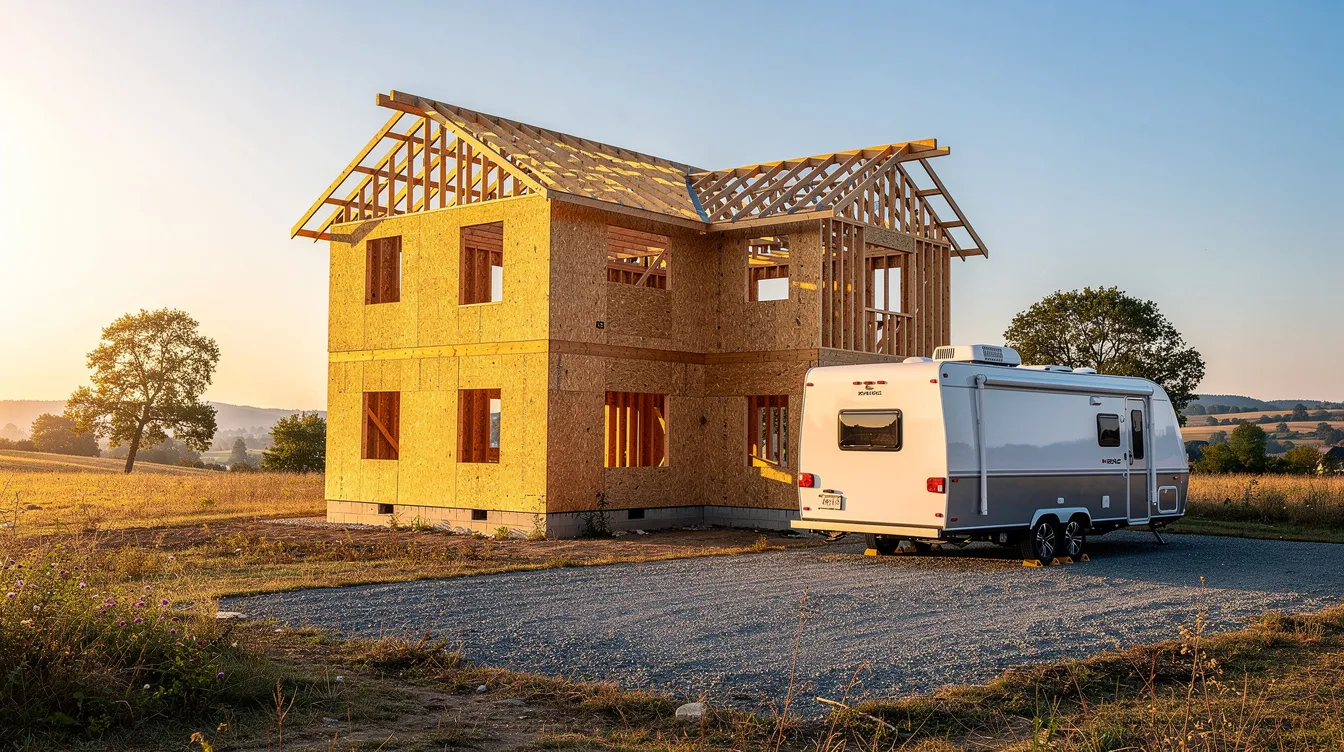
Concrete examples of common setups include a 28-foot travel trailer stationed on a gravel pad and plugged into a 30-amp temporary power pole, a 12×24 insulated shed converted into a micro living area with a kitchenette and composting toilet, or a code-compliant mobile home placed on blocks with proper tie-downs as a temporary residence.
Is It Legal to Live on Your Land During Home Construction?
Legality is hyper-local. Whether you can live on your property during construction depends entirely on your city or county's zoning regulations, temporary use rules, and building codes. Do not rely on anecdotes, social media posts, or what your neighbor did two years ago. What worked for them may not be legal in your jurisdiction.
Most U.S. counties treat this scenario under a "temporary occupancy during construction" provision. Typically, this requires that your lot is zoned appropriately, a building permit for the main house has been issued and remains active, and your temporary dwelling meets minimum health and safety standards. Zoning laws regulate temporary occupancy during construction, and local authorities often enforce a maximum duration for temporary living on-site - commonly six months to one year, with possible renewals. Rutherford County, Tennessee, for example, requires a permit, utility service, and discontinuation of temporary use once the primary residence is occupied.
Quick compliance checklist:
Call your county or city planning department and ask if temporary dwellings (RVs, mobile homes, park models, cabins) are allowed during construction.
Confirm your home construction permit is issued or applied for - temporary occupancy usually depends on it.
Ask about maximum allowed duration and whether extensions are possible.
Note any inspections required for electrical, septic, fire safety, or setbacks.
Common pitfalls include assuming agricultural zoning automatically allows living on site, ignoring HOA covenants that ban RVs or temporary housing, and exceeding allowed dates - any of which can trigger fines or forced removal. Check local zoning regulations before deciding on a temporary dwelling arrangement. Many jurisdictions have rules about living in RVs on vacant land, even on property you own outright.
Key Zoning Rules That Decide Your Options
Zoning classifications dictate what temporary dwellings are allowed on your property:
Residential zones (R-1, R-2): Designed for permanent single family home construction. Temporary housing during construction is often allowed only under narrow exceptions. Residential zones often permit temporary housing during construction, but may restrict RV visibility from the road or cap the size of temporary units.
Agricultural zones (A-1, A-2): Generally more permissive, but many still require sanitary permits and inspections. Don't assume ag zoning means no permit needed.
Rural Residential (RR/RE): Larger lots, fewer urban utility requirements, more flexibility for off-grid solutions. Often the friendliest zoning for on-site temporary living.
HOA covenants can override zoning. Even if your county allows an RV during construction, your HOA may ban all RVs on the property. Imagine discovering your 5th-wheel is prohibited after you've already hauled it onto the lot - forcing a last-minute scramble into a short term rental at twice the cost.
Also watch for limited access issues: landlocked parcels, seasonal roads, or weight-restricted bridges can prevent you from even delivering a mobile home or modular unit to the site.
Permits and Documents You'll Likely Need
In plain language, here is the paperwork most jurisdictions require:
Home construction permit (must be active before temporary occupancy is granted)
Temporary occupancy or construction trailer permit
Electrical permit for temporary power pole and meter
Septic or wastewater permit from the health department
Address/911 registration so emergency responders can find you
Building permits often specify conditions for temporary residency. Temporary dwellings must comply with local zoning regulations, and occupancy usually must end once a certificate of occupancy is granted for the house. Because construction delays are common, request permit extensions proactively - before the expiration date - rather than risking a lapse that could force you off the property.
Choosing the Right Temporary Living Arrangement
The best setup depends on four levers: build duration, climate, budget, and how close you need to be to supervise construction. This section reads like a buyer's guide - because that is exactly what you need right now. Temporary living arrangements can include RVs, tents, or small cabins depending on regulations. Living arrangements should include reliable access to power, water, and sanitation.
The key phrase here is balancing convenience, oversight of the build, and total cost of living during construction. No single option is perfect; each involves trade-offs.
On-Site Options: RVs, Tiny Homes, and Mobile Homes
RV or travel trailer: A 25–32-foot RV is often the fastest on-site solution. It comes with a built-in kitchen, bathroom, and sleeping space, which means you can store food, shower, and sleep from day one. Living in a camper can save on housing costs during construction, and living in a caravan is a common option during construction. Decent used travel trailers run around $12,000–$25,000 in many U.S. states, with the median used RV listing price around $17,600 as of late 2026. Downsides: limited space for families, requires careful winterization in cold winters, and some people underestimate the cost of RV insurance and maintenance.
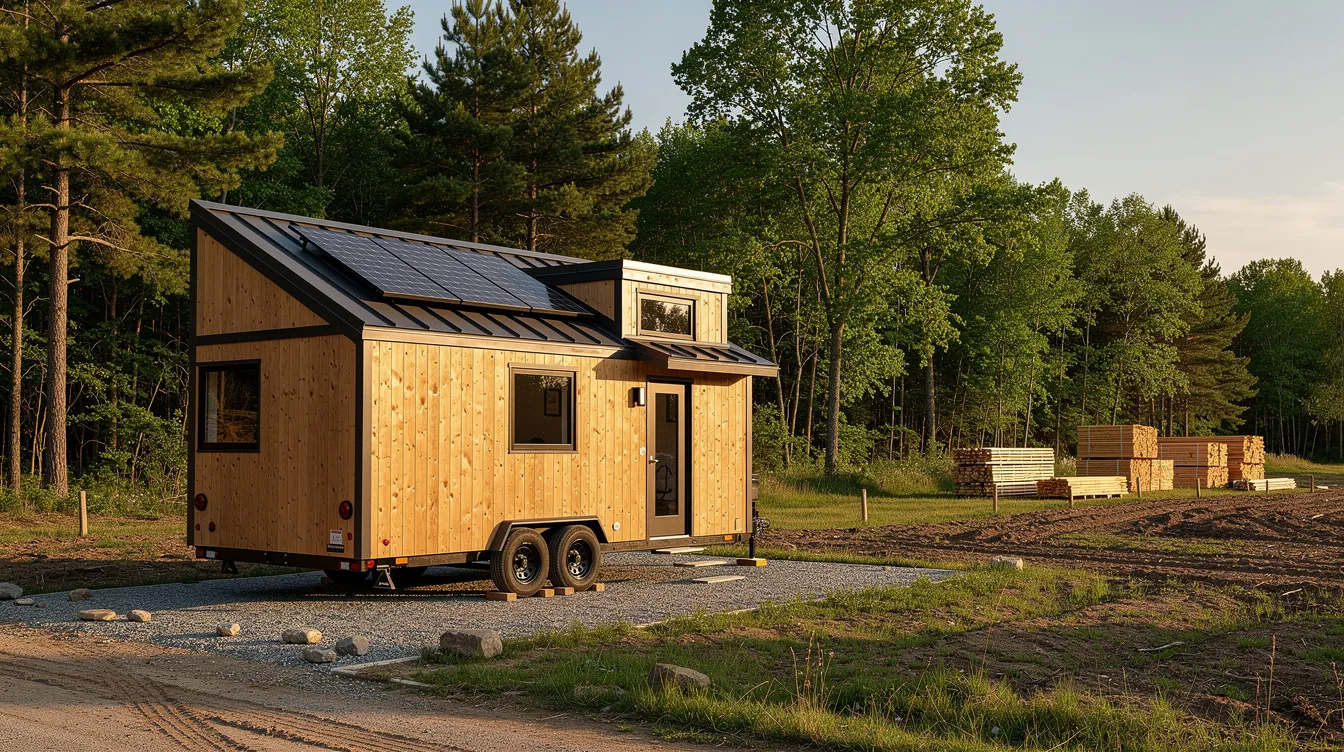
Tiny home or park model cabin: A code-compliant tiny house on wheels or small park model cabin can double as a long-term guest house or rental after your main forever home is finished. These units typically offer 200–400 square footage, better insulation than RVs, and a more finished living space. Prices range from $40,000 to $150,000+ for new units. Readers can browse such models on TinyHomeMap, filtering by size, price, and off-grid features.
Used mobile home: Bringing in a used mobile home on blocks gives you a full-size living area with standard appliances. Pros include comfortable square footage and a temporary home that feels more like a real house. Cons: transport logistics, permit hurdles, and the cost of removal later. Insurance requirements may differ for temporary residences compared to finished homes.
Off-Site Options: Rentals and Hotels
Sometimes it makes more sense not to live on the land at all - especially on small urban lots with strict zoning, infill sites with no room for a temporary unit, or when the renovation site is too noisy for daily life.
Extended stay hotels: Predictable monthly cost, all basic utilities included, housekeeping, and wi fi. Extended-stay hotels average $3,560 per month nationally (roughly $118.71 per night), and many extended stay hotels offer discounted monthly rates. This works well for shorter 4–8 week phases of construction. Temporary housing should ideally include a full kitchen for comfort, and many extended stay hotel suites provide kitchenettes.
Furnished apartments and short term rentals: Better matches for 6–12 month builds. Renting a 2-bedroom apartment costs about $5,500 to $7,700 depending on metro area, though average apartment rent nationally is closer to $1,041 per month in more affordable markets. Watch out for a security deposit, inflexible lease terms, and construction delays forcing you to re-book or move mid-build. If you need to stay within a specific school district, off-site rentals give you more location control.
Temporary housing costs vary widely based on location and type - what works in rural Tennessee may cost three times more in coastal California.
Planning Timeline, Budget, and Construction Delays
A typical home build takes 5 to 7 months under ideal conditions. But owner-managed builds frequently take longer than expected, often averaging 12 to 15 months. Here is a realistic construction timeline for a custom home:
| Phase | Timeline |
|---|---|
| Permit submission & site prep | Months 1–2 |
| Foundation & rough framing | Months 3–5 |
| Mechanical (plumbing, electrical, HVAC) | Months 6–7 |
| Interior finishes & exterior | Months 8–10 |
| Final inspections & certificate of occupancy | Months 11–12 |
Always add a 4–8 week buffer for weather conditions, inspector scheduling, and supply-chain problems. The average length of displacement during renovations is 2.55 months, but full ground-up builds stretch much longer.
Budget guidance:
Always factor the cost of temporary utilities and housing into your overall budget. Establishing a separate budget for household expenses and construction expenses is essential.
A contingency fund of 10 to 20 percent is recommended for construction budgets - and temporary accommodation should be included in that contingency.
You should plan for several months of temporary living costs during construction. A 10×10 storage unit costs $91 to $97 per month in Evansville - typical of what you might need to store furniture and belongings while living in a smaller temporary setup.
Plan B: If delays push past your lease or permit dates, shifting from on-site living to an extended stay hotel for the final few weeks is a common and cost effective fallback. Build flexibility into every plan.
Utilities, Sanitation, and a Functional Living Area
Comfort and legality both depend on safe water, power, and waste systems. Establishing basic utilities is necessary for comfortable living during construction, and short-cutting these is both unsafe and a common reason temporary occupancy permits are denied. Temporary setups need reliable access to power and water. Your temporary shelter must provide adequate weather protection and sanitation, and creating a comfortable temporary shelter involves considering heating, cooling, and sanitation needs.
Safe Power Options on an Active Build Site
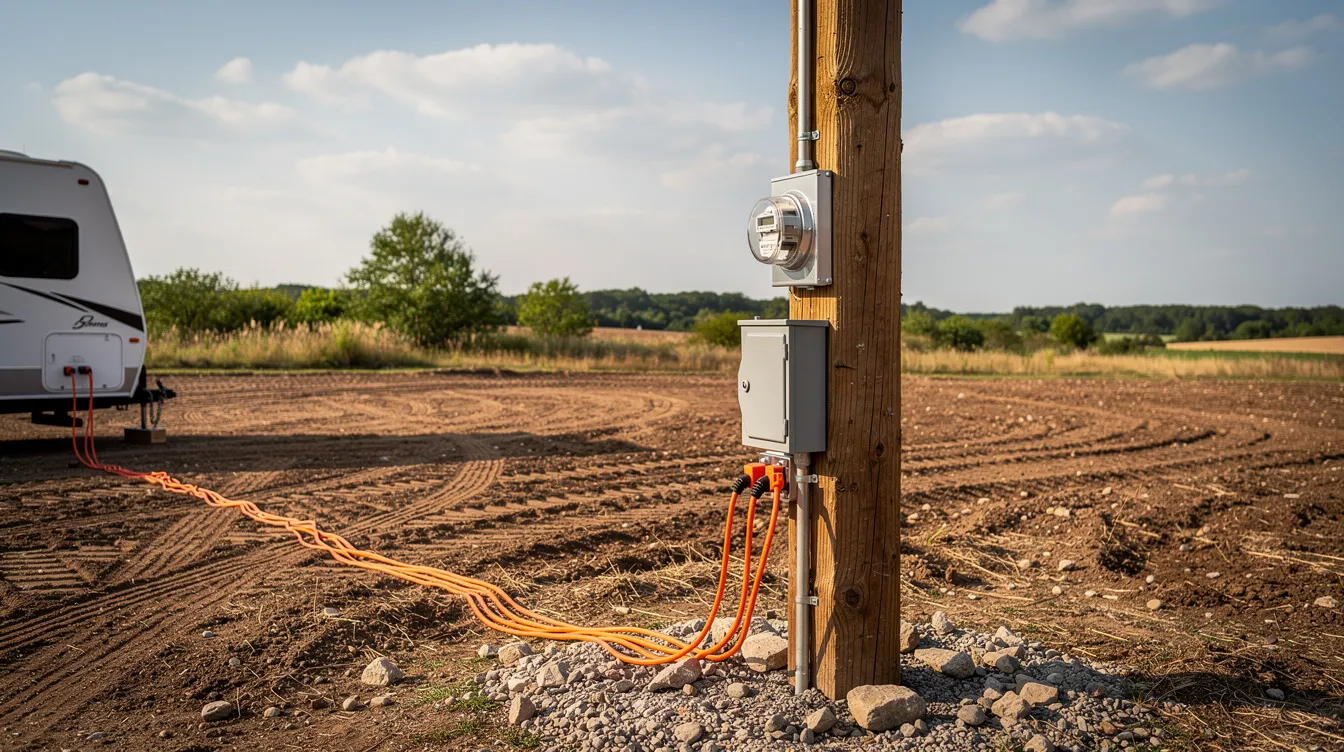
A typical temporary power setup involves a utility-approved power pole with a 100-amp panel installed by a licensed electrician. This pole feeds both the construction and your temporary dwelling. Contact your power company early - installation can take a few weeks to schedule. Utility installation costs can range from hundreds to thousands of dollars; temporary pole costs typically run $2,000–$6,000 depending on distance from the grid.
Electricity can be supplied using generators or solar panels for off-grid parcels. For basic loads - laptops, lights, water pump, small heater - a 3,000-watt inverter generator or a solar-plus-battery system can cover you.
Electrical safety checklist:
Use outdoor-rated, weather resistant extension cords
Never daisy-chain multiple power strips
Elevate cords off muddy or wet ground
Keep generators at least 20 feet from windows and sleeping areas
Water, Waste, and Health Regulations
Water can come from wells, municipal hookups, or hauled containers. Options for drinking water on raw land include drilling a new well before the build ($5,000–$15,000+), filling 300–1,000-gallon storage tanks via a local hauler, or a temporary tie-in to municipal water where infrastructure exists. You must verify soil percolation to ensure the land can support a septic system before committing to on-site waste disposal.
Portable toilets are the safest option for waste management on site, and often the simplest to arrange - a serviced unit placed away from wells and creeks. For longer stays, a permitted septic tank (possibly shared later with the house) or RV sewer connections work well. Sanitation systems must comply with local health regulations. Dumping greywater or blackwater on the ground is illegal in most places, can contaminate wells, and may get your temporary occupancy permit revoked.
Managing Safety Hazards and Site Security
A construction site is fundamentally unsafe for kids, pets, and guests unless clear rules and physical barriers are in place. Construction zones involve hazards like uneven ground and active machinery. Living on-site during construction may increase stress and reduce privacy, but the biggest concern is physical safety risks.
Common hazards and solutions:
Open trenches, rebar, exposed nails - use temporary fencing to separate the living area from active work zones with clear signage marking no-go areas
Heavy equipment and vehicle traffic - caravans must be positioned safely away from heavy equipment, with access points clearly defined
Night-time visibility - install motion-sensor LED lights along all paths between your temporary home and access roads
Wearing closed shoes prevents injuries on construction sites - make this a non-negotiable rule for everyone on the property
Security for remote builds: deadbolts on your dwelling, trail cameras, wi fi-enabled cameras where signal exists, and locking up tools and generators. A storage unit off-site can hold your most valuable tools when you cannot supervise.
Daily Life on Site: Routines, Noise, and Comfort
Living on a construction site can strain personal relationships and mental health. Expect trades arriving at 7:00 a.m., nail guns starting early, and trucks coming and going all day. Clear communication with trades ensures safety and coordination - establish quiet hours, agree on access points for deliveries, and maintain daily routines that work around the crew's schedule.
Practical comfort tips:
Good earplugs and a white-noise machine make a big difference for sleep
Outdoor mats control mud at the entry to your living space
Organized storage bins under the bed maximize limited space
A canopy or shade sail creates an outdoor "living room" that expands your living area in good weather
A gravel or all-weather driveway is essential for site access - without one, rain turns your property into a mud pit

Weather, Climate, and Environmental Considerations
Climate shapes every decision. Cold winters in Minnesota demand full RV insulation, skirting, and a reliable heat source. A mild spring build in Tennessee is a completely different project. Seasonal issues to plan for include snow loads on RV roofs, muddy access roads in spring, wildfire smoke in late summer, and hurricane season on coastal land.
Site your temporary unit on slightly higher ground than the build pad, away from runoff channels, with good drainage to avoid standing water around your living area. Preserve native plants and topsoil where possible - minimize tree clearing, use existing drive paths, and avoid damaging root zones with repeated vehicle traffic.
When It's Better NOT to Live on the Land
On-site living is a bad fit in several scenarios:
Small urban lots or infill projects with no room for a temporary unit
Strict HOAs that prohibit all temporary structures
Steep or heavily wooded parcels with limited access that makes delivery and daily commuting impractical
Families with very young children facing constant safety hazards
The mental load of living amid constant dust, noise, and incomplete systems is real. Most buyers building a custom home underestimate this. Some people will be happier paying for off-site stability while their home construction progresses. Kitchen remodels, home renovations, and ground-up builds all create disruption - but living inside that disruption 24/7 is not for everyone.
TinyHomeMap's directory can help you find nearby tiny home rentals or a small cottage that offers a similar rural feel without needing to be on the exact parcel under construction.
Using Tiny Homes and Cabins as a Strategic "Bridge" Home
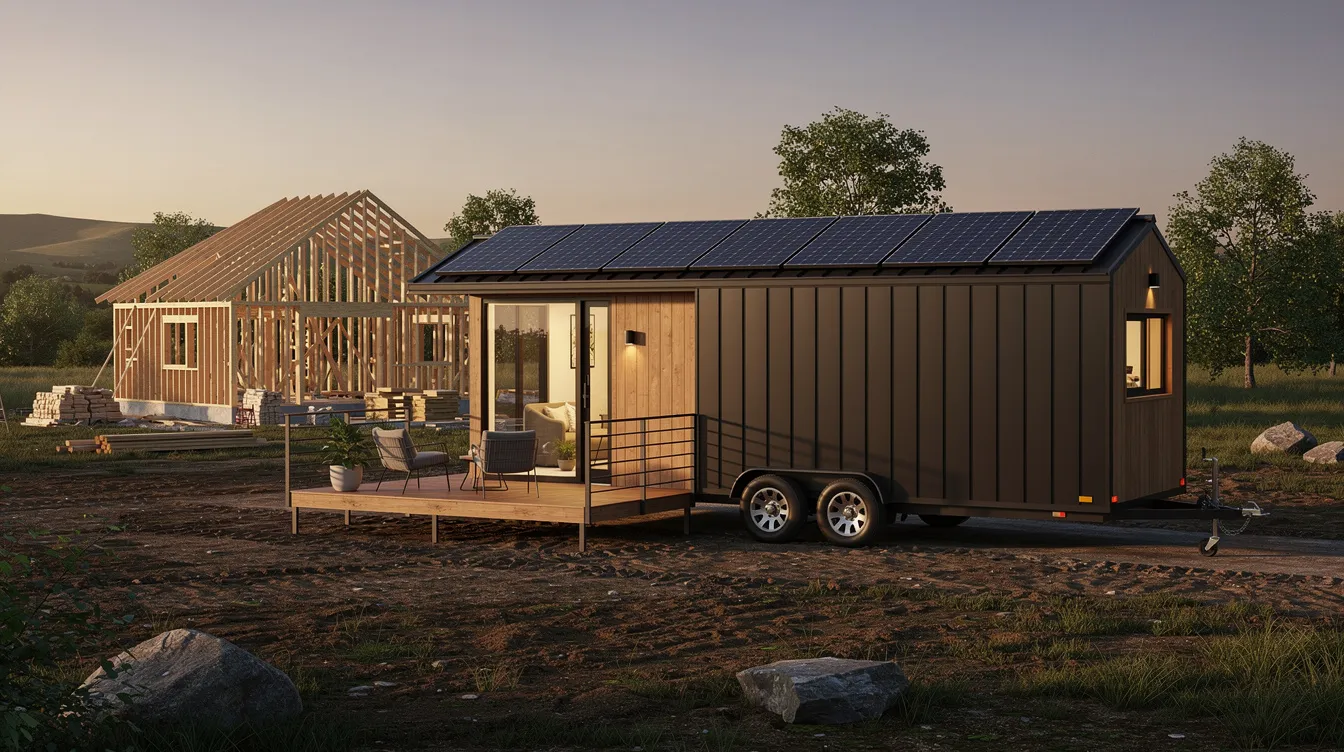
The bridge home strategy means purchasing or renting a tiny home, park model, or small cabin to live in on or near the land during the build, then repurposing it as a guest house, home office, or rental property afterward. This approach helps amortize your cost across years rather than treating temporary housing as money lost.
Browse TinyHomeMap to compare models by size, price, and off-grid features. Some jurisdictions are more comfortable permitting a factory-built park model or modular unit with known specs and certifications than approving a DIY shed conversion. A certified unit often simplifies the permit process and shortens your closing date with the planning department.
Photographs and Visuals That Should Accompany This Article
For anyone publishing this guide, here are high-quality photo ideas that support the content:
RV or travel trailer parked beside a framed house under construction - wide establishing shot
Insulated shed interior used as a micro home with kitchenette and sleeping nook
Temporary power pole with meter box on a cleared lot
Portable toilet setup positioned away from the dwelling and construction area
Nighttime shot showing motion-sensor site lighting along a gravel path
Modern tiny home on wheels on a gravel pad with off-grid features visible
All images should be bright, sharp, and realistic - not overly polished stock that misrepresents typical construction mess.
Frequently Asked Questions
How early should I apply for temporary living permits before moving onto my land?
Start talking with your planning department 2–3 months before you hope to move on site. In many U.S. counties, simple temporary use permits can be approved within 2–4 weeks, but septic or electrical approvals often add a few weeks depending on inspector schedules. Your temporary occupancy permit usually cannot be issued until the main home's building permit is active, so coordinate both applications together.
Can I live in a shed or shipping container on my land while building?
Many areas either ban or heavily regulate using bare sheds or metal shipping containers as dwellings. Usually, they must be insulated, wired to code, and permitted as an official temporary dwelling or accessory unit. Ask your planning office specifically about shed-to-studio conversions. If that is not allowed, consider a certified tiny home, mobile home, or RV - all of which typically have clearer permitting pathways.
What if my road access is limited or seasonal?
Limited access - dirt roads impassable in spring, weight-restricted bridges - can make it difficult to bring in a mobile home and to commute daily. Plan for staging areas such as parking your RV at a nearby campground during the worst months, and use smaller vehicles to reach the land when heavy equipment cannot get through. A gravel or all-weather driveway solves most year-round access problems.
Is it cheaper in the long run to buy an RV or to use rentals and hotels?
Run a simple comparison. At $1,041 per month average rent for 9 months, off-site housing totals roughly $9,400 before utilities. A used RV at $17,600 costs more up front, but you can sell it afterward or keep it as a guest space. If your build stretches past a few months - and owner-managed builds often hit 12–15 months - purchasing almost always saves you money over renting. Factor in insurance, maintenance, and the cost of site prep for an honest comparison.
Can I switch from on-site living to off-site if the build gets too stressful?
Absolutely. Mixing approaches is common. Many people live on site during early land work and rough framing, then move to a short term rental or extended stay hotel during the heaviest and noisiest construction phase. Build flexibility into your plan by avoiding rigid one-year leases. Choose month-to-month or easily extended arrangements so you can shift when on-site life becomes too noisy, dusty, or logistically difficult.
Related articles
More guides that dig deeper into the same topics.
Ready to start searching?
Browse tiny homes, plans, builders, communities and land on the interactive map.
Explore the map