Mississippi Tiny House Laws: County Rules, Off-Grid Options & Where You Can Legally Live Small
22 min read · Updated October 16, 2026
By John
Key Takeaways
Mississippi has no statewide tiny house code. Zoning, minimum square footage, and enforcement vary dramatically by county and city, meaning tiny homes are legal in Mississippi without statewide regulations blocking them outright.
Many rural counties-including Warren County and Adams County-have little or no code enforcement, while suburbs like DeSoto County often require larger minimum house sizes and may treat tiny houses like mobile homes or recreational vehicles.
Tiny houses on wheels are usually classified as RVs or park models and are generally limited to RV parks or mobile home parks, not as permanent residences on standard residential lots.
Off grid living is broadly viable in rural Mississippi, but sewer connection rules and health department wastewater regulations can restrict full off-grid setups near towns.
You can use TinyHomeMap to visually explore Mississippi listings, tiny house friendly land, communities, mobile home parks, and off-grid properties before speaking to local planning offices.
Introduction: How Mississippi Handles Tiny House Laws Today
Mississippi tiny house laws form a patchwork that can confuse even experienced builders. The state adopted baseline building codes in 2014 under Senate Bill 2378, but left zoning, minimum dwelling size requirements, and enforcement almost entirely to counties and municipalities. The result is a system where your tiny house project might sail through one county and hit a wall ten miles down the road.
There is no statewide "tiny house" statute or accessory dwelling unit law as of 2026. Instead, tiny homes get classified as dwellings, mobile homes, RVs, park models, or accessory structures depending on where you build. Mississippi's regulatory definition of a tiny house is at least 80 square feet but less than 400 square feet, but not all municipalities must allow an 80-square-foot tiny house as a permanent dwelling despite that definition.
The contrast between flexible rural counties-often with no zoning at all-and higher-growth areas like DeSoto County, Harrison County, and Jackson County that actively enforce minimum square footage and subdivision standards is stark. At TinyHomeMap, we see users regularly scout friendly areas for tiny living on our platform before drilling into local regulations, which is exactly the approach we recommend.
Statewide Framework: What Mississippi Law Actually Says (and Doesn't) About Tiny Homes
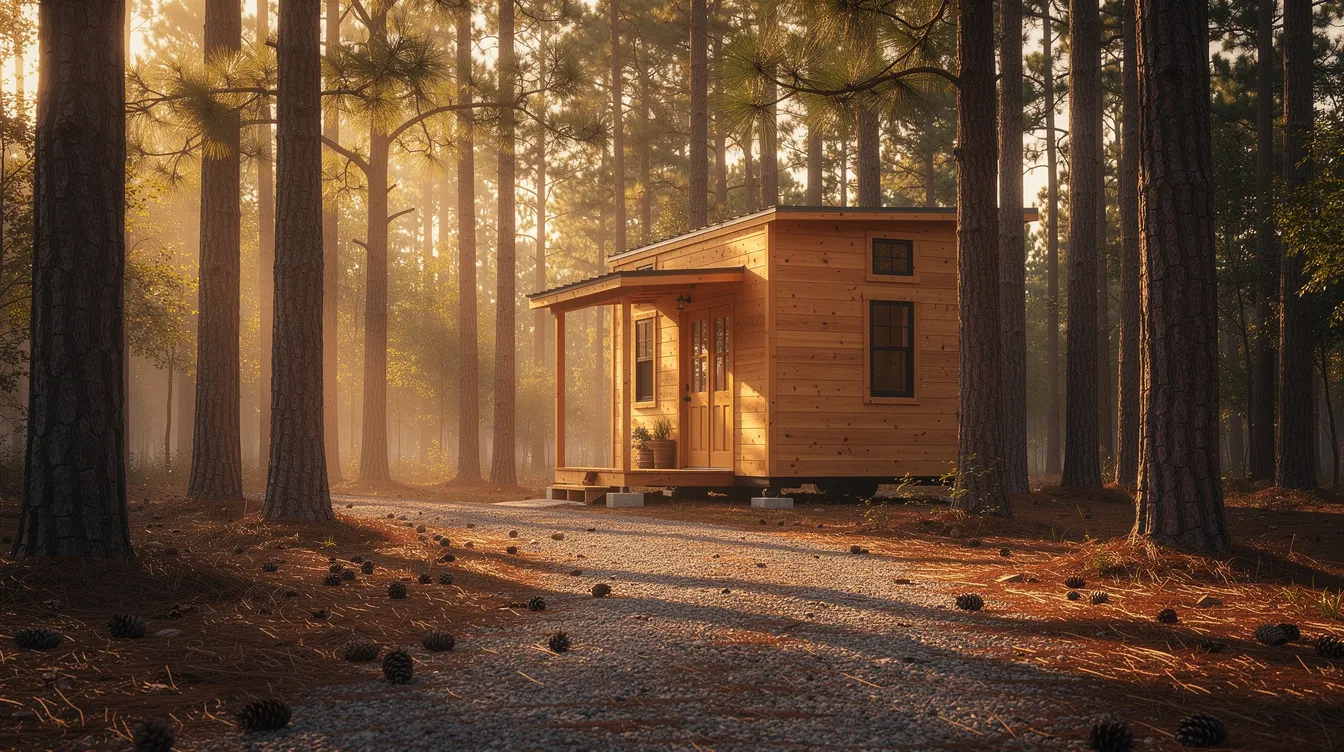
Mississippi has no uniform statewide building code for tiny homes and no minimum dwelling size set at the state level. The legislature has not adopted IRC Appendix Q statewide as of 2026, leaving that decision to individual jurisdictions.
Under Mississippi Code § 17-2-4, counties and municipalities were required in 2014 to adopt one of the last three editions of the International Residential Code (or IBC) or formally opt out within 120 days. Counties can adopt or opt out of building codes entirely. Warren County and Adams County are among those that opted out of building code enforcement. Many local authorities in Mississippi reference the International Residential Code for building standards, but which edition-and whether Appendix Q is included-varies by jurisdiction.
Zoning laws, density limits, whether park models count as dwelling units, and whether a tiny house qualifies as an accessory dwelling unit are all controlled at the city or county level. Local county and municipal ordinances determine tiny house legality and zoning, not the state capitol. As of July 1, 2026, Mississippi adopted the 2024 I-Codes for modular factory-built homes, which may gradually expand options for code-compliant small dwellings.
Defining Tiny Houses, Park Models and Mobile Homes in Mississippi
Legality hinges on how your unit is classified. Here are the key distinctions in Mississippi:
Tiny house (site-built or modular): Generally under 400 square feet, built to IRC standards or Appendix Q where a county has adopted it. Some jurisdictions in Mississippi require tiny houses on permanent foundations to meet local building codes and obtain permits. Permanent tiny homes must meet standard building codes.
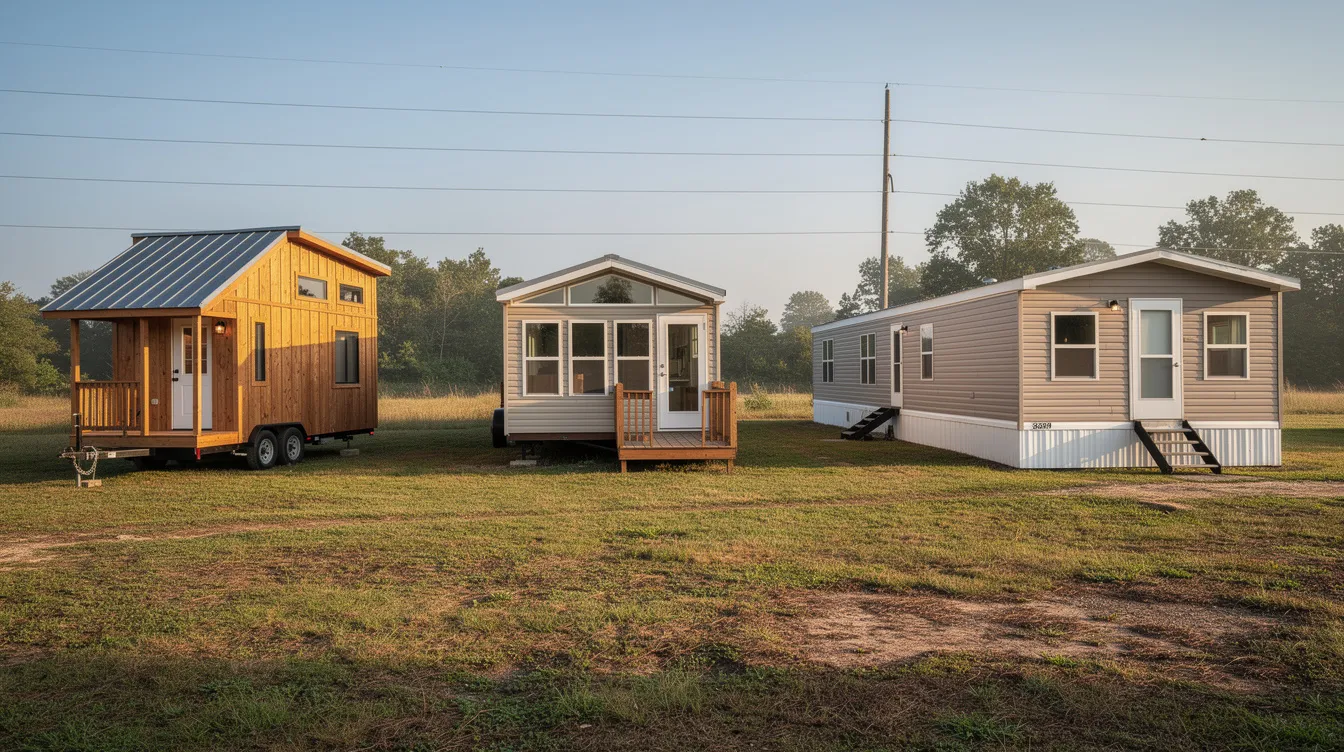
Manufactured home: Built to HUD's National Manufactured Housing Construction and Safety Standards (post–June 15, 1976). Mississippi zoning ordinances often key off this definition. These are not a tiny home under most definitions, but their zoning districts sometimes overlap.
Mobile home: In Mississippi codes, this usually means a pre–June 15, 1976 transportable unit of at least 256 square feet. Some counties still use that 256 square feet threshold as a minimum square footage benchmark for movable dwellings.
Park model: Built to ANSI A119 RV standards, around 400 square feet or less, usually treated as recreational vehicles. Park models must go into RV parks or mobile home parks unless placed on a permanent foundation with special approval.
Tiny house on wheels (THOW): THOWs are often classified as recreational vehicles in Mississippi. They can be parked in RV parks but not in residential zones in most jurisdictions.
Minimum Square Footage Rules and How They Affect Tiny Living
Minimum square footage can be set either by building codes (like the older 2012 IRC's 120 square feet habitable room rule) or by local zoning ordinances that specify minimum dwelling size per district. The difference matters enormously for tiny living.
Some Mississippi jurisdictions still enforce standards based on the 2012 International Residential Code, while others have adopted the 2018 IRC-which removes minimum room size limits and adds Appendix Q tiny home guidance. The 2018 International Residential Code includes standards for tiny homes that make lofts and reduced ceiling heights code-compliant. Still others have opted out of code adoption entirely.
Many counties in Mississippi do not impose minimum dwelling size limits, making 300–400 square feet tiny houses feasible on agricultural or unzoned land. However, minimum square footage requirements for traditional dwellings often exceed 1,000 square feet in Mississippi cities. Hinds County requires a minimum area of 256 square feet for mobile homes.
DeSoto County's suburban residential districts illustrate the challenge: the zoning ordinance requires principal residences to be at least 2,500 square feet in many residential zones, effectively shutting out a 400 square feet tiny house as the primary dwelling.
| Category | Typical Min. Size | Where It Applies |
|---|---|---|
| Mobile home benchmark | 256 sq ft | Hinds County, some rural codes |
| ADU / Tiny home | 300–400 sq ft | Agricultural zones, unzoned land |
| Panola County tiny home | 500 sq ft (heated) | Panola County local guide |
| Standard subdivision | 1,200–2,500+ sq ft | DeSoto County, suburban zones |
How the Permit and Inspection Process Works for Tiny Houses
There is no statewide ADU or tiny house permit portal in Mississippi. Permits are handled by each county or city building or zoning department. Most counties require a permit for tiny homes, and permit fees can add to the overall expense of your build.
The typical steps look like this:
Zoning check: Confirm your lot is in a district that allows your dwelling type. Permits are issued only after confirming residential zoning for the lot.
Site plan review: Submit a site plan showing setbacks from property lines, septic placement, and driveway access.
Building permit application: For foundations and structural work. Permanent tiny homes are subject to local zoning laws and permits.
Separate electrical and plumbing permits: Three permits are usually needed-building, electrical, and septic.
Final inspections: Structural, electrical, plumbing, and septic before occupancy is granted.
Active building departments in Hinds, DeSoto, Harrison, and Jackson counties typically have 30–60 day review timelines. Sparsely staffed rural counties can be more informal but sometimes slower. Warren County and Adams County, which opted out of building code enforcement, may still require septic and health approvals even without structural inspection. Tiny homes must comply with local building codes and zoning laws regardless.
Zoning Basics: Where Tiny Houses Fit in Mississippi Land-Use Codes
Standard zoning categories used across Mississippi counties include:
Agricultural (A): Often provides the best flexibility for tiny living and off grid living. Agricultural zones commonly allow mobile homes, accessory buildings, and larger setbacks on 1–3 acre parcels. Rural counties often have more lenient zoning regulations compared to urban areas regarding tiny homes.
Single-family residential (R-1, R-2): Usually enforces minimum size, setbacks, and restricts dwelling types. THOWs typically face stricter parking regulations than permanent homes in these zones. Minimum lot size and setback requirements can affect tiny house placement in Mississippi.
Manufactured housing / mobile home districts: Dedicated zones for manufactured homes, sometimes accepting park models. These are the zones where tiny houses most often fit neatly into existing frameworks.
Commercial / mixed-use: Occasionally allows live-work units but rarely targets tiny houses.
Many cities allow a tiny house as an accessory dwelling unit behind a larger primary home, but rarely as the only dwelling in standard subdivisions unless minimum square footage is met. Some mobile home parks and RV parks are beginning to welcome tiny houses and park models as a way to modernize aging parks. Mississippi has no statewide zoning laws for tiny homes, so communities in Mississippi can set their own rules regarding the placement of tiny houses and accessory dwelling units.
County Spotlight: DeSoto County Tiny House and ADU Rules
DeSoto County is a fast-growing Memphis suburb with some of the state's most defined zoning ordinances and higher minimum square footage requirements. Suburban residential zones in DeSoto County typically require 2,500 square feet or more for the main dwelling, making sub-400 square feet tiny houses challenging as a primary permanent residence in those districts.
Agricultural zones in DeSoto County tell a different story. DeSoto County requires a minimum of three acres for mobile homes in agricultural areas, with 100-foot setbacks-but these parcels are more favorable for tiny living or placing a tiny house as an accessory dwelling unit alongside a main house.
County rules usually require tiny houses on wheels to be treated as RVs, allowed only in approved RV parks or mobile home parks with current registration. They are not permitted as permanent residences in standard residential zones.
If you're inside a city like Southaven, review that city's current ordinance too. Municipal rules can layer specific regulations on top of county-wide standards.
Contact the DeSoto County Planning Department directly and request written confirmation of your lot's zoning district before committing to a purchase.
County Spotlight: Warren County, Adams County and Other "Opt-Out" Areas
Warren County and Adams County are notable for opting out of enforcing the state-adopted building codes under the 2014 requirement. This changes how tiny houses and small cabins are handled. Without an adopted code, there is no county building department running structural inspections-but "opt-out" does not mean "no rules at all."
Property owners still must obey any local zoning (if present), floodplain regulations, and Mississippi Department of Health wastewater rules. These counties require septic permits and soil evaluations just like anywhere else. What they lack is the formal code-based inspection framework that most Mississippi counties use.
This is why these areas are attractive for off grid living and tiny houses on private land: fewer formal inspections, more room for alternative construction methods, and in some unincorporated rural areas, no zoning at all. Many counties across Mississippi operate similarly in practice.
However, lenders and insurers may be cautious in non-code-enforced counties. Resale value or financing for non-permitted structures can be limited. If you plan to sell later, consider building to IRC standards voluntarily so future buyers can obtain conventional financing.

Off-Grid Living Rules: Power, Water and Wastewater for Tiny Homes
Off grid living is legal in rural Mississippi areas, but practical legality is controlled by electrical, water, and wastewater codes plus health department rules. Living off-grid in a tiny house requires satisfying applicable sanitation and utility regulations.
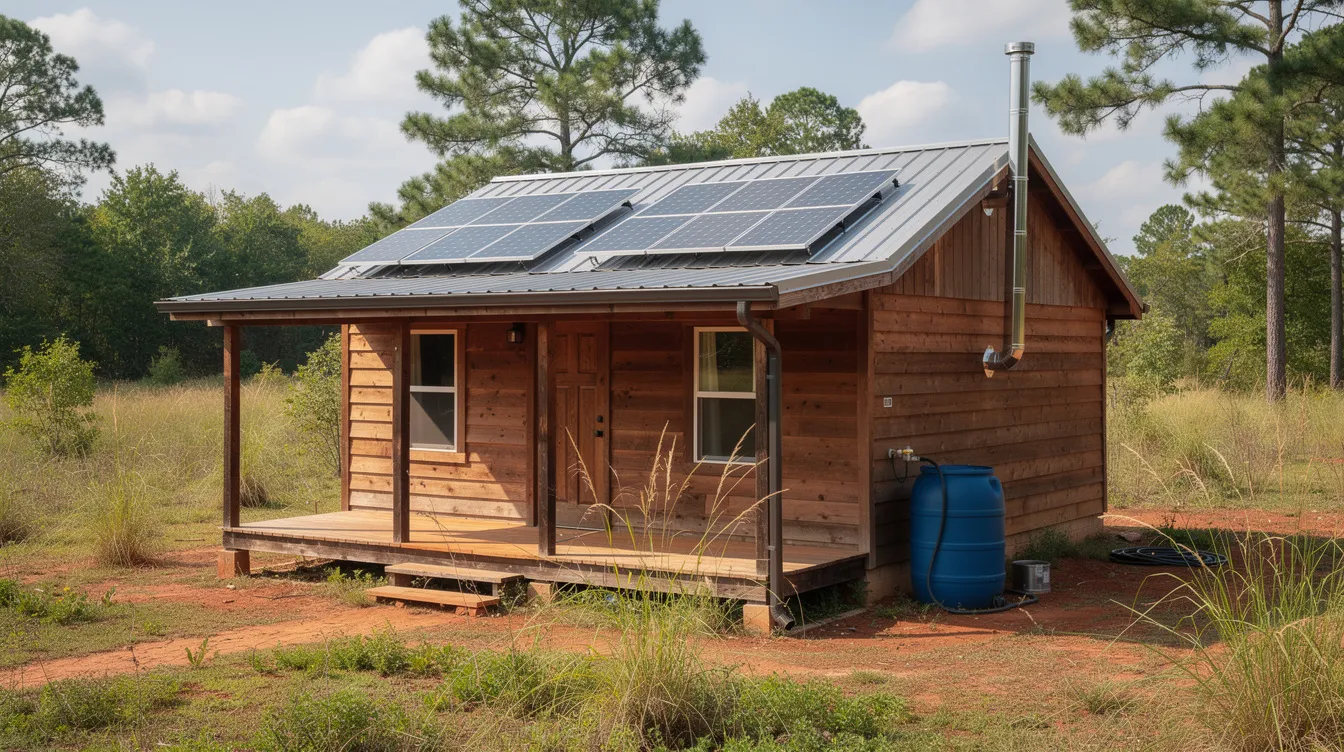
Electricity: Solar, small wind, or micro-hydro systems are allowed if they meet the National Electrical Code. Off-grid electricity systems must meet local building codes. Electrical work typically must be done by a licensed contractor. Some counties demand permits for any permanent solar installation.
Water: Mississippi has relaxed laws for off-grid water use. All water is technically owned by the state but widely available for domestic use. Wells must usually be drilled by licensed contractors. Mississippi allows rainwater harvesting without a permit for small systems, making it a practical supplement.
Wastewater: Counties can require connection to municipal sewer systems if available-typically within roughly one mile. Otherwise, a permitted septic system is mandatory, with soil tests and licensed installers. Wastewater systems for tiny houses must meet local health department regulations in Mississippi. Composting toilets and outhouses are only permitted in very remote or temporary setups with health officer approval.
Graywater: Legally treated as wastewater. Discharging sink or shower water onto the ground is prohibited without an approved treatment system, making full off-grid graywater reuse expensive and documentation-heavy.
Tiny Houses on Wheels (THOWs), RVs and Park Models
How mobile a unit is-and which certification it carries-largely determines whether a Mississippi county treats it as a dwelling unit, a park model, or a recreational vehicle.
THOWs: Full-time living in a tiny house on wheels is usually restricted to RV parks and regulated areas. Tiny houses on wheels are often treated as RVs, limiting permanent residency on standard lots. THOWs can be parked in RV parks but not in residential zones in most counties. THOWs typically face stricter parking regulations than permanent homes.
RVIA-certified park models: Can sometimes be placed in mobile home parks or seasonal resorts, but many counties forbid them as year-round primary dwellings unless converted to a permanent foundation unit under building codes. A custom park model tiny home can exceed $120,000 depending on finishes and certification.
Counties referencing Appendix Q: Some counties-for example, Madison County and Pearl River County-have explicitly referenced the 2018 IRC and Appendix Q, setting size caps of around 400 square feet and minimum ceiling heights of 6'8" for tiny dwellings.
Always verify whether your specific county treats park models separately from RVs and whether full time residence is allowed or limited to seasonal use. Local rules vary enormously, and local officials can clarify what the current regulations allow.
Mobile Homes, Manufactured Housing and Tiny House Overlap
Many Mississippi zoning ordinances were written around manufactured homes and mobile homes rather than modern tiny houses, so tiny dwellings often get shoehorned into those categories. This is not a tiny home framework-it is a manufactured housing framework that small dwellings must navigate.
Agricultural zones are most likely to allow single-wide and double-wide manufactured homes, sometimes with a minimum size of 256 square feet or simply HUD certification. A small cabin may be permitted under the same language in many Mississippi counties.
Some counties allow additional mobile homes on a parcel only with zoning board approval, limiting the number of tiny houses you can place even on large acreage. In mobile home parks, acceptance of park model tiny houses or custom THOWs depends entirely on park rules: age of units, square footage, whether skirting and tie-downs are required, and what anchor systems must be used.
In Biloxi's land development ordinance, manufactured home parks require a minimum of 3,600 square feet per space, a 10-acre minimum park area, and utility undergrounding. These specific regulations shape what kinds of tiny homes can fit neatly into existing park infrastructure.
Readers using TinyHomeMap can filter for "mobile home parks," "park models," or "land for tiny homes" to pre-screen locations where mobile-home-style zoning is already in place.
Property Taxes, Financing and Insurance Impacts
Making a tiny house legal in Mississippi almost always triggers property tax and insurance consequences that buyers need to budget for up front. Building a tiny home costs between $30,000 and $100,000 depending on size and finishes. Tiny homes on wheels typically cost around $50,000. Custom park model tiny homes can exceed $120,000. Land costs vary significantly based on location in Mississippi.
When a tiny house is permitted as a dwelling or accessory dwelling unit, the county assessor will reassess the parcel. Even a 300–400 square feet unit can raise annual taxes depending on finish level and local millage rate.
Insurance considerations:
Traditional homeowners' insurance often will not automatically cover a rental ADU or a THOW
Owners may need landlord policies, dwelling fire coverage, or specialty tiny home insurance
Coastal jurisdictions with flood and wind risk carry significantly higher premiums
Financing realities:
Lenders are usually more comfortable with permanent foundation tiny homes built to IRC
Chattel or RV loans are more common for park models and THOWs, often at higher interest rates and shorter terms
Units treated as recreational vehicles generally only qualify for personal property loans
HOAs, Design Standards and Neighborhood Resistance
Even if county zoning allows tiny houses, private covenants in subdivisions and homeowners' associations can outright ban them or impose higher minimum size and design standards. Private covenants and neighborhood rules can override county regulations on tiny homes in Mississippi.
Common HOA restrictions include:
Prohibition of detached accessory dwellings
Minimum heated square footage (often 1,800 square feet or more for any house)
Bans on mobile homes and recreational vehicles
Architectural review committee approval before building
Exterior material requirements (brick, specific roofing types)
Restrictions on fire pits, outbuildings, and setbacks from property lines
HOA covenants are private contracts that county approval does not override. Buyers must read CC&Rs and get written clarification before placing a tiny house on a lot governed by an association. When searching TinyHomeMap for Mississippi parcels, target unplatted rural land or older neighborhoods without HOAs for the smoothest path to tiny living.
Where Tiny Houses Are Already Working: Cities and Counties with Clearer Paths
While Mississippi has no statewide tiny home law, certain Mississippi counties and cities are known to be more tiny-house-friendly-or at least clearer about their expectations.
Jackson County: Requires compliance with safety and building codes for tiny homes and permits tiny homes primarily in agricultural zones. Jackson County permits small mobile-home-classified units of at least 256 square feet in specific districts.
Pearl River County: Has referenced the 2018 IRC and Appendix Q, providing a recognized framework for dwellings under 400 square feet.
Forrest County and Lamar County: Explicit allowances for sub-800 square feet homes in multiple districts, making them more accessible for the tiny home movement.
Harrison County (Gulfport, Biloxi): Open to small coastal dwellings and RV or park model resorts, but often restricts park models and recreational vehicles to seasonal or non-permanent residency. Extra hurricane and floodproofing requirements apply along the Gulf Coast.
Panola County: Publishes a specific "Tiny Houses & Shed-to-Home" guide requiring 500 square feet of heated living space, with lot sizes starting at 1 acre with public water and 1.5 acres with a well.
Many rural counties without county-wide zoning-Lowndes, Pike, Lincoln, Sunflower and others-default to municipal rules. Unincorporated land in those counties can be relatively open for tiny living if health codes are met. Most Mississippi counties do not explicitly ban small dwellings; the challenge is fitting into frameworks that were designed for larger homes.
Tiny House Communities, Mobile Home Parks and Resort-Style Villages
For many people, joining an existing tiny home community, RV park, or mobile home park is the simplest way to comply with Mississippi tiny home laws. The zoning is already worked out, utilities are connected, and the entire development operates under a single permitted framework.
Known examples include:
Longleaf Piney Resort: Offers tiny cabins near the Longleaf Trace trail in Hattiesburg-a popular option for both short-term rental and seasonal living.
Cottage Station near Gulfport: Features a playground and basketball court, catering to families and long-term residents in a planned unit developments format.
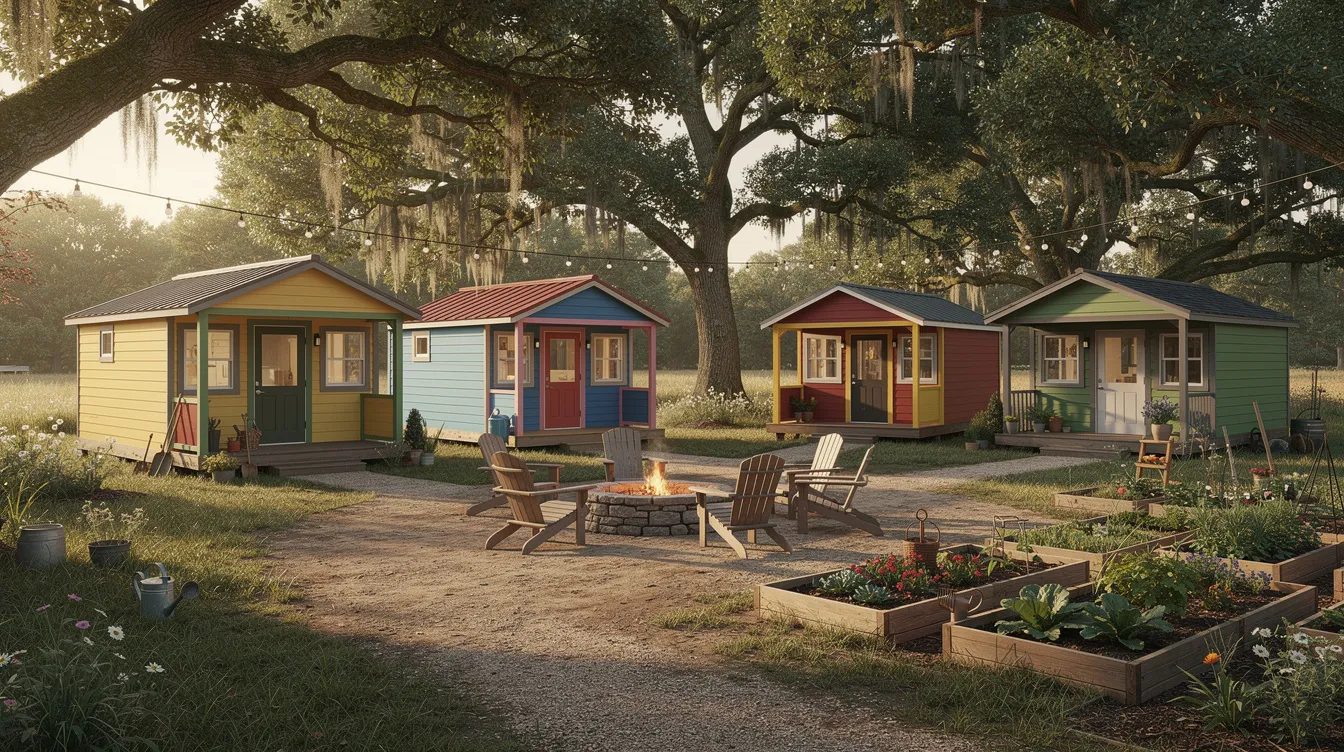
Tiny home communities in Mississippi often provide shared amenities like gardens, community buildings, and laundry facilities. These communities promote eco-friendly living and social connections. Mississippi has several tiny home communities for diverse lifestyles, from retirees to remote workers.
Typical community rules include limits on unit size (often up to 400 square feet for park models), requirements for skirting and tie-downs, utility connection fees, pet policies, and restrictions on full-time versus short-term rental use. TinyHomeMap lists many of these communities, letting users filter by "tiny house communities," "park models," or "off-grid homes."
Buying Land for Tiny Living: What to Check Before You Close
Land choice is the single biggest factor that determines whether a tiny house will be lawful, financeable, and insurable. Land costs vary significantly based on location in Mississippi-from a few thousand dollars per acre in rural areas to substantially more in developed areas near cities.
Due-diligence checklist before closing:
Confirm the zoning district and whether zoning exists at all
Check minimum square footage and number-of-dwellings-per-lot limits
Determine if sewer is "available" within one mile (which may trigger mandatory connection)
Review flood maps and hurricane exposure on the Gulf Coast
Verify access to utilities-power lines, water lines, ability to drill a well
Confirm room for a code-compliant septic system with adequate setbacks from property lines
Check for HOA covenants or deed restrictions
Ask local authorities about property values and tax implications of adding a dwelling
Prospective buyers can use TinyHomeMap to overlay tiny house listings, land sales, and communities, then cross-reference each promising parcel with county GIS and planning department information before making offers.
Common Pitfalls Mississippi Tiny Home Owners Run Into
Most delays and legal problems in Mississippi tiny house projects stem from avoidable misunderstandings about zoning, classification, and utilities. Here are the mistakes we see most often:
Assuming no county zoning equals no rules: Health department regulations, floodplain rules, and manufactured housing laws still apply even where zoning doesn't exist.
Parking a THOW behind a suburban house: Without checking RV residency limits, owners risk citations. THOWs can be parked in RV parks but not in residential zones.
Starting construction before obtaining septic or wastewater permits: This alone can halt an otherwise legal tiny house project.
Ignoring HOA covenants: County approval does not override private deed restrictions with strict rules about minimum size or dwelling types.
Building to the wrong code: Constructing an RV-standard shell when the county expects IRC compliance can make it impossible to pass inspection without costly retrofits.
Underestimating property tax and insurance increases: Even a modest tiny house can trigger reassessment.
Build a communication paper trail with local officials-emails, recorded names and dates-so you can demonstrate good-faith effort if current regulations change mid-project. Moving forward with documentation protects you.
Step-by-Step: Verifying Tiny House Rules in Your Mississippi County
Before buying a tiny house or land, work through each step in this checklist:
Identify your county and municipality. Unincorporated areas follow county rules; cities layer on their own rules.
Pull zoning maps. Most counties publish these on their GIS portals or through the zoning department.
Locate your zoning district. Read that district's use table and minimum square footage requirements.
Call or email the local zoning office. Confirm tiny house or park model treatment in writing. Ask about planned unit developments or overlay districts that might apply.
Check code versions. Document whether the county enforces the 2012 IRC, 2018 IRC, 2024 I-Codes, or has no code adopted. Ask specifically whether Appendix Q has been adopted.
Contact the health department. Ask about septic or sewer requirements, soil test timelines, and whether composting toilets or rainwater harvesting systems are permitted.
Ask about classification. If tiny houses are not named in the code, ask whether your structure will be reviewed as an accessory dwelling unit, a mobile home, an RV, or a general accessory building.
Get everything in writing. Email confirmations from local governments protect you if staff changes or interpretations shift.
This process typically takes 2–4 weeks of phone calls and emails. It is the single most important investment in your tiny home journey before spending money on land, a builder, or materials.
FAQ: Mississippi Tiny House Laws and Tiny Living
These questions cover extra practical scenarios that tiny house buyers in Mississippi often face.
Can I live full-time in a tiny house on wheels on my own land in Mississippi?
In most Mississippi counties, a tiny house on wheels is treated as an RV, meaning full-time occupancy on a standard residential lot is either prohibited or time-limited-often to 180 days. Full-time living in a tiny house on wheels is usually restricted to RV parks and regulated areas. Year-round living is more realistic in RV parks, mobile home parks, or agricultural zones where local officials have given explicit approval. Always check with your county's zoning department before assuming your own land allows it.
Are there any Mississippi counties with no minimum house size at all?
Many rural counties without zoning-such as parts of Warren County, Pike County, Lincoln County, and others-do not list a minimum square footage requirement. Many counties in Mississippi have no minimum dwelling size requirements. However, health and safety regulations (especially septic and wastewater) still apply, and local municipalities inside those counties may have their own rules. The absence of a minimum size does not mean the absence of all regulation.
Do I need a certified builder to pass inspections for a tiny house?
Mississippi law does not always require using a certified tiny home builder. However, counties that enforce the International Residential Code and require multiple inspections strongly favor permitted, professionally stamped plans. Using experienced builders-especially for park models and off grid systems-helps win approvals and makes insurance significantly easier to obtain. For electrical and plumbing work, most counties require licensed contractors regardless.
Can I rent out my tiny house on Airbnb in Mississippi?
Long-term rentals are often allowed if the unit is a legal dwelling or accessory dwelling unit. Short-term rentals are a different story: some cities-especially tourist and college towns-regulate them with permits, occupancy taxes, or caps on the number of rental nights. Owners must check local STR ordinances and HOA rules before listing. Coastal areas around Harrison County and Biloxi are particularly active in regulating short-term vacation rentals.
What is the easiest legal path into tiny living in Mississippi if I'm starting from scratch?
Two approaches stand out. First, place a tiny house or park model in an existing tiny home community, RV park, or mobile home park that already welcomes such units-the zoning and utilities are pre-approved. Second, purchase rural agricultural or unzoned land where county staff informally confirm that a small dwelling with a permitted septic system will be acceptable. Use TinyHomeMap to locate and compare both types of options before committing, and always verify current regulations with local authorities before closing on land or a unit.
Related articles
More guides that dig deeper into the same topics.
Ready to start searching?
Browse tiny homes, plans, builders, communities and land on the interactive map.
Explore the map