Tiny Home Lots: How to Find, Evaluate, and Choose Land for Your Tiny House
15 min read · Updated October 12, 2026
By John
What Are Tiny Home Lots?
A tiny home lot is any parcel of land-or leased pad within a community-where you can legally place or build a tiny house, whether it sits on wheels, a permanent foundation, or qualifies as a park model. The focus here is on the land itself: its zoning, infrastructure, and legal capacity to host a small dwelling, not on the home's design or builder. This guide covers the main types of tiny home lots, the features that separate a great lot from a headache, and how to choose one that fits your budget and lifestyle. You can browse tiny-home-friendly land and community listings worldwide on TinyHomeMap to see what's currently available.
Types of Tiny Home Lots
Tiny home lots come in several formats, from fully serviced pads in planned communities to raw rural parcels where you start from scratch. The type you choose determines your upfront costs, available utilities, community rules, and how quickly you can move in.
Lots in Dedicated Tiny Home Communities
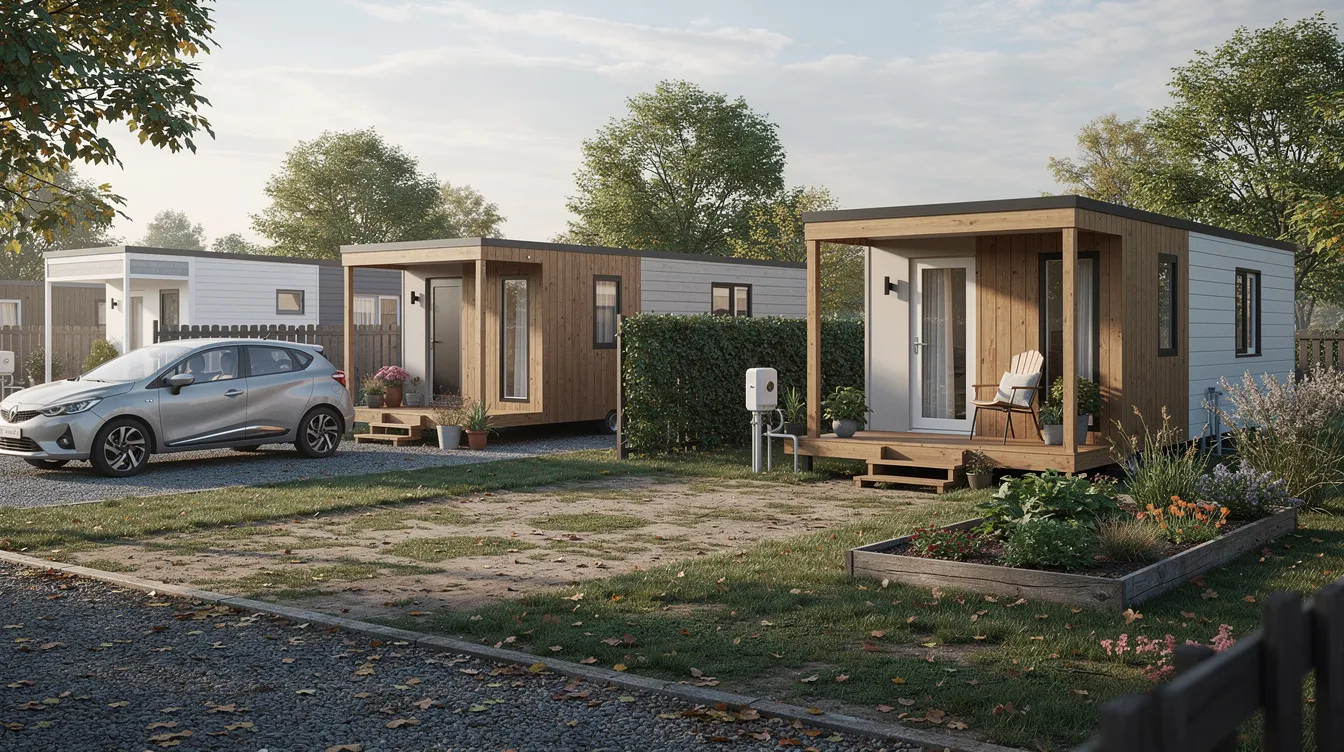
Purpose-built tiny home villages and cottage communities have been launching since around 2015 in states like Colorado, Oregon, North Carolina, and Texas. Tiny home communities can be found in urban and rural areas, and many are designed for sustainable living. These lots typically offer cleared pads with utility hookups and shared amenities like gardens and laundry, plus governance through an HOA or community agreement.
Pricing models split into two camps: deeded lots you purchase outright (then pay ongoing HOA fees), and pad leases where you rent the space monthly. Tiny home communities often range from 100 to 400 square feet per dwelling, and lot leases vary widely. At Acony Bell Tiny Home Village in Mills River, NC, THOW lot leases run $500–$700/month with full hookups, hiking trails, and community gardens. At the higher end, Liberty Tiny Village in Aubrey, Texas-a 55+ managed community-charges roughly $950/month covering water, sewer, trash, internet, and landscaping, though not electricity or propane. LuxTiny Lakeside in Arizona offers lots averaging over 3,500 square feet for $379–$479/month including basic utilities.
The best part of a dedicated community is reduced permitting hassle: the site is already approved for tiny homes. Some communities require specific certifications (RVIA, NOAH), and certified tiny homes hold value better than uncertified builds. The trade-off is less autonomy-HOA rules may limit exterior modifications, restrict guests, or cap the number of structures per lot.
Rural Private Land Parcels for Tiny Homes
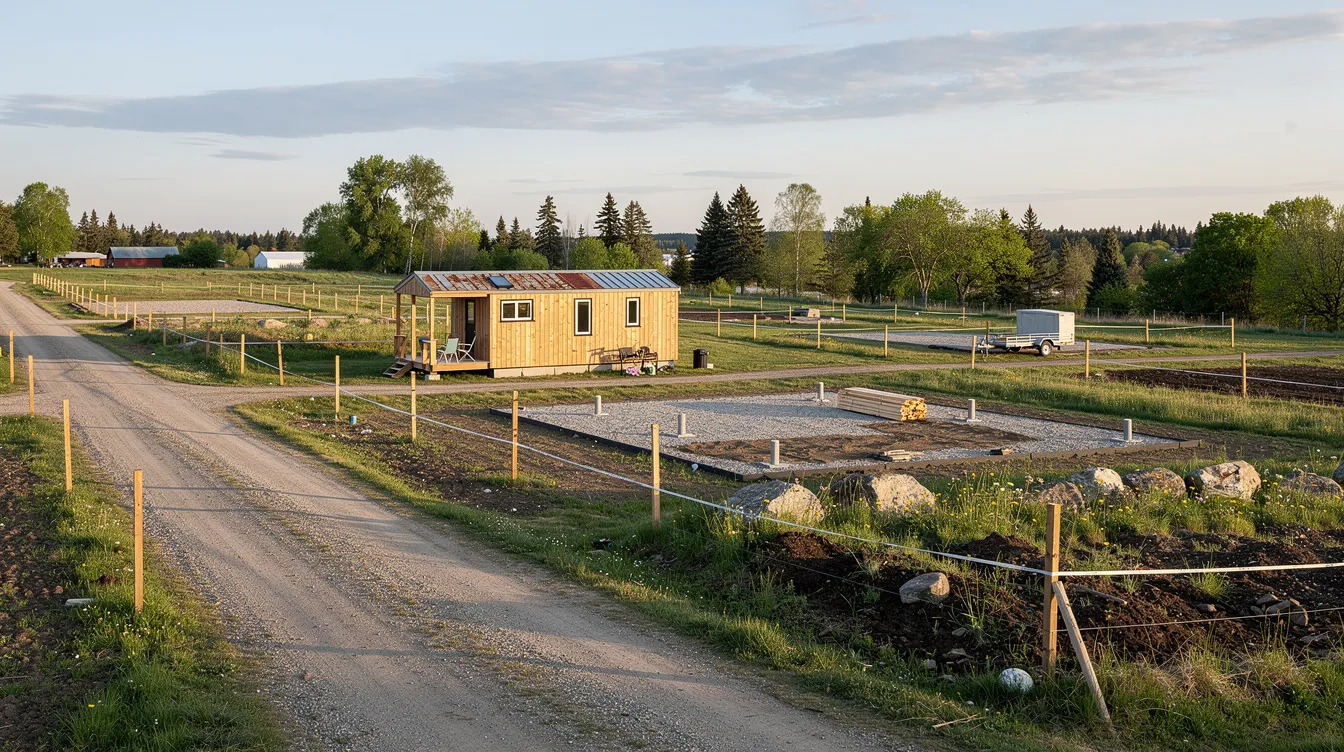
Buying a private rural parcel-say 1–5+ acres in Tennessee, Texas, or Montana-offers privacy, room for a garden, and the freedom to create a property that reflects your vision. Zoning in agricultural or rural residential districts tends to be more flexible, and you may have space for multiple units or off-grid setups. Tiny homes can be built for urban infill or rural properties, but rural land often requires the most upfront work.
The biggest expense on raw land is utility installation. A combined well and septic system typically runs $15,000 to $60,000, depending on well depth, soil composition, and the type of septic required. Standard septic in cooperative soil might cost $3,500–$8,500, while engineered or mound systems in poor-drainage areas can reach tens of thousands. Add driveway grading, power line extension, and permits, and developing raw land can be costly if utility access is limited-total site prep can exceed $40,000 on challenging terrain.
Pros: plenty of room, solitude, lower land price per acre, and potential for off-grid power and water. Cons: longer timelines, more research into zoning and permits, environmental constraints (flood zones, steep slopes), and unpredictable costs driven by topography and distance from services.
Tiny-Home-Friendly RV Parks and Campgrounds
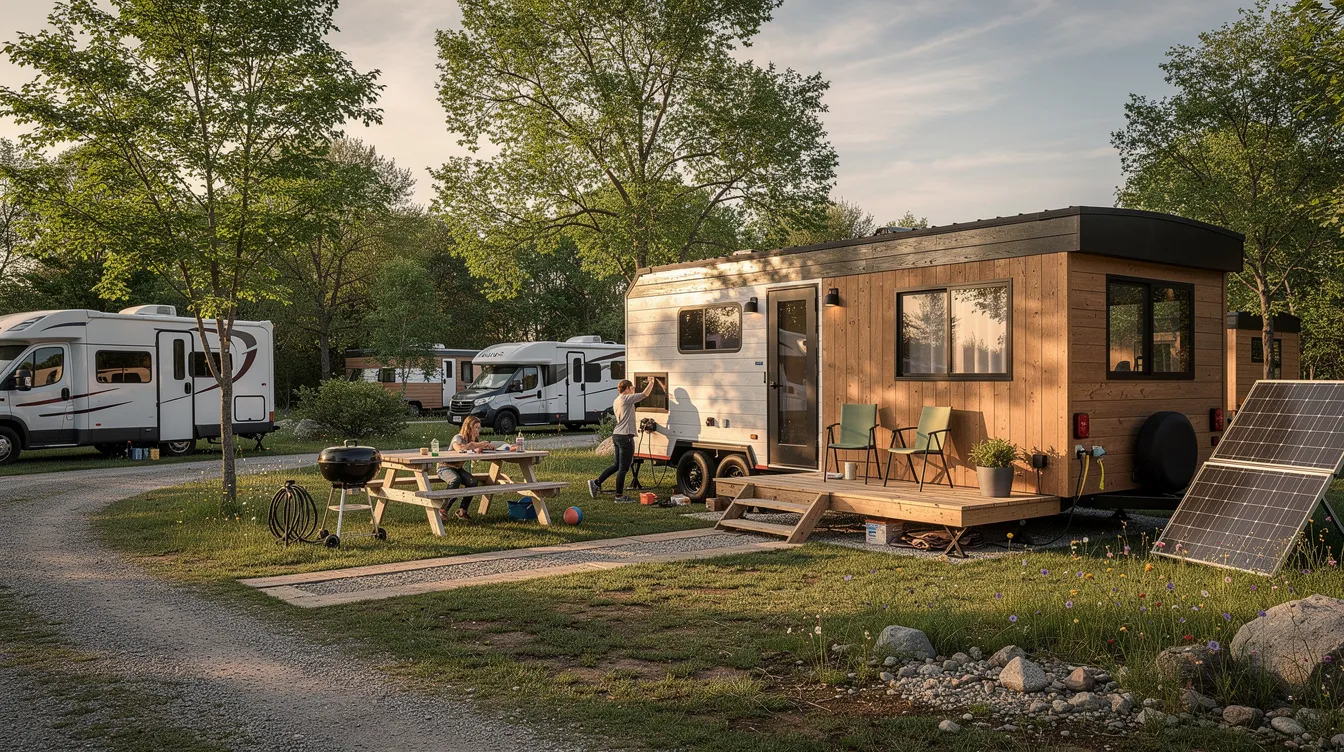
Many RV parks and campgrounds now explicitly allow long-term placement of tiny homes on wheels, treating them similarly to park model RVs. Tiny homes on wheels are often classified as RVs, and these lots usually come with hookups for water, sewer, and electric power. You lease the pad; the landowner retains the land.
Monthly pad rent in these settings varies by location and amenities. In Texas, tiny-home-friendly parks often charge $400–$800/month. La Bohemia Villas in Cumby, TX offers RVIA-certified THOW lots at $595/month including electric, water, and septic service. Community rules may limit permanent additions like enclosed porches or large storage structures, and since you don't own the land, you miss out on property appreciation.
These lots are often the most affordable entry point-ideal for seasonal living, testing the tiny lifestyle before committing to a land purchase, or anyone who values mobility over equity.
Backyard ADU and Infill Lots
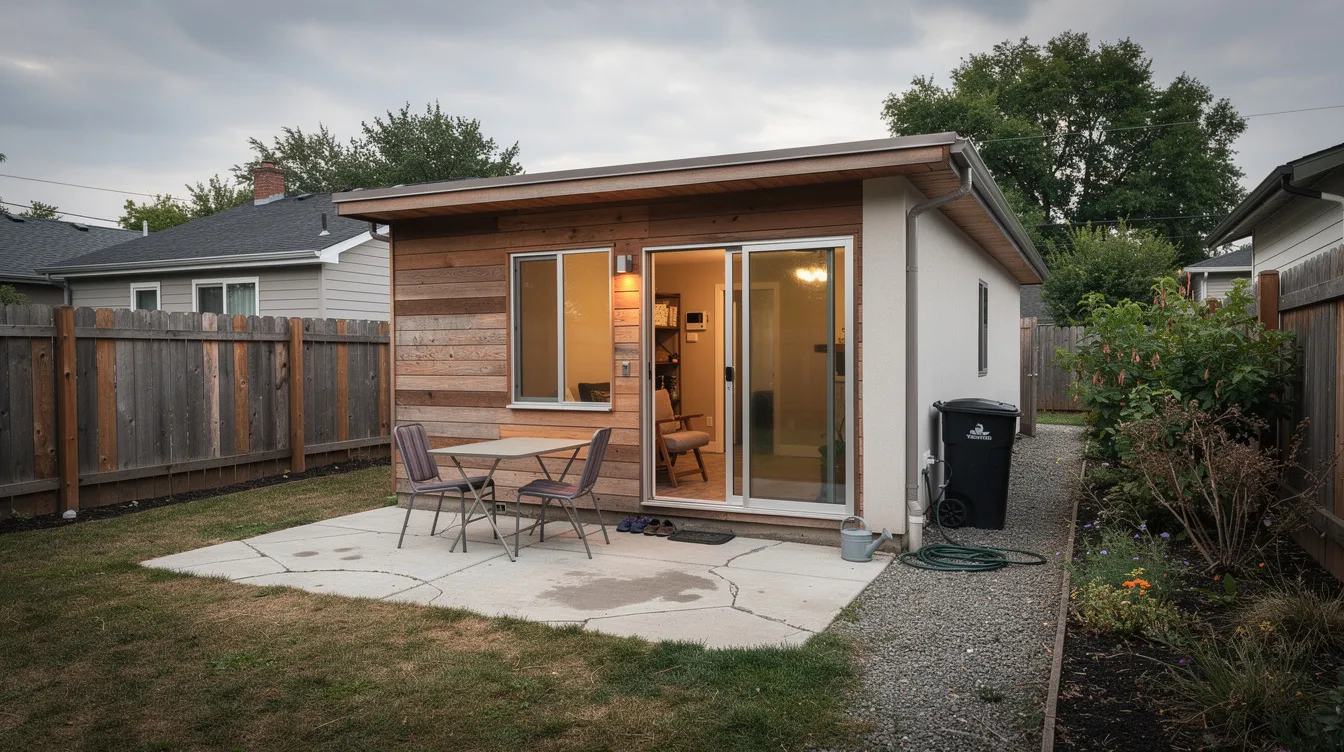
Since about 2017, cities like Los Angeles, Portland, Austin, and San Diego have reformed zoning to allow accessory dwelling units on many residential parcels. Accessory dwelling units are permitted in many urban areas, and the "lot" in this scenario is typically a city or suburban property where a tiny home functions as a secondary dwelling behind an existing house.
Key constraints include square foot caps on the ADU, setback requirements dictating the distance buildings must be from property lines and roads, height limits, and rules on whether movable tiny homes qualify or only stick-built and manufactured homes on foundation are accepted. California and Oregon now require local governments to allow ADUs under certain objective standards, and California saw roughly 23,000 new ADU permits in 2023-over seven times the number in 2018.
ADU lots are popular for rental income, housing family members, or aging-in-place solutions. Local building codes govern plumbing, electrical, and fire safety for tiny homes in these settings, so working with local planning staff early is essential.
Off-Grid and Remote Tiny Home Lots
Remote parcels marketed for cabins or tiny homes-often in mountain, desert, or forest regions-attract buyers seeking self-sufficiency and minimal neighbors. These lots typically lack public utilities but may accommodate solar power, rainwater catchment, composting toilets, and alternative septic solutions.
Environmental and site conditions can significantly impact building costs and feasibility. Road building, material transport, and fire-access requirements add to expenses. However, property taxes tend to be lower, land is more affordable per acre, and you enjoy maximum privacy. The catch: many jurisdictions still require flush toilets, approved septic systems, and grid electricity for full occupancy certificates. Septic systems must be approved by local health departments in many areas, and some places strictly regulate composting toilets and greywater systems. Research local code thoroughly before you buy.
What to Look For in Tiny Home Lots
The right lot is more than acreage and price. Zoning, utilities, topography, and community rules collectively determine whether a tiny home is actually allowed, comfortable, and financially sensible on a given site. Here are the concrete attributes to evaluate when comparing listings.
Zoning, Codes, and Legal Use
This is the single most important check. Zoning regulations for tiny homes vary by municipality, and you must verify whether local zoning explicitly allows your type of tiny home-foundation-based, THOW, park model, or manufactured home. Foundation-based tiny houses fall under residential building codes (often the IRC, including Appendix Q for dwellings under 400 square feet). Tiny homes on wheels range from 100 to 400 square feet and are typically regulated as RVs or park models under NFPA 1192 or ANSI A119.5 standards. Standard tiny homes comply with ANSI housing standards.
Approximately a dozen U.S. states have adopted IRC Appendix Q-including California, Florida, Washington, New York, New Mexico, and Utah-but adoption doesn't guarantee local enforcement or acceptance. Zoning regulations usually specify setbacks and minimum lot sizes for new structures, and minimum dwelling size regulations can prevent the approval of tiny homes in some districts. Zoning districts also restrict the number of dwelling units allowed per parcel.
Even lots marketed as "tiny-home-friendly" should be cross-checked with county or city planning departments. Local ordinances determine land use for tiny homes on wheels or permanent foundations, and finding the right land for a tiny home involves multiple legal factors. Always ask specifically about allowed dwelling types, minimum square footage, and whether your home needs specific certifications.
Utilities and Infrastructure
Utilities are often the largest variable cost when evaluating a tiny home lot. The main connections to assess:
Electricity - grid connection vs. solar-ready site
Water - municipal hookup, well, or cistern
Sewage - sewer line, septic system, or composting toilet allowance
Internet - critical for remote workers; may be unavailable or costly in rural locations
On raw land, a combined well and septic installation averages around $25,000 for moderately cooperative sites, with difficult soil or deep wells pushing costs toward $60,000. Local ordinances typically require permanent utility hookups for tiny homes in many jurisdictions. Developing raw land can be costly if utility access is limited-budget for hookup permissions, easements, and construction.
Community lots and RV parks often provide turnkey full hookups, simplifying the process. But don't overlook access: driveway condition, year-round road maintenance, snow plowing, and distance to paved highways all affect livability and cost.
Lot Size, Shape, and Topography
Physical characteristics matter more for tiny homes than many buyers assume. A lot needs room for the home's footprint, safe turn radius for trailers (if using a THOW), outdoor living space like a porch or patio, solar orientation for panels, setback compliance, and drainage.
Imagine a flat 1/8-acre lagoon-front lot in Florida: it offers water views, minimal build prep, and easy access, but likely carries high flood risk, hurricane exposure, and steep insurance costs. Flood zone status affects insurance and building permit availability. Now contrast that with a 5-acre wooded parcel in Tennessee: plenty of privacy and land for a garden, but you'll need clearing, a driveway, utility runs, and possibly permits for steep terrain.
Soil matters too-percolation tests determine septic viability, and frost depth dictates foundation design. Orientation affects sun exposure for solar, shade from trees, prevailing wind (which influences insulation and cooling needs), and noise from roads or neighboring properties.
Community Rules, HOAs, and Restrictions
In dedicated tiny home villages, subdivisions, or resort-style parks, CC&Rs (Covenants, Conditions & Restrictions) often dictate exterior appearance, materials, roof pitch, color, and landscaping. Many restrict short-term rentals, limit guests, regulate pets, and cap the number of structures per lot. HOAs may prohibit tiny homes or impose additional restrictions beyond what zoning requires.
Factor HOA dues and amenity access (clubhouse, pool, shared garden) into your overall cost of living. A lot lease that looks affordable may exclude electricity, common area maintenance, or internet. Read every lease or HOA agreement carefully before signing-look for clauses on annual rent escalation, modification restrictions, and age or community access rules.
Costs Beyond the Listing Price
The sale price or monthly pad rent is just the starting point. A realistic budget includes:
Land purchase or pad lease deposit/reservation fee
Closing costs and survey
Site prep - grading, clearing, driveway, foundation pad
Utility installation - well, septic, power extension, internet
Permitting and impact fees
Ongoing costs - property taxes, HOA dues, utilities, insurance, maintenance
In community settings, lot leases range from roughly $300–$400/month in rural or low-amenity areas to $1,000+/month in urban or resort-style developments. On rural raw land, site preparation alone-grading, access road, power line extension, foundation-can run $40,000 or more. Some lots marketed for tiny homes already include improvements (septic, power pole, concrete pad), which can offset a higher purchase price and dramatically shorten your timeline. Most finished tiny homes cost between $50,000 and $120,000, while fully custom or luxury tiny homes can exceed $120,000, and a DIY tiny home shell can start around $30,000-so your total project budget needs to account for both land and home.
How to Choose the Right Tiny Home Lot
Once you understand the lot types and key features, narrow your options based on a few personal criteria:
Lifestyle and Location - Decide whether you want a social community setting with shared amenities, a remote retreat surrounded by nature, or an urban backyard ADU close to the city. Consider commute times, climate, access to services, and whether you picture yourself sipping morning coffee on a porch overlooking a beach or a mountain meadow.
Tiny Home Type (Wheels vs. Foundation) - The lot must match the structure. Some parcels only allow permanent foundations; others accept only RV-certified units or park models. Park model homes include full kitchens and spacious baths, making them popular for community lots. Tiny homes on wheels often require RV loans for financing, which affects your financing options.
Budget and Total Project Cost - Set a combined budget for land, site work, and the tiny home itself. Allocate contingency funds-at least 10–15%-for permits or unexpected infrastructure costs. Private land can be used if zoning allows tiny homes, but developing it adds layers of expense.
Timeline to Move-In - A community or RV park lot where a tiny house on wheels can be placed quickly contrasts sharply with a raw land project that may take months to fully permit and service. If you're interested in living tiny soon, a move-in-ready lot changes the calculus.
Long-Term Plans - Think about resale value, renting the tiny home to guests, adding a second one bedroom cabin, or eventually building a larger house on the same lot. Choose parcels that keep these options open. Investors should confirm rental policies early.
Regulatory Comfort Level - If navigating complex building codes sounds daunting, established tiny home communities or jurisdictions with clear tiny home ordinances offer a simpler path. Zoning laws can restrict the placement of tiny homes only to specific areas, and buyers who prefer certainty should look for locations where the legal framework is already in place.
Using TinyHomeMap to Explore Tiny Home Lots
TinyHomeMap is a global directory where you can browse tiny-home-friendly land listings and communities on an interactive map. Land and lot listings are submitted by owners, agents, and community operators, then reviewed before publication for quality and basic accuracy.
Searching for Tiny-Home-Friendly Land and Communities
Start by exploring the world map and zooming into your target regions-California mountain towns, Florida coastal zones, rural parcels in Texas, or locations across Europe. Filter by price range, acreage, and allowed home types (THOW, park model, cabin, or foundation-based). You can compare very different options side by side: a half-acre serviced community lot located near an urban center vs. a large undeveloped rural parcel with room to plant a garden and build multiple structures. The visual format helps you quickly identify which areas have the density of listings that match your needs.
Evaluating Individual Lot Listings on the Platform
A strong lot listing should contain clear photos of terrain and access, utility details, zoning notes, and any community rules provided by the seller. Look for phrases like "tiny home ready," "RV hookups installed," or "ADU allowed"-but always verify directly with local authorities. Tiny home communities may have specific zoning regulations that differ from what a listing implies.
TinyHomeMap functions as a directory only: it does not broker or guarantee transactions. Buyers should conduct their own due diligence-schedule a site tour, get soil tests and surveys, confirm zoning with the county, and work with local professionals (real estate agents, attorneys, builders) before any purchase.
Frequently Asked Questions About Tiny Home Lots
These FAQs address the most common concerns about legality, costs, and practical steps to securing a tiny home lot.
Where can I legally put a tiny home in the United States?
Legal options include dedicated tiny home communities, certain RV parks, rural parcels with compatible zoning, and ADU-friendly city lots. However, zoning regulations vary by county and city, so there's no single national rule. States like California, Florida, Oregon, and Texas have made significant progress with ADU mandates and building code reforms, but local enforcement differs. Always check with the specific county or municipal planning department and look for jurisdictions that have adopted tiny house or ADU ordinances.
How much does it cost to prepare a tiny home lot with utilities?
On an already-serviced community lot, setup costs may be modest-sometimes just a pad-leveling fee or security deposit. Bringing power, septic, and a driveway to raw rural land can easily run $25,000–$40,000 or more. Soil conditions, distance to existing utility lines, and local permit fees significantly affect the final price. A well alone can cost $6,000–$16,000 depending on depth, and engineered septic systems in poor soil can add tens of thousands.
Can I live full-time in a tiny house on wheels on my own land?
Some counties allow full-time residence in a THOW if it meets certain standards-typically RVIA certification or compliance with NFPA/ANSI models-while others limit occupancy duration or classify the home as temporary. When speaking to local officials, ask specifically about "recreational vehicles as primary dwellings," accessory dwelling allowances, and minimum dwelling size requirements. Private land can be used if zoning allows tiny homes, but "allows" is the operative word.
Do I need a foundation for my tiny home lot?
Foundation requirements depend on whether the tiny home is treated as a standard residential building, manufactured home, or RV/park model under local rules. Some communities and jurisdictions require permanent foundations for year-round residency, while others are set up for wheeled units on leveled pads or concrete runners. Setback requirements dictate the distance buildings must be from property lines and roads regardless of foundation type, so confirm both structure classification and placement rules.
Can I rent out my tiny home if it sits on a tiny home lot?
The ability to sell or rent-short-term or long-term-depends on zoning, HOA rules, and any community or park policies tied to the lot. Some tiny home communities explicitly prohibit Airbnb-style rentals; others welcome them. If you're an investor or plan to generate rental income, check these rules up front and look for listings that explicitly mention allowing rentals or having on-site rental management. Zoning districts may also restrict the number of dwelling units allowed per parcel, which affects multi-unit rental strategies.
Start Exploring Tiny Home Lots
Choosing the right tiny home lot means balancing legality, utilities, budget, and the lifestyle you want to live. Before you start contacting sellers, make a short personal checklist: your must-have location, the type of tiny home you plan to place, the infrastructure level you need, and your cost ceiling. Whether you're drawn to an affordable community pad, a spacious rural acre, or a perfect urban ADU site, explore tiny home lots, land, and community listings on TinyHomeMap's global map to find real-world options that match your criteria.
Related articles
More guides that dig deeper into the same topics.
- Legal & ZoningTiny Home Zoning Laws: Regional Differences
- Legal & ZoningZoning Laws and Tiny Homes: What You Need to Know
- Land & LocationChoosing Land for Your Tiny Home: Location Guide
- LocationDiscovering Tiny Homes Godby Rd: A New Community in College Park
- LocationTiny Homes for Sale in Hendersonville, NC (and Nearby)
Ready to start searching?
Browse tiny homes, plans, builders, communities and land on the interactive map.
Explore the map