Top Tiny House Builders AZ: Innovative Solutions for Your Space Needs
23 min read · Updated October 11, 2026
By John
Start Here: Looking for Tiny House Builders in AZ Right Now?
If you're searching for tiny house builders in AZ, you're entering one of the most active tiny home markets in the country. Arizona has a fast-growing tiny house scene stretching from Phoenix and Tucson in the desert lowlands to Flagstaff, Prescott, and the Verde Valley in the high country, with builders offering everything from mobile tiny homes on wheels to permanent foundation casitas.
This guide isn't a sales page for any single builder. It's an informational resource designed to help you understand the types of tiny house builders operating across Arizona, compare your options honestly, avoid the most common and costly mistakes, and use tools like TinyHomeMap to discover builders and projects on an interactive map. Whether you're drawn to tiny living for affordability, freedom, or a minimalist lifestyle, the right builder match depends on your goals, your location, and your willingness to understand Arizona's unique rules and climate.
Why Arizona Is a Hotspot for Tiny House Builders
Arizona attracts tiny home builders for reasons that go well beyond sunny weather. The state's combination of open land, booming metro areas, and a culture that embraces the outdoors has created strong demand for compact, efficient housing across nearly every region. Arizona has an active tiny-home market catering to various types of projects, from snowbird retreats to full-time residences.
Year-round building season. Mild winters across most of the state mean fewer weather delays and a construction process that keeps moving, unlike builders on the west coast or in northern climates who lose months to snow and rain.
Snowbird and seasonal living demand. High interest in seasonal residences around Phoenix, Tucson, Yuma, and Lake Havasu keeps park model and RV-style tiny homes in constant demand.
Growing ADU and backyard tiny demand. Metro Phoenix and Tucson homeowners are building backyard casitas and in-law suites at an increasing rate, driven by affordable housing needs, rental income potential, and multigenerational family living.
Off-grid and rural tiny living. Areas near Sedona, Prescott, Payson, and Northern Arizona offer land and natural settings that draw people seeking off-grid cabin life, sustainable living, and a smaller footprint.
This environment has attracted a diverse mix of park model manufacturers, custom tiny house builders, and ADU contractors - each serving a different slice of the tiny living community.
Types of Tiny House Builders in Arizona
The phrase "tiny house builders AZ" covers several distinct categories. Understanding which type of builder fits your project is the single most important step before you contact anyone or spend a dollar.
Park Model & RV‑Style Tiny Home Manufacturers
Park model tiny homes are factory-built units, often 399 to 400 square feet, constructed to ANSI or RV codes rather than traditional residential building standards. They can be placed in RV resorts or campgrounds, making them a great option for snowbirds, retirees near Mesa and Apache Junction, and seasonal residents at resort parks in Yuma and Lake Havasu City. Park model homes are designed for Arizona's diverse climate and use less energy than traditional houses, offering lower ongoing costs due to their smaller footprint. Park models also provide access to Arizona's outdoor adventures, including proximity to national parks and desert recreation.
Typical offerings from Arizona-based park model manufacturers include standardized floor plans, quick build times (often 60 to 150 days), and nationwide delivery. Models like the Cheyenne (ranging from 340 to 399 sq. ft.) and the Denali Extreme (400 sq. ft. with high ceilings) show the range available. Cavco Industries, headquartered in the Phoenix area, is one of the larger factory and park model producers operating in Arizona.
Pros:
Faster delivery and predictable pricing
Designed for RV parks, resort communities, and seasonal use
Lower entry cost compared to custom builds
Cons:
Less customization than a fully custom tiny home
Zoning restrictions may limit where you can place them as a primary residence
Tiny homes on wheels are treated like RVs in Arizona, which affects year-round living legality
Custom Tiny House Builders on Wheels (THOWs)
Custom tiny homes on trailers - typically 160 to 350 square feet - are built for mobility and tailored layouts. Arizona allows tiny homes on wheels, and THOWs are treated like RVs, which means they can be parked in RV parks but may face different approval requirements compared to permanent structures. A tiny home on wheels requires RVIA certification for easier financing in Arizona.
Arizona-specific considerations for THOWs include towing on long desert highways, high-performance insulation for hot summers and cool high-desert nights, and solar and off-grid systems for rural sites. Heating and cooling systems must be sized correctly to handle Arizona's temperatures - a poorly sized mini-split in a Phoenix summer can make a tiny space unbearable.
Arizona-based custom tiny builders typically offer a collaborative design process with more creativity and customization, though at a higher per-square-foot cost. Tiny home builders offer customized design services that let you shape the layout around your life. Common customization options include:
Loft vs. single-level bedroom configurations
Off-grid packages (solar arrays, composting toilets, water storage)
Desert-resistant exterior materials like stucco or fiber cement siding
Shaded outdoor decks and awning systems for desert living
Uncharted Tiny Homes in Phoenix, for example, builds RVIA-certified THOWs from roughly 200 to 650 sq. ft., emphasizing desert-optimized designs with UV protection and insulation suited for Arizona. Starting prices for their mid-size units (around 270 sq. ft.) begin near $80,000.

ADU, Casita, and Backyard Tiny Home Contractors
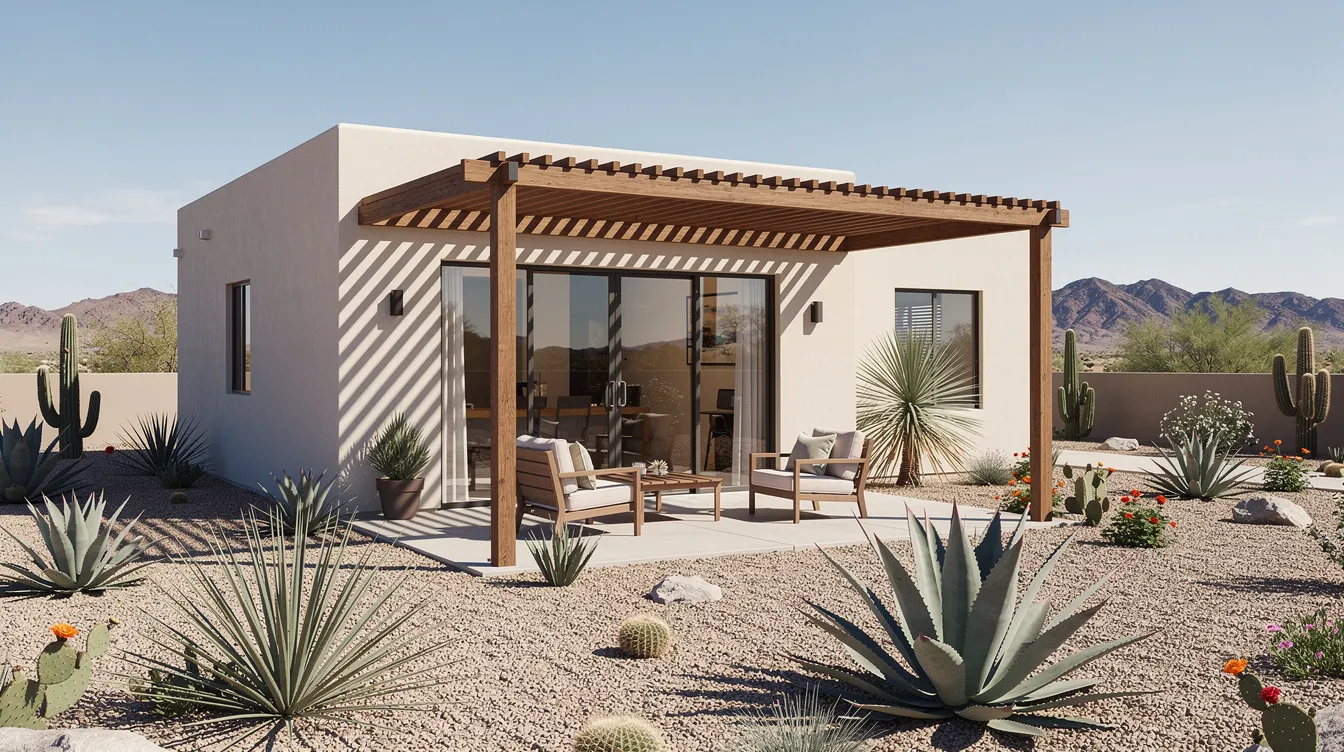
Many "tiny house builders in AZ" are actually ADU and casita specialists working on foundations in city backyards. Accessory dwelling units can serve as in-law suites or guest quarters, and detached ADUs can provide rental income opportunities. ADUs can enhance property value and functionality, making them appealing to homeowners across Phoenix, Scottsdale, Tempe, Tucson, and Flagstaff.
Typical projects include in-law suites, guest casitas, backyard rental units, and detached home offices or studios ranging from 200 to 800 square feet. ADUs can be designed to integrate seamlessly with existing homes - local builders often match rooflines, stucco color, and windows to the main house for HOA acceptance. Building an ADU can be a stress-free process with proper guidance from an experienced contractor.
Tasks these contractors often handle include:
Permitting and zoning review for your specific city or county
Utility tie-ins (water, sewer, electric)
Design to match the main house aesthetics
Inspections and certificate of occupancy
Permit acquisition is often handled by builders as part of their services
Tiny Homes of Tucson specializes in custom ADUs and garage conversions, with deep knowledge of Pima County permitting processes.
How to Evaluate Tiny House Builders in AZ
Arizona's regulations and extreme climate make builder selection more consequential than in many other states. The wrong builder can mean a home that doesn't meet code, overheats in summer, or can't be legally occupied. Here's where to focus your evaluation.
Licensing, Codes, and Compliance in Arizona
Many permanent tiny home builds in Arizona must involve an Arizona-licensed contractor. Tiny home builders should have knowledge of local zoning and permit processes, and compliance with building codes and local regulations is essential for tiny home approvals.
Permanent tiny homes must follow IRC Appendix Q building codes where adopted. Pima and Coconino counties have clear tiny home standards, while other counties may require extra permits for tiny homes. Arizona counties have distinct rules for tiny houses on permanent foundations versus mobile chassis.
Verify the following before signing anything:
Arizona Registrar of Contractors license status - confirm the builder is licensed, bonded, and insured for the type of work involved.
Experience pulling permits in your specific city or county - a builder who works in Maricopa County may not know Coconino County's snow load requirements.
Understanding of RV vs. residential code pathways - tiny homes on wheels may have different approval requirements compared to permanent structures.
Proper insurance - Arizona's HB 2868 (effective September 12, 2026) adds requirements that installers of mobile and manufactured homes carry liability insurance sufficient to cover replacement cost of the home.
Transparency in cost and contractor reputation are crucial when hiring a builder. Construction quality and materials should be inspected before hiring builders for tiny homes.
Experience With Arizona Climate and Desert Conditions
Arizona's extreme summer heat necessitates energy-efficient designs and systems. A builder without desert experience may deliver a home that looks beautiful but performs terribly in 115°F Phoenix summers or freezing Flagstaff winters.
High-performance insulation is crucial for tiny homes in Arizona's climate. Closed-cell spray foam or high R-value rigid insulation handles both the searing heat of low-desert summers and the large temperature swings in high-elevation areas like Prescott and Show Low.
Properly designed roofs are necessary to withstand the desert sun in Arizona. Reflective metal roofing reduces heat gain and handles monsoon rains. Builders using reflective roofing and window overhangs have documented interior ambient temperature reductions of 15–20°F compared to standard builds in Tucson summers.
Ventilation and HVAC sizing for small spaces matters enormously. Well-placed windows for cross-ventilation, ceiling fans, and correctly sized mini-splits are essential.
Energy-efficient windows and shading help reduce cooling costs in Arizona. Double-pane, low-E coated windows oriented with overhangs and eaves can dramatically cut energy use. A Phoenix couple who built a 350 sq. ft. foundation tiny home with solar and insulation upgrades reported electricity bills dropping roughly 70% compared to a standard build.
Water storage, catchment, and septic considerations are critical for rural sites in Cochise, Yavapai, or Coconino Counties. Shared well agreements for utilities are common in rural Arizona, and septic installation alone typically runs $5,000 to $12,000.
Ask prospective builders: What insulation R-values do you use? What roofing material do you recommend for my location? How do you size HVAC for small spaces in summer? What exterior materials do you use, and how do they hold up against UV and monsoon exposure?
Portfolio, Reviews, and Past Projects Across Arizona
The best AZ tiny house builders can show finished projects in various Arizona settings - an urban backyard in Tempe, an RV resort near Mesa, an off-grid cabin near Show Low, or a foundation casita in Tucson.
Look for:
Photos and videos of completed tiny homes in similar climates and zoning contexts to your plan
Evidence of permits and inspections for permanent builds
Customer feedback that specifically mentions communication, staying on schedule, and handling all the paperwork
Variety across models and settings - a builder with only one style may struggle to adapt to your vision
Use independent platforms like TinyHomeMap to cross-check a builder's presence and completed work, rather than relying solely on the builder's own website. Seeing real projects in your target area is far more valuable than renderings.
Pricing, Timelines, and Contracts
Arizona tiny home costs vary significantly by type, finish level, and land conditions. A complete, itemized price quote is essential when considering tiny home builders.
Park models and standard THOWs built in Arizona factories generally start around $60,000 to $80,000, with professionally built THOWs averaging $60,000 to $100,000 depending on size and features.
Custom THOWs with off-grid packages and higher-end finishes push higher - Tiny Treasure Homes in Show Low starts around $60,000–$65,000 for their units.
Foundation ADUs and casitas in metro areas typically range from $80,000 to $120,000 or higher once you account for site prep, permits, and utility hookups.
Off-grid infrastructure (solar, battery systems, water storage, septic) can add $8,000 to $20,000 depending on capacity.
Understand what's included and excluded in any builder quote: transport, site prep, utility hookups, and permit fees are common exclusions that surprise buyers. Utilities and off-grid capabilities should be clearly defined with the builder.
Realistic build and delivery timelines in Arizona:
Factory-built park models: approximately 60 to 150 days. United Tiny Homes in the Phoenix metro reports roughly 120-day delivery timelines.
Custom THOWs: several months for design, sourcing, and build.
Foundation ADUs and casitas: 4 to 9 months when you factor in permitting and inspections, particularly in cities like Phoenix or Tucson where backlogs can occur.
A fixed-price contract or clearly defined allowances protects you from cost surprises. Ensure responsibilities for permits and inspections are clearly assigned in writing - including who handles delivery, final hookups, and the walk-through. Financing options vary by build type, so ask builders early about what they or their partners offer.
Popular Tiny House Styles Built in Arizona
Arizona's landscape and climate diversity - from Sonoran Desert floor to Ponderosa pine forests - means builders here produce a wide range of styles. Use this section as inspiration and context for what's commonly available.
Modern Desert Tiny Homes
Clean-lined, modern designs with large windows, shade structures, and stucco or metal exteriors are the signature tiny home style in Phoenix and Tucson neighborhoods. These homes are built to handle intense sun and heat while creating beautiful, efficient living space.
Typical features include shaded patios and integrated outdoor living areas, reflective roofing, low-water landscaping (xeriscaping), and layouts that maximize cross-breezes to reduce cooling loads. Eaves and trellises provide solar shading, while double-pane low-E windows keep heat out. The result is a home that uses less energy and looks completely at home in Arizona's desert environment.
Cabin‑Style Tiny Houses for Northern Arizona
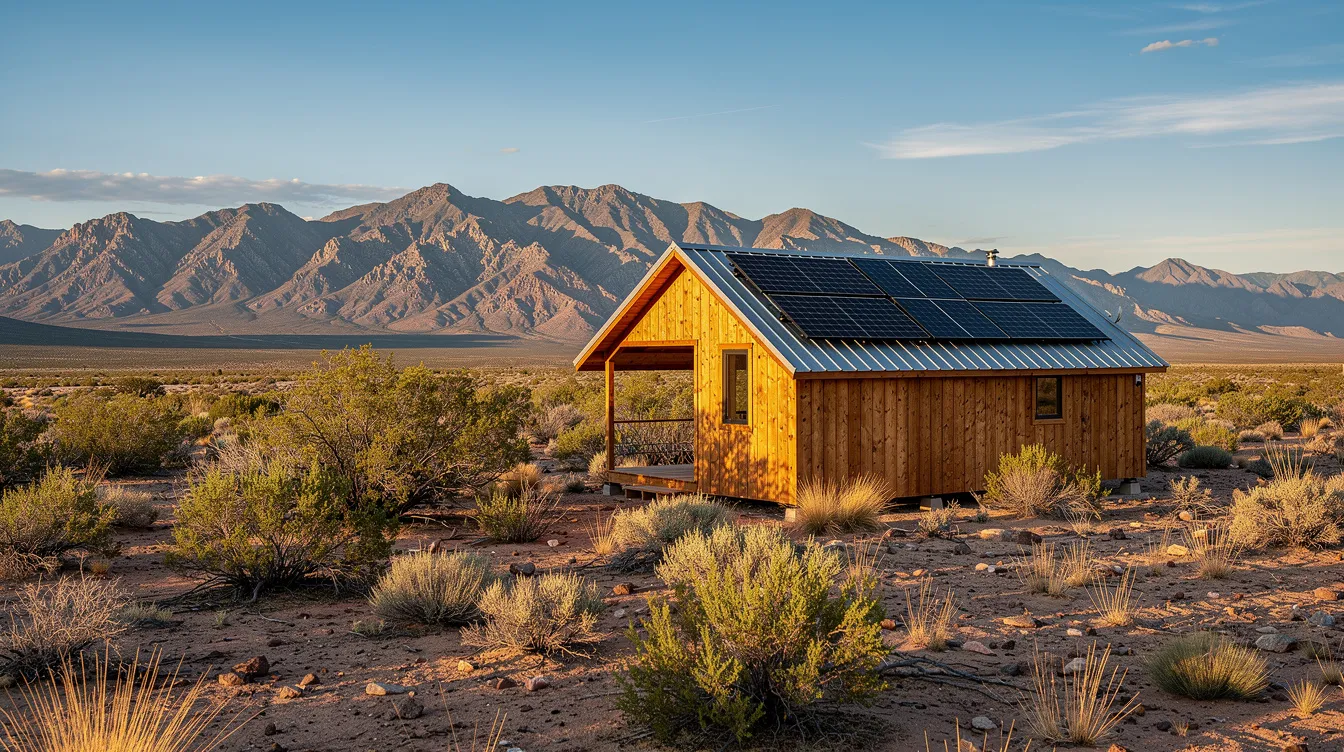
Cabin-inspired tiny homes are popular in Flagstaff, Prescott, Payson, Show Low, and Williams for forest or mountain settings. These are built with a different set of priorities than desert models: steep pitched roofs to shed snow, wood or rustic siding with stone accents, wood stoves or high-efficiency heating systems, and extra insulation for winter nights when temperatures can drop well below freezing.
Coconino County tolerates various tiny house forms - RV/travel trailers, park models, manufactured homes, modular homes, and site-built tiny houses - but builders must account for snow, wind, and seismic load standards at higher elevations. Some AZ builders specialize in park model cabins used for weekend getaways or short-term rentals in these cooler regions. LuxTiny in Lakeside combines tiny home building with community development focused on higher-elevation ecovillage living in the White Mountains.
Backyard Casitas and Guest Suites
Casita-style tiny homes built on foundations behind primary houses are thriving in metro areas like Phoenix, Scottsdale, Chandler, and Oro Valley. Arizona's HB 2720 (2024) requires municipalities with populations over 75,000 to allow at least one attached and one detached ADU per single-family lot, dramatically expanding where these can be built.
Common layouts include studio with kitchenette, one-bedroom with full bath, and home office with separate entrance. Local builders often match rooflines, stucco color, and windows to the main house for HOA acceptance and neighborhood harmony. Tiny homes built on permanent foundations are permitted in zones allowing detached single-family dwellings, making these a straightforward path for homeowners who want to add housing to their property.
Off‑Grid and Eco‑Focused Tiny Homes
Some Arizona builders focus specifically on off-grid systems for rural parcels near places like Sedona, Bisbee, and Kingman. These builds appeal to people who are passionate about sustainable living, freedom from utility grids, and a deeper connection to the land.
Typical features include:
Solar power systems with battery backup
Water tanks and rainwater catchment
Composting toilets
Propane appliances
Shaded outdoor kitchens
Off-grid packages for tiny homes may include solar arrays and composting toilets, but these builds must still consider local county rules and access for inspections or emergency vehicles. External placement rules for tiny homes vary significantly by Arizona municipality, so research before you commit to a remote parcel.
Using TinyHomeMap to Find and Compare Tiny House Builders in AZ
TinyHomeMap is an independent global directory that includes Arizona tiny house builders, communities, and listings. It's a discovery and research tool - not a broker or builder - designed to help you visualize your options on a real map before making contact.
Search Tiny House Builders on an Interactive Arizona Map
Users can zoom into Arizona on TinyHomeMap and filter for "Builders / Manufacturers" to see options near Phoenix, Tucson, Flagstaff, and other cities. A typical builder listing includes a short description, location, website link, and the types of tiny homes they offer (THOWs, park models, ADUs, and more). TinyHomeMap does not sell homes or handle payments - it connects you directly with the builders and resources you find.
Explore Real Tiny Homes Built in Arizona
Filter by "Tiny homes for sale," "Rentals," or "Off-grid homes" within Arizona to see actual units and park models installed across the state. Seeing completed homes helps evaluate which builders align with your style - cabin, modern, casita, or off-grid. Use filters for price, size (e.g., under 400 sq. ft.), and features like loft, solar, or wheelchair-friendly layouts to narrow your options and find inspiration for your dream tiny home.
Find Tiny Home Communities and Tiny‑Friendly Land in Arizona
Beyond builders, TinyHomeMap also lists tiny-friendly parks, communities, and land opportunities in Arizona. Some Arizona builders partner with specific communities or RV parks, and users can cross-reference those locations on the map. Lot rents in Arizona tiny home communities typically range from roughly $300 to $900 per month depending on location and amenities. Pairing a builder with a compatible community or parcel is crucial, especially in counties with stricter rules.
Key Steps to Starting a Tiny House Build in Arizona
While every builder has its own process, Arizona projects generally follow a predictable path from idea to move-in. Understanding the whole process upfront helps you plan your budget, timeline, and expectations.
Step 1: Clarify Your Tiny Home Goals and Location
Before contacting any builder, decide what type of tiny home fits your life:
A mobile THOW for travel and RV parks
A park model for a long-term site in an RV resort or tiny home community
A foundation ADU or casita in a city backyard
An off-grid cabin on rural land
This choice determines which type of AZ builder to contact and which zoning rules apply to your project. Tiny homes in Arizona can be categorized as recreational vehicles or accessory dwelling units, and the distinction shapes everything from your budget to your legal pathway.
Step 2: Check Local Zoning and Rules Before You Sign
Contact the local planning or zoning office in your specific city or county - City of Phoenix, Pima County, Coconino County, or wherever you plan to build or park - before committing to a builder or floor plan. Zoning laws in Arizona vary depending on the city or county, and Arizona zoning regulations may require specific compliance with local ordinances for tiny homes.
Key questions to ask:
Are tiny houses on wheels allowed as dwellings, or only as RVs?
What minimum square footage or foundation requirements apply? (Tiny homes are typically 400 sq. ft. or less under most AZ definitions.)
Are ADUs or casitas permitted on my lot, and under what conditions?
What setback, parking, or design-matching rules exist?
Some AZ counties are significantly more tiny-friendly than others, so early research saves time and money. Tiny homes in Arizona must conform to local market demand and characteristics for successful projects.
Step 3: Shortlist and Interview Arizona Tiny House Builders
Use multiple sources - TinyHomeMap, web search, local tiny house groups - to create a shortlist of AZ builders who serve your area and project type. Interview topics should include:
Experience with similar projects in your city or county
Licensing and insurance for Arizona work
Standard build specs (insulation, HVAC, materials) for Arizona climate
Warranty terms and after-sale support
How they handle permitting and all the paperwork involved
Financing options available through their business or partners
Compare at least two to three detailed quotes. Look for complete, itemized pricing rather than vague estimates.
Step 4: Design, Contract, and Permitting
After choosing a builder, most AZ projects move into:
Design and layout selection or custom design work - this is where creativity and your vision come together
Formal contract with payment schedule, estimated completion date, and clearly defined scope
Permitting (for ADUs and permanent tiny houses) or park/community approval for park models and RV-style units
Ensure responsibilities for permits and inspections are clearly assigned in writing. Permit acquisition is often handled by builders as part of their services, but confirm this upfront so nothing falls through the cracks.
Step 5: Build, Delivery, and Set‑Up in Arizona
The build typically happens in a factory, workshop, or on-site depending on the project type. Expect regular check-ins and progress updates from a committed team.
Arizona-specific logistics to plan for:
Transport permits and towing for park models and THOWs on Arizona highways - weight, width, and overhang must comply with state highway codes
Crane or staging considerations for tight urban backyards in metro Phoenix or Tucson
Hooking up utilities in desert or rural environments, including well water, septic, and solar connections
The final steps include inspection, certificate of occupancy (for permanent builds), and a walk-through before final payment. Don't release the last payment until you've verified everything matches the contract and your expectations.
Common Mistakes People Make With Tiny House Builders in AZ
Avoiding these pitfalls can save months of delay and thousands in unexpected costs. These are the mistakes that trip up Arizona tiny home buyers most often:
Choosing a builder before checking city or county rules on tiny homes or ADUs - the wrong build type for your zone can mean starting over entirely.
Underestimating cooling and shade needs in desert climates, leading to uncomfortable interiors and sky-high energy bills.
Not budgeting for site work and utility hookups on rocky or rural Arizona land - foundation work, grading, septic, and utility tap-ins add real cost.
Assuming a THOW can be used as a permanent house everywhere in Arizona without restrictions - THOWs are treated like RVs, and permanent use depends on local zoning.
Focusing only on low upfront price instead of code compliance, insulation quality, high quality materials, and long-term durability - cheap builds in the Arizona desert degrade fast.
Skipping contract details - vague agreements around delivery, site prep, permit fees, and inspection responsibilities lead to disputes and cost overruns.
Where Tiny House Builders Are Active Across Arizona
Coverage isn't uniform across the state. Some regions have significantly more builders and communities than others, and understanding the landscape helps you set realistic expectations.
Phoenix Metro Area
Phoenix, Mesa, Chandler, Scottsdale, and Glendale have the strongest demand for backyard ADUs, casitas, and park models in nearby RV resorts. Many Arizona tiny builders are headquartered or have show models around the Phoenix metro - Uncharted Tiny Homes has a showroom in north Phoenix, and United Tiny Homes operates out of Goodyear. This is where the ADU boom driven by HB 2720 is most active, and homeowners here have the widest selection of builders to choose from.
Tucson and Southern Arizona
Tucson, Oro Valley, and surrounding communities see demand for both casitas and off-grid-adjacent tiny homes in the desert outskirts. RV parks and seasonal communities along the I-10 corridor and near the Mexico border welcome park models and THOWs, serving the snowbird community drawn to southern Arizona's relaxing winters, star-gazing, and desert hiking. Tiny Homes of Tucson focuses specifically on this region's permitting landscape and ADU demand.
Northern and High‑Country Arizona
Tiny and park model cabins serve as vacation homes or full-time residences near Flagstaff, Prescott, Payson, Show Low, and Pinetop-Lakeside. Harsher winter conditions and snow loads directly affect construction methods and builder selection - not every Arizona builder has experience with freeze-thaw cycles and high-elevation building requirements. Tiny Treasure Homes in Show Low and LuxTiny in Lakeside are among the builders who know this territory well. TinyHomeMap users can browse cabins and off-grid projects in these cooler regions to find builders with proven high-country experience.
Frequently Asked Questions About Tiny House Builders in AZ
These are the questions people ask most often before contacting builders or starting a tiny house project in Arizona.
How much does it cost to build a tiny house in Arizona?
Costs depend heavily on the type of build. Basic park models and factory-built THOWs generally start in the $60,000 to $80,000 range. Custom THOWs with off-grid options and higher-end finishes typically run $80,000 to $100,000 or more. Backyard ADUs and casitas on foundations in metro areas usually cost $80,000 to $120,000 or higher once permits, site work, and utility connections are factored in. Land costs, distance from utilities, finish level, and your specific budget all affect the final number. Off-grid infrastructure (solar, water, septic) can add $8,000 to $20,000.
Can I legally live in a tiny house full‑time in Arizona?
Legality varies by city and county, and by whether the home is on wheels, a park model, or on a permanent foundation. Arizona allows tiny homes on wheels in RV parks, but using a THOW as a permanent primary residence is more restricted. Municipalities tend to allow ADUs and small homes on foundations more readily. Pima County defines a tiny house as a single-family dwelling of max 400 sq. ft. and permits foundation tiny homes in any zone allowing detached single-family dwellings. Regulations change over time, so contact your local planning department for the most current details.
Do I need land before I contact a tiny house builder in AZ?
Having land first provides zoning clarity, easier permitting, and lets the builder tailor the design to your specific site. However, many people start the design conversation while still shopping for property. Some Arizona park model and THOW builders work closely with RV parks and tiny communities where you can place your new home without buying land. Use TinyHomeMap to explore both land listings and tiny home communities while talking to builders - pairing the right builder with the right location is one of the most important parts of the process.
How long does it take to get a tiny home from an Arizona builder?
Factory-built park models and standard THOWs typically take several weeks to a few months, with some builders like United Tiny Homes delivering within approximately 120 days. Highly custom tiny builds take longer due to design, material sourcing, and the construction process itself. ADUs and casitas on foundations should plan for 4 to 9 months when you add permitting and inspection timelines in cities like Phoenix or Tucson. Written schedules and clear communication about how delays are handled are essential parts of any contract.
How can TinyHomeMap help me choose the right AZ tiny house builder?
TinyHomeMap offers a visual map of Arizona builders, communities, and listings in one place. You can compare styles, sizes, and locations before contacting anyone, and find inspiration from existing Arizona tiny homes and park models already on the ground. It's an independent directory - not a builder or broker - so you contact builders and sellers directly. Use it to cross-reference builder claims, discover communities near your target area, and forward your tiny living journey with better information.
Ready to Explore Tiny House Builders in Arizona?
Arizona offers a wide range of tiny house builder options, but success depends on matching the right builder to your location, project type, and local rules. The difference between a fun, efficient tiny home living experience and a frustrating one often comes down to the homework you do before signing a contract.
To move forward with confidence, clarify your project type - THOW, park model, ADU, or off-grid cabin. Check local zoning in your Arizona city or county before committing to any plan. Then use TinyHomeMap to discover and compare builders, communities, and real tiny homes across Arizona. Open the map, zoom into Arizona, and start bookmarking the builders and listings that match your vision. Your dream tiny home in AZ starts with knowing what's out there.
Related articles
More guides that dig deeper into the same topics.
Ready to start searching?
Browse tiny homes, plans, builders, communities and land on the interactive map.
Explore the map