Communities
Tiny Home Villages for the Unhoused: Models That Work
7 min read · Updated December 19, 2025
By John
From Seattle to Austin, tiny-home villages are housing people faster and cheaper than shelters. Here is what makes them work.
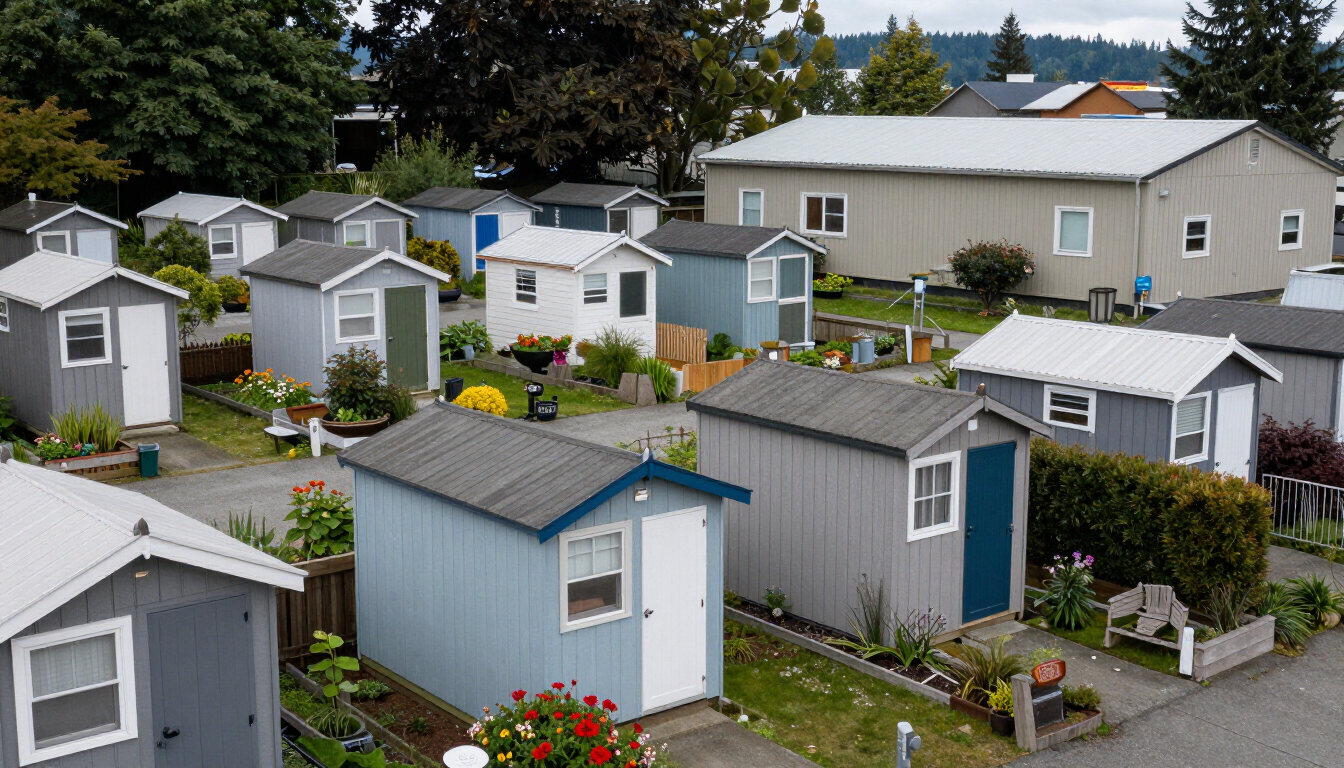
Why tiny homes suit transitional housing
A tiny home gives an unhoused person something no shelter can: a lockable door of their own, in a building that is not shared with strangers at night. That dignity and security are prerequisites for stability — employment, health, reconnecting with family. Villages can be built in weeks for a fraction of the cost of a traditional shelter bed, which is why cities from Seattle to Austin have adopted the model.
The hard parts
Siting is the recurring obstacle — neighbors resist, and zoning rarely allows it by right. Successful projects secure land through city partnerships, faith communities, or private donors and negotiate a temporary-use permit. Utilities are usually shared and minimal (heat, light, power; communal bathrooms). Funding blends city budgets, grants and private donations. None of it is easy, but the per-unit cost is a fraction of permanent supportive housing.
What the broader movement can learn
These villages prove that small, well-designed dwellings can house people at scale and speed — a lesson for the mainstream tiny-home movement too. The same community-building principles (clear rules, shared facilities, phased growth) apply whether the residents are formerly unhoused or downsizing retirees. Browse communities & land to see both market-rate and mission-driven projects.
Related articles
More guides that dig deeper into the same topics.
Ready to start searching?
Browse tiny homes, plans, builders, communities and land on the interactive map.
Explore the map