Off-Grid Tiny House for Sale: How to Find the Right One on TinyHomeMap
17 min read · Updated October 11, 2026
By John
Off-Grid Tiny Houses for Sale: What You'll Find Here
This page is your starting point for finding an off-grid tiny house for sale anywhere in the world - whether you're searching for a solar-equipped tiny house on wheels in Colorado, a foundation cabin on rural land in the Pacific Northwest, or a prefab tiny home ready for remote property in southern Europe. TinyHomeMap is an information and listing directory, not a builder or broker - we don't handle payments, contracts, or construction. Use TinyHomeMap's world map and filters to locate off-grid-ready tiny homes for sale, compare specs, and connect directly with sellers and tiny home builders listing their projects.
As you browse, you'll face a few key decisions: mobile or stationary, level of self-sufficiency (solar, water, waste), budget range, and whether you want land included or need to move a unit to your own property.
Types of Off-Grid Tiny Houses for Sale
"Off-grid" covers several distinct categories of small homes, each suited to different land, climate, and mobility needs. Here's how the range breaks down.
Tiny Houses on Wheels (THOW) Set Up for Off-Grid Use
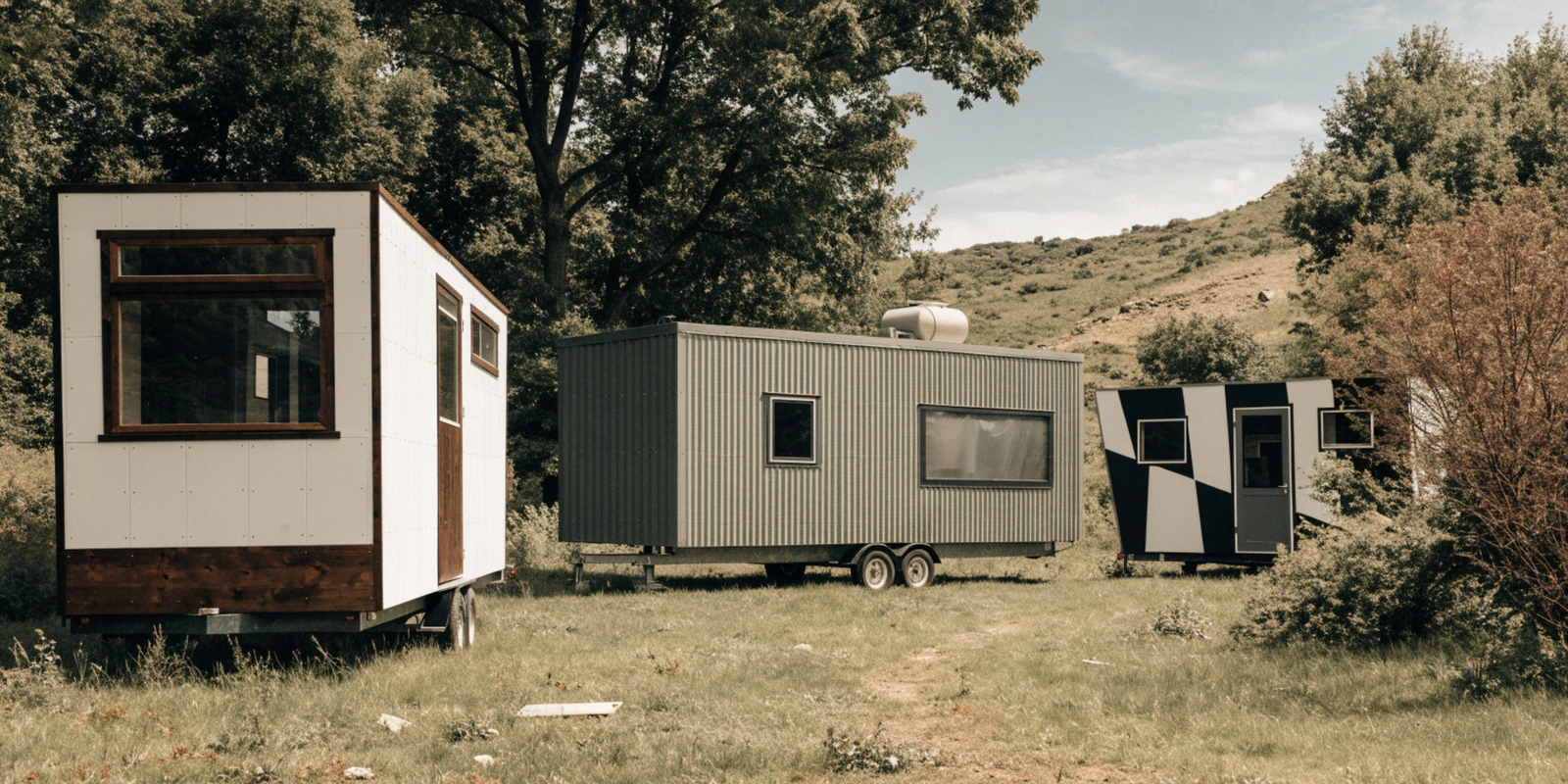
A THOW is a road-legal, trailer-based tiny home - often 16–32 ft long - with built-in off-grid systems: roof-mounted solar panels, a composting toilet, propane appliances, rainwater catchment, and a mini wood stove or diesel heater. These suit digital nomads, seasonal workers, and anyone wanting flexibility to relocate between off-grid sites or RV parks. Building quality and certifications are essential for tiny houses on wheels, since they must withstand road vibration and comply with highway weight and dimension limits. The tradeoff: easier relocation and resale, but limited interior space and more exposure to road and RV regulations. THOWs may face stricter RV regulations in Colorado and similar jurisdictions, so always confirm local ordinances before parking one long-term.
Foundation Tiny Houses and Small Cabins Off the Grid

These are small fixed homes - typically 250–800 sq ft - set on piers, slabs, or skids on remote plots. Common setups include ground-mounted solar arrays, larger battery banks, wood-burning stoves, well or pump systems, and off-grid septic or composting. They're ideal for people who already own or are buying rural land and want a long-term homestead or weekend cabin. TinyHomeMap often lists both completed cabins and shell or unfinished structures ready for custom off-grid systems, so you can choose between turnkey living and beautiful craftsmanship or a hands-on build project.
Off-Grid Park Models and Modular Units
Park model tiny homes (roughly 320–400 sq ft, often 12 ft wide) and modular units configured for off-grid hookups are transported once or occasionally, then set semi-permanently on pads. These may be built to ANSI A119.5 or modular housing codes, making them easier to insure and finance in some areas. Park models are accepted as accessory dwelling units in Colorado and in many other regions with ADU-friendly zoning. Common use cases: seasonal living on recreational land, hunting or fishing cabins, and guest houses away from main utilities. Options range from a bumble bee modular cabin to a grand canyon modular cabin 4 bed layout, an ocean breeze modular cabin 2 bed configuration, or compact designs like the nordic raven modular cabin 2 bed, the evergreen modular cabin 2 bed, the sunshine modular cabin 2 bed, the clifford modular cabin 2 bed, or the breeze modular cabin 2 bed - the variety is wide enough to match most use cases. You'll also find modern tiny cabins and modular cabin 2 bed or 3 bed 2 bath floorplans in many builder catalogs. Buyers must confirm local rules on placing park models or modulars on rural parcels or in tiny home communities.
DIY and Shell Off-Grid Tiny Houses for Sale
A "shell" unit is a framed, sheathed, weather-tight tiny house or cabin - with or without rough plumbing and wiring - sold at a lower price for hands-on buyers who want to install their own solar, interior finishes, and off-grid systems. TinyHomeMap listings may describe these as "dry shell," "finished exterior only," or "DIY project with materials included." This path suits people comfortable with custom tiny home construction and willing to research permitting, wiring, and plumbing themselves. The tradeoff is clear: cheaper purchase price but significantly more time, permitting research, and technical work. Some steel house kit options - such as the blue ridge steel house kit, the coastal modern steel house kit, the oakwood steel house kit, the freedom steel house kit, the liberty steel house kit, the maple ridge steel house kit, the pine haven steel house kit, the meadowbrook steel house kit, the homestead steel house kit, the coastal crown steel house kit, the grandview steel house kit, the magnolia steel house kit, the big fam budget house kit, or the fam budget house kit - provide durable construction materials energy efficient windows metal roofing and modern cabin style designs as a starting point for a DIY off-grid build, with efficient floor plans durable construction, and plans durable construction materials energy efficient windows and metal roofing built in.
Off-Grid Tiny Homes Sold with Land Included
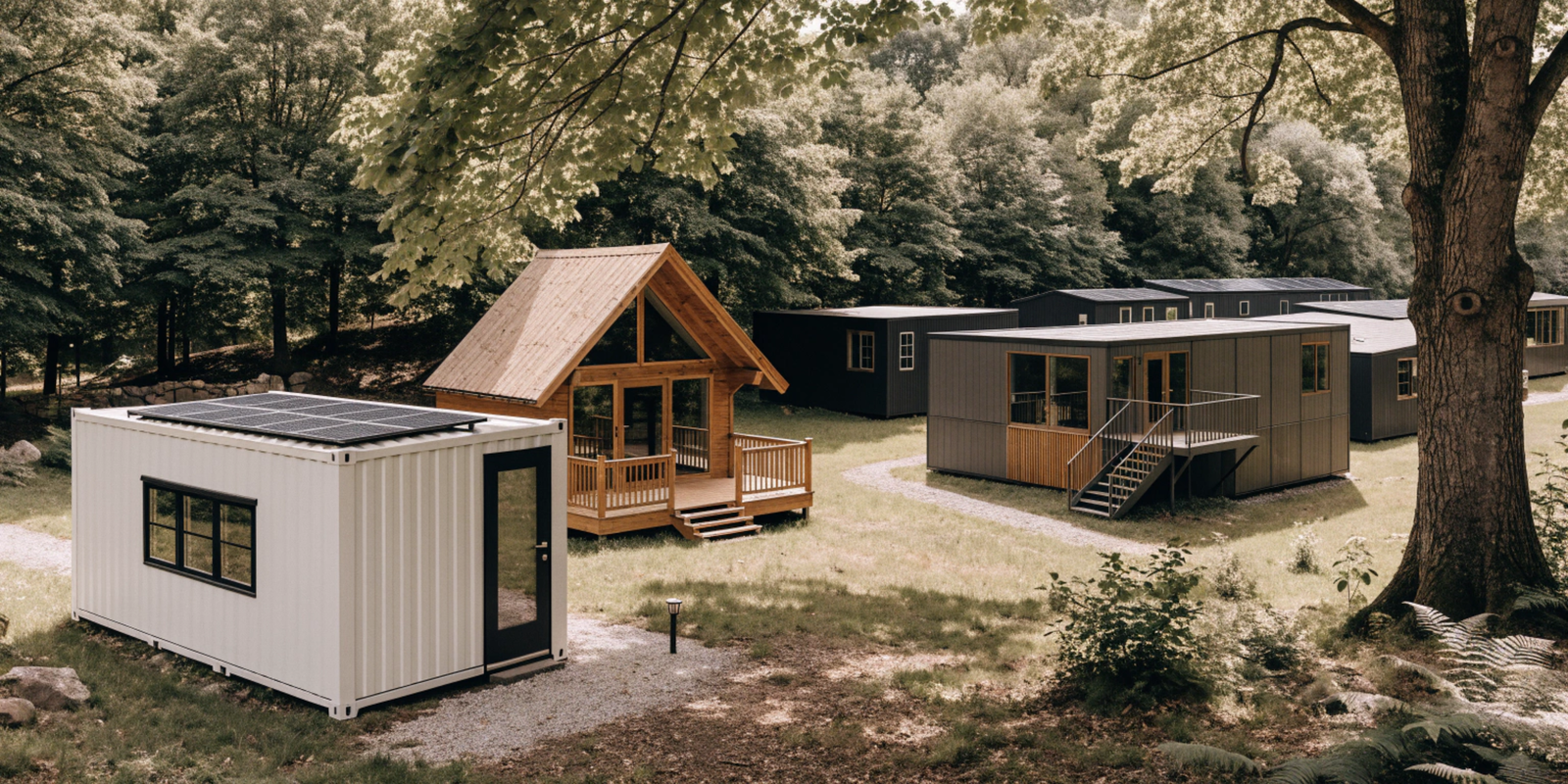
Some listings include rural land - often 1–10 acre parcels of wooded property or cleared homestead plots - with an existing off-grid cabin or tiny home already sited. Benefits include no need to hunt for compatible zoning, existing driveways, clearings, and possibly existing wells or septic. A builder network serves buyers who want affordable housing efficient living on property that's already set up. Other listings are "home only, move to your own site." Use TinyHomeMap's filters and listing descriptions to distinguish "land included" from "unit only" - this distinction dramatically affects total cost, timeline, and legal complexity.
What to Look For in an Off-Grid Tiny House for Sale
"Off-grid" claims vary widely from one listing to the next. Some sellers mean a fully self-sufficient home with years of proven performance; others mean a house with a solar panel on the roof and a bucket under the sink. This section tells you which concrete features and specs to verify before you buy.
Power Systems: Solar, Batteries, and Backup
Off-grid homes often utilize solar energy systems as their primary power source. Solar power systems rely on solar panel arrays and battery banks for electricity, managed through charge controllers and inverters. Key specs to check in any listing:
Solar array capacity - measured in kW. Full-time tiny homes generally consume 2–8 kWh per day, depending on heating, cooling, and appliances. A typical couple living off-grid year-round often needs around 3–5 kWh/day, requiring roughly 1.6–2.4 kW of panels (4–6 standard panels). Heavier use pushes that to 2.4–4.0 kW.
Battery capacity - look for usable kWh, not just total. LiFePO₄ (lithium iron phosphate) batteries dominate in 2026, with costs around US$300–$450 per kWh of usable storage. Two to three days of autonomy is standard; colder or cloudier climates may require four to seven days.
Inverter size - typically 2–6 kW to handle peak loads like microwaves, AC units, or hair dryers. Account for 20–30% losses from wiring and conversion inefficiency.
Backup - backup generators may be necessary for extended winter or low-sun periods. Check whether the home includes a generator hookup or the ability to plug into a grid or RV pedestal when available.
High-efficiency appliances should minimize energy draw in off-grid homes - verify that the listing's kitchen, lighting, and electronics reflect this.
Water Source, Storage, and Filtration
Tiny homes should offer reliable water supply and storage options. Water systems must include storage tanks and rainwater collection setups where local law allows. Common off-grid water sources:
Rainwater catchment with cisterns - rainwater harvesting is common in off-grid living and can supply most household needs in wetter climates.
Hauled water tanks - practical for dry regions or as a backup.
Wells - if land is included, check whether a well exists, its depth, flow rate, and whether water rights are legally established.
Tank size matters: 50–500+ gallons depending on climate and occupancy. In cold climates, insulation and heat tape for pipes and tanks are non-negotiable. For filtration, look for sediment filters and UV purification at minimum. Confirm whether the listing's water system is fully installed, partially roughed-in, or only "prepped" for future work.
Waste Management: Toilets and Greywater
Proper waste management solutions are necessary for off-grid living. Many off-grid homes feature composting toilets, which eliminate the need for septic and reduce water use dramatically. Alternatives include incinerating toilets and standard flush toilets tied to approved septic systems.
Greywater management systems are important for off-grid homes. How greywater is handled - soakaway, mulch basin, or septic - varies by jurisdiction. "Off-grid" does not automatically mean it's legal to discharge greywater onto open ground. If land is included, check inspection dates, tank sizes, and whether septic or greywater permits are in place. Legal compliance varies by county for off-grid tiny houses' placement and waste systems.
Heating, Cooling, and Insulation
Off-grid homes require superior insulation to maintain temperature without burning through battery reserves. High-performance insulation is crucial for off-grid tiny houses - check R-values in walls, roof, and floor, and look for double or triple-glazed energy efficient windows.
Common off-grid heating options include wood stoves, propane heaters, mini-split heat pumps powered by solar, and diesel heaters in THOWs. Passive design features - orientation, overhangs, natural ventilation, shading - reduce power needs significantly. Match climate-specific features (snow load rating, freeze protection, AC capacity) to your actual location. Construction materials energy efficient design and efficient windows metal roofing all contribute to year-round comfort with minimal energy input.
Legal Status, Codes, and Certification
Every off-grid tiny home is classified in one of several ways - RV/THOW, park model, modular, or site-built dwelling - and the classification determines where it can legally be placed and insured. Certifications you may see in listings include RVIA, NOAH, ANSI A119.5, or local building permits for cabins.
Zoning laws must allow off-grid living on the desired site, and zoning regulations vary by county - throughout the entire state of Colorado, for example, rules differ significantly between Denver, mountain counties, and the Eastern Plains. Local ordinances must be checked for tiny home compliance. TinyHomeMap does not provide legal advice; always verify zoning and codes with local authorities before purchasing.
Build Quality and Builder Reputation
Look for visible quality indicators: proper flashing details, moisture barriers, quality roofing and siding materials, and branded window and door hardware. Signs of rushed builds include uneven finishes, water stains, soft or spongy floors, and unclear electrical labeling. Tiny home builders often use high-end materials for durability, but not all do - finding off-grid tiny houses requires looking at specialized builders with verifiable track records. Great Lakes Tiny Homes, for instance, has over 100 years of combined craftsmanship experience. Check whether the listing comes from a known builder, a DIY owner-build, or a licensed contractor with references. Users should verify documentation before purchasing off-grid tiny homes.
Price, Age, and Ongoing Maintenance
Off-grid systems age: batteries last 5–15 years depending on chemistry and use, inverters may need replacement after 10–15 years, and roofing, siding, and water systems all require ongoing maintenance. Typical price ranges for off-grid tiny homes in 2024–2026:
Used or basic DIY tiny houses - a tiny home can cost as low as $24,999 for small, simple builds. The Victoria model, for example, is 398 sqft and costs $34,999.
Mid-range factory-built off-grid models - the average cost of a tiny home is around $60,000. KW Tiny Homes offers models ranging from 199 to 1074 sqft. Tiny homes in Colorado start under $90,000, and the Elizabeth Deluxe model is 819 sqft priced at $89,999. Over 100 tiny home models are available in Colorado alone.
Premium, custom, or larger units with land - can exceed US$200,000+, especially in high-cost land zones or with extensive off-grid infrastructure.
Adding off-grid systems to a base home typically costs US$10,000–$20,000+ depending on system size and specification.
Additional bedrooms in tiny homes can cost $750 each; building a tiny home feasibility report can range from $500 to $1,200.
Factor in future upgrade costs - expanding solar, replacing batteries, repainting, resealing - when evaluating any listing's regular price. Some "bargain" listings may need immediate work to bring systems up to safe, reliable standards.
How to Choose the Right Off-Grid Tiny House for You
This section turns the features above into decisions, so you can shortlist real listings on TinyHomeMap with confidence.
Your location and climate - Snow loads, wildfire risk, extreme heat or cold, and remoteness all dictate ideal roof design, insulation levels, and power system sizing. A tiny home or modern tiny cabin in the Arizona desert needs different specs than one in rural Vermont. Off-grid living reduces reliance on public utilities, but your climate determines how much system capacity that independence requires.
Full-time, seasonal, or weekend use - A full-time tiny home residence demands robust solar, multi-day battery autonomy, and weatherized plumbing. Seasonal or weekend use allows simpler, smaller systems. Your usage pattern directly affects whether you need a 2 kW or 4 kW solar array, and how durable your finishes need to be.
With land vs home-only purchase - Buying a tiny home on rural land with wooded property eliminates the zoning search but adds land costs, taxes, and access considerations. Home-only purchases give you flexibility but require finding a legal site. Buyers who want affordable options often compare both paths.
Mobility vs space - A road-ready THOW gives you the freedom to relocate but limits you to roughly 400 sq ft and trailer-weight constraints. A larger park model, modular cabin, or foundation cabin - including bed 2 bath options, 2 bath or 3 bed, or bath or 3 bed layouts - gives more room but minimal mobility. Modern tiny homes and compact homes and modern minimalist designs maximize usable space in either format with efficient floor plans.
Budget and willingness to DIY - Budget interacts with every other decision. Affordable tiny houses and small tiny houses are available at entry-level prices, but may be shells or older builds. Affordable tiny home builders and prefab tiny homes can deliver turnkey off-grid units in 60–120 days. A ridge steel house kit or similar package lets handy buyers save on labor. Modern tiny houses and modern steel house kit options span a wide price range.
Local rules and long-term plans - Think 5–10 years ahead. Family size changes, remote work vs commuting, resale potential, and whether you plan to use it as an airbnb investment property all influence whether code compliance (RVIA, ANSI, IRC) is critical. Tiny homes can be used as short-term rentals in Denver, for instance, but tiny homes are also popular as Airbnb rentals throughout Colorado - regulations differ sharply. Tiny home models can be delivered across Colorado, including Denver, but zoning regulations vary by county.
How to Use TinyHomeMap to Find Off-Grid Tiny Houses for Sale
Tiny home marketplaces allow users to filter by off-grid features - here's how to make the most of TinyHomeMap's tools.
Search by Location and Off-Grid Features
Open TinyHomeMap's global map and zoom into your target region - the Pacific Northwest, Colorado Rockies, rural Spain, or wherever you're looking. Apply filters for "For Sale," "Off-Grid / Solar," "Composting Toilet," "Includes Land," "Tiny House on Wheels," and more. Start broad (entire state or country), then narrow by travel radius, climate, and terrain. Off-grid living promotes sustainable and eco-friendly practices, and filtering for these features lets you find homes that genuinely support that lifestyle. Tiny home builders provide eco-friendly living options in urban areas as well - don't overlook ADU-zoned properties in suburban or peri-urban locations where accessory dwelling units are permitted.
Compare Listings and Shortlist Favorites
Scan listing summaries for size (sq ft), year built, sale price, and key off-grid systems at a glance. Open multiple listings in new tabs and compare system specs - solar wattage, battery capacity, water storage, heating method - alongside interior layouts and photos. Look for listings that specify a full kitchen, sleeping configurations, and whether they include a complete off-grid package or just partial prep. Save or bookmark promising listings and note questions to ask sellers: battery age, permit status, maintenance history.
Contacting Sellers and Doing Due Diligence
TinyHomeMap connects you to owners and builders via the contact details they share - we don't handle contracts or payments. When you reach out, ask about maintenance history, reason for sale, past winter performance, and any known issues or code disputes. Arrange in-person or virtual tours. For older builds especially, hiring a qualified inspector is strongly recommended. Verify zoning, access roads, fire regulations, and insurance options before committing. Building a tiny home feasibility report - which can range from $500 to $1,200 - may be worth the investment before purchasing land or placing a unit.
Frequently Asked Questions About Off-Grid Tiny Houses for Sale
These FAQs address the most common questions users bring to TinyHomeMap when browsing off-grid listings.
Are off-grid tiny houses legal where I live?
Legality varies by country, state, province, and even neighborhood - there is no universal rule. The main variables are zoning classification (residential, agricultural, recreational), building codes, and RV or park model regulations. THOWs may face stricter RV regulations in some areas, while park models are accepted as accessory dwelling units in others. Always confirm with your local planning office; don't rely solely on listing descriptions.
How much does an off-grid tiny house typically cost in 2024–2026?
Prices range widely. A used or basic THOW can start as low as $24,999. The average cost of a tiny home is around $60,000, and tiny homes in Colorado start under $90,000 for mid-range builds. Premium custom units or homes with land can exceed $200,000. Age, size, included off-grid systems, and whether land is part of the sale dramatically affect price. TinyHomeMap shows asking prices from individual sellers and builders, reflecting real market variety.
Can I run everything on solar, including heating and air conditioning?
Running lights, laptops, and small appliances on solar is common and practical. Resistive electric heat, however, is usually impractical off-grid due to its enormous energy draw. Most successful off-grid homes use mixed systems: solar for general power plus wood, propane, or diesel for space heating, and energy-efficient mini-splits where solar capacity allows. Check each listing's solar and battery sizing against your own expected loads - don't assume it will "just work."
What should I inspect before buying a used off-grid tiny house?
Focus on roof condition and leaks, framing integrity, trailer frame or foundation, electrical systems, plumbing, and all off-grid components. Check the age and brand of batteries, inverters, and heaters, plus any signs of moisture or mold. Soft floors, water stains, and unclear wiring are red flags. Bring in a licensed inspector or experienced tiny home builder for a pre-purchase inspection whenever possible.
Can I finance an off-grid tiny house?
Financing depends on how the home is classified. RV-classified THOWs may qualify for RV loans; park models and homes sold with land may qualify for conventional or land-home packages. Personal loans are another option. Some builders - especially in Texas and other rural areas - offer in-house financing or help locate lot-compatible parcels. TinyHomeMap does not offer financing, but you can use listing details to approach lenders with concrete specs and prices.
Is an off-grid tiny house a good option for Airbnb or short-term rental?
Off-grid tiny homes can perform well as an airbnb investment property in tourist or nature destinations - tiny homes are popular as Airbnb rentals in Colorado, and tiny homes can be used as short-term rentals in Denver. Consider guest access logistics, clear instructions for composting toilets and off-grid systems, and reliable power and water so guests aren't inconvenienced. Always check local short-term rental regulations, HOA rules, and platform requirements before investing primarily for rental use.
Start Exploring Off-Grid Tiny Houses for Sale on TinyHomeMap
You now know the types, features, and criteria that separate a solid off-grid tiny home from a listing that needs deeper investigation. Open the TinyHomeMap world map, apply your off-grid filters, and start comparing real listings in the regions that fit your climate, budget, and lifestyle. TinyHomeMap is your discovery and research tool - use it to find options, ask better questions, and make a confident decision before you buy.
Related articles
More guides that dig deeper into the same topics.
Ready to start searching?
Browse tiny homes, plans, builders, communities and land on the interactive map.
Explore the map