Renewable Energy & Off-Grid

Tiny Home Electricity: Wiring and Power Systems

14 min read · Updated March 13, 2026

By John

Electricity is the system that makes a tiny home feel like a home, not a shed. Here is a practical guide to tiny home wiring and power systems — from shore power to off-grid solar — sized safely for a small space.

Electrical breaker panel box open in a tiny home utility closet with neatly labeled circuits

Two ways to power a tiny home

Every tiny home runs on one of two electrical strategies, or a hybrid of both. Shore power means plugging into grid power through a 30- or 50-amp RV-style connection, the simplest and cheapest option if you park where power is available. Off-grid solar means generating, storing, and managing your own power with panels, a charge controller, batteries, and an inverter. Many homes combine the two — solar with a shore-power backup — for flexibility. Tiny home electricity is not one-size-fits-all; it depends on where you park and how much power you use. Browse off-grid tiny homes for examples of each approach.

Sizing your power needs first

Before choosing a system, list every electrical load and its daily run time: lights, fridge, water pump, fans, laptop, phone, a mini-split, maybe a microwave or induction cooktop. Multiply watts by hours to get watt-hours per day, add a 25 percent margin, and you have your daily energy budget. A modest tiny home on shore power might use 3 to 6 kWh per day; an off-grid solar system is usually designed around 2 to 5 kWh per day to keep battery costs sane. The budget tells you whether shore power suffices or you need solar, and how big. See our
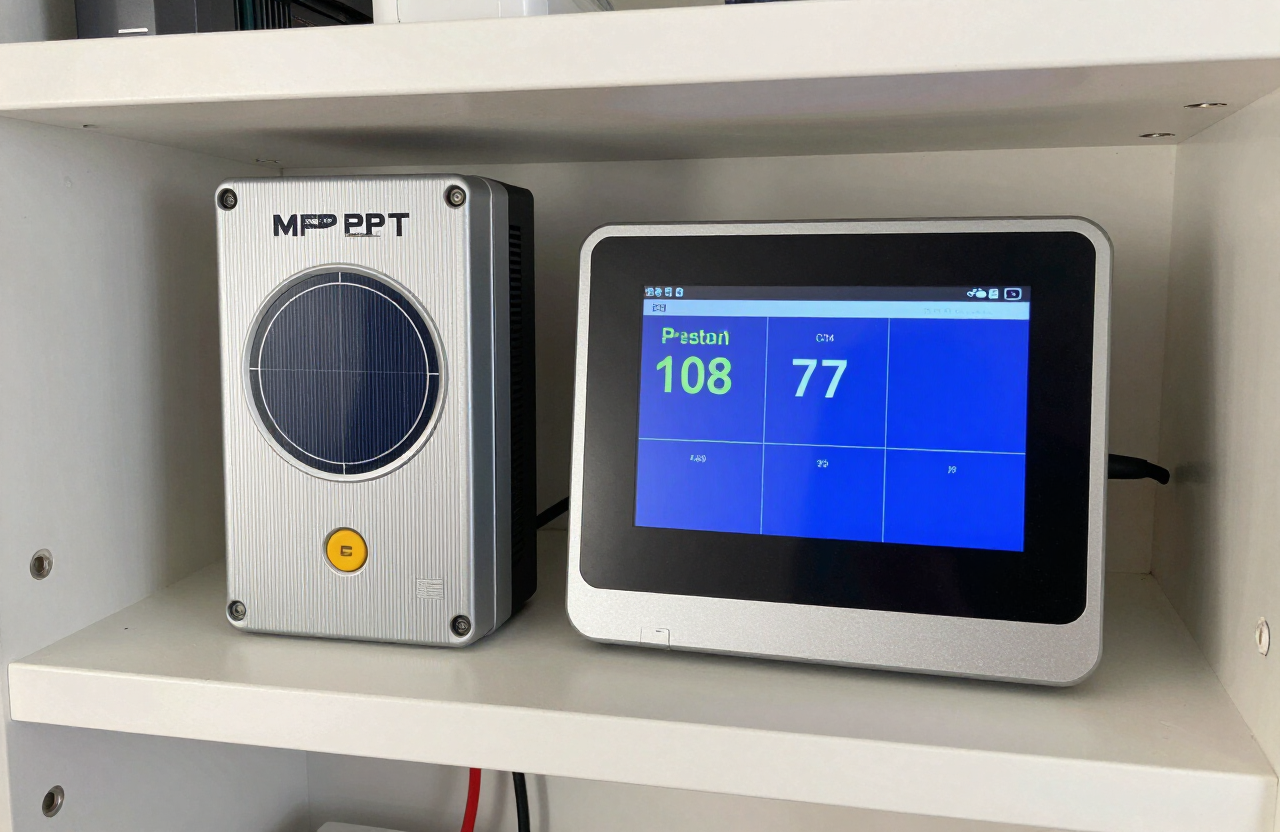
MPPT solar charge controller and inverter display screen in a tiny home utility closet showing battery status

Shore power: the grid connection

Shore power is the simplest tiny home electrical system. A 30-amp 120-volt RV connection gives about 3,600 watts of continuous capacity — enough for most tiny home loads except heavy heating — while a 50-amp 120/240-volt connection handles near-full residential loads. Install a shore-power inlet on the exterior with a twist-lock connector, run to a main breaker panel, and distribute to branch circuits. Use a transfer switch if you also have solar or a generator, so two sources never backfeed. Keep the connection weatherproof and use an RV-rated cord, not a household extension cord.
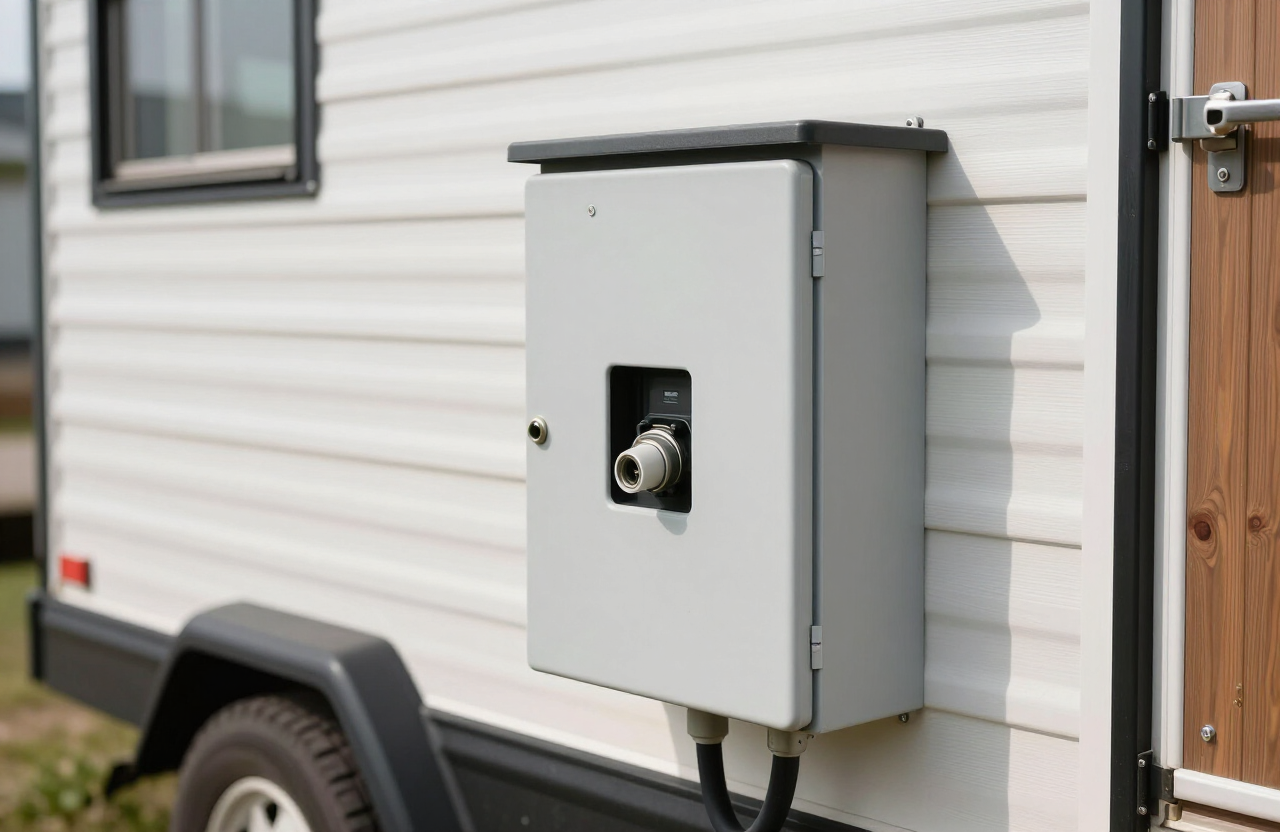
Shore power inlet box mounted on the exterior of a tiny house on wheels with a twist-lock connector

Off-grid solar: panels, controller, batteries, inverter
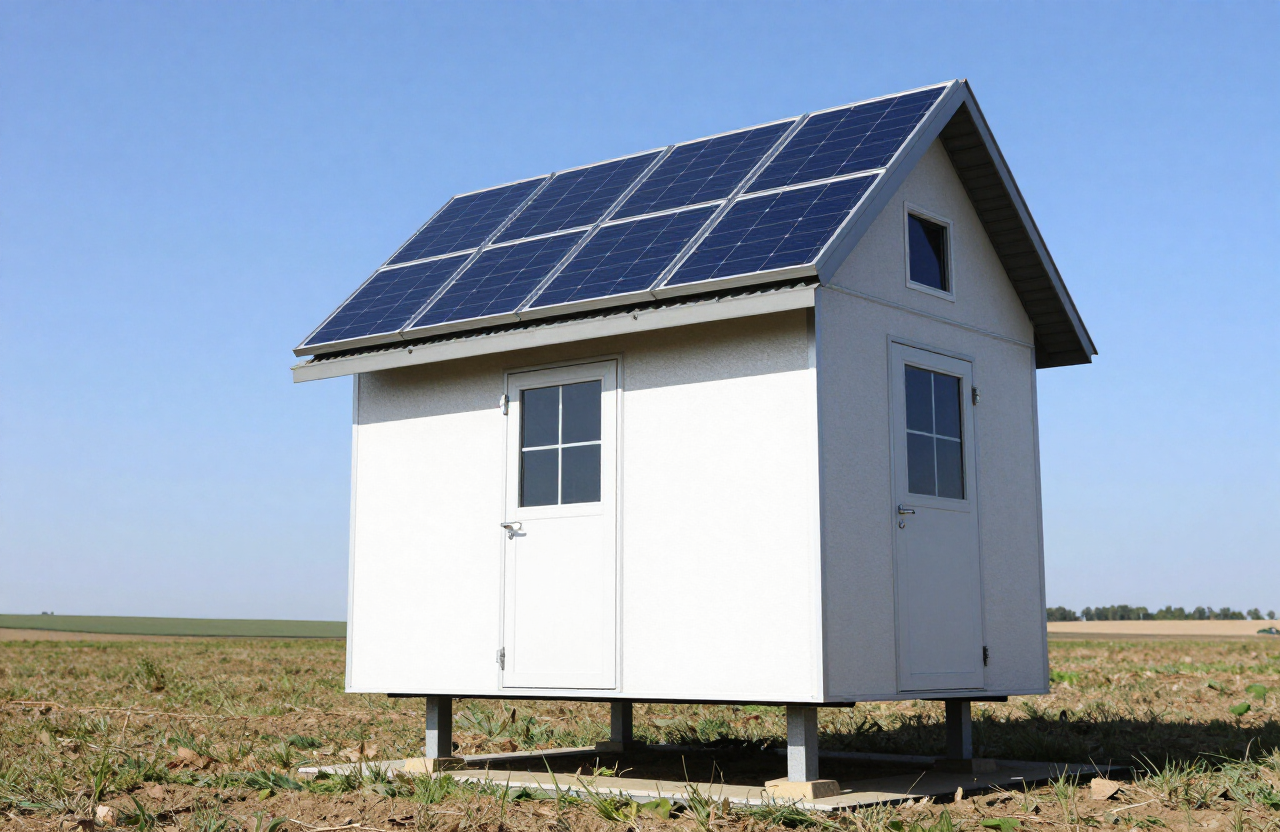
An off-grid solar system has four parts. Solar panels on the roof (or ground-mounted nearby) generate power; an MPPT charge controller regulates it and charges the battery bank; the battery bank (typically 12, 24, or 48-volt lithium) stores it; and an inverter converts battery DC power to the 120-volt AC your appliances use. Size the panel array to recharge your daily budget even on short winter days, and size the battery bank for two to three days of autonomy. A 48-volt system is more efficient for larger loads and keeps wire sizes manageable. See our
Solar panels mounted on the roof of a tiny house on wheels under a blue sky for off-grid power

Battery banks and storage

Lithium iron phosphate (LiFePO4) batteries are the standard for modern tiny homes — they are light, safe, tolerate deep discharge, and last thousands of cycles. Size the bank in kilowatt-hours to cover your daily budget times your desired days of autonomy, plus a margin for cold-weather derating. A 5 to 10 kWh bank covers most off-grid tiny homes; heavy loads like air conditioning push it higher. Mount batteries in a ventilated, temperature-moderated compartment — lithium performs poorly below freezing and should not charge below 32°F without a heated model. Keep the bank close to the inverter to minimize large, expensive cable runs.
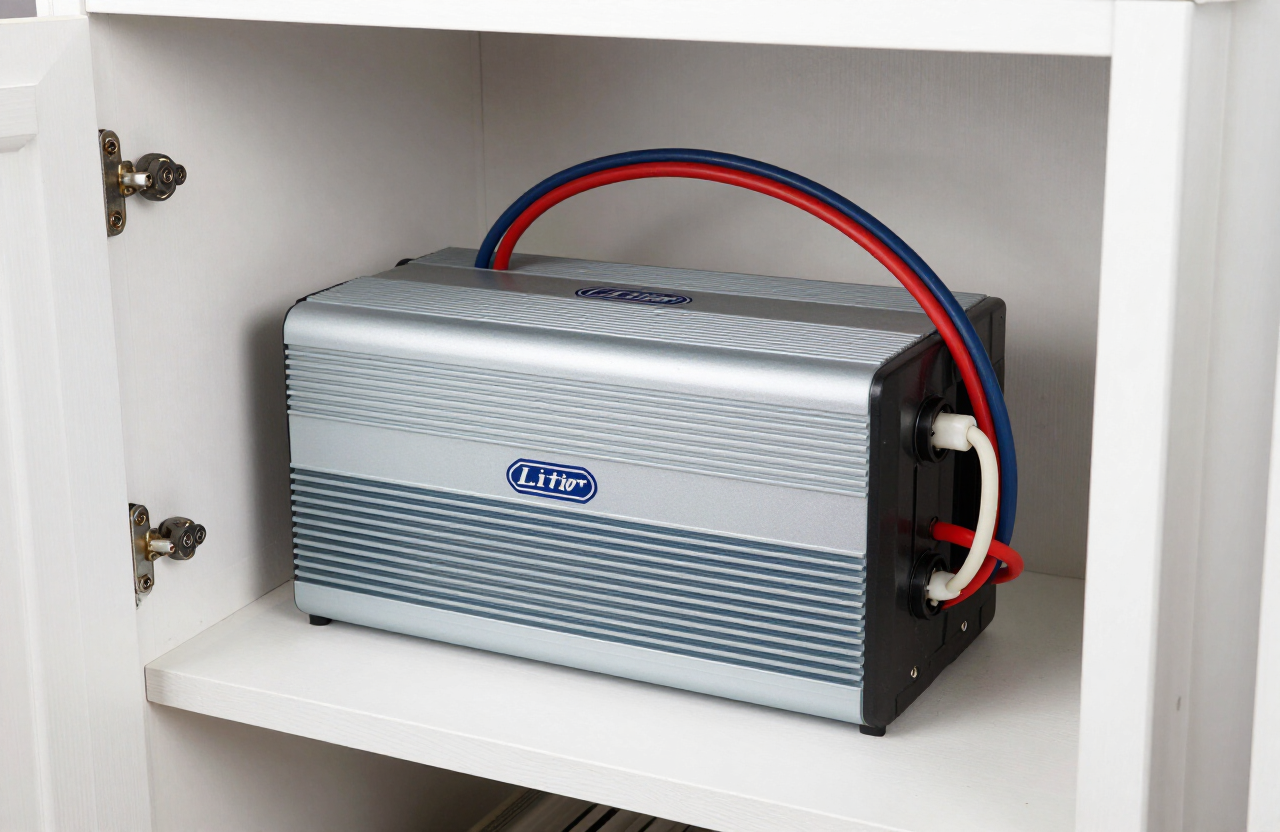
Lithium battery bank and inverter installed in a tiny home utility compartment with tidy wiring

Wiring and breaker panel basics

Whether shore or solar, the distribution side follows the same rules. Run Romex through drilled stud holes (never notches) with nail plates to protect wires, and size wire gauge to the breaker — 14 AWG for 15-amp circuits, 12 AWG for 20-amp. Install a main breaker panel with a main disconnect and clearly labeled branch circuits, and use GFCI outlets in the kitchen, bath, and exterior. Keep AC and DC wiring separated and labeled, and bond the system to ground per code. A tidy, labeled panel is not just cosmetic — it makes troubleshooting safe and fast. If you are not trained, have a licensed electrician wire the panel.
Romex electrical wiring rough-in through stud bays of a tiny home under construction with junction boxes

Lighting and low-draw loads

Lighting is where tiny homes win on efficiency. All-LED lighting — strips, pucks, and fixtures — draws a fraction of incandescent power and lasts for years, and a full tiny home can be lit for under 50 watts. Run lighting on a dedicated circuit, and consider 12-volt DC lighting wired straight off the battery bank to avoid inverter losses in an off-grid home. Use motion sensors in the bath and entry to save power, and dimmable fixtures to set mood without extra draw. Efficient lighting is the cheapest way to shrink your energy budget.
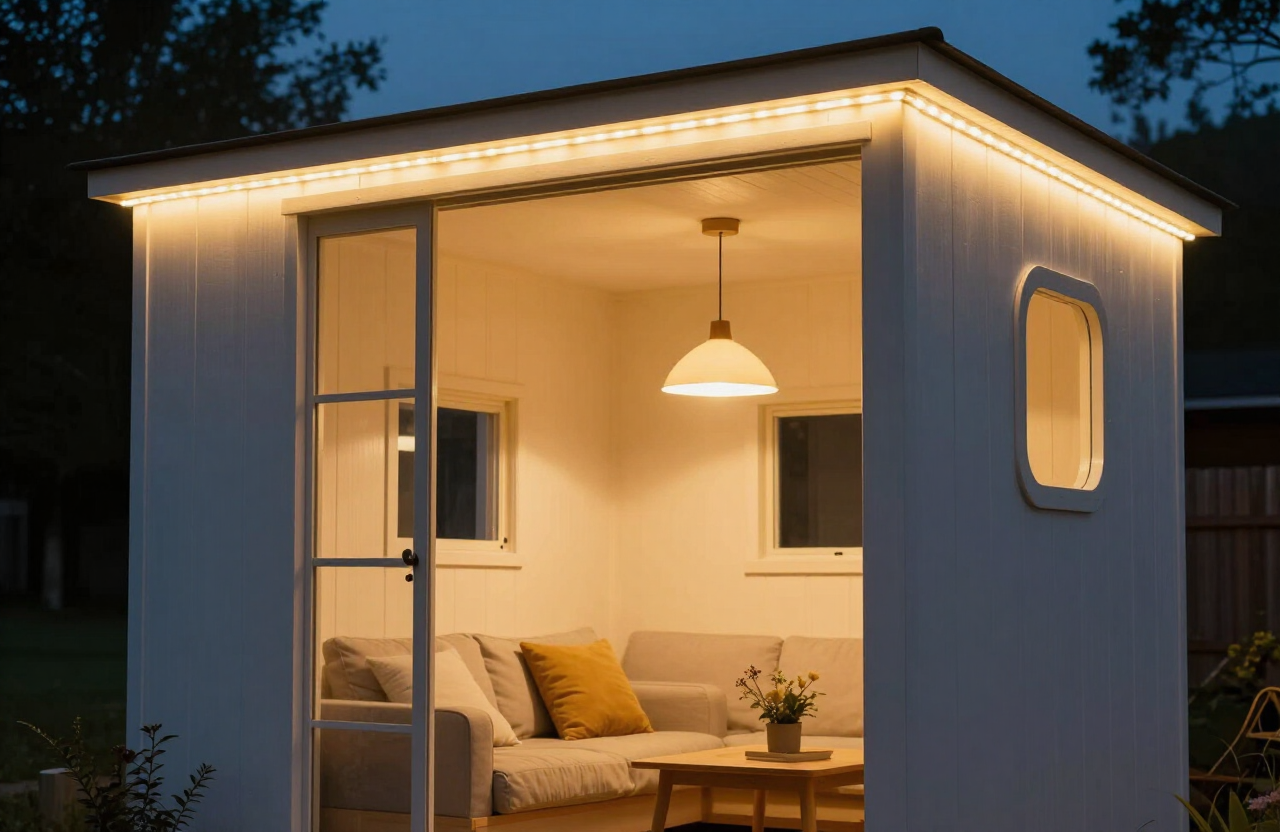
Warm LED strip lighting and pendant lamps illuminating a tiny home interior in the evening

Safety: grounding, GFCI, and inspections

Electricity in a small, possibly mobile home demands respect. Bond the AC system to ground and the DC system to its own negative or ground per the inverter manual, and install GFCI protection wherever water is present. Use a transfer switch between any two power sources to prevent backfeed. Keep a fire extinguisher rated for electrical fires near the panel, and label every breaker clearly. If you built the home yourself, have a licensed electrician inspect the panel and rough-in before you close the walls — it is the one DIY stage where errors can be lethal.

Power system options at a glance

SystemBest forRough cost
30-amp shore powerParked with grid access$500–$1,500
50-amp shore powerFull residential loads$1,000–$2,500
Small solar (2–3 kWh/day)Light off-grid use$3,000–$6,000
Large solar (5+ kWh/day)Full off-grid with AC$8,000–$18,000
Hybrid solar + shoreFlexible location$5,000–$15,000

Designing a system that grows with you

The best tiny home electrical system is slightly oversized and easy to expand. Leave room in the panel for more circuits, mount the charge controller and inverter with space to add a second, and run conduit for future panels. Start with shore power if you have grid access and add solar later, or start solar and add a shore-power inlet as a backup. A flexible system lets you change how and where you live without rewiring. Ready to power up? Browse off-grid tiny homes, compare builders, or explore home plans with electrical layouts.

Related articles

More guides that dig deeper into the same topics.

Frequently asked questions

Can a tiny home run entirely on solar power?+

Yes, with a properly sized array, battery bank, and efficient loads. Most off-grid tiny homes are designed around 2 to 5 kWh per day. Heavy loads like air conditioning or an electric water heater push the system larger and more expensive, so many off-grid homes use propane for heating and cooking to shrink the electrical budget.

How many solar panels do I need for a tiny home?+

It depends on your daily energy budget and local sun. A modest off-grid tiny home often uses 600 to 1,200 watts of panels (two to four 300W panels), while a home running air conditioning may need 1,500 to 3,000 watts. Size the array to recharge your battery bank even on short winter days.

Should I use shore power or solar for my tiny home?+

If you park where grid power is available, shore power is far cheaper and simpler. If you move often or want full off-grid independence, solar is the answer. Many tiny homes combine both — solar with a shore-power backup — for flexibility.

What size battery bank does a tiny home need?+

Most off-grid tiny homes use a 5 to 10 kWh LiFePO4 bank for two to three days of autonomy. Size it to your daily energy budget times your desired days of autonomy, plus a margin for cold-weather derating. Heavy loads like air conditioning push the bank larger.

Do I need an electrician to wire a tiny home?+

If you are not trained, yes — at least for the breaker panel, main disconnect, and any service connection. DIYers can often run branch circuits and low-voltage wiring, but the panel and the connection to shore or solar should be inspected by a licensed electrician for safety and code compliance.

Can I run air conditioning on a tiny home solar system?+

Yes, but it requires a larger array and battery bank — typically 1,500+ watts of panels and 10+ kWh of storage for a small mini-split. Many off-grid homeowners run AC only during peak sun hours or use a high-efficiency mini-split to keep the load manageable.

Ready to start searching?

Browse tiny homes, plans, builders, communities and land on the interactive map.

Explore the map
>