Off-Grid Power

Tiny Home Wind Power: Is a Small Turbine Worth It?

10 min read · Updated February 8, 2026

By John

Wind power has a romantic pull for off-grid tiny-home owners, but a small turbine rarely outperforms solar on cost per watt. Here is when wind makes sense, when it does not, and how to decide.
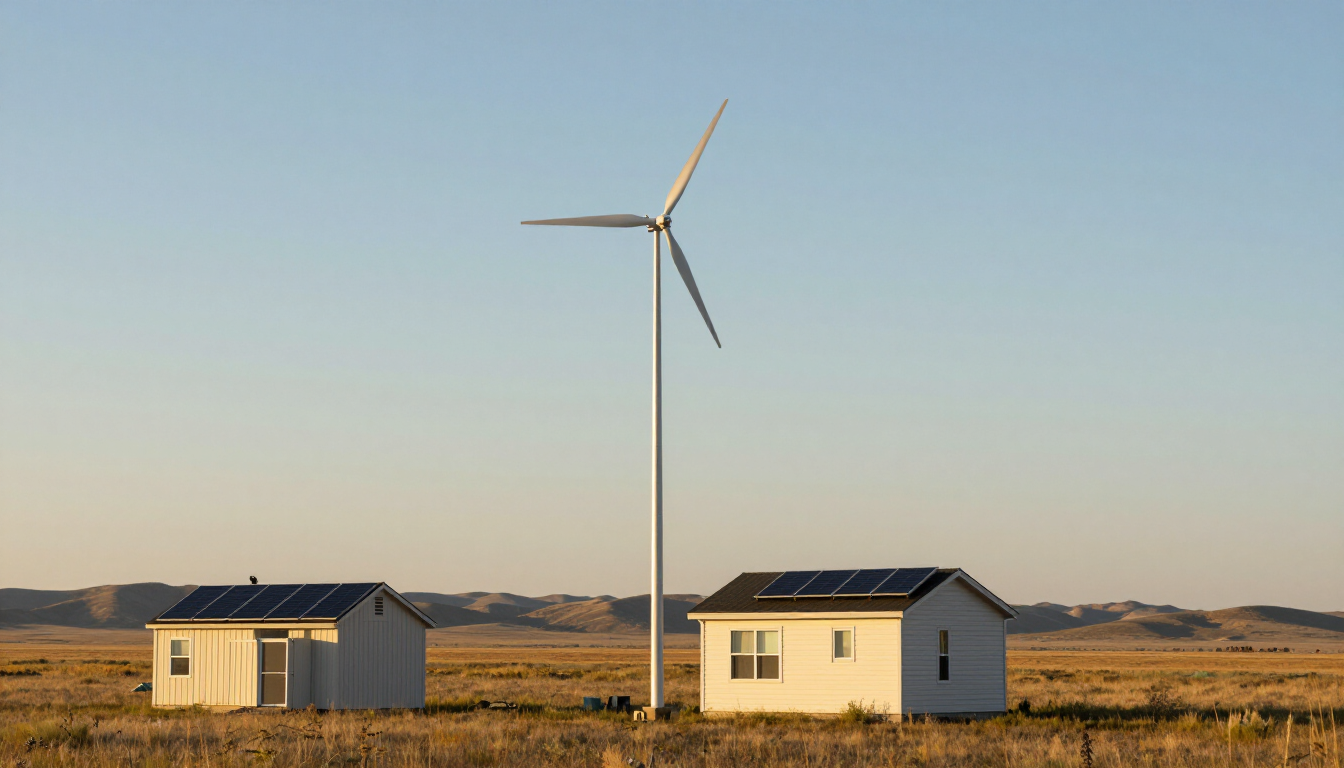
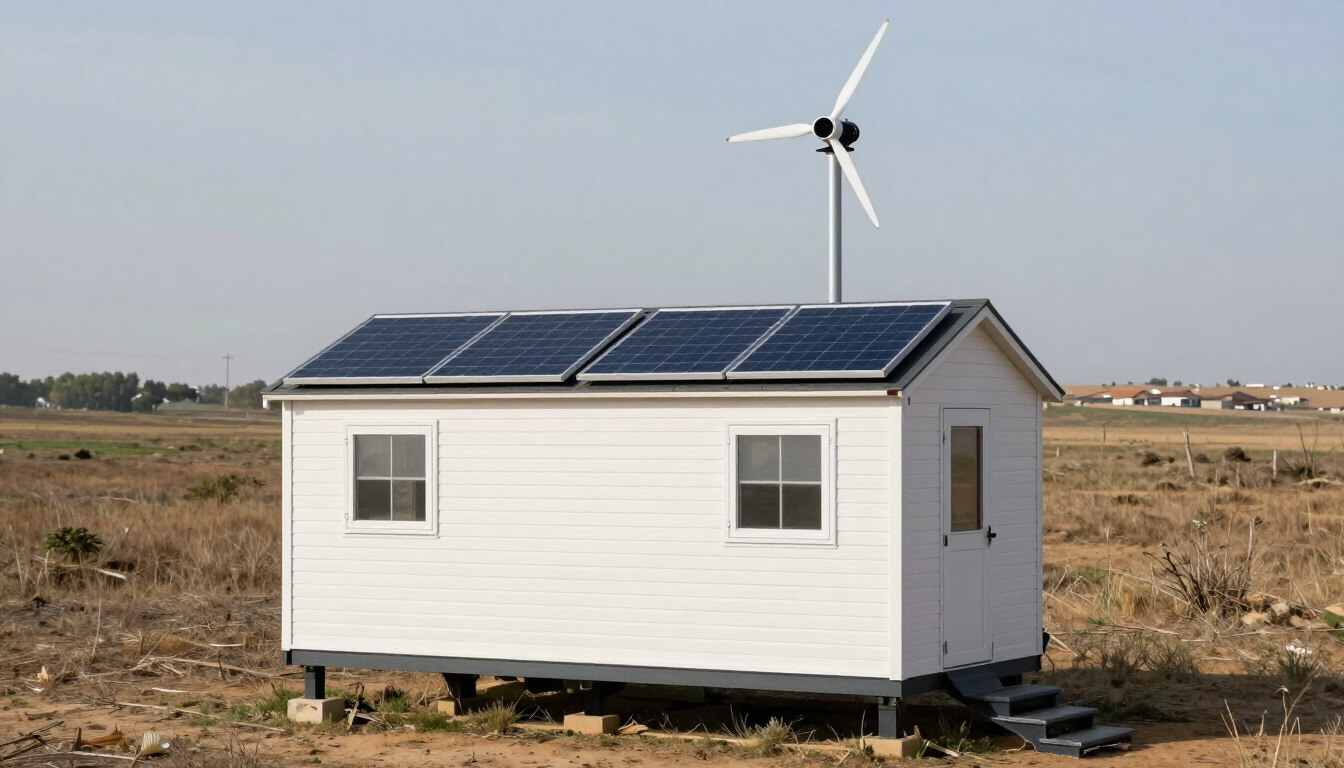
Small residential wind turbine on a tower next to a tiny home on open land

The honest answer up front

For most off-grid tiny homes, tiny home wind power is a supplement to solar, not a replacement. Small wind turbines produce less energy per dollar than solar panels in almost every residential setting, because wind is harder to harvest efficiently at small scale and most sites do not have enough consistent wind. Wind makes sense in specific situations — consistently windy sites, winter when solar output drops, or as a complement that fills solar's gaps. This guide helps you figure out if your site is one of them. Start with our solar power guide for the baseline system.

Why small wind is harder than it looks
Wind power scales with the cube of wind speed, which means a small drop in wind produces a large drop in power. A turbine rated at 400 W only delivers that at its rated wind speed (often 25+ mph); at a typical 10–12 mph breeze it may produce 20–50 W. Trees, buildings, and terrain turbulence ruin performance, so a turbine must be mounted high — usually 30 feet above anything within 300 feet — which means a tall tower, guy wires, and permitting considerations. The wind also needs to blow steadily, not just occasionally. Most people overestimate their wind resource.
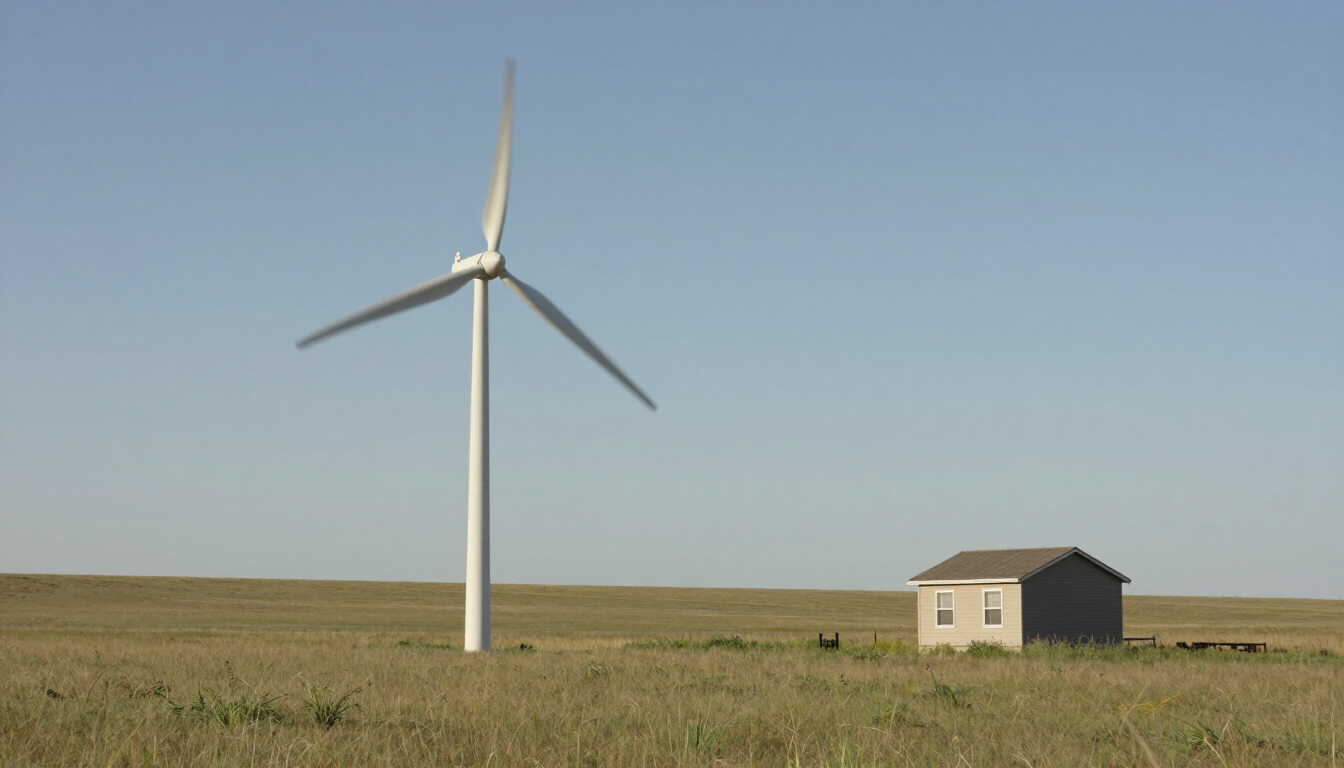
Small wind turbine spinning in a breezy open field next to a tiny home

Assess your site before anything else
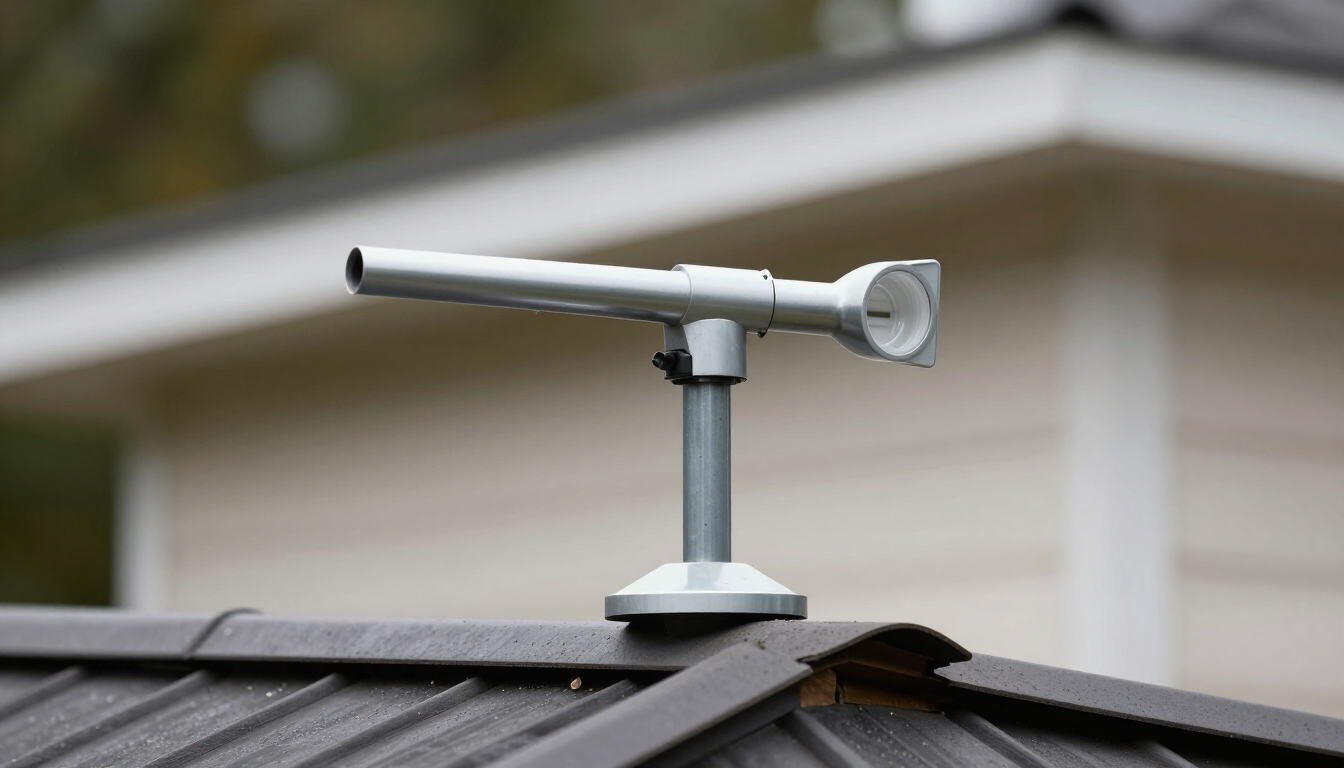
Before spending money, estimate your wind resource. The best signal is local data: check government wind maps (the US DOE Wind Exchange, for example) for your area's average wind speed at tower height. A site needs an average of at least 10–12 mph at the turbine height to be worth considering. You can also install a small anemometer and log wind for a few months. Open plains, coastal areas, hilltops, and shorelines are the best candidates; wooded valleys and urban areas are usually poor. If your average is below 10 mph, spend the money on more solar instead.
Anemometer wind speed sensor mounted on a small mast on a tiny home roof

Wind vs solar: a head-to-head

Per dollar spent, solar panels typically generate 3–5 times more energy than a small wind turbine in an average residential setting. Solar is silent, has no moving parts, needs almost no maintenance, and works anywhere the sun shines. Wind's advantage is that it can generate at night and during storms when solar produces nothing, and in winter when days are short. For a tiny home in a sunny climate, solar alone is almost always the right call. For a consistently windy, cloudy site, wind can fill the gap. The table below summarizes the trade-offs.
Tiny home with both a small wind turbine and rooftop solar panels in a hybrid setup

Wind vs solar compared

FactorSolarSmall wind
Cost per wattLowHigh
MaintenanceAlmost noneRegular (moving parts)
NoiseSilentAudible
Night outputNoneYes (if windy)
Winter outputReducedOften higher
Site sensitivityLowVery high
Lifespan25+ years10–20 years

What a tiny-home wind system looks like
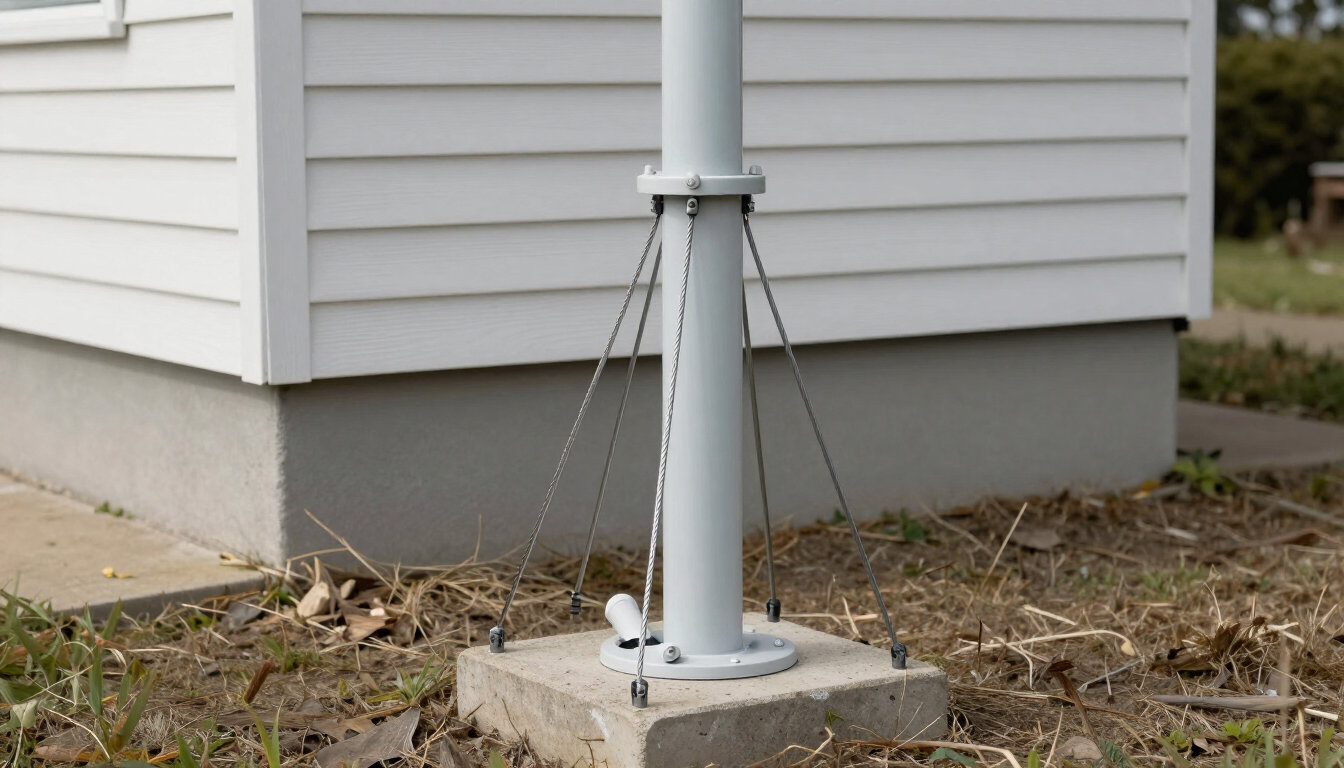
A small residential wind system has a turbine (usually a horizontal-axis unit rated 400–2,000 W), a tower (tilt-up or fixed, 30–60 feet), a charge controller and rectifier to convert the wild AC output to DC for your battery bank, a dump load to absorb excess power, and breakers. The turbine feeds the same battery bank your solar charges, so the two systems complement each other. The tower and its anchors are often the biggest cost and effort — the turbine itself is only part of the investment. See how this fits a full
Base of a small wind turbine tower with steel guy wires anchored to the ground

Maintenance and realistic expectations
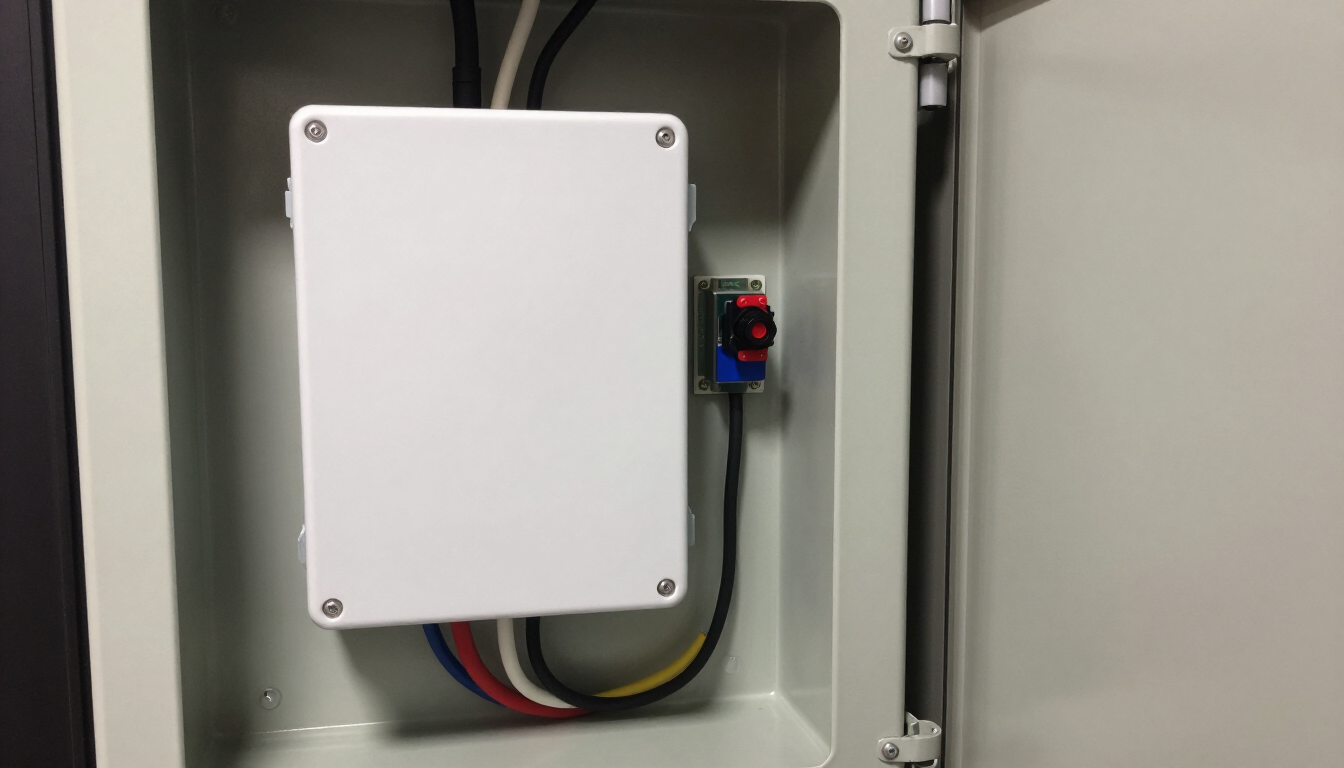
Wind turbines have moving parts, bearings, and blades that wear, so expect periodic inspection and eventual rebuild or replacement — something solar never demands. They can be noisy (vibration and blade noise), and neighbors may object. Realistic annual output from a 400 W turbine on a decent site is a few hundred kWh, not the nameplate rating. If you are counting on wind for a meaningful share of your power, size up and invest in a quality machine, not a cheap one that will disappoint and fail. Pair the system with a properly sized battery bank.
Wind turbine charge controller and rectifier box mounted near a tiny home electrical panel

When wind is worth it

Wind earns its place for tiny homes on consistently windy sites — coastal, plains, or ridge-top locations with average wind speeds above 10–12 mph — especially where winter solar is weak. It also suits owners who want resilience against long cloudy stretches and are comfortable with maintenance. For everyone else, the same budget spent on more solar panels and a larger battery bank delivers more reliable energy per dollar. The most robust off-grid systems combine both: solar as the workhorse and a small turbine for stormy and winter gaps.
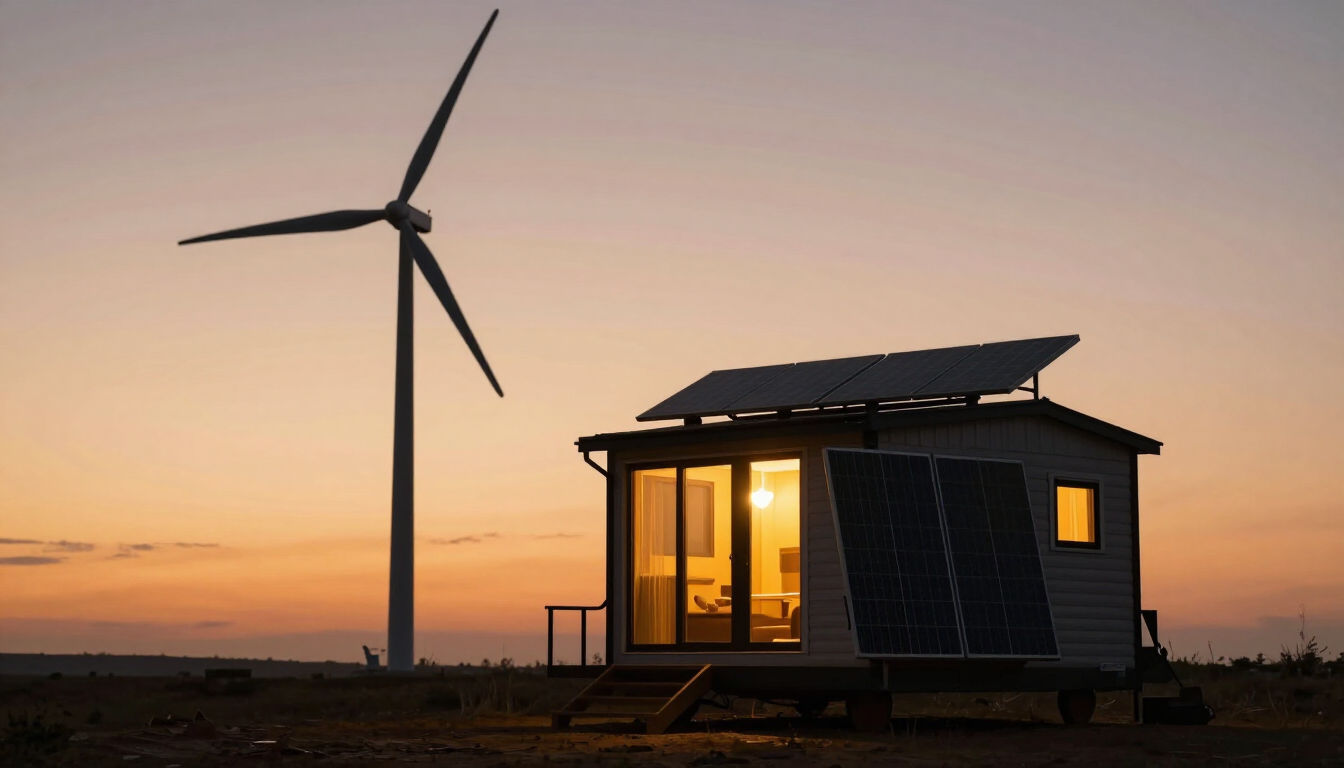
Hybrid wind and solar off-grid tiny home at sunset with lights glowing inside

The verdict

Assess your wind honestly, compare cost per kWh against solar, and only invest in wind if your site genuinely has the resource. If it does, a small turbine can be a valuable complement that keeps your batteries topped up when the sun will not. If it does not, more solar and battery capacity is the better investment. Either way, find an off-grid-ready home on the

Related articles

More guides that dig deeper into the same topics.

Frequently asked questions

Can a small wind turbine power a tiny home by itself?+

Rarely. Small turbines produce far less than their rating in typical winds, and most sites lack consistent wind. Wind is usually a supplement to solar, not a standalone source for a tiny home.

How much wind do I need for a turbine to be worth it?+

An average wind speed of at least 10–12 mph at the turbine's tower height is the usual threshold. Below that, the same money spent on more solar panels and batteries will deliver more energy.

Is wind or solar better for an off-grid tiny home?+

Solar is better for almost everyone: cheaper per watt, silent, low-maintenance, and works anywhere the sun shines. Wind's edge is night-time and winter output, which matters on consistently windy, cloudy sites.

How tall does a tiny-home wind turbine tower need to be?+

Typically 30 feet above anything within 300 feet, to reach clean, turbulent-free wind. The tower, guy wires, and anchors are often the biggest cost and effort of the whole system.

Are small wind turbines noisy?+

They can be. Blade noise and vibration are audible, and neighbors may object. Quality machines are quieter, but wind is never as silent as solar, which has no moving parts.

How much maintenance does a small wind turbine need?+

More than solar. Expect periodic inspection of blades, bearings, and slip rings, and eventual rebuild or replacement after 10–20 years. Solar, by contrast, has no moving parts and needs almost no maintenance.

Can I combine wind and solar on the same battery bank?+

Yes. A wind turbine's charge controller feeds the same battery bank your solar charges, so the two systems complement each other — solar by day, wind whenever it blows.

Ready to start searching?

Browse tiny homes, plans, builders, communities and land on the interactive map.

Explore the map
>