Off-Grid
Composting Toilets 101: How They Work in a Tiny Home
6 min read · Updated December 30, 2025
By John
Modern composting toilets are odor-free and waterless — here is how they work, what they cost, and how to maintain one in a tiny home.
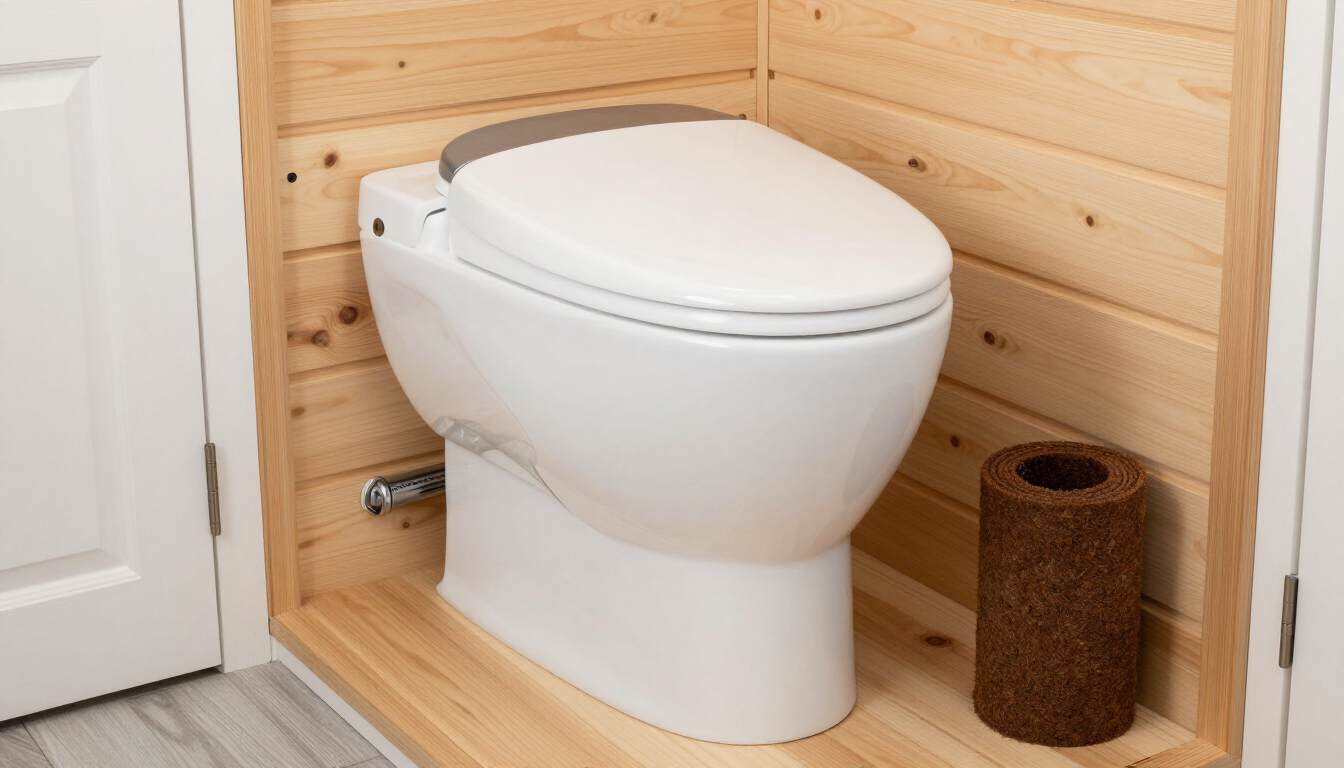
Why composting toilets dominate tiny homes
A composting toilet uses no water and produces a small amount of safe compost instead of blackwater. That eliminates the need for a septic system or black tank — a huge win for
The two main types
Self-contained units combine the toilet and composting chamber in one body — simple, affordable ($900–$1,800), and good for part-time use. Centralized (split) systems put the composting chamber in a basement or outside, with the toilet inside flushing to it via a chute — better for full-time use and easier to empty, but pricier ($1,500–$3,500). Both use a ventilation fan running 24/7 to pull odors out and keep the pile aerated.
Daily and seasonal maintenance
After each solids deposit you add a handful of carbon cover material (coconut coir, sawdust, or peat). The liquid stream is either diverted to a small drain or evaporated by the fan. Every few weeks you rotate the drum or stir the chamber; every few months you empty the finished compost to an outdoor maturation bin. It is about five minutes of attention per week — less than walking a dog.
What about the greywater?
A composting toilet solves only the blackwater stream. Sinks and showers still produce greywater, which you can route to a greywater system for irrigation. Together, the two let a tiny home operate with no septic at all. If you are renting before buying, a tiny home rental is the easiest way to try a composting toilet for real.
Related articles
More guides that dig deeper into the same topics.
Ready to start searching?
Browse tiny homes, plans, builders, communities and land on the interactive map.
Explore the map