Off-Grid
Rainwater Harvesting for Tiny Homes: A Complete Guide
7 min read · Updated January 1, 2026
By John
Roof area, tank sizing, filtration and first-flush diverters — how to turn rainfall into a reliable water supply for a tiny home.
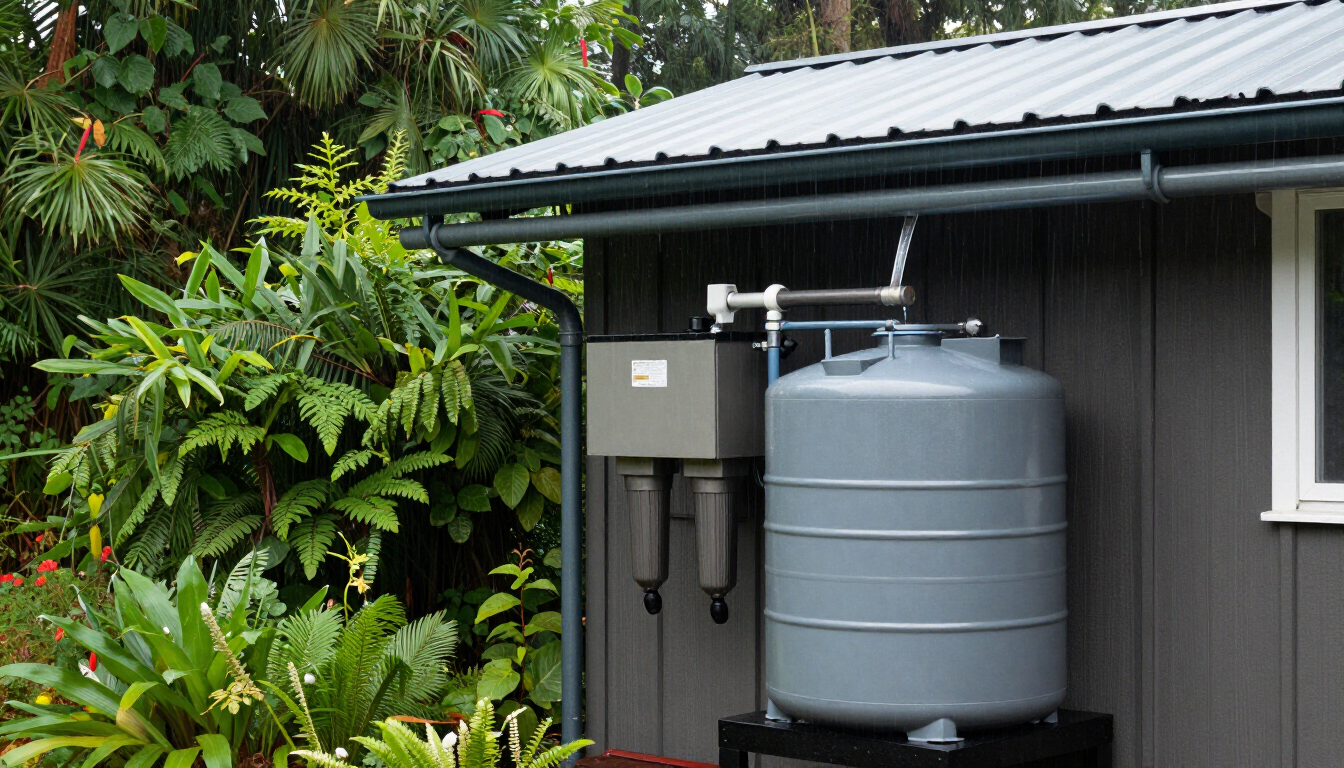
How much water can you catch?
Every 1,000 sq ft of roof collects about 600 gallons per inch of rainfall. A typical tiny home with a 200 sq ft roof therefore catches roughly 120 gallons per inch of rain. In a climate with 30 inches of rain spread through the year, that is 3,600 gallons — enough for one careful person if you store it. The math is simple; the challenge is storage and the dry months. This pairs with our broader off-grid living guide.
Tank sizing for the dry season
Size your tank for your longest dry spell, not your average rainfall. If you use 40 gallons a day and your dry season is 60 days, you need 2,400 gallons of storage to bridge it — even if your annual catch is plenty. Most off-grid tiny homes use 1,500–3,000 gallon food-grade cisterns, buried for cool temperature and freeze protection. It is almost always cheaper to add storage than to add roof area.
Filtration and first-flush
The first few gallons of every rain wash dust, pollen and bird droppings off the roof. A first-flush diverter sends that dirty water away before the rest enters the tank. After the tank, pump water through sediment, carbon and UV stages for drinking-safe water. A metal or smooth
When rain is not enough
In arid climates, rain alone rarely covers a full-time home. Supplement with a well and solar pump, or trucked water delivered to a cistern. Combine rainwater with a greywater system to stretch every gallon by reusing sink and shower water for irrigation. Browse off-grid listings to compare water setups already in the field.
Related articles
More guides that dig deeper into the same topics.
Ready to start searching?
Browse tiny homes, plans, builders, communities and land on the interactive map.
Explore the map