Off-Grid
Off-Grid Heating Options for Tiny Homes
7 min read · Updated December 27, 2025
By John
Wood stoves, propane heaters, mini-splits and radiant floors compared — what each costs, how much fuel they need, and what fits a tiny home.
Insulation before heat source
The cheapest heat is the heat you never need. A well-insulated 300 sq ft tiny home (R-30 walls, R-40 roof) needs only 3,000–5,000 BTU to stay warm in most winter climates — a fraction of what a poorly insulated one demands. Read our insulation guide before choosing a heater; the right insulation can shrink your heating bill by two-thirds.
Wood stoves: romantic and real
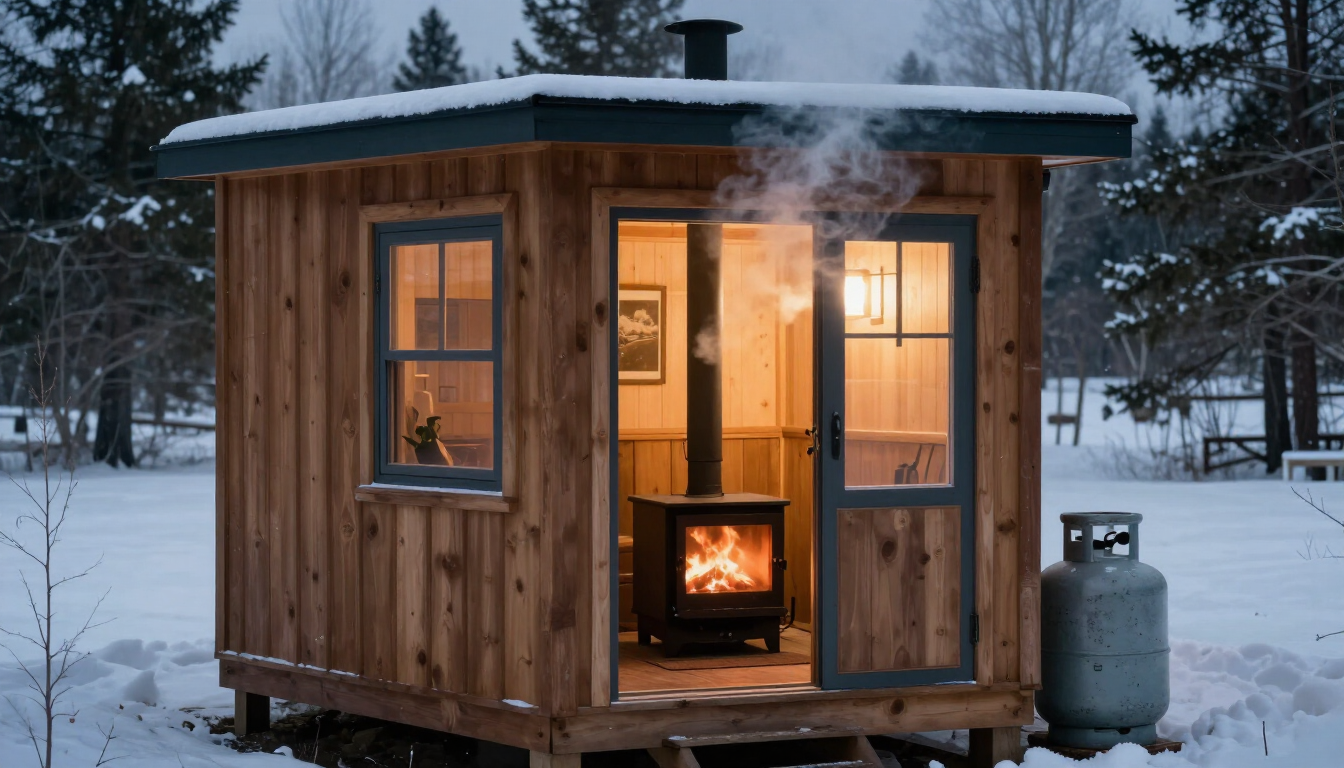
A small marine or tiny-home wood stove (4,000–8,000 BTU) is beloved for its dry heat and independence from fuel deliveries. Costs run $700–$2,500 installed, plus a chimney and hearth. The trade-offs are clearances (stoves need 36 in from combustibles unless shielded), insurance approval, dry fuel storage, and nightly tending. Wood stoves suit full-time
Propane and diesel heaters
Ventless propane heaters are cheap and simple but add moisture and combustion products to the air — most off-grid builders prefer a vented propane heater or a direct-vent wall furnace ($800–$2,000). A 20 lb propane tank runs a small heater for a few days; a 100 lb tank for weeks. Diesel air heaters (popular in van builds) are compact and efficient but need a fuel source and ventilation.
Mini-splits and electric radiant
A ductless mini-split heat pump heats and cools in one unit and runs on your
Related articles
More guides that dig deeper into the same topics.
Ready to start searching?
Browse tiny homes, plans, builders, communities and land on the interactive map.
Explore the map