Building
Tiny Home Insulation: R-Values, Materials and Climate
7 min read · Updated December 26, 2025
By John
Insulation is the single biggest comfort and cost lever in a tiny home. Here is how to choose R-values and materials for your climate.
Why insulation matters more in a tiny home
A tiny home has a high surface-area-to-volume ratio — more exterior skin per square foot of living space than a large house. That means it loses and gains heat faster, so insulation has an outsized effect on comfort and on what size heater and solar system you need. Skimping here is the most common tiny-home regret.
Target R-values by climate
A practical baseline: R-15 to R-20 walls and R-25 roof for mild climates; R-25 to R-30 walls and R-40 roof for cold climates; and R-30+ floor in any cold or mobile home (the floor is exposed to moving air when towing). In hot climates, prioritize the roof and west walls. These targets assume a tight air barrier as well — insulation without air sealing underperforms by 30% or more.
Material choices
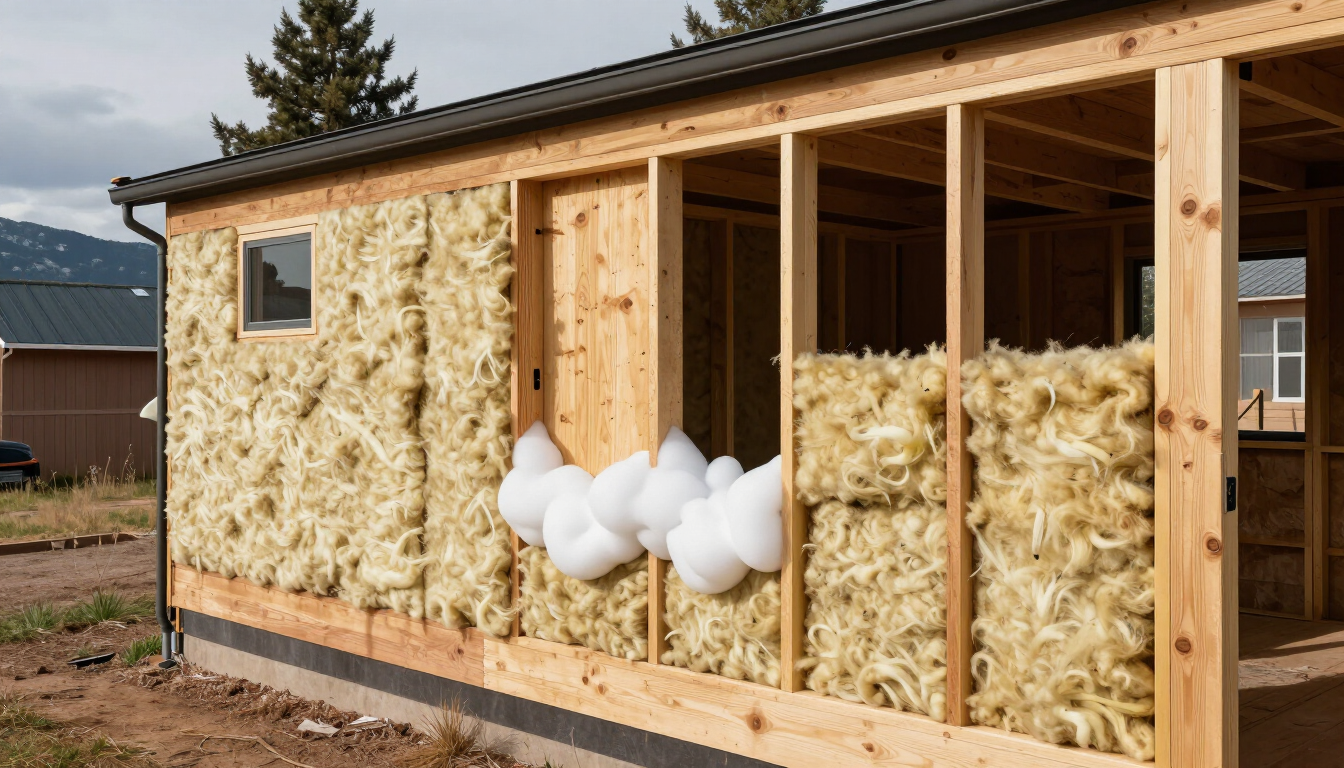
Closed-cell spray foam gives the highest R per inch (~R-6.5) and doubles as an air and vapor barrier — excellent for tiny homes but pricey and fossil-fuel-derived. Mineral wool (R-4 per inch) is fireproof, sound-dampening and moisture-tolerant. Rigid foam boards are cheap and easy. For a lower-impact build, see our sustainable materials guide — hempcrete, sheep's wool and cork all insulate well.
Thermal bridging and moisture
Wood studs conduct heat through insulation, creating thermal bridges that can cut a wall's real R-value by 25%. Break the bridge with a continuous layer of rigid foam outside the framing. Equally important is managing moisture — a tiny home with a tight envelope needs a mechanical vent fan, especially over the shower and composting toilet, or condensation will rot the walls from inside.
Related articles
More guides that dig deeper into the same topics.
Ready to start searching?
Browse tiny homes, plans, builders, communities and land on the interactive map.
Explore the map