Building
Sustainable Building Materials for Tiny Homes
6 min read · Updated December 24, 2025
By John
Reclaimed wood, hempcrete, cork, bamboo and sheep's wool — lower-impact materials that perform well in a tiny-home build.
Why materials matter more here
A tiny home uses far less material than a conventional house, so choosing low-impact options has a proportionally bigger effect on its overall footprint — and the small scale makes premium materials affordable. Many builders now specialize in sustainable tiny homes, and the results are both greener and often healthier to live in.
Structure and insulation
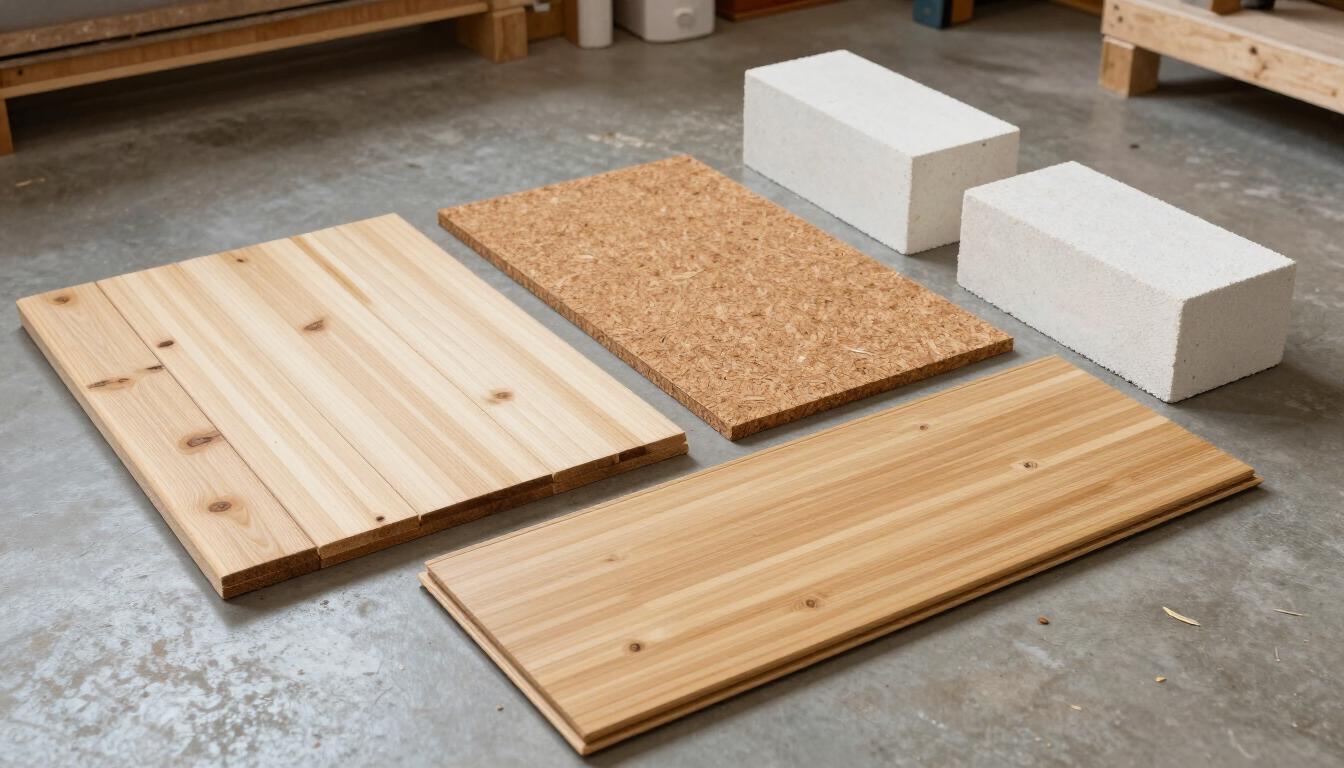
Hempcrete (hemp shiv + lime) is carbon-negative, breathable and insulating (~R-2 per inch) — it suits non-load-bearing wall infill. Sheep's wool batts insulate (~R-3.7 per inch) and naturally manage moisture. Cork boards (R-3.6 per inch) work as rigid insulation and are renewable. Each is covered alongside conventional options in our insulation guide.
Finishes and flooring
Reclaimed barn wood and salvaged lumber give walls and ceilings character with no new harvest. Bamboo flooring is fast-renewing and hard-wearing. Natural plasters (clay or lime) regulate humidity and avoid the VOCs of conventional paint. For countertops, recycled paper-composite and end-grain butcher block are durable and lower-impact than quarried stone.
Roofing and the trade-offs
Standing-seam metal roofing is long-lasting (50+ years) and recyclable, and it is the best surface for
Related articles
More guides that dig deeper into the same topics.
Ready to start searching?
Browse tiny homes, plans, builders, communities and land on the interactive map.
Explore the map