Climate Control

Tiny Home Heating Systems Compared: Wood, Electric, Propane & More

12 min read · Updated February 16, 2026

By John

Wood, electric, propane, radiant floor, or mini-split — the right tiny home heating system depends on your climate, budget, and whether you are on or off grid. Here is an honest comparison.
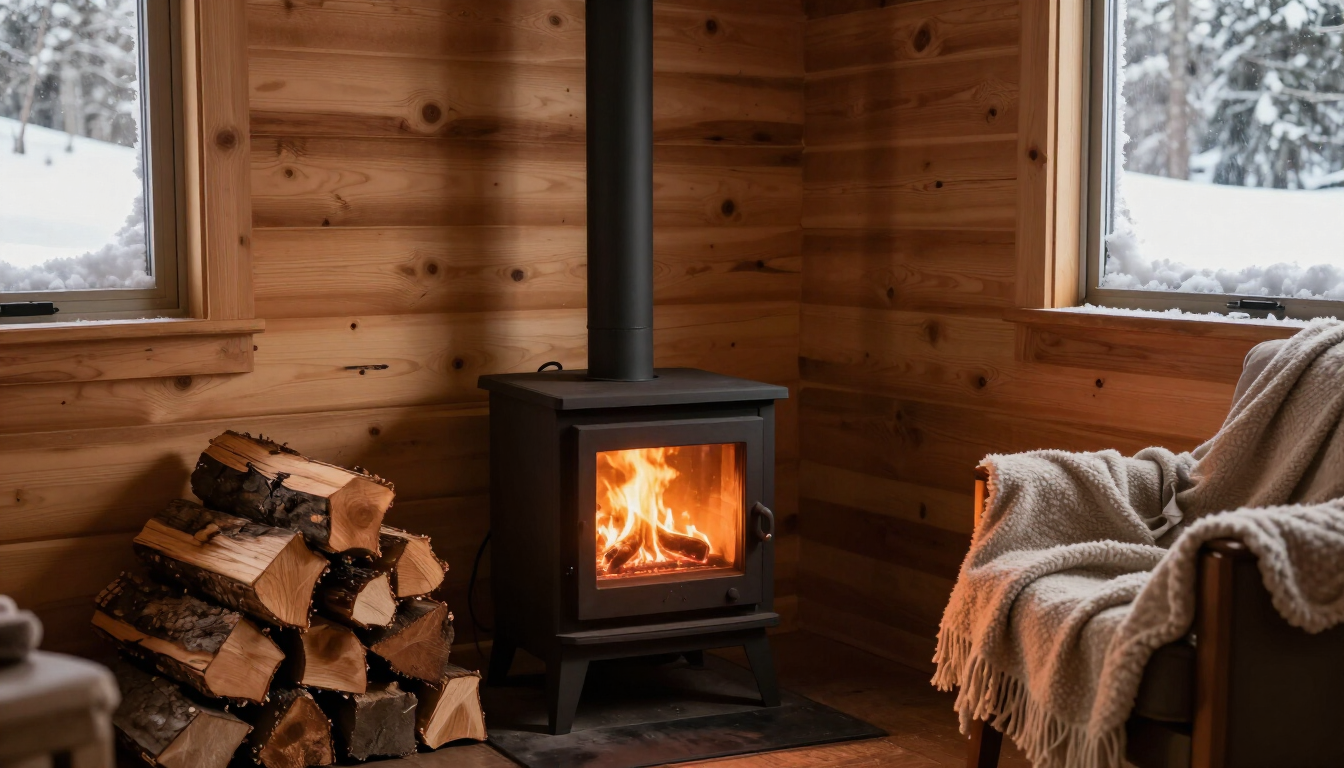
Cozy tiny home interior in winter with a small cast-iron wood stove glowing

How to think about tiny home heating

Heating a tiny home is mostly a heat-loss problem, not a heat-source problem. Because the space is small — often 100–400 sq ft — you need surprisingly few BTUs to warm it. The real challenge is that the same high surface-area-to-volume ratio that makes tiny homes easy to heat also makes them easy to lose heat, so insulation and air sealing matter more than heater size. A well-insulated 200 sq ft tiny home in a cold climate may need only 4,000–6,000 BTU/hr to stay warm, while a drafty one of the same size might need twice that. Size your heater to the heat loss, not to a rule of thumb.

Wood stoves: romantic, renewable, labor-intensive
A small wood stove is the classic tiny-home heat source and the only one that is truly fuel-independent — if you have trees, you have heat. Modern tiny-home stoves (the cubic-foot class marine and RV stoves) are efficient and put out 6,000–12,000 BTU, which is plenty for a small space. The trade-offs are real: you must source and store dry wood, tend the fire, clean the chimney, and manage clearances to combustibles. A wood stove also needs a through-wall or through-roof chimney with proper flashing and heat shielding. For off-grid owners in cold, forested climates it is hard to beat. See our
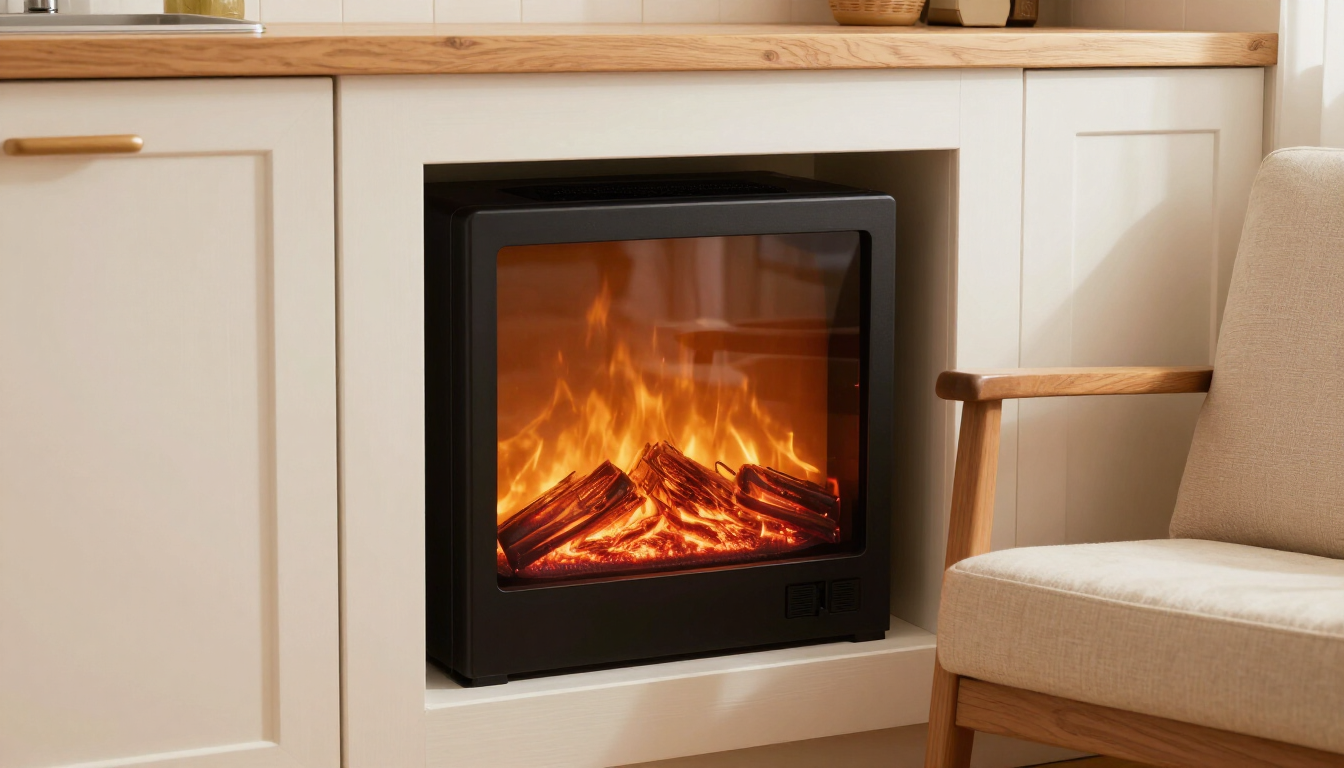
Small electric fireplace heater built into a tiny home wall nook

Electric heaters: simple, safe, grid-dependent
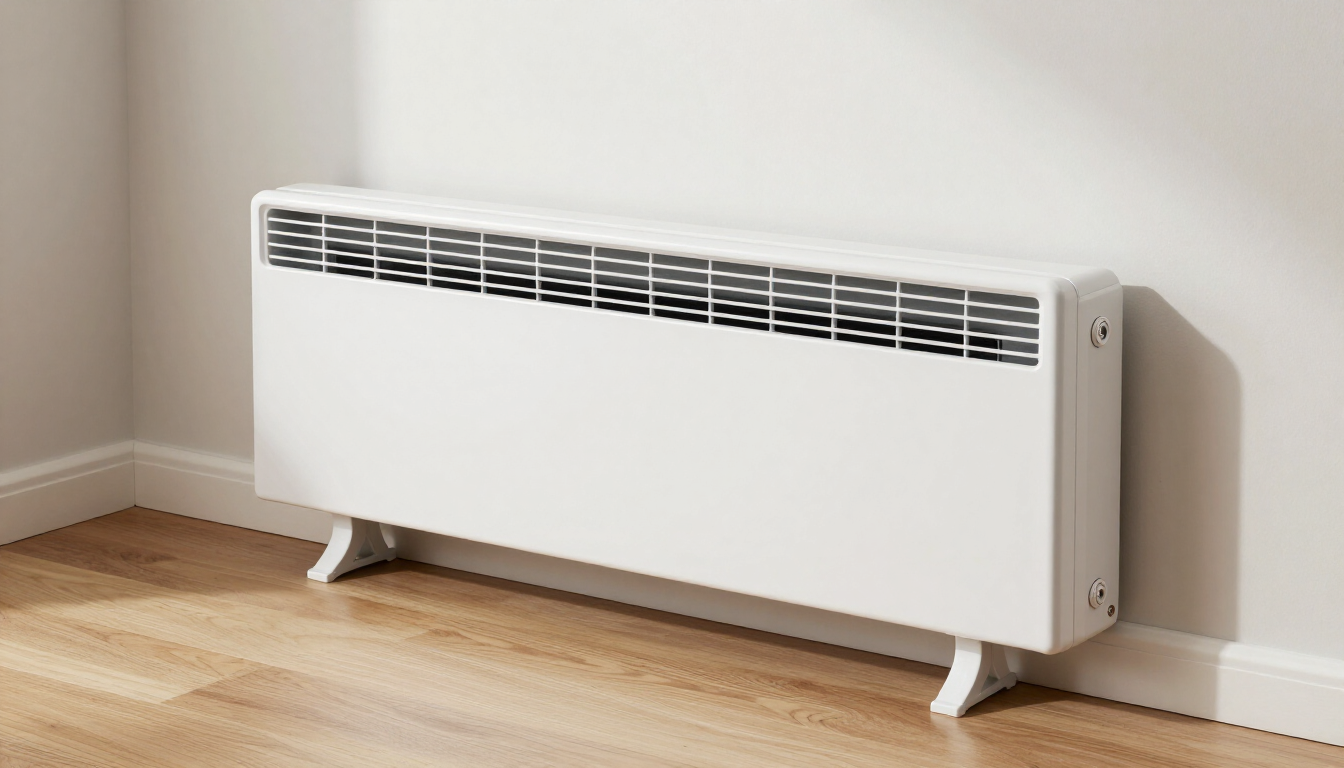
Electric resistance heat — baseboard, wall, or panel heaters — is the simplest tiny-home heating system: no combustion, no fuel storage, no chimney, near-100% efficient at the point of use. The catch is that electricity is usually the most expensive BTU, and a 1,500 W heater draws 12+ amps, which is a lot for a 30-amp tiny-home service. Electric heat is ideal for grid-tied homes in mild climates or as a backup to a primary system. For off-grid use, electric heat is generally impractical unless you have a large solar array and battery bank, since heating directly with stored solar is far more costly than burning a fuel. Pair it with a
Electric baseboard heater mounted low along a tiny home wall

Propane heaters: powerful, off-grid-friendly, venting matters
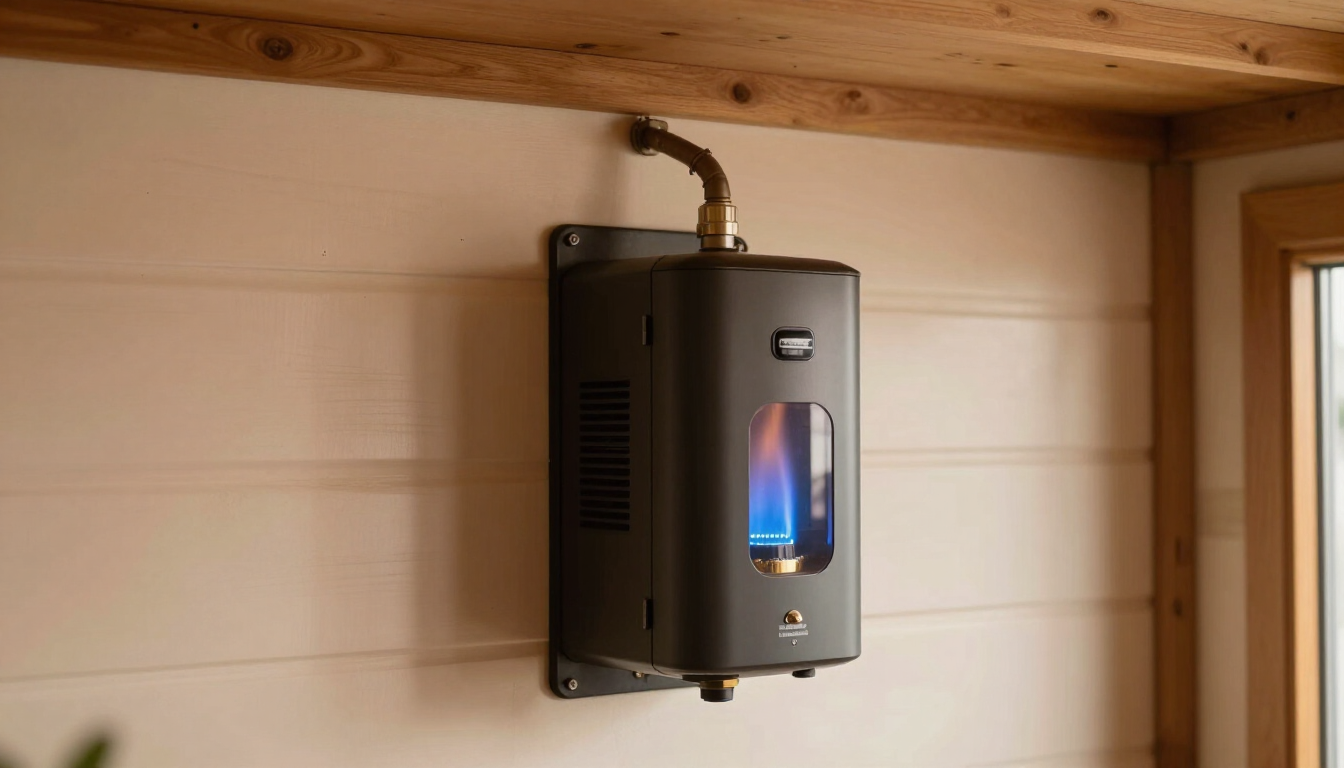
Propane packs a lot of BTUs into a small tank, which makes it attractive for off-grid tiny homes. Vent-free (ventless) propane wall heaters are cheap and need no chimney, but they release moisture and combustion products into the living space — fine for occasional use in a well-ventilated home, less ideal for full-time heating. Direct-vent propane heaters and small furnaces draw combustion air from outside and exhaust outside, making them safer for continuous use. Always install a propane detector and follow clearance requirements. Propane is the go-to for off-grid heating in cold climates where wood is impractical.
Propane wall heater mounted in a tiny home with a propane line

Mini-split heat pumps: efficient, dual-purpose, pricey up front

A ductless mini-split heat pump is the most efficient electric heating option, delivering 2–3 BTU of heat per BTU of electricity consumed by moving heat rather than creating it. The bonus is that it also air-conditions in summer, solving two problems with one unit. The downsides are upfront cost ($1,500–$3,500 installed for a small unit), complexity, and that a mini-split still needs significant power — though far less than resistance heat. For grid-tied or large-solar tiny homes in mixed climates, a mini-split is often the best single appliance. Browse

Radiant floor heating: even comfort, low output
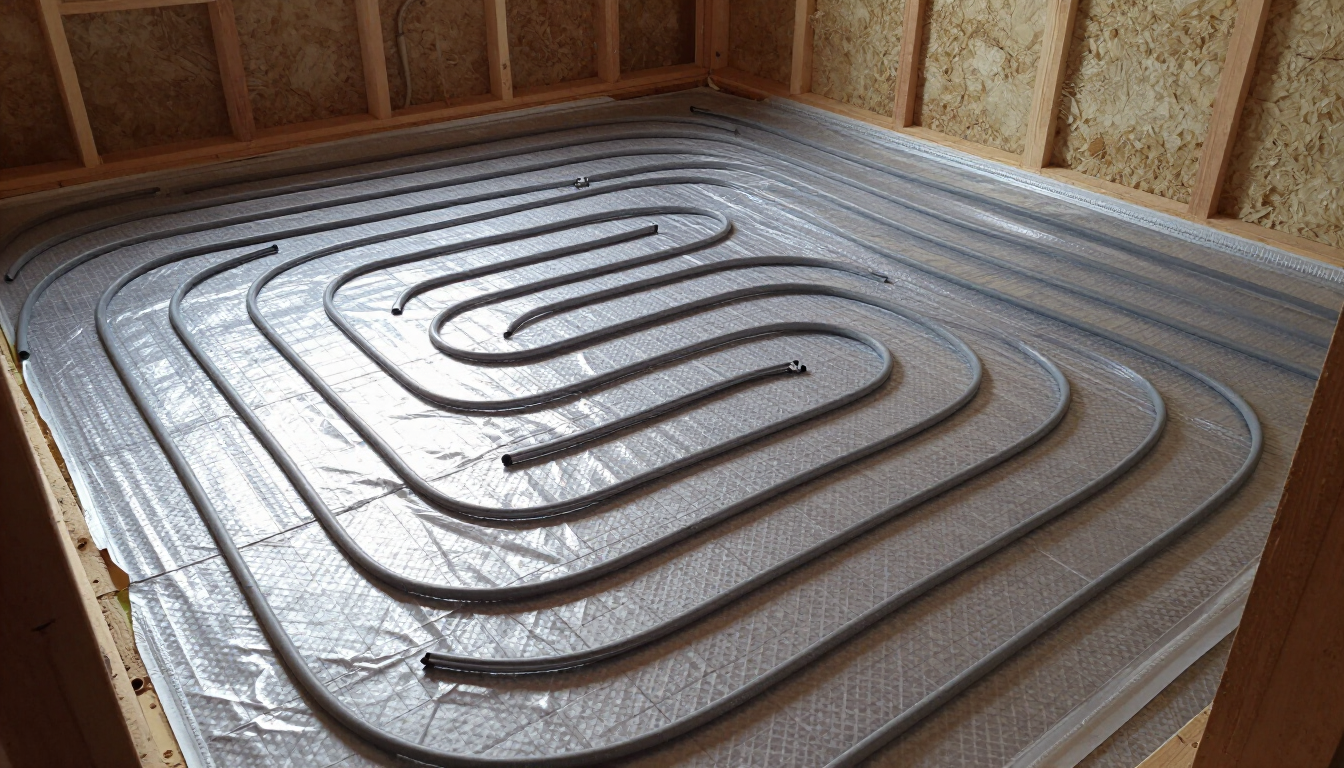
Radiant floor heating — electric mats or hydronic PEX tubing warmed by a water heater — delivers heat low in the room where people are, with no fan noise and no dust movement. It feels luxurious at lower air temperatures. The limitation is output: a floor can only get so warm before it is uncomfortable to walk on, so radiant alone may not keep up in deep cold. It is best as supplemental comfort heating paired with a primary source, or in mild climates. Hydronic systems add complexity and are rare in tiny homes on wheels; electric mat systems are simpler.
PEX radiant floor heating tubing being installed over insulation in a tiny home

Heating systems compared

SystemUpfront costRunning costOff-grid?Maintenance
Wood stoveMediumLow (free fuel)YesHigh (chimney, ash)
Electric resistanceLowHighNo (usually)Low
Propane (direct-vent)MediumMediumYesLow–medium
Mini-split heat pumpHighLowWith big solarLow
Radiant floor (electric)MediumHighNo (usually)Low
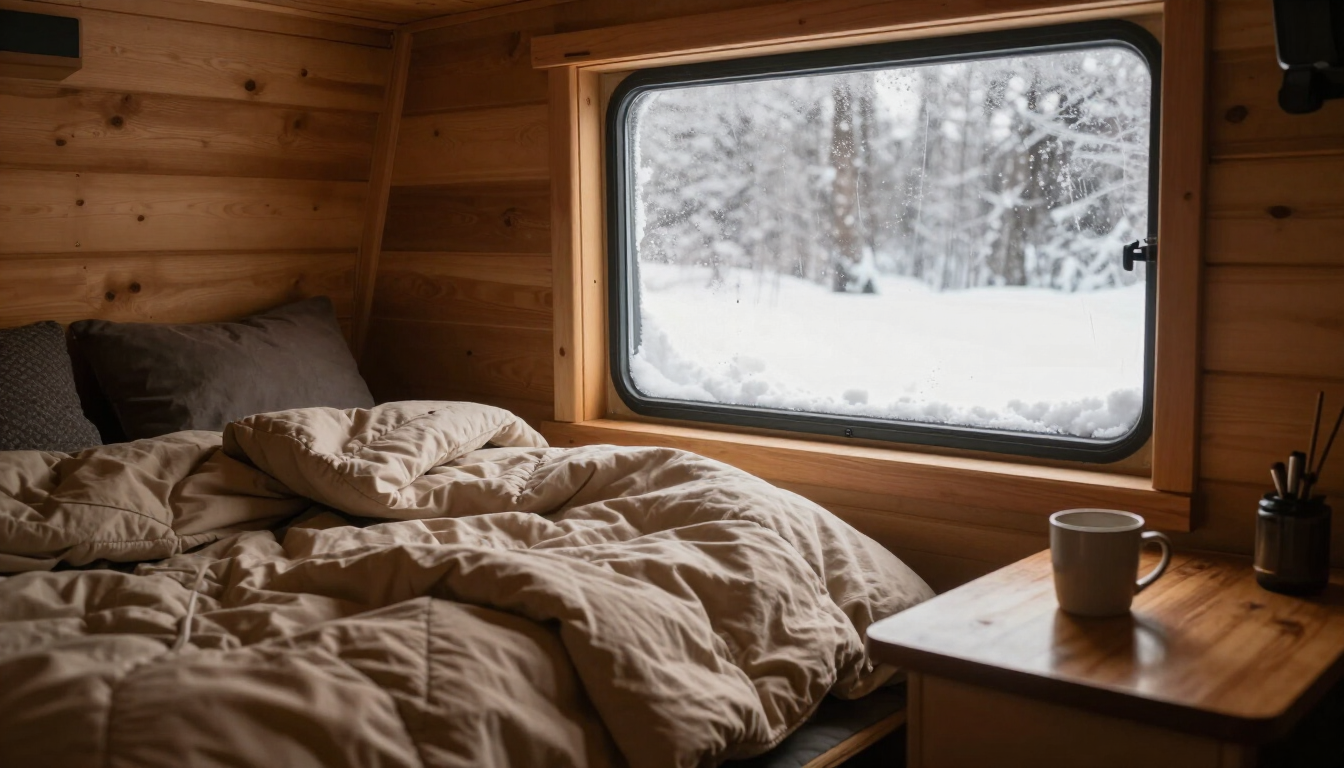
Cozy warm tiny home interior with snow outside a frosted window

Sizing and safety basics

To size a heater, estimate heat loss: roughly 20–40 BTU per sq ft depending on insulation and climate, so a 200 sq ft well-insulated tiny home in a moderate climate needs about 6,000–8,000 BTU. Oversizing a wood stove is a common mistake — too much output in a tiny space means you run it choked-down, which creosotes the chimney and wastes fuel. Safety is non-negotiable: any combustion heater needs a carbon monoxide detector, proper clearances, and (for propane) a gas detector. Insulate first; a tight envelope lets you choose a smaller, safer, cheaper heater. See also our
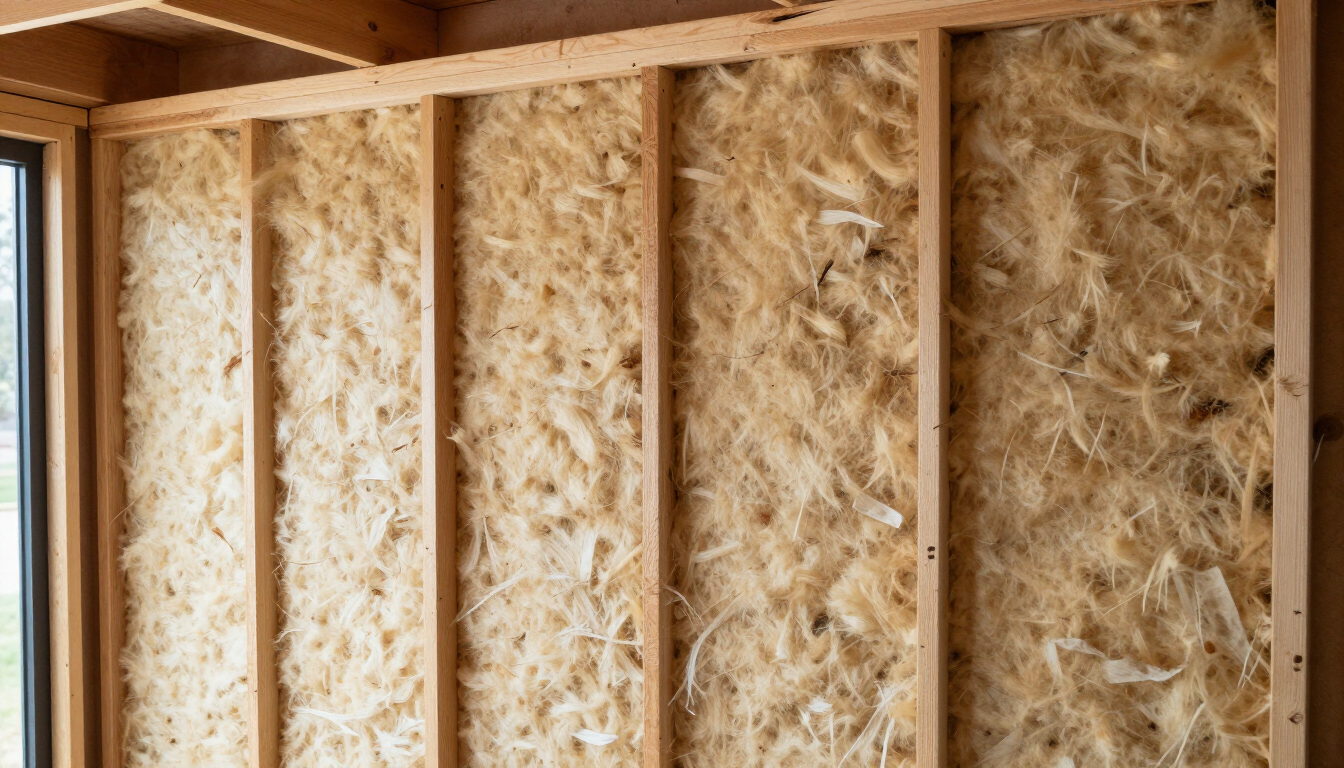
Mineral wool insulation being installed between studs to reduce heating load

Choosing the right system for your situation

Match the heater to your reality, not your fantasy. Off-grid in a cold forest? A wood stove with a propane backup is the proven combo. Grid-tied in a mixed climate? A mini-split handles both heating and cooling efficiently. Mild climate, simple build? Electric resistance is cheap and safe. Wherever you land, insulate and air-seal first — it is the highest-return investment and it shrinks every other decision. Then explore builders who understand cold-climate tiny homes, or browse the map for homes already set up for your region.

Related articles

More guides that dig deeper into the same topics.

Frequently asked questions

What is the cheapest tiny home heating system to run?+

A wood stove if you have free firewood, and a mini-split heat pump if you are on grid electricity. Electric resistance heat is the cheapest to buy but usually the most expensive to run.

Can I heat a tiny home off-grid with electricity?+

It is possible but costly. Heating with stored solar requires a large battery bank because heating loads are high. Most off-grid owners use wood or propane for heat and reserve solar for lights, fridge, and electronics.

Are vent-free propane heaters safe in a tiny home?+

They are acceptable for occasional use with good ventilation and a propane and carbon monoxide detector, but for full-time heating a direct-vent unit that exhausts outside is much safer because it does not release combustion products indoors.

How many BTUs do I need to heat a tiny home?+

A well-insulated 200 sq ft tiny home typically needs 4,000–8,000 BTU/hr depending on climate. Insulate and air-seal first, then size the heater to the actual heat loss rather than a rule of thumb.

Is a wood stove too much heat for a tiny home?+

It can be. Oversized stoves run choked-down, which builds creosote and wastes wood. Choose the smallest efficient stove rated for your square footage, and consider a marine or RV-sized stove designed for small spaces.

Do I need a carbon monoxide detector in a tiny home?+

Yes, absolutely — any home with a combustion heater (wood, propane, or oil) needs a working CO detector, plus a smoke detector and, for propane, a gas detector.

Can one appliance heat and cool a tiny home?+

Yes. A ductless mini-split heat pump provides both efficient heating and air conditioning in one unit, making it a popular single-appliance choice for grid-tied or large-solar tiny homes in mixed climates.

Ready to start searching?

Browse tiny homes, plans, builders, communities and land on the interactive map.

Explore the map
>