Design & Interior Layout

Tiny Home Decor: Personalizing Small Spaces

11 min read · Updated March 14, 2026

By John

A tiny home does not have to feel like a box. With the right decor choices — color, light, textiles, and a few well-chosen pieces — you can make a small space feel personal, warm, and surprisingly expansive. Here is how.
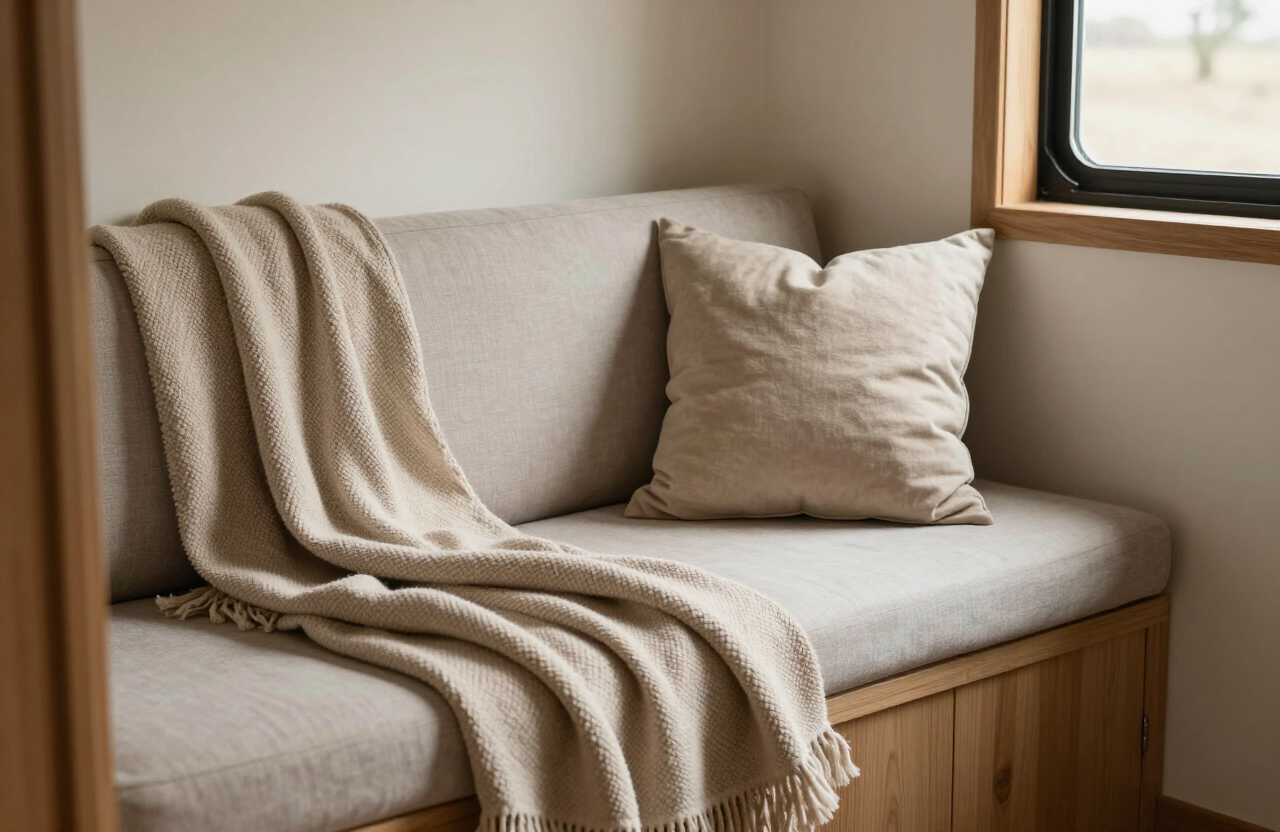
Cozy tiny home corner with layered throw blankets and cushions on a bench seat in warm neutral tones

Decor principles for small spaces

In a tiny home, every decor choice does double duty — it has to look good and earn its place functionally. Three principles guide the rest. First, edit ruthlessly: a few meaningful pieces beat a clutter of decorations, because visual noise shrinks a small room. Second, let light lead the design: a bright, well-lit space feels larger than a dim one of the same size. Third, choose multifunctional pieces whenever possible — a bench that stores blankets, a mirror that bounces light, a shelf that displays and divides. Hold every decor decision against these three tests before it comes inside. For more on layout, see our interior design guide.

Color and palette

Color sets the perceived size of a tiny home. Light, cohesive palettes — whites, warm creams, soft greys, pale wood — reflect light and make walls recede, so the space feels larger. You do not have to live in white: a warm neutral base with one or two accent colors keeps the room calm while letting you express personality. Dark, dramatic palettes can work in a tiny home if you commit fully, creating a cozy jewel-box effect rather than a cramped one. The mistake to avoid is mixing too many strong colors, which fragments the small space. Pick a palette of three to four colors and repeat it throughout.
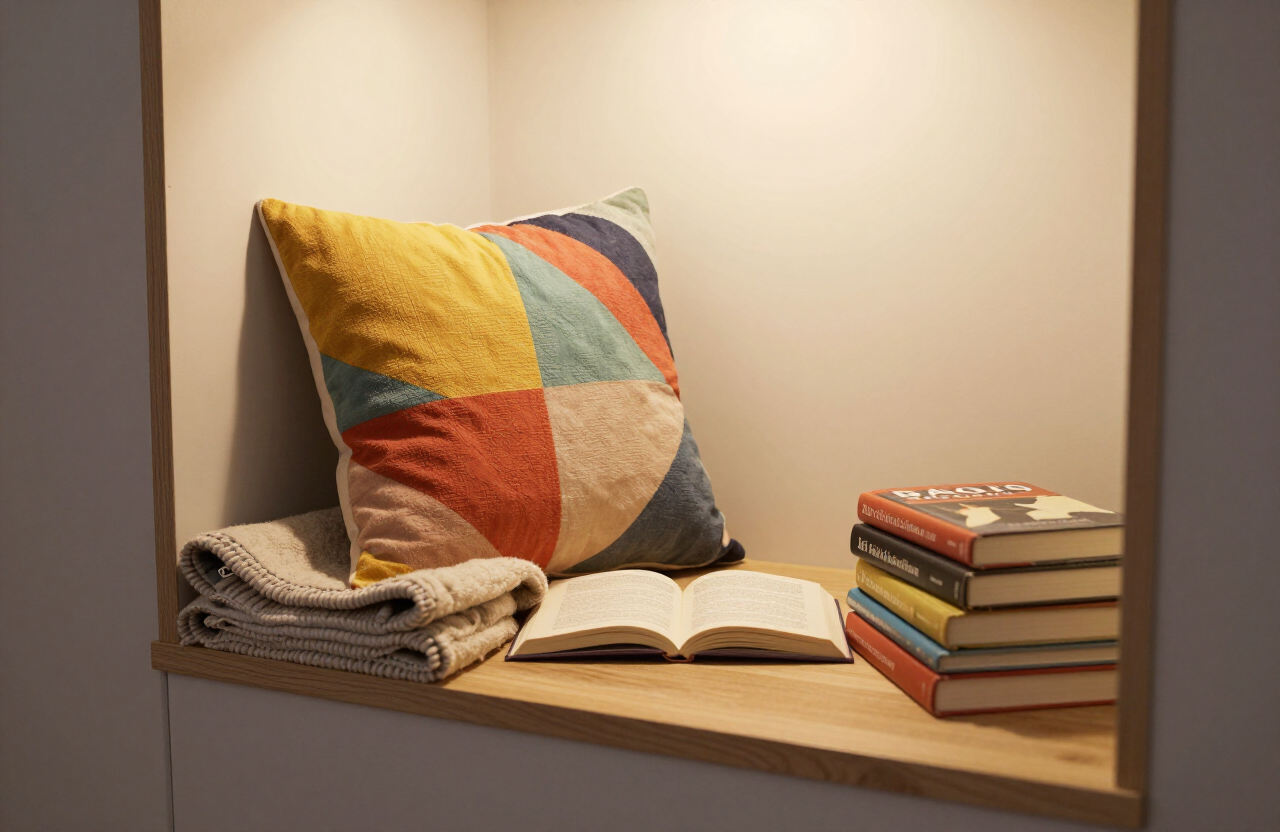
Small tiny home reading nook with a colorful accent pillow, a folded blanket, and a stack of books

Textiles that add warmth without bulk
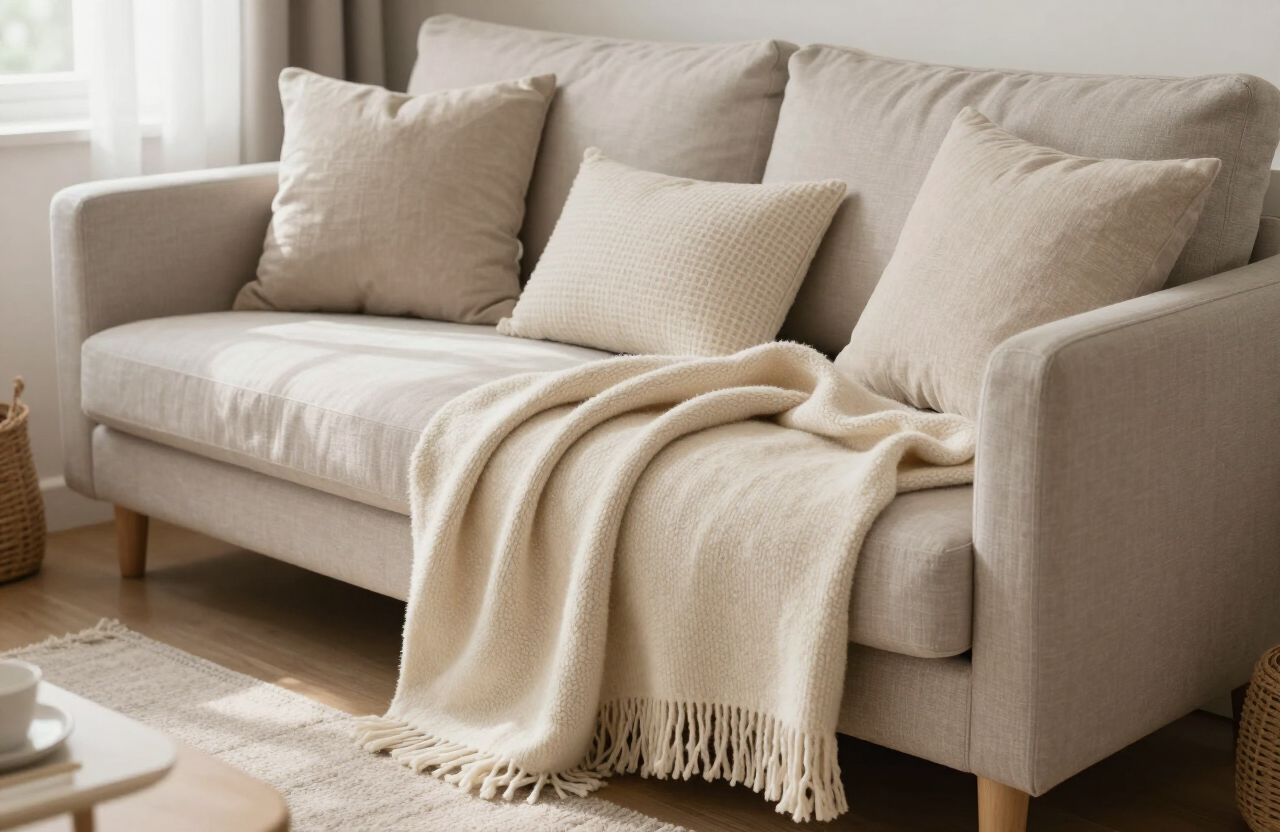
Textiles are the easiest way to warm up a tiny home without adding visual clutter. Layer a throw blanket and two or three cushions on a bench or bed in a coordinated palette. Choose a small rug that defines a zone — the living area, the kitchen — without covering the whole floor. Use curtains sparingly and hang them high and wide to make windows feel taller. Linen, wool, and cotton in natural textures add tactile warmth that reads as cozy rather than crowded. The rule is layering within a palette, not piling on colors — two textures in the same tone beat five colors in five textures.
Layered textiles in a tiny home adding warmth: a wool throw blanket, linen cushions and a small rug on a sofa

Lighting a tiny home

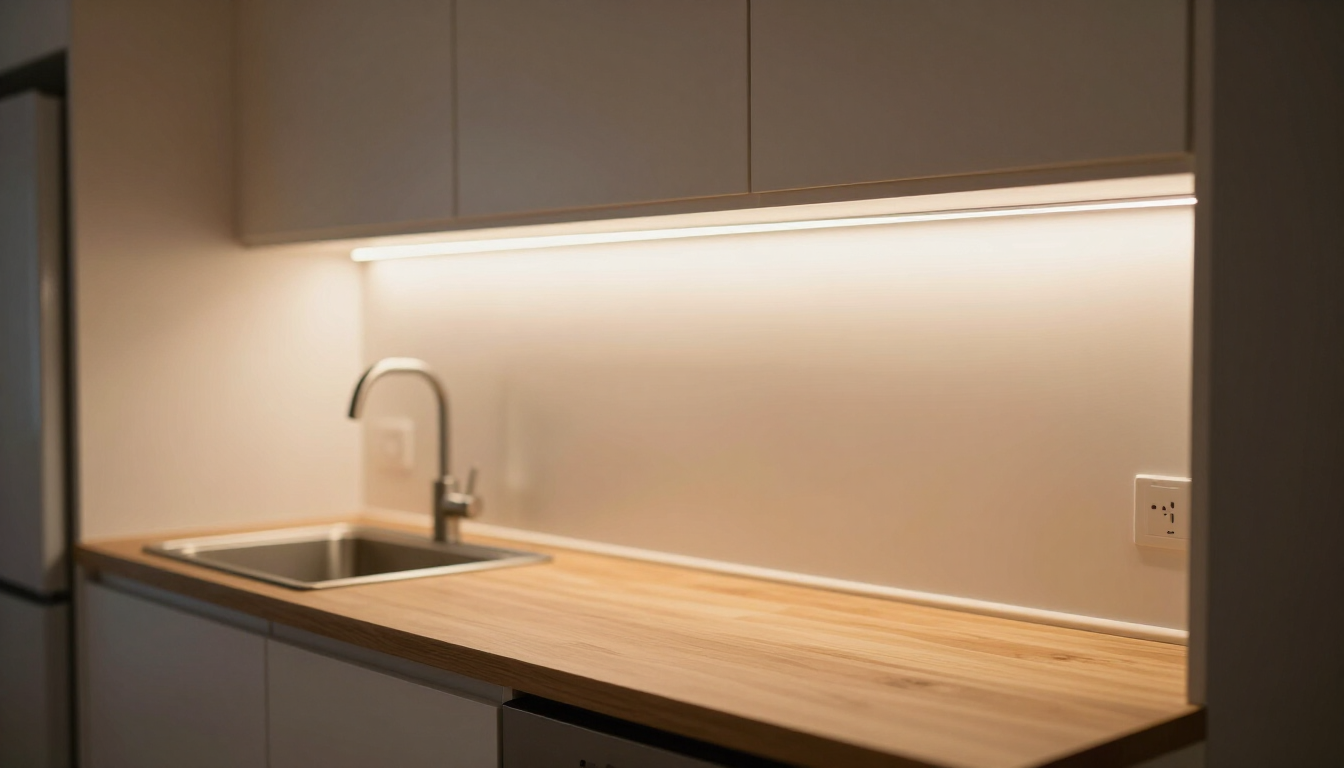
Lighting is the most powerful decor tool in a small space. Layer three types: ambient light for overall brightness, task light for cooking and reading, and accent light for warmth and mood. Use warm-temperature LEDs (2700K to 3000K) to keep the space feeling cozy. Add under-cabinet strip lighting to brighten work surfaces without taking wall space, and a small pendant or sconce over a seating area to create a focal point. Avoid a single harsh ceiling light that flattens the room. Dimmers let you shift from bright daytime work to soft evening calm in the same small space.
Smart LED strip lighting under tiny home kitchen cabinets glowing warm white

Mirrors and vertical space

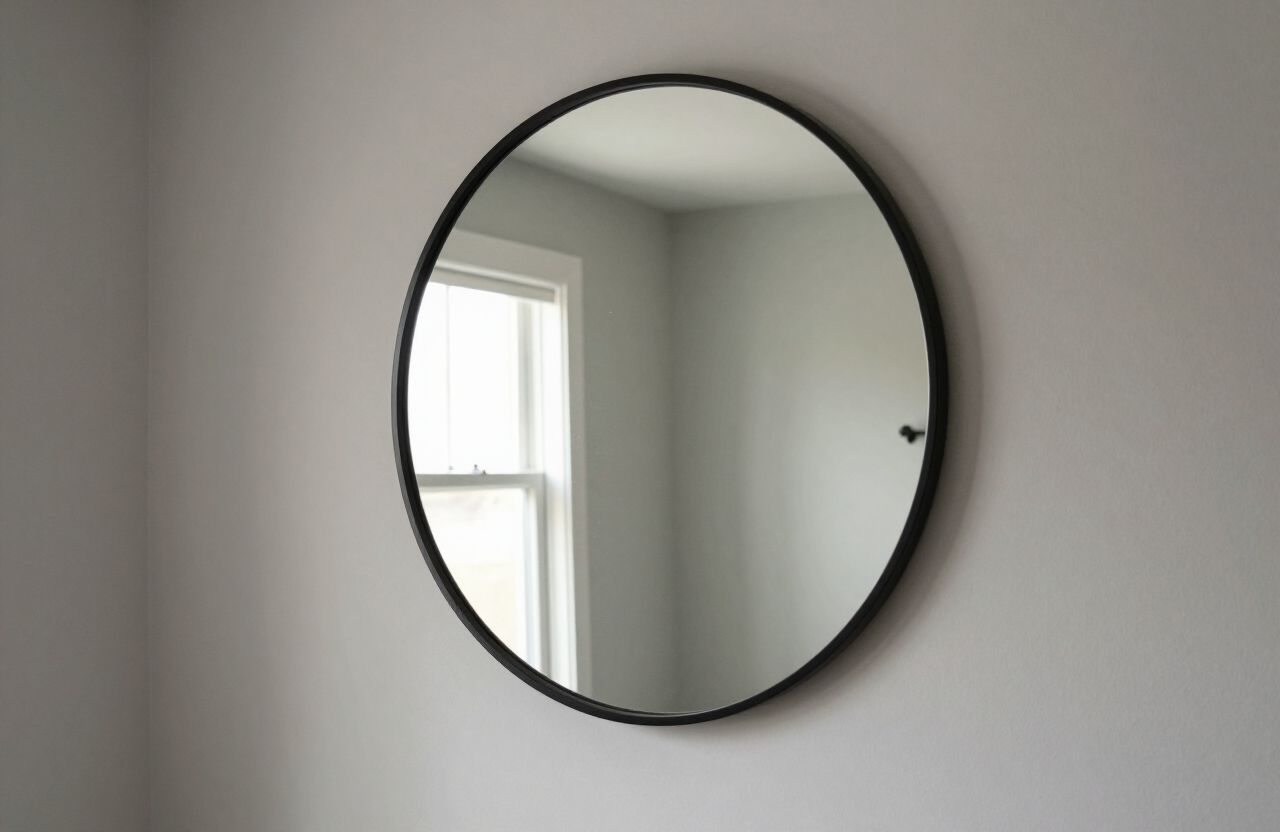
Mirrors are a tiny home's best trick for perceived space. A large mirror opposite or adjacent to a window bounces daylight deep into the room and creates the illusion of depth. Hang mirrors vertically to draw the eye up and emphasize ceiling height. Beyond mirrors, use vertical space for decor: tall bookshelves, hanging plants, and art hung high all draw attention upward and make the ceiling feel taller. Keep the floor as clear as possible, because visible floor space reads as roominess. The goal is to decorate the walls and the air, not the floor.
Large round mirror on a tiny home wall reflecting window light to make the small space feel bigger

Plants and natural elements

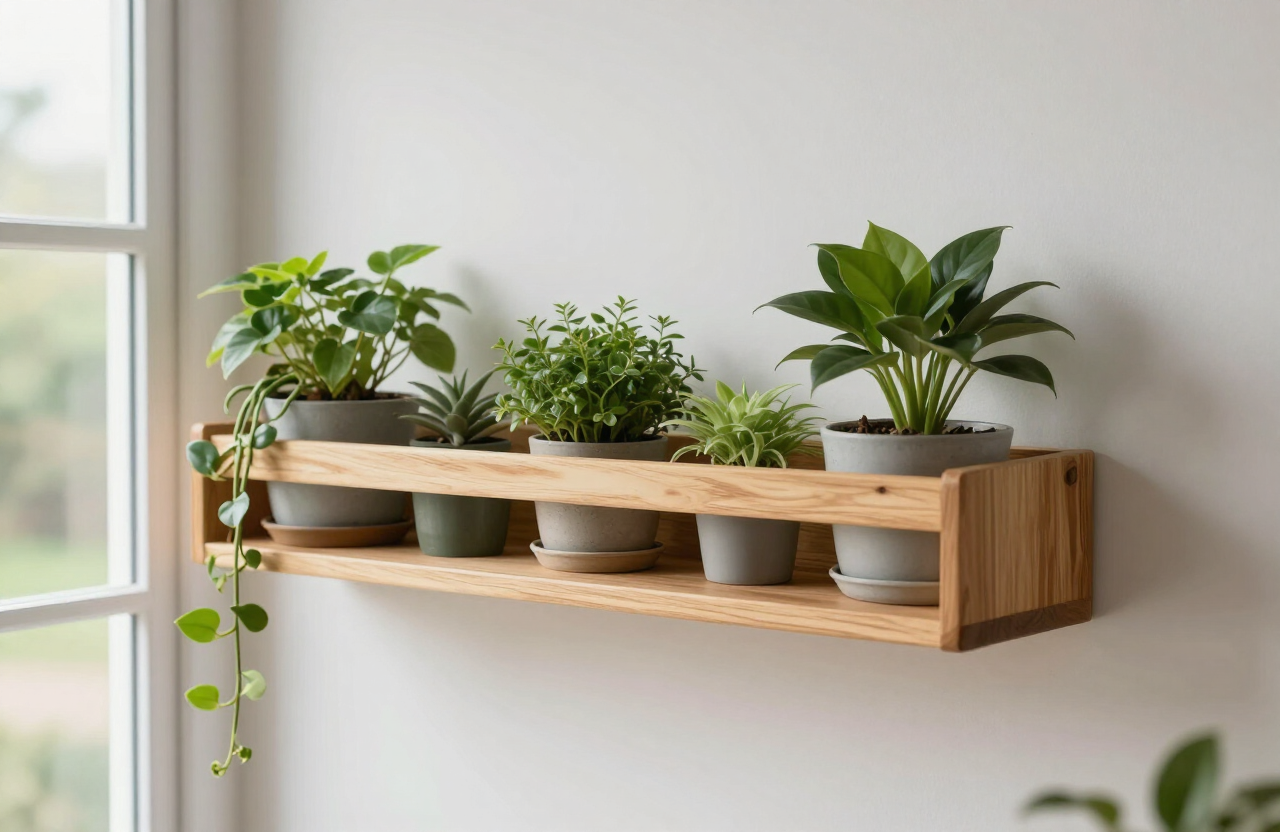
Plants bring life to a tiny home without adding clutter, and they improve air quality as a bonus. Choose a few statement plants rather than a crowded collection — a trailing pothos on a high shelf, a small fiddle leaf in a corner, herbs in the kitchen window. Use wall-mounted planters and hanging baskets to keep surfaces clear. Beyond plants, natural materials — wood, stone, linen, rattan — add warmth and texture that read as organic rather than busy. Biophilic touches connect a small interior to the outdoors, which is exactly the feeling that makes tiny living feel expansive. See our aesthetics guide for more.
Floating wooden shelf in a tiny home filled with small potted plants and trailing vines near a window

Art and personal touches

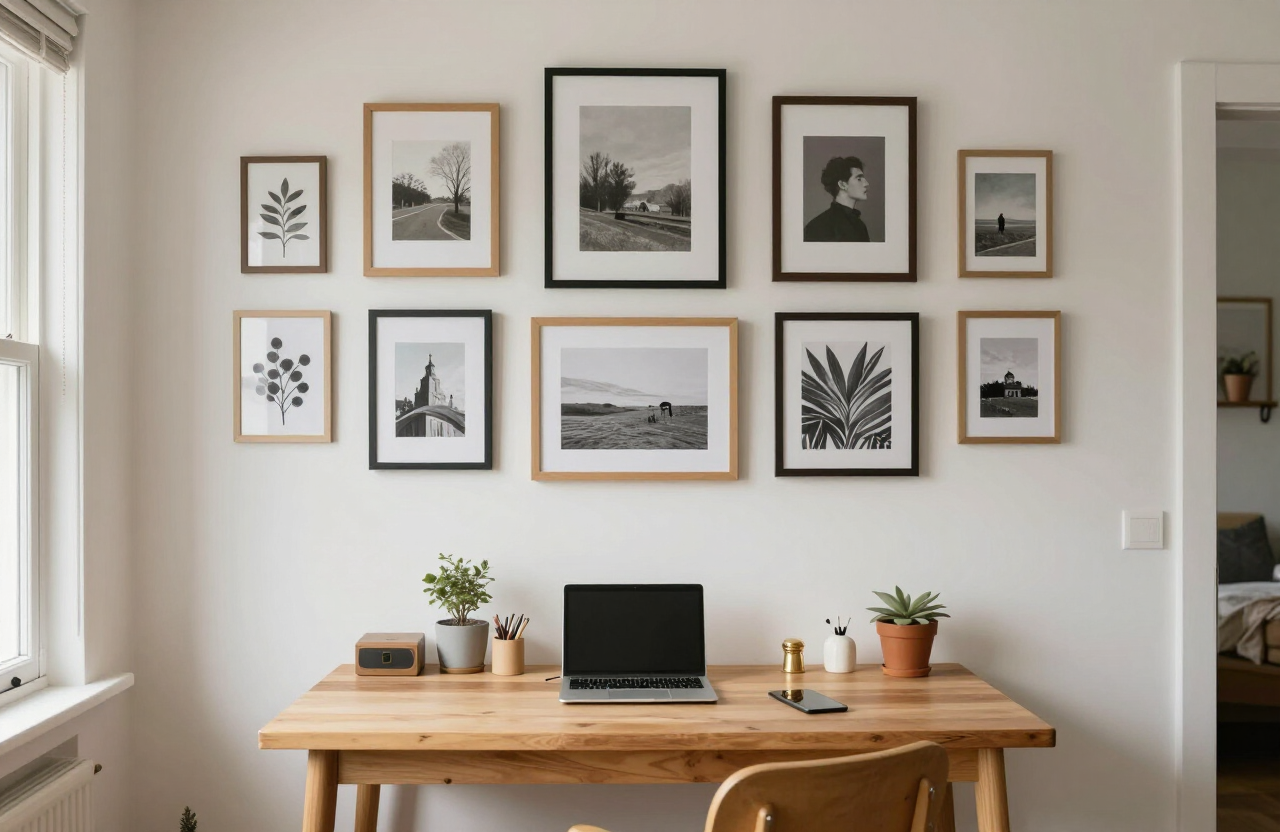
Personal art is what turns a tiny house from a cabin into your home. A gallery wall of framed prints above a desk or sofa adds personality without using floor space — keep frames cohesive in color and size to avoid clutter. Lean into a theme that reflects you: travel photos, botanical prints, family pieces. Rotate art seasonally so the space feels fresh without accumulating more. Display a few meaningful objects — a favorite book stack, a ceramic, a found stone — rather than a shelf of trinkets. In a tiny home, every visible object should be either useful or loved, ideally both.
Gallery wall of framed art and prints above a tiny home desk

Multifunctional and storage-forward decor
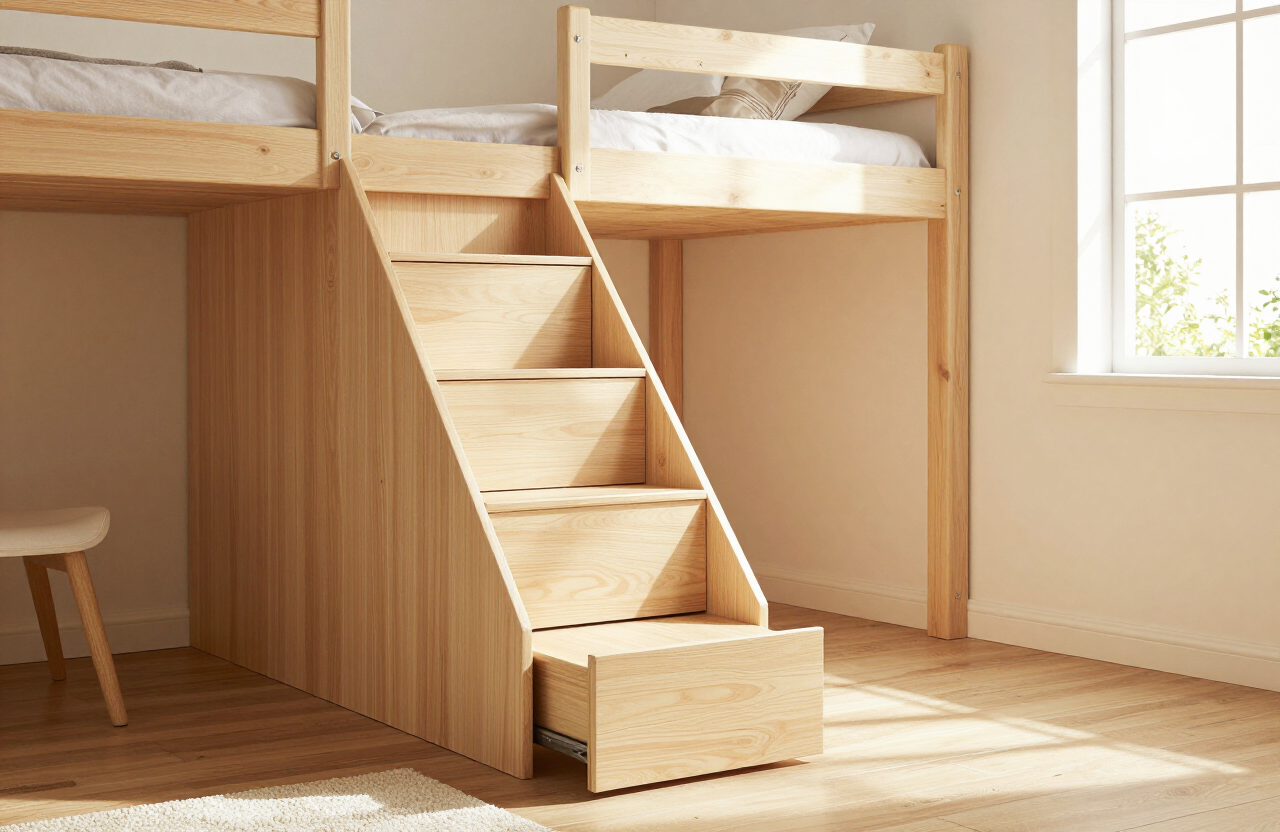
The best tiny home decor also stores things. A storage ottoman doubles as a coffee table and a blanket bin. A staircase with pull-out drawers leads to a loft and hides clothes. Open shelving displays beautiful items and keeps essentials within reach. Choose furniture with hidden storage — a bed with drawers, a bench that lifts — and let the storage replace closets you do not have. When decor and storage merge, the home stays tidy by design, and tidiness is the foundation of a small space that feels serene rather than stuffed.
Multifunctional storage staircase in a tiny home with pull-out drawers leading up to a loft bed

Decor choices at a glance

ElementSmall-space approachWhat to avoid
ColorLight cohesive palette, 1–2 accentsMany strong colors at once
TextilesLayered within one palettePiling many colors and patterns
LightingLayered, dimmable, warm LEDsOne harsh ceiling light
MirrorsLarge, opposite windows, verticalTiny decorative mirrors
PlantsA few statement plants, hung highCrowded surfaces of small pots
ArtCohesive gallery wall, rotatedRandom unframed clutter
FurnitureStorage-integrated, multifunctionalBulky one-purpose pieces
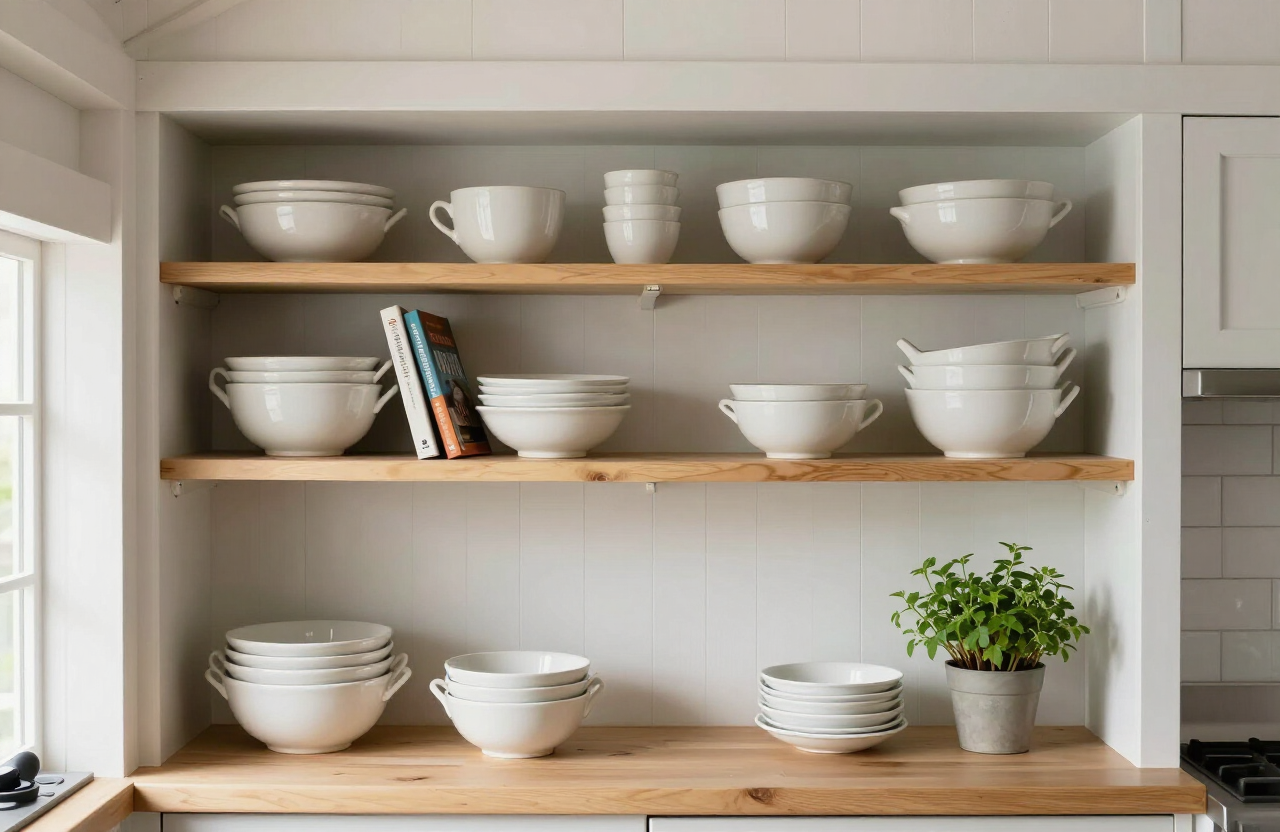
Curated open shelving in a tiny home kitchen with matching ceramics, a few cookbooks, and a small herb plant

Making a tiny home yours

The best tiny home decor reflects the person who lives there, not a catalog. Start with a cohesive palette and good lighting, add textiles and a few plants for warmth, hang art that means something to you, and choose furniture that stores as well as it shows. Edit often, because a tiny home rewards restraint. When every visible object is useful or loved, the small space feels intentional and expansive rather than cramped. Find inspiration in tiny homes for sale, explore home plans, and read our interior design guide for layout ideas.

Related articles

More guides that dig deeper into the same topics.

Frequently asked questions

How can I make a tiny home feel bigger?+

Use a light, cohesive color palette, add a large mirror opposite a window to bounce daylight, layer dimmable lighting, draw the eye up with vertical shelving and hanging plants, and keep the floor clear. Cohesion and light do more for perceived space than any single decor piece.

What colors work best in a tiny home?+

Light, cohesive palettes — whites, warm creams, soft greys, pale wood — reflect light and make walls recede. Add one or two accent colors for personality. A fully committed dark palette can also work, creating a cozy jewel-box effect. Avoid mixing many strong colors, which fragments a small space.

How do I decorate a tiny home without clutter?+

Edit ruthlessly so every visible object is useful or loved. Choose a few meaningful pieces over a shelf of trinkets, use a cohesive gallery wall for art, and let multifunctional storage furniture handle the rest. A daily reset and a one-in-one-out rule keep clutter from creeping back.

Are plants good for tiny home decor?+

Yes. A few well-chosen plants bring life and improve air quality without clutter. Use wall-mounted planters and hanging baskets to keep surfaces clear, and choose a few statement plants over a crowded collection. Natural materials like wood and rattan complement plants and add organic warmth.

What lighting is best for a small space?+

Layer ambient, task, and accent lighting with warm LEDs (2700K–3000K). Add under-cabinet strip lighting for work surfaces and a pendant or sconce for a focal point. Install dimmers to shift from bright work to soft evening mood. Avoid a single harsh ceiling light that flattens the room.

How do I use mirrors in a tiny home?+

Place a large mirror opposite or adjacent to a window to bounce daylight and create depth. Hang mirrors vertically to draw the eye up and emphasize ceiling height. One large mirror does more for perceived space than several small decorative ones.

What furniture works best in a tiny home?+

Choose multifunctional, storage-integrated pieces — a storage ottoman, a bed with drawers, a staircase with pull-out drawers, a bench that lifts. Let storage furniture replace closets you do not have, and keep the floor clear. Bulky one-purpose pieces shrink a small space fast.

Ready to start searching?

Browse tiny homes, plans, builders, communities and land on the interactive map.

Explore the map
>