Design & Interior

Tiny Home Aesthetics: Interior Design Trends

11 min read · Updated March 13, 2026

By John

A tiny home's small footprint is a design constraint that sparks some of the most creative interiors anywhere. Here is a tour of the tiny home interior design trends shaping how small spaces look and feel today.
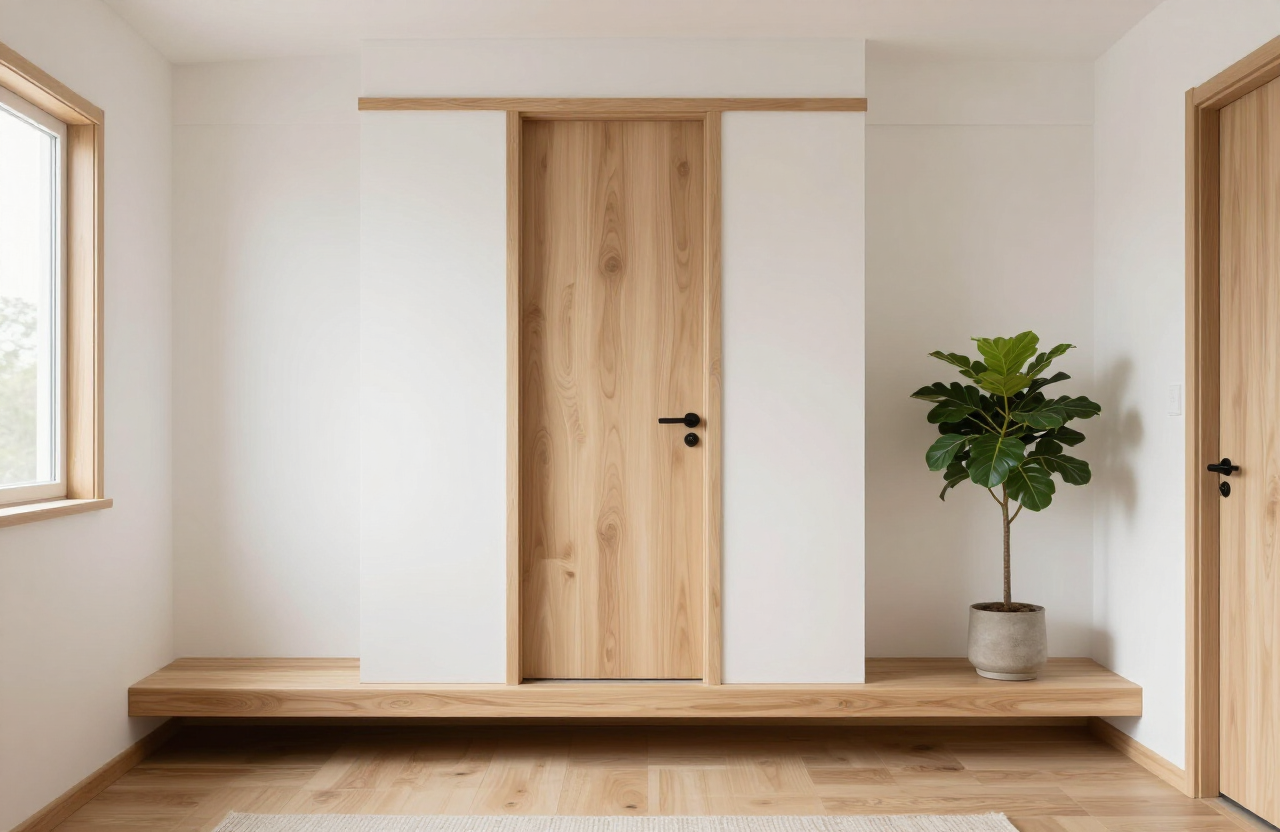
Stylish minimalist tiny home interior with Scandinavian design, light wood, white walls, and a single statement plant

Small space, big design personality

A tiny home forces design decisions that a large house can hide, which is why tiny interiors often feel more intentional than sprawling ones. Every surface is seen, every object is chosen, and every material earns its place. Tiny home interior design trends lean toward restraint, natural materials, and clever multifunctionality — not because small spaces cannot be bold, but because in a small space, every choice counts twice. Browse home plans and tiny homes for sale to see these aesthetics in real homes.

Minimalist and Scandinavian restraint

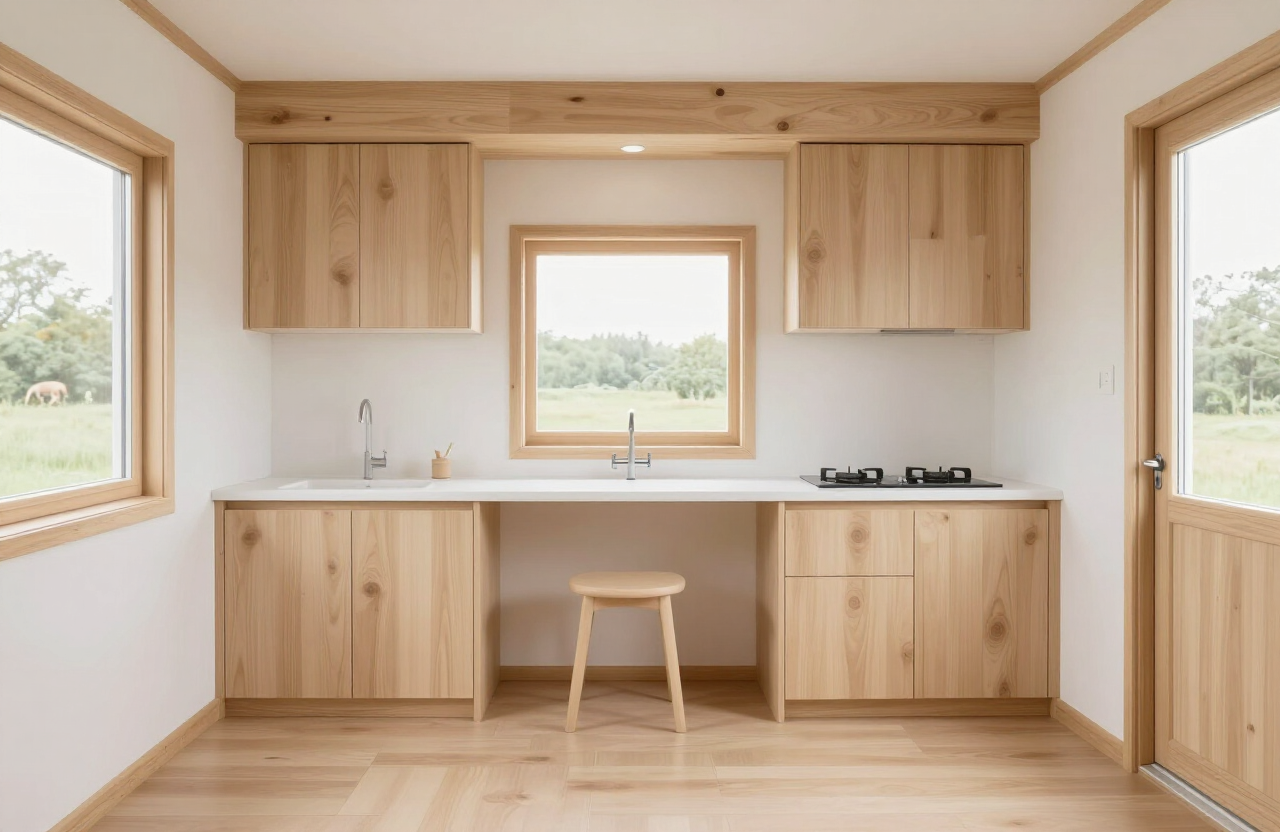
The dominant thread in tiny home design is minimalism with warmth — the Scandinavian idea that a few well-chosen things beat many cluttered ones. Light wood, white or off-white walls, and a single statement plant or textile create calm without sterility. The look relies on hidden storage so surfaces stay clear, and on consistent materials so the eye is not chopped up in a small room. Minimalism here is not emptiness; it is editing. The result is a space that feels larger than its square footage because nothing competes for attention.
Scandinavian-style minimalist tiny home interior with light wood, white walls and simple clean-lined furniture

Biophilic design and bringing nature in
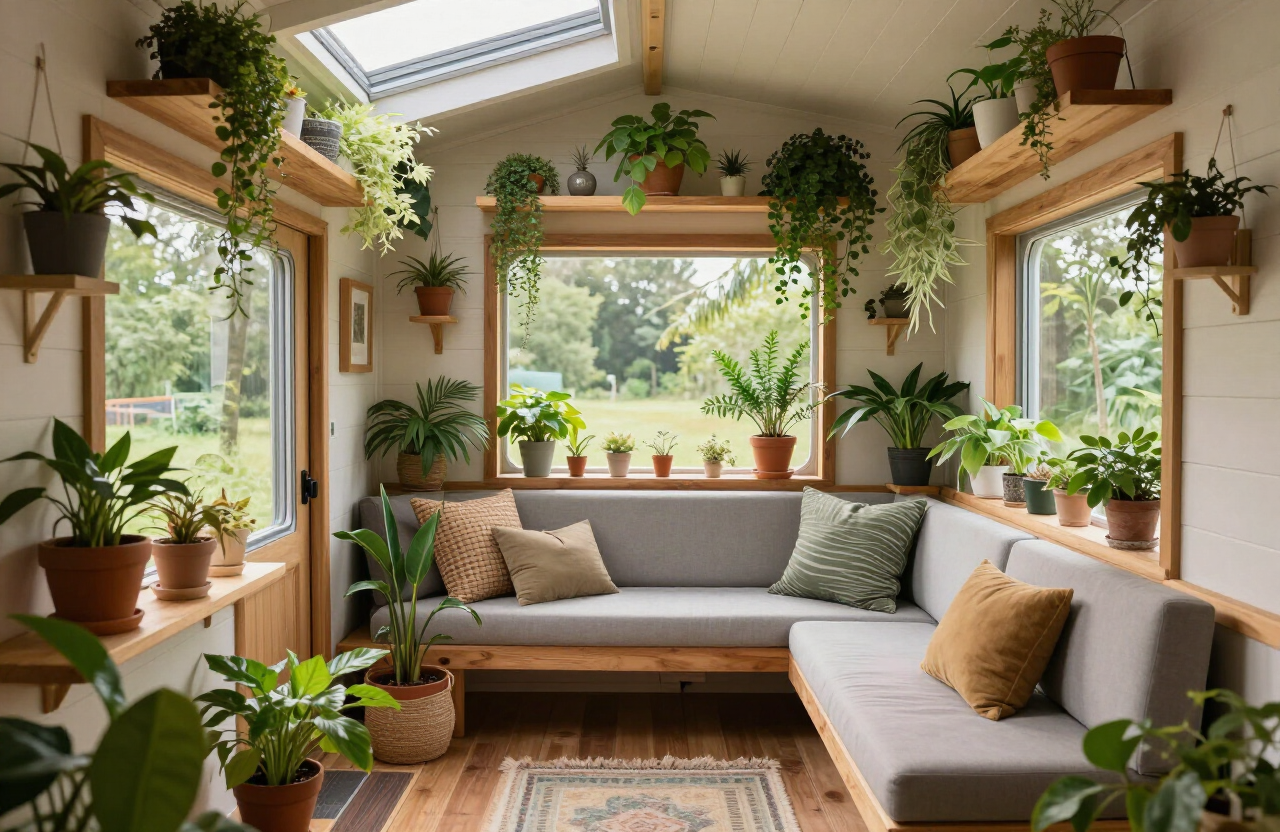
Biophilic design — connecting the interior to nature — is a strong trend in tiny homes, where a few plants and natural textures transform a small box into a living space. Hang trailing plants from high shelves, cluster potted herbs in the kitchen window, and use natural wood, stone, and linen throughout. A large window framing a real view does more for biophilic design than any decor. The trend pairs naturally with off-grid and sustainable living, and it improves air quality and mood. Just keep plants sized to the space — one large statement plant beats a crowded windowsill. See our sustainable materials guide for natural material choices.
Biophilic tiny home interior with abundant potted plants, hanging greenery, and natural wood textures in daylight

Japandi: where Japanese meets Scandinavian
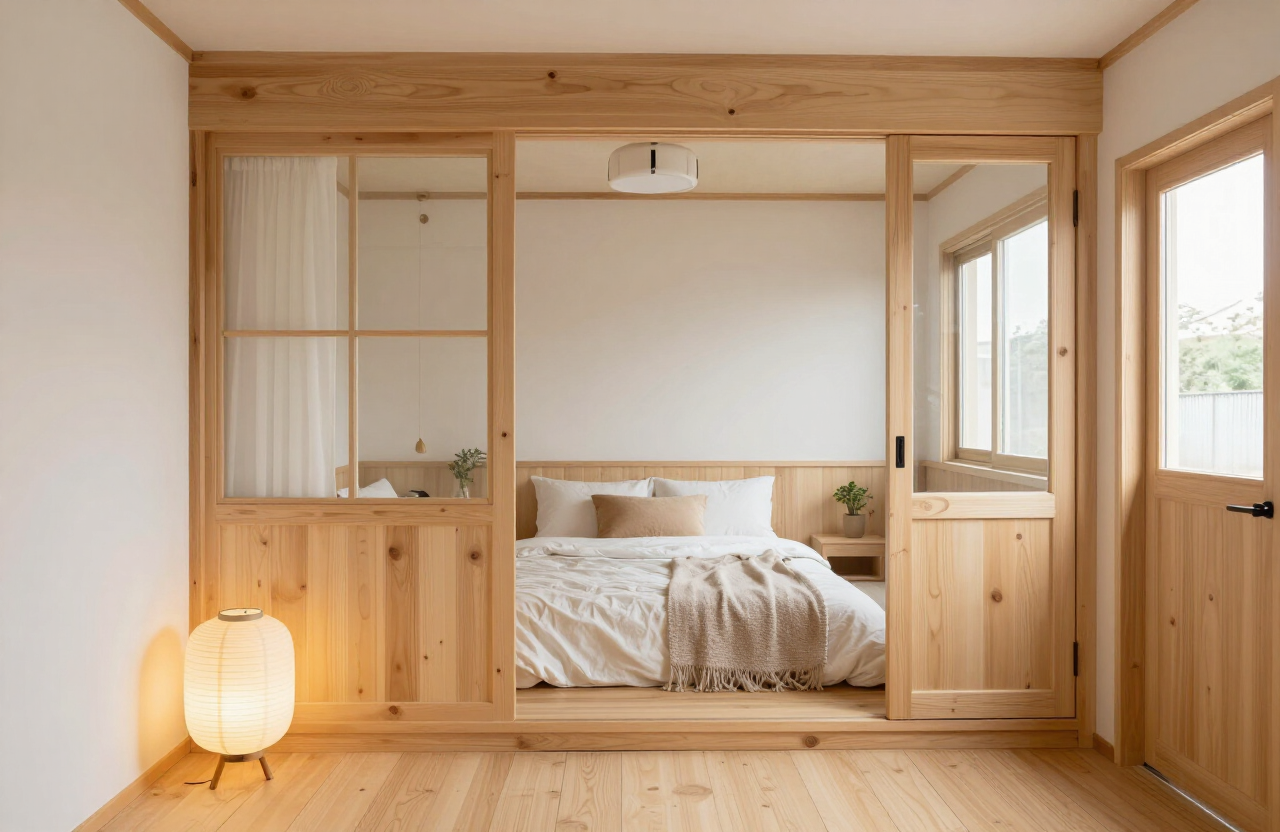
Japandi — a blend of Japanese and Scandinavian aesthetics — is one of the most popular tiny home looks right now. It combines the warmth and light wood of Scandinavian design with the spare, grounded simplicity of Japanese interiors: low furniture, paper lanterns, tatami textures, and a muted earthy palette. The style suits tiny homes because both traditions are built on small-footprint living and respect for empty space. A Japandi interior feels calm and intentional, with every object chosen for both use and beauty. Keep the palette to two or three muted tones and let natural materials do the work.
Japandi-style tiny home interior blending Scandinavian minimalism with Japanese warmth, light wood and paper lantern

Warm wood and hygge coziness

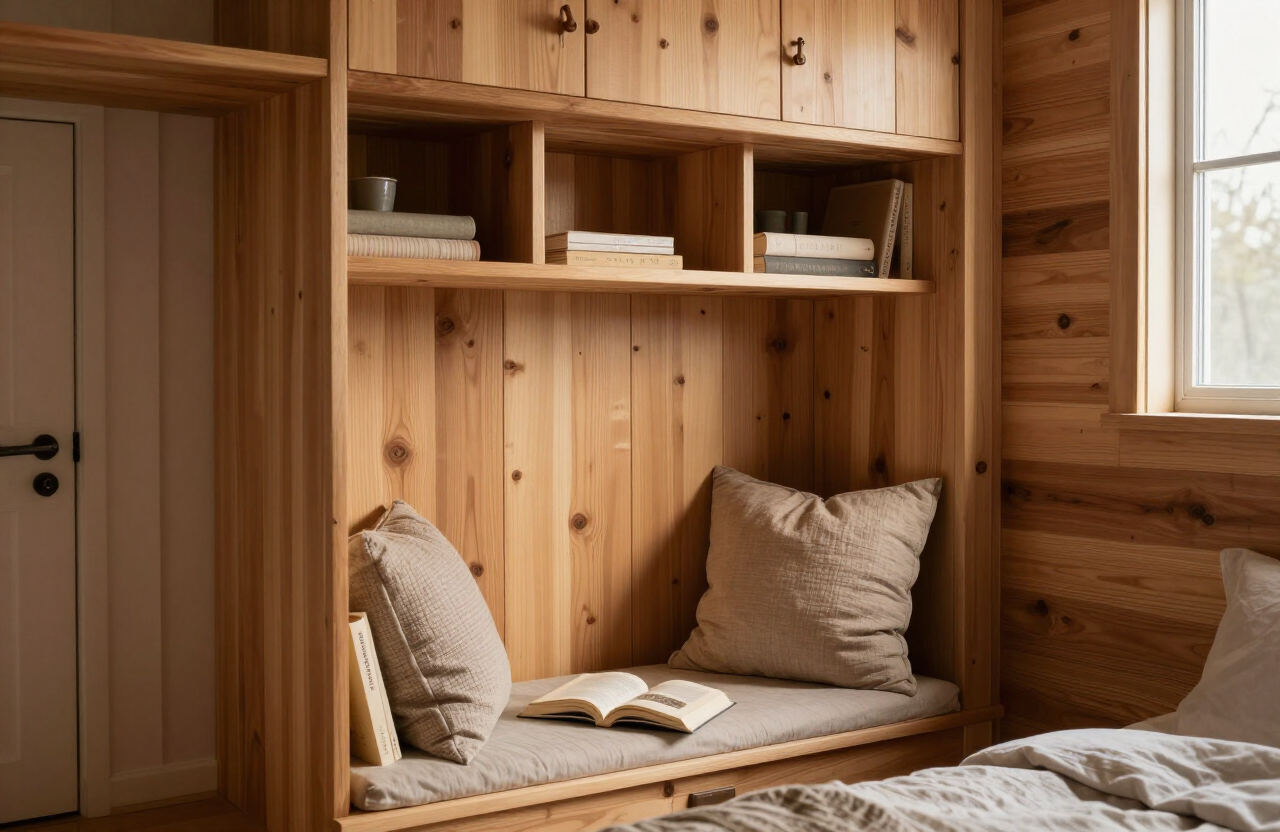
Against the cool minimalism trend sits the warm, cozy hygge aesthetic — interiors wrapped in wood, wool, and soft light. Tongue-and-groove wood walls and ceilings, a reading nook with built-in shelving, warm-toned LED lighting, and layered textiles make a tiny home feel like a hug. This look embraces the smallness rather than fighting it, turning compact into cozy. Use warm wood tones consistently, add a wool throw and linen cushions, and keep the lighting low and warm in the evening. Hygge proves a tiny home does not have to feel minimal to feel intentional.
Warm wood textures and a cozy reading nook in a tiny home with built-in shelving in hygge style

Moody accent walls and dramatic contrast
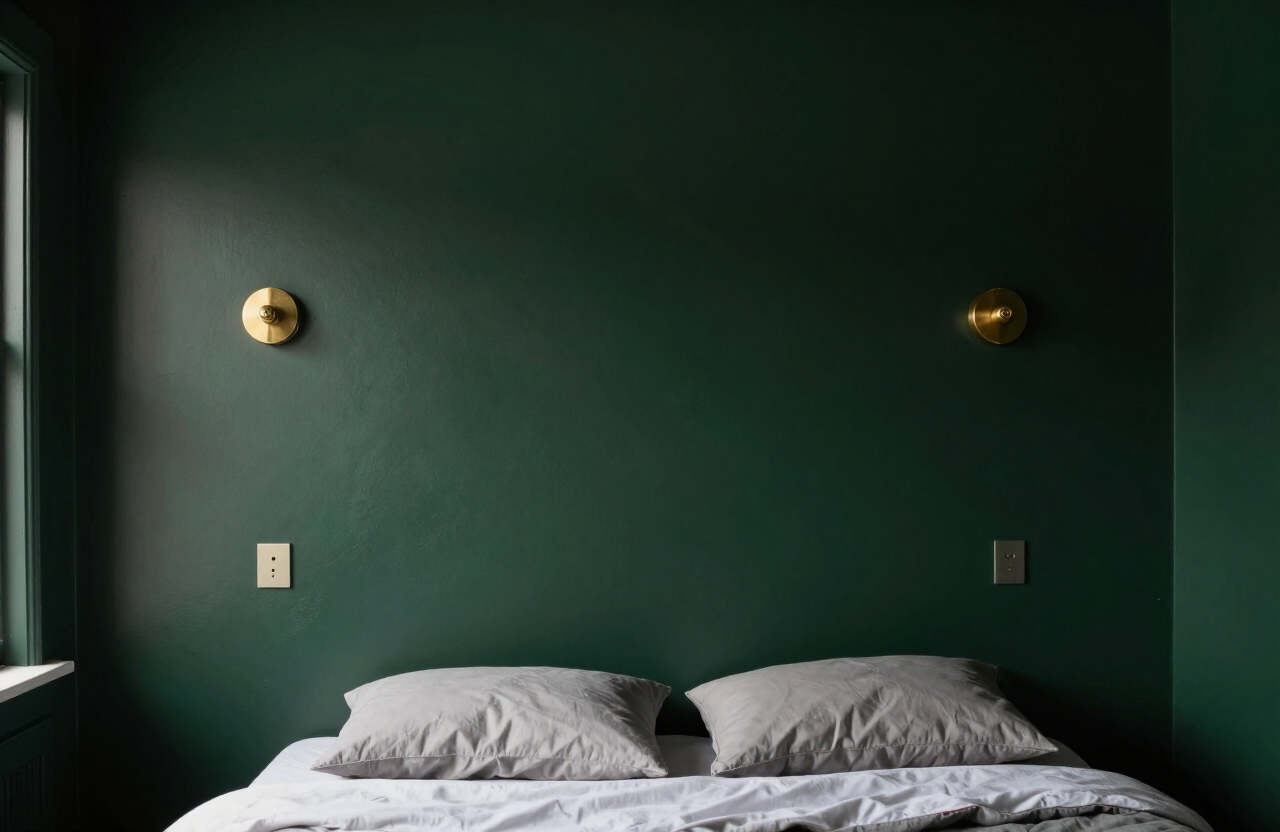
Not every tiny home chases light and airy — a counter-trend uses deep, moody color to make a small space feel intimate rather than cramped. A single dark accent wall in deep green, navy, or charcoal, paired with brass or warm metal accents and a single sconce, creates drama without closing the room in. The trick is to use the dark color on one surface only — a wall, a ceiling, or a nook — and keep the rest light, so the contrast reads as intentional rather than gloomy. Moody accents work especially well in sleeping lofts and reading corners.
Dark moody accent wall in a tiny home bedroom with deep green paint and a brass sconce for dramatic contrast

Multifunctional nooks and built-ins
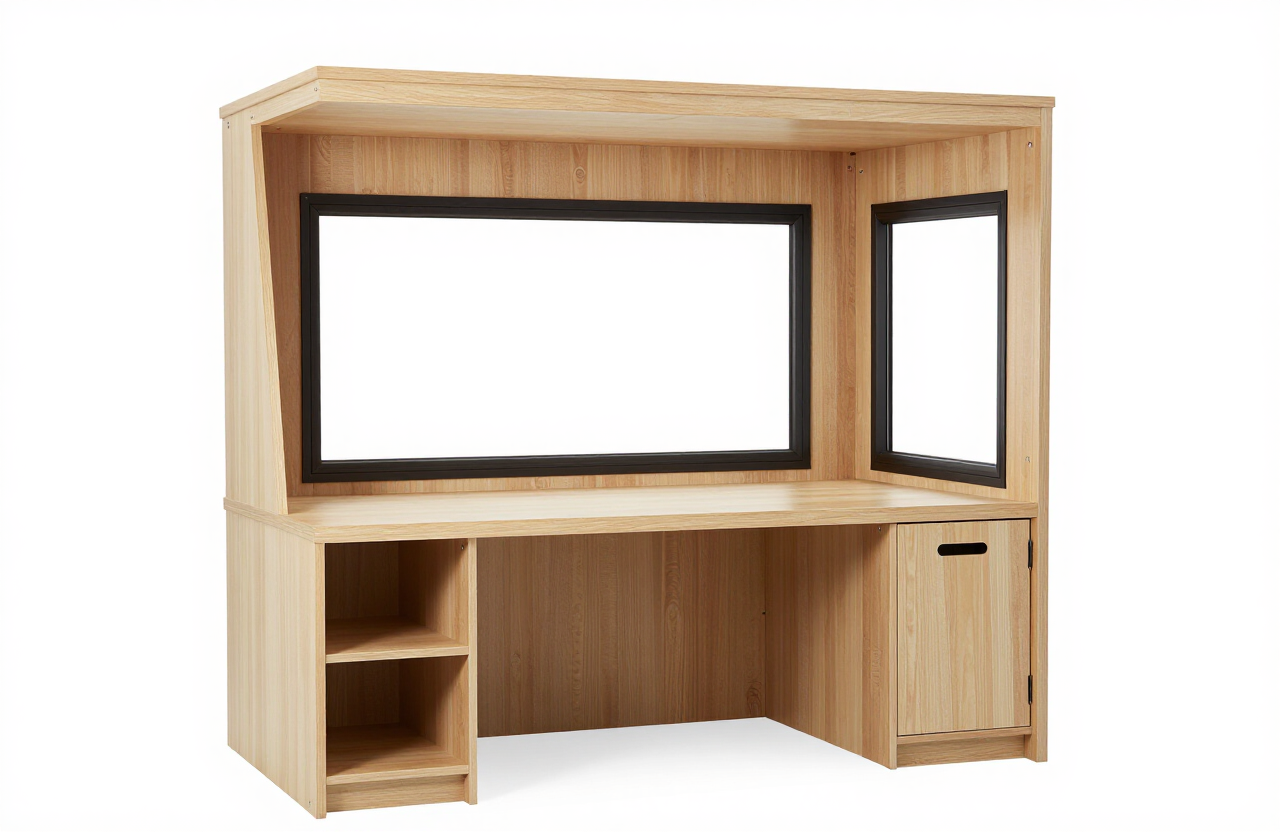
The most on-trend tiny home feature is the multifunctional nook — a single spot that serves as seating, storage, and a workspace. A window nook with a lift-up seat hides linens, doubles as a dining bench, and becomes a desk with a fold-down table. Built-ins that follow the lines of the home — rather than freestanding furniture — make the layout feel designed, not assembled. The trend is toward furniture that disappears or transforms, so the same square footage does three jobs. Good built-ins are the secret to a tiny home that looks styled even when it is full of life.
Multifunctional window nook in a tiny home that serves as seating, storage, and a desk

Layered textures and tactile surfaces
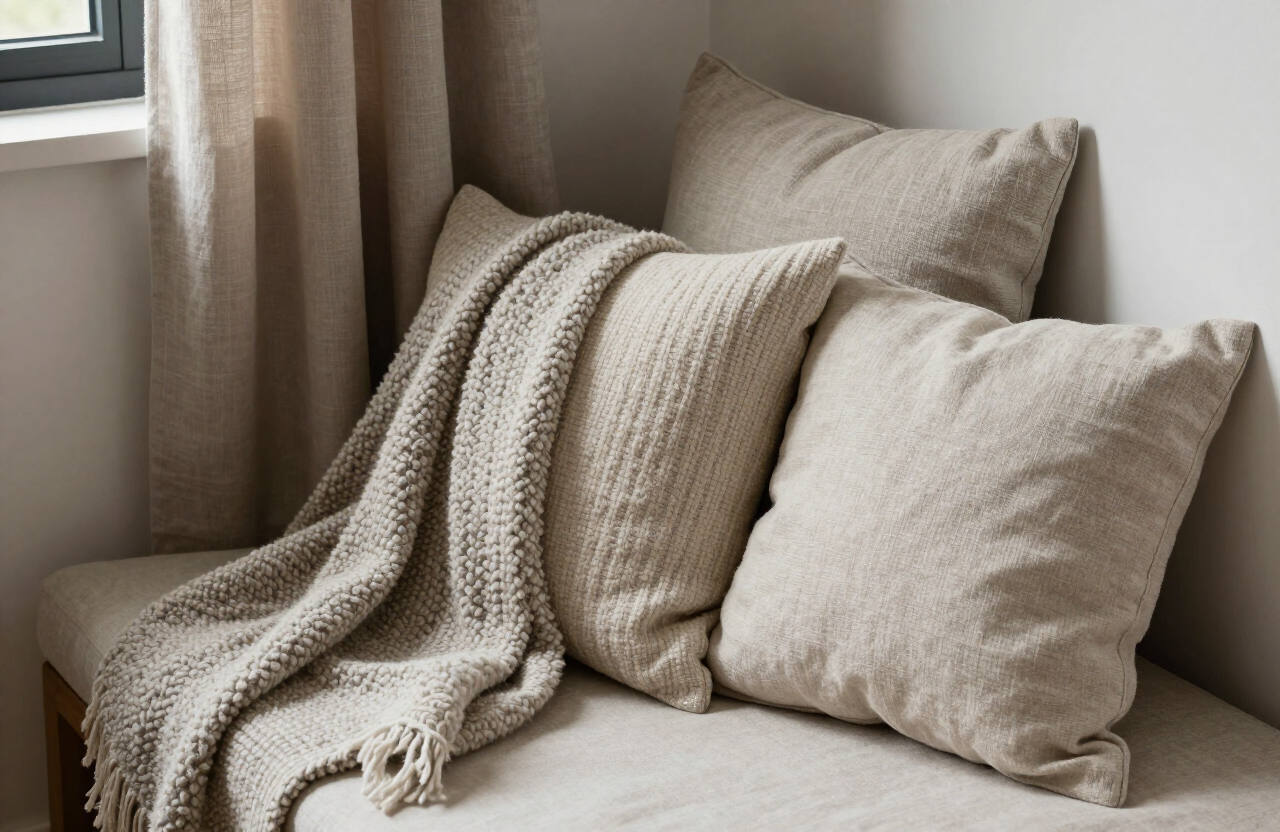
When a palette is restrained, texture carries the design. Layer wool throws over linen cushions, mix a smooth concrete countertop with rough wood shelving, and use a textured wall finish or limewash paint to add depth without color. The tactile trend is about making a small space feel rich to the touch, so it never reads as flat or sterile even with a minimal color scheme. Keep the textures in a compatible family — warm naturals together, cool smooths together — so the layering feels composed. Texture is the cheapest way to make a tiny home feel expensive.
Layered textured textiles, wool throws and linen cushions in a tiny home living area for tactile coziness

Finding your own tiny aesthetic

Trends are a menu, not a mandate. The best tiny home interior is the one that fits how you live — calm if you need rest, cozy if you need warmth, bold if you need energy. Choose one or two trends that resonate, keep the palette restrained, and let natural materials and built-ins do the heavy lifting. A tiny home styled with intention feels more like home than any large house decorated by default. Ready to find your look? Browse tiny homes for sale, compare home plans, or explore builders who can realize your aesthetic.

Related articles

More guides that dig deeper into the same topics.

Frequently asked questions

What is the most popular tiny home interior style?+

Minimalist Scandinavian design — light wood, white or off-white walls, hidden storage, and a single statement plant — is the most popular look. It makes a small space feel larger and calmer by keeping surfaces clear and materials consistent.

How do I make a tiny home feel bigger?+

Use a restrained, consistent palette, hide storage so surfaces stay clear, let in natural light with large windows, use mirrors sparingly, and keep sightlines open. Light wood and white walls reflect light and make the space feel larger than its square footage.

What is Japandi style in a tiny home?+

Japandi blends Japanese and Scandinavian aesthetics — low furniture, muted earthy tones, light wood, paper lanterns, and a respect for empty space. It suits tiny homes because both traditions are built on small-footprint, intentional living.

Can a tiny home have a dark or moody interior?+

Yes. A single dark accent wall in deep green, navy, or charcoal, paired with warm metal accents and a sconce, creates intimacy without making the space feel smaller. Keep the dark color to one surface and the rest light so the contrast reads as intentional.

How do I add personality to a tiny home without clutter?+

Use texture and natural materials instead of objects — layered textiles, wood grain, limewash walls, and a few well-chosen plants. Built-ins and multifunctional nooks add character while serving a function, so personality does not cost floor space.

What plants work best in a tiny home?+

One large statement plant beats a crowded windowsill. Trailing plants like pothos on high shelves, herbs in the kitchen window, and low-light plants like snake plants suit tiny homes. Choose plants sized to the space and matched to your light conditions.

Ready to start searching?

Browse tiny homes, plans, builders, communities and land on the interactive map.

Explore the map
>