Interior
Color Schemes That Make Tiny Homes Feel Bigger
5 min read · Updated November 22, 2025
By John
Light, continuity and deliberate contrast — how to use color in a tiny home to add perceived space without making it sterile.
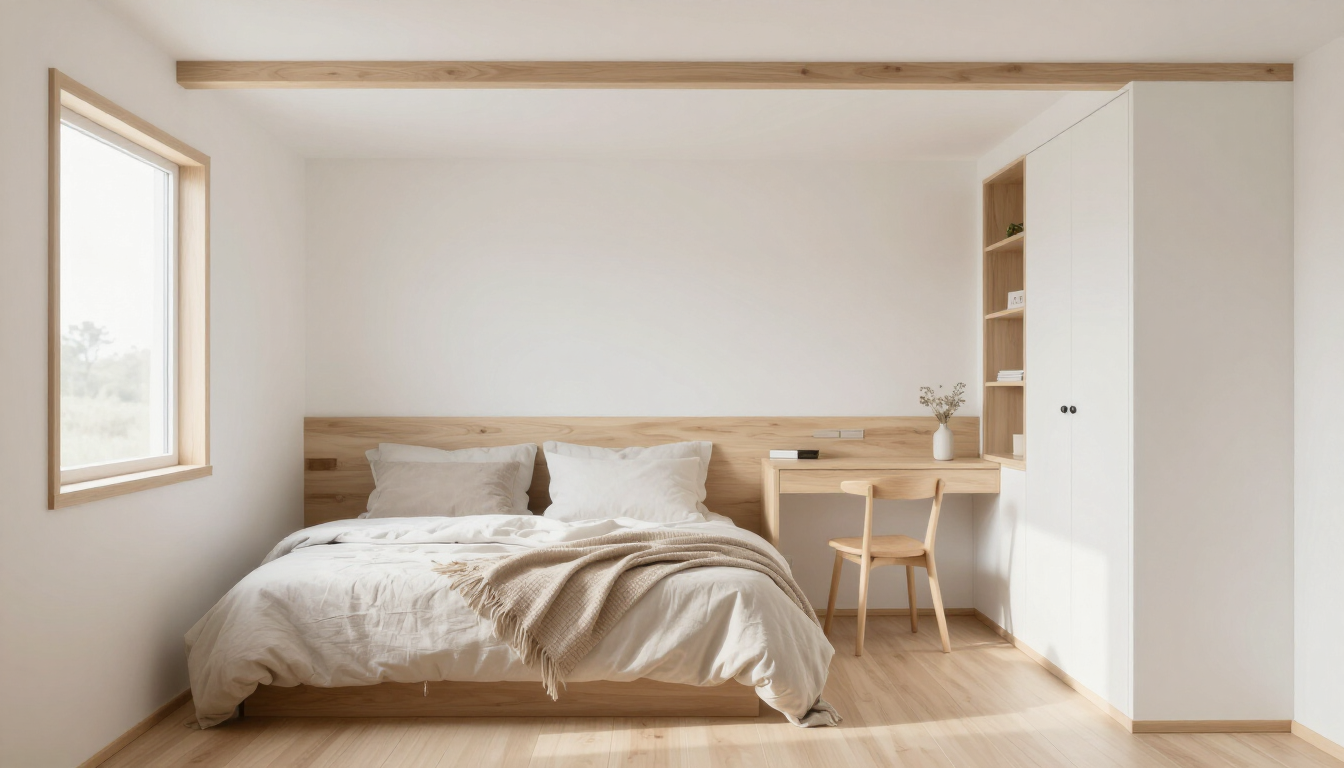
Light recedes, dark advances
The single most useful color rule for a small space: light colors recede (making walls feel farther away) and dark colors advance (making surfaces feel closer). A tiny home painted in light, continuous tones reads as larger than the same home in dark or contrasting colors. This is why nearly every spacious-feeling tiny home shares a pale, restrained palette. It underpins our
Continuity multiplies space
Running the same color across walls, ceiling, cabinetry and even flooring erases the visual breaks that chop up a small room. A continuous light backdrop makes the home read as one volume rather than a collection of small surfaces. Match cabinet doors to the walls, use the same flooring throughout, and keep trim close to the wall color. The eye travels without stopping, which reads as space.
Using contrast deliberately
Contrast is not banned — it is a tool. A single dark accent wall (behind the bed, say) adds depth and focus without shrinking the room. Dark lower cabinets with light uppers ground a kitchen. Natural wood tones count as color; warm wood against pale walls is the signature look of modern tiny homes. The rule is restraint: one or two deliberate contrasts, not a patchwork.
Light, texture and finish
Color interacts with light — a pale color in a poorly lit room reads as gray and flat. So pair your scheme with good natural light and layered electric lighting. Matte and eggshell finishes feel softer than gloss in a small space. Add texture (linen, wood grain, a woven rug) so the restrained palette does not feel sterile. The result is a tiny home that feels calm, open and intentional.
Related articles
More guides that dig deeper into the same topics.
Ready to start searching?
Browse tiny homes, plans, builders, communities and land on the interactive map.
Explore the map