Design & Interior Layout

Tiny Home Technology: Smart Home Solutions

12 min read · Updated March 14, 2026

By John

A tiny home is a perfect canvas for smart technology — small enough to automate completely, efficient enough to run off-grid. Here is a practical guide to the smart home solutions that genuinely earn their place in a tiny house.
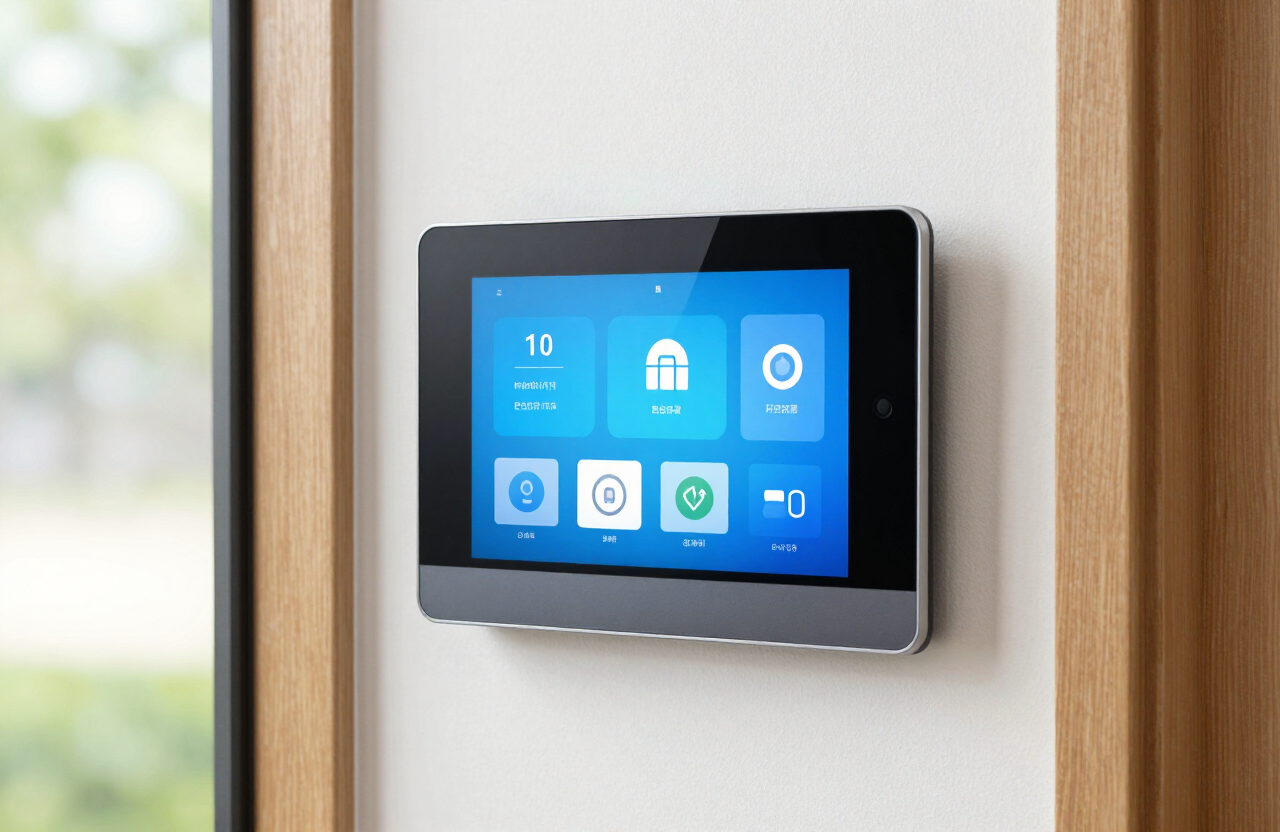
Wall-mounted tablet acting as a central smart home control panel inside a tiny home

Why smart tech fits tiny homes

A tiny home is the ideal setting for smart technology. Because the space is small, a few well-chosen devices can automate the whole home rather than a single room. Because the energy budget is tight, monitoring and efficiency pay off fast. And because many tiny homes are off-grid, smart energy management is not a luxury but a necessity. The trick is to choose devices that solve real tiny-home problems — climate control, energy visibility, security when you are away — rather than gimmicks that add complexity. This article covers the smart home solutions that genuinely earn their place. For the power side, see our

Climate control and smart thermostats

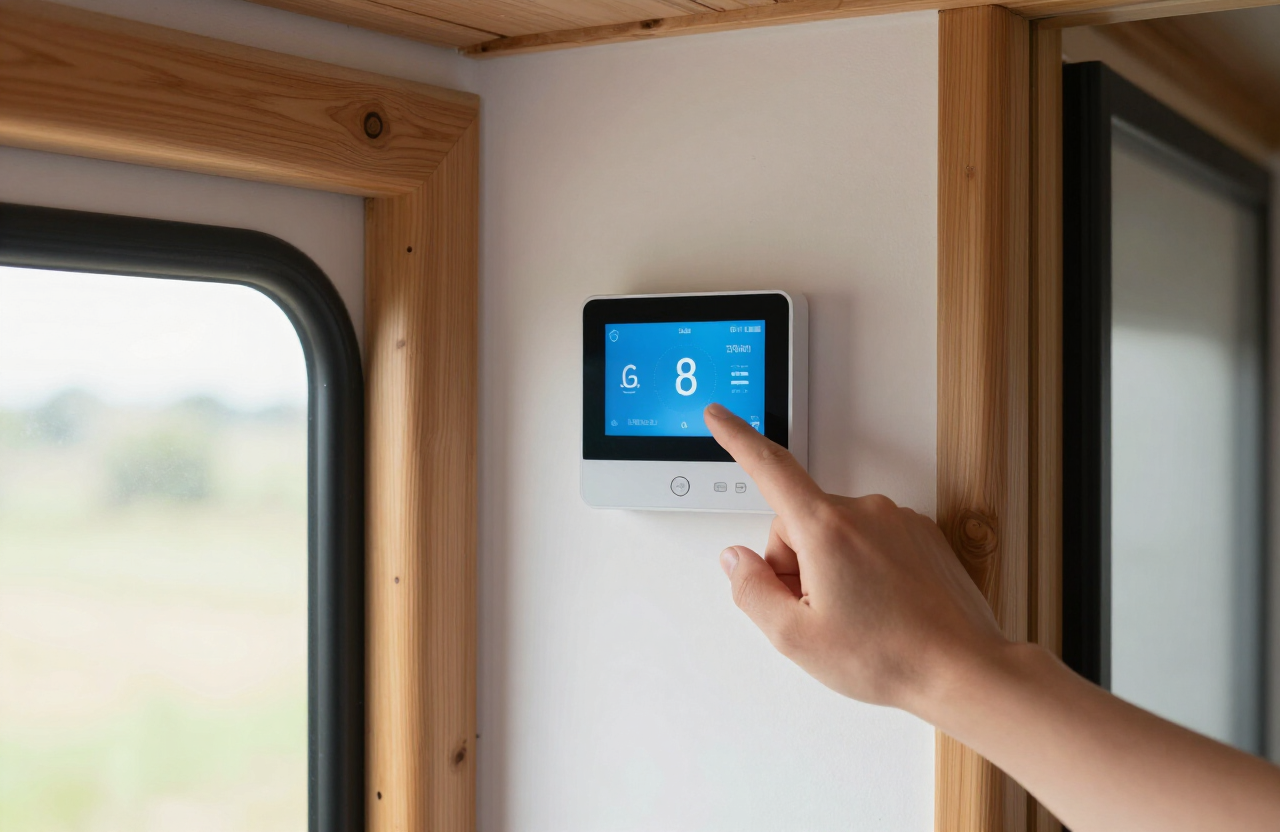
Climate is the biggest energy user in a tiny home, and a smart thermostat or controller is the highest-impact upgrade. For a mini-split heat pump, a smart AC controller lets you schedule heating and cooling, set geofencing so the home warms up as you drive home, and track runtime. For a propane furnace, a smart thermostat with a remote sensor keeps an even temperature. The payoff is real: scheduling and setback can cut heating and cooling energy by 10 to 20 percent, which matters enormously off-grid. Choose a controller that works offline or with a local hub if your connectivity is spotty.
Smart thermostat mounted on a tiny home wall with a hand adjusting the temperature

Smart lighting

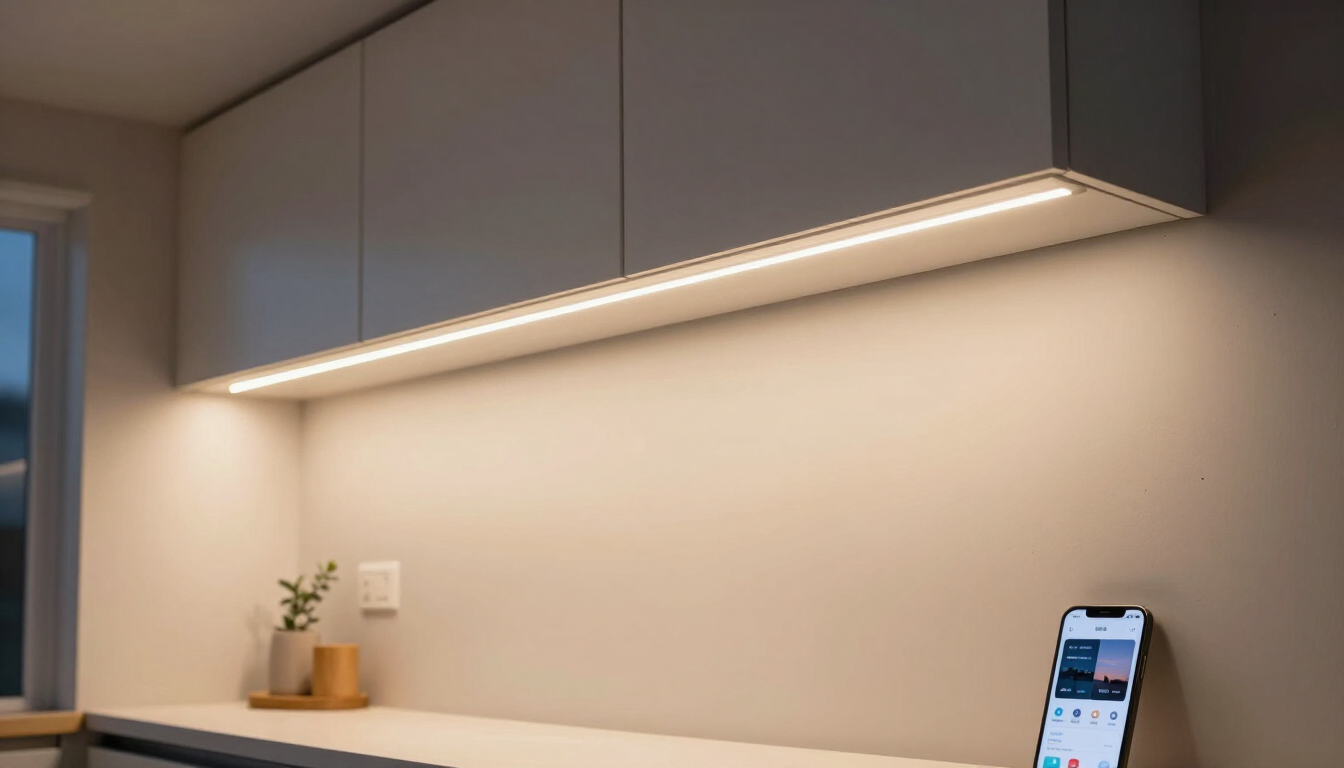
Smart lighting in a tiny home does more than set a mood — it saves space and energy. Replace switches with smart bulbs or a smart relay and you gain dimming, scheduling, and scenes without rewiring. Use warm LEDs at 2700K to 3000K for a cozy feel, and set a daytime scene with bright ambient light and an evening scene with dimmed accent light. Motion-activated lights in the bathroom and on the porch add convenience and security. For an off-grid home, choose low-draw LED strips and a system that runs locally rather than pinging the cloud constantly. Lighting automation is cheap, visible, and an easy first smart project.
Smart LED strip lighting under tiny home kitchen cabinets glowing warm white

Energy monitoring and management

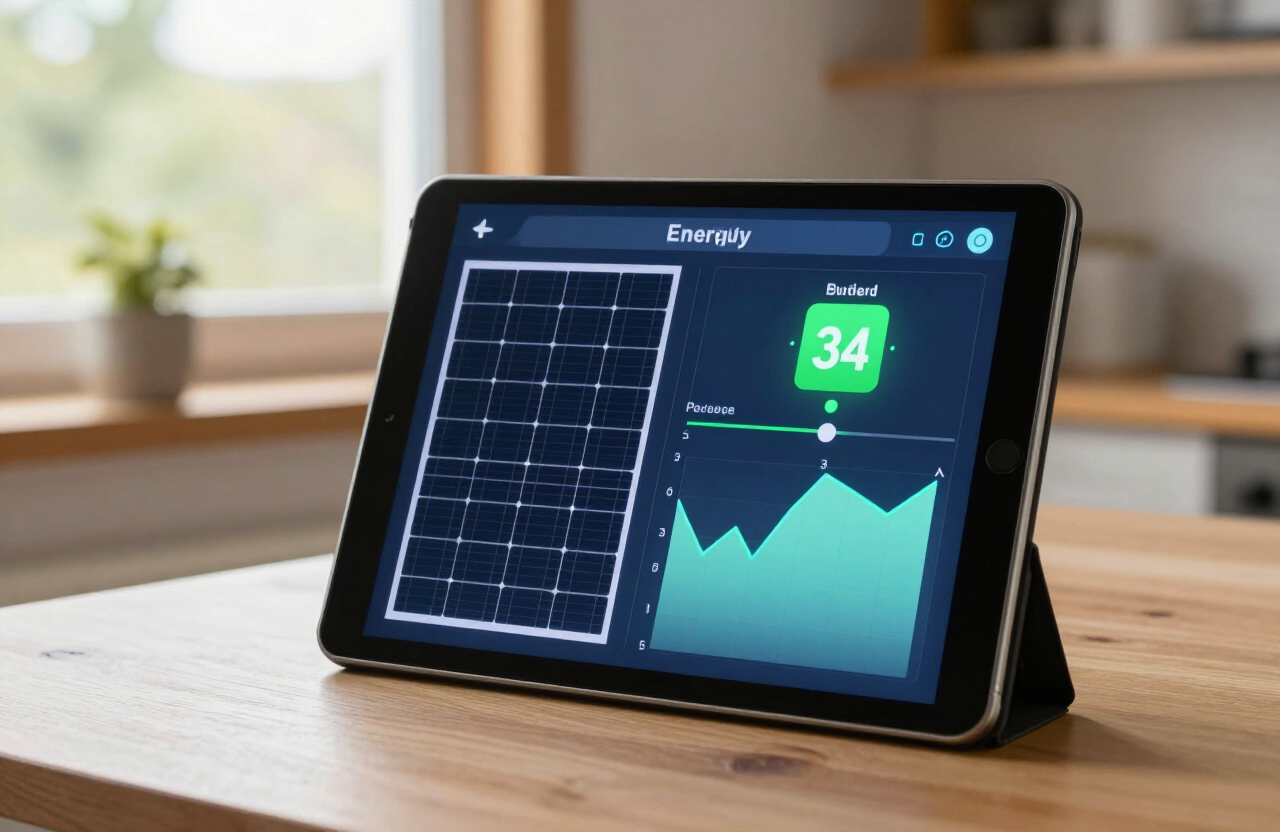
In a tiny home — especially an off-grid one — knowing exactly where your energy goes is transformative. A whole-home energy monitor tracks consumption in real time and by circuit, so you can see that the water heater or the mini-split is the big draw and adjust. Pair it with a solar and battery monitor to watch production, storage, and use together, and to avoid draining the battery below safe levels. Many systems send an alert when consumption spikes, catching a forgotten heater or a failing appliance before it kills your battery. For an off-grid tiny home, this visibility is the difference between guessing and knowing. See our solar guide for the power system.
Energy monitoring display on a tablet showing real-time solar production and battery usage inside a tiny home

Security and remote monitoring

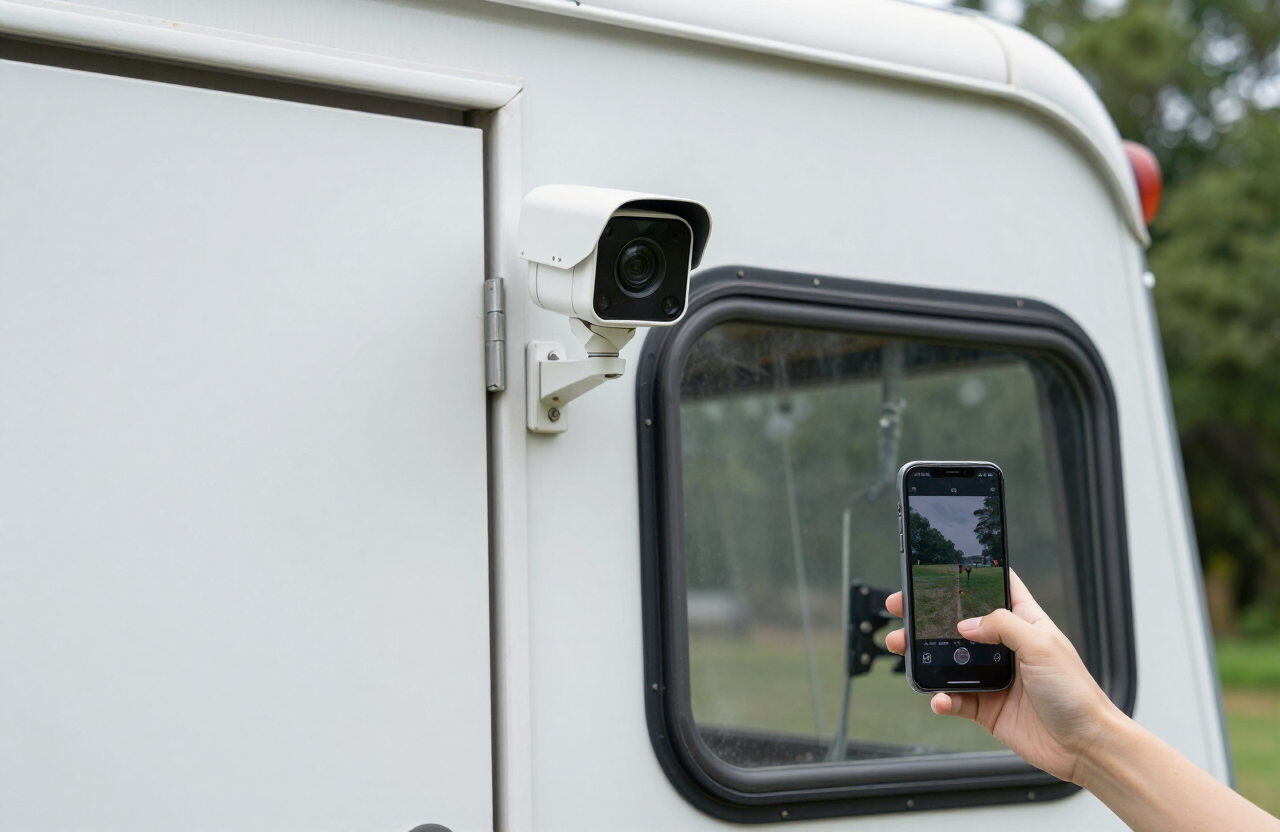
A tiny home — particularly one on wheels or in a remote spot — benefits from smart security. A door and window sensor with app alerts tells you if the home is entered unexpectedly. A small outdoor camera with motion detection lets you check on the home from anywhere, and a video doorbell handles deliveries and visitors. For a tiny home on wheels, a GPS tracker hidden on the trailer adds recovery if the home is ever stolen, a risk unique to movable homes. Choose devices that can run on local storage or a cellular backup if Wi-Fi is unreliable. Security tech brings peace of mind when you are away from a small, valuable asset.
Small security camera mounted near the door of a tiny house on wheels with a phone showing the live feed

Voice control and a central hub

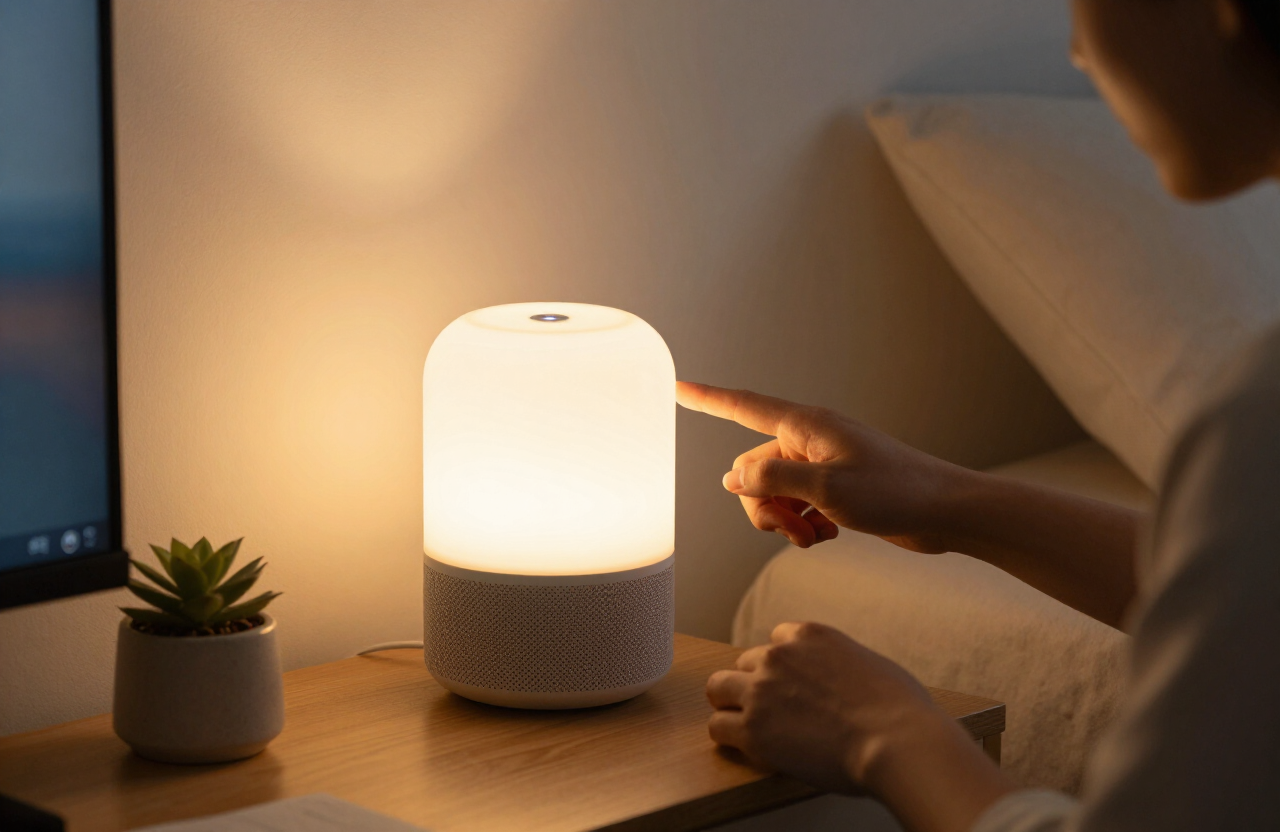
Voice control is genuinely useful in a tiny home where hands are often full and surfaces are scarce. A smart speaker lets you turn off lights, set the thermostat, or check the battery level by voice while cooking or getting into bed. For a tidy control surface, mount a tablet on the wall as a central dashboard showing climate, energy, and security at a glance. Choose a hub — whether a smart speaker, a home automation bridge, or a local server — that ties your devices together and ideally runs automations locally so they keep working if the internet drops. One hub, one app, one voice: that is the goal.
Person using voice control with a smart speaker inside a tiny home to turn off lights

Automated blinds and ventilation

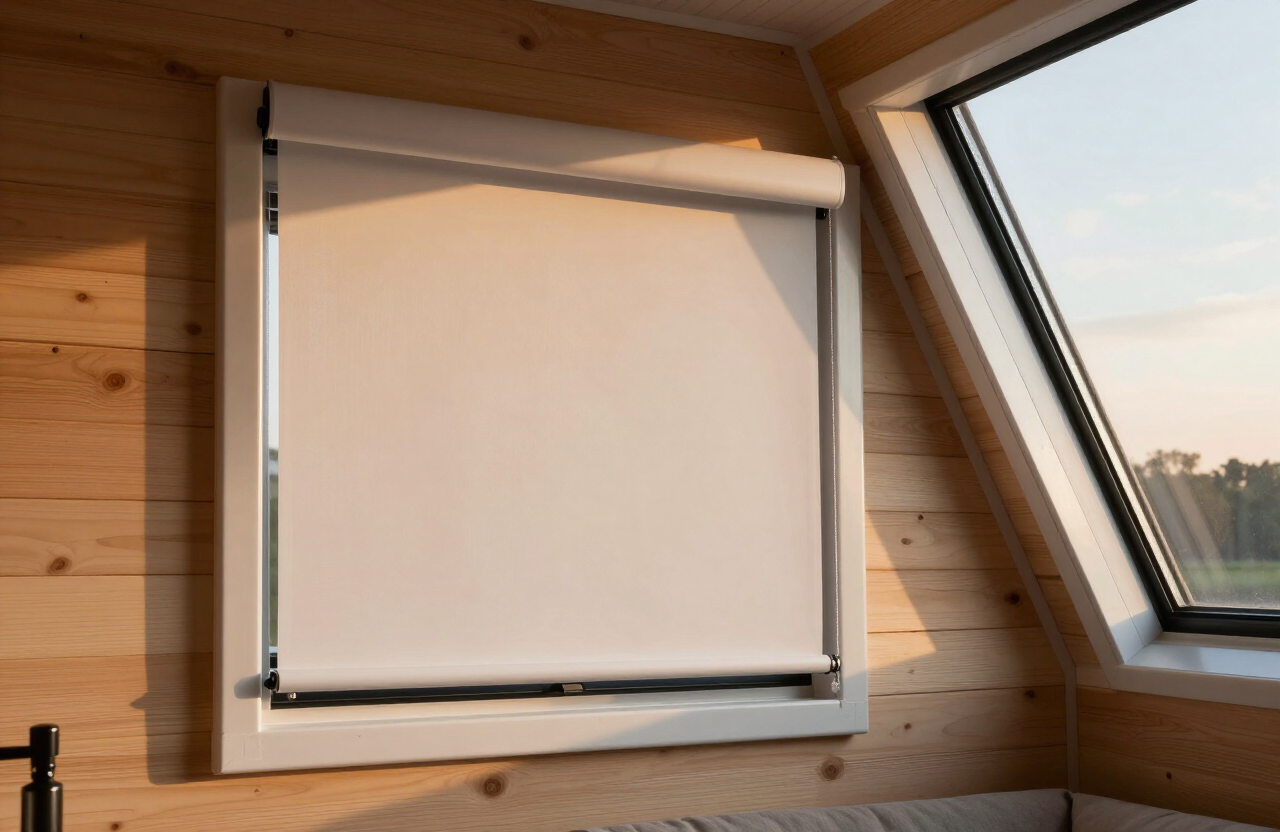
Automated blinds and smart ventilation quietly improve comfort and efficiency. Smart blinds can close automatically at the hottest part of a summer day to reduce cooling load and open in the morning to warm the home with sun — a real gain in a small, well-insulated space. A smart exhaust fan in the bathroom can run on a humidity sensor, clearing moisture without you remembering to switch it on. These automations are subtle but compound, especially off-grid where every watt and every degree matters. Choose low-power devices and tie them to the same hub as the rest of your system.
Automated roller blinds closing over a tiny home loft window at sunset

Connectivity and offline reliability

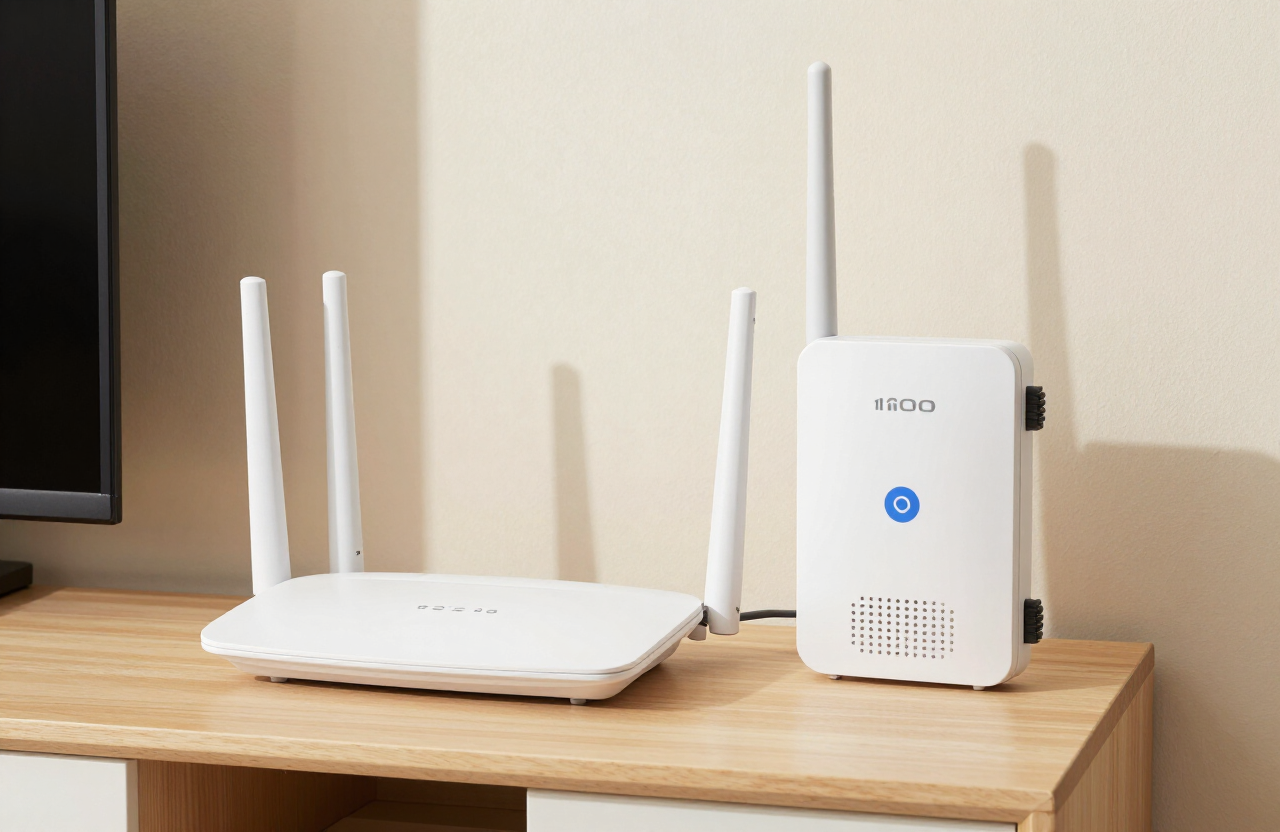
Tiny homes often sit where connectivity is weak — rural land, RV parks with shared Wi-Fi, off-grid sites — so plan for it. A cellular router with a strong external antenna beats relying on park Wi-Fi. Choose smart devices that support local control through a hub rather than requiring a constant cloud connection, so your automations keep running during an outage. For critical systems like security and climate, prefer devices with battery or cellular backup. Test your setup by temporarily disconnecting the internet and seeing what still works. A smart home that dies when the connection drops is not smart enough for a tiny home.
A Wi-Fi router and cellular signal booster with an antenna set up in a tiny home utility area for reliable connectivity

Smart device guide for tiny homes

DeviceBenefitOff-grid friendly?
Smart climate controller10–20% energy savingsYes, with local hub
Smart LED lightingScenes, dimming, schedulingYes, low draw
Energy monitorReal-time consumption visibilityYes, essential
Solar/battery monitorTracks production and storageYes, essential
Door/window sensorsIntrusion alertsWith cellular backup
Outdoor cameraRemote check-inWith cellular backup
GPS tracker (THOW)Theft recoveryYes, cellular
Smart blindsPassive solar controlYes, low draw

Building your smart tiny home

Start with the highest-impact devices — a smart climate controller and an energy monitor — and expand from there. Choose a single hub and ecosystem so everything works together, and prefer local control for reliability. Add security if your home is remote or movable, and automate blinds and ventilation for passive comfort. Avoid gimmicks that add complexity without solving a real problem. Done right, smart technology makes a tiny home more comfortable, more efficient, and more secure without adding clutter. Explore off-grid homes, builders, and our electricity guide to plan the foundation.

Related articles

More guides that dig deeper into the same topics.

Frequently asked questions

Can a tiny home be a smart home?+

Yes, and often more easily than a large house. A tiny home's small size means a few well-chosen devices can automate the whole space, and its tight energy budget makes monitoring and efficiency genuinely valuable. Choose a single hub and ecosystem, prefer local control, and focus on devices that solve real problems like climate, energy, and security.

What is the best smart device for a tiny home?+

A smart climate controller is the highest-impact single device, because heating and cooling dominate a tiny home's energy use and scheduling can cut that by 10 to 20 percent. A close second is an energy monitor, which gives real-time visibility into where your power goes — essential off-grid.

Do smart home devices work off-grid?+

Many do, if you choose carefully. Pick devices that support local control through a hub rather than requiring a constant cloud connection, so automations keep running during an outage. Low-draw LED lighting, smart blinds, and energy monitors are all off-grid friendly. For security, add cellular backup.

How much power do smart home devices use?+

Most smart devices draw very little — a smart bulb uses a watt or two on standby, a thermostat a few watts, an energy monitor negligible power. The bigger draw is the appliances they control. The benefit is that smart control reduces those larger loads through scheduling and monitoring, netting out to energy savings.

How do I secure a tiny home on wheels with smart tech?+

Use door and window sensors with app alerts, a small outdoor camera with motion detection, and a video doorbell for visitors. Because a THOW can be moved, add a hidden GPS tracker on the trailer for recovery if it is stolen. Choose devices with cellular backup so security keeps working if Wi-Fi drops.

What hub should I use for a tiny home?+

Choose a hub that supports local control and ties multiple device types together — a smart speaker, a home automation bridge, or a local server. The goal is one hub, one app, and one voice interface for the whole home. Local control is especially important in a tiny home where connectivity may be unreliable.

Are smart blinds worth it in a tiny home?+

Yes, especially off-grid. Smart blinds can close automatically during the hottest part of a summer day to cut cooling load and open in the morning to warm the home with sun. In a small, well-insulated space, that passive solar control compounds into real energy savings and comfort.

Ready to start searching?

Browse tiny homes, plans, builders, communities and land on the interactive map.

Explore the map
>