Tiny homes for sale in California: how to find the right one (with and without land)
16 min read · Updated October 13, 2026
By John
Overview: tiny homes for sale in California right now
This page is for buyers actively searching for tiny homes for sale in California, whether you want a move-in-ready home on wheels, a foundation-built cottage with land, or something off-grid in the desert. Listings change weekly; as of 2026, hundreds of properties are available across coastal towns, Central Valley cities, high desert areas, and mountain counties.
TinyHomeMap is an independent directory. We aggregate listings from builders, private sellers, and communities across the state; we do not sell or broker homes. Buyers contact sellers directly. The sections below break down the types of tiny homes on the California market, realistic prices, where they are legally allowed, and how to use TinyHomeMap's filters to narrow your search.
Types of tiny homes for sale in California
"Tiny homes for sale in California" covers several distinct categories. Each comes with different rules, price bands, and practical trade-offs.
Tiny homes on wheels (THOW/RV-certified units)
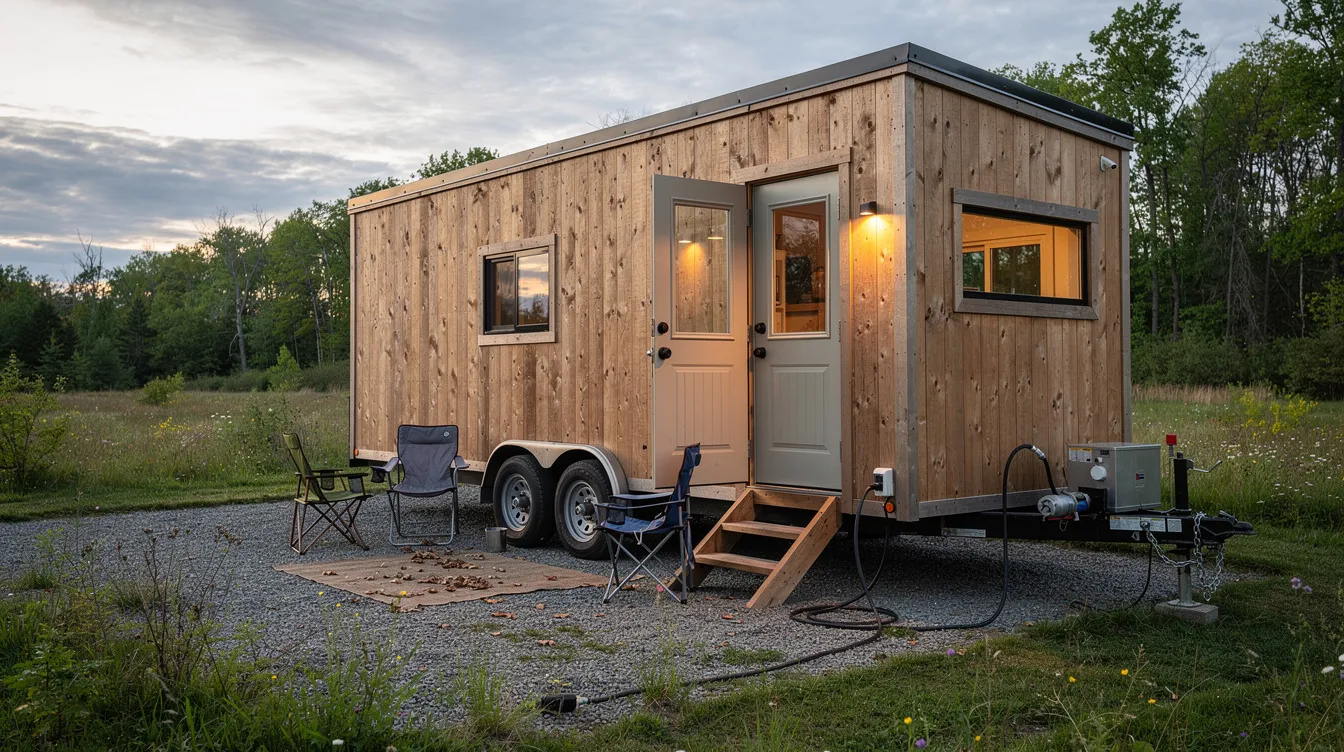
A tiny home on wheels is a dwelling built on a trailer, typically 150 to 400 sq ft, often certified to RVIA or ANSI A119.5 standards. Tiny homes must comply with ANSI 119.5 standards in California to be parked in most RV communities. Zoning laws vary for tiny homes on wheels between different municipalities in California, so where you can place one depends on the county and city.
Prices in current California listings range widely based on finish level. Shell or smaller THOWs start around $25,000 to $40,000. A fully built 24-foot studio from Forever Tiny Homes lists at roughly $54,975, while their 32-foot and 40-foot models run $64,975 to about $80,000. Forever Tiny Homes offers a 1-year manufacturer warranty on these units. Luxury finished models, like Central Coast Tiny Homes' 400 sq ft "Corbett Canyon Max," start at $160,000.
California allows tiny homes on wheels in RV parks, and some counties permit them as ADUs on residential lots. The mobility of a THOW means you can relocate if your life changes, and registration as an RV sidesteps some residential building code requirements. The trade-off: financing is usually limited to RV loans or personal credit, insurance costs more than for a conventional home, and long-term parking outside designated parks can be restricted.
Foundation-built tiny houses and small cottages
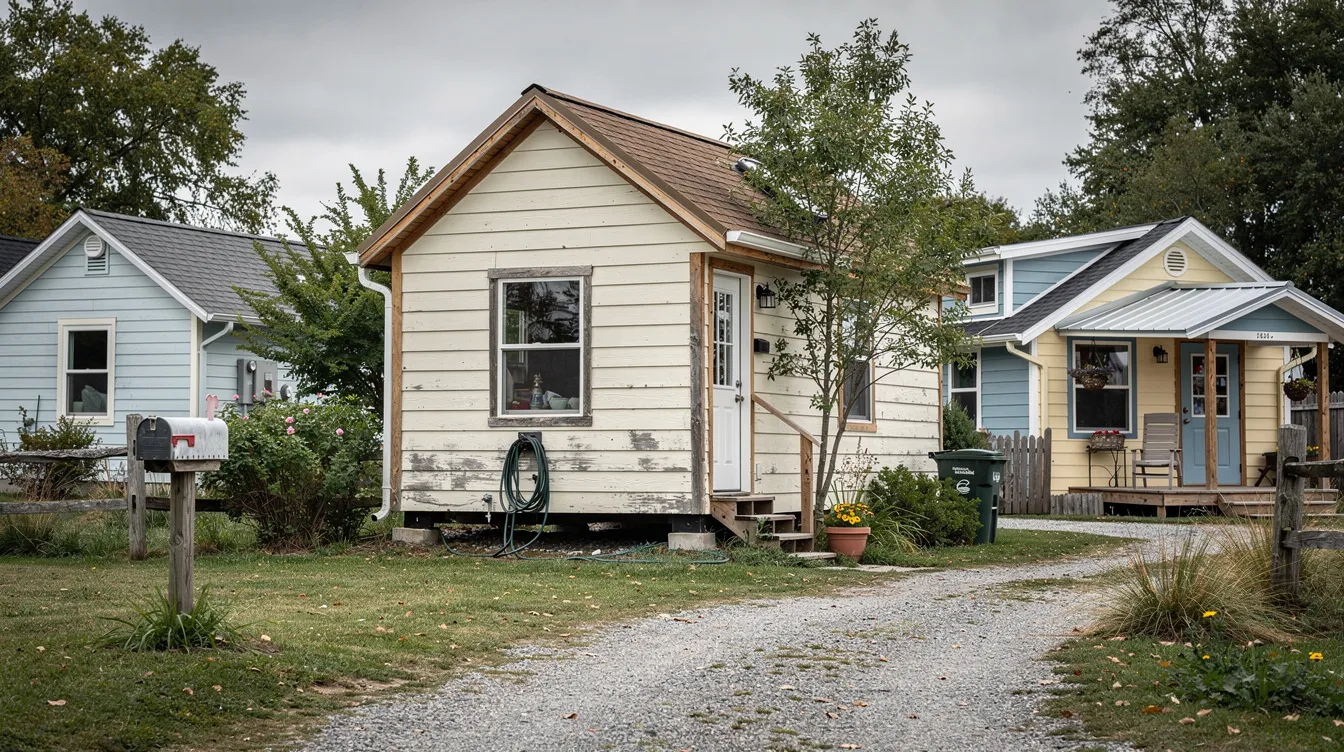
These are permanent structures on foundations, usually under 800 sq ft, permitted as Accessory Dwelling Units or small primary homes. The California Building Code governs tiny homes built on permanent foundations and includes specifications like ceiling heights and room sizes. California's Department of Housing and Community Development identifies ADUs as an important housing option for affordability, and California has progressive laws that enhance ADU opportunities and streamline their approval.
Foundation-built tiny houses are appraised like conventional real estate, which means easier mortgage financing and property tax treatment. Many municipalities allow tiny homes on foundations or as backyard ADUs with minimal friction. Tiny Home Cottages builds luxury tiny homes in California in this category, with interiors designed for comfort in a compact footprint.
Prices depend on location. Expect mid-$200,000s for finished cottages on rural lots in areas like exurban Sacramento or mountain towns, climbing past $500,000 near coastal or high-amenity regions. These are almost always "tiny home with land" sales, and buyers should verify that the property meets California's Title 24 energy code, including solar requirements for newly constructed detached ADUs.
Park model tiny homes and resort units
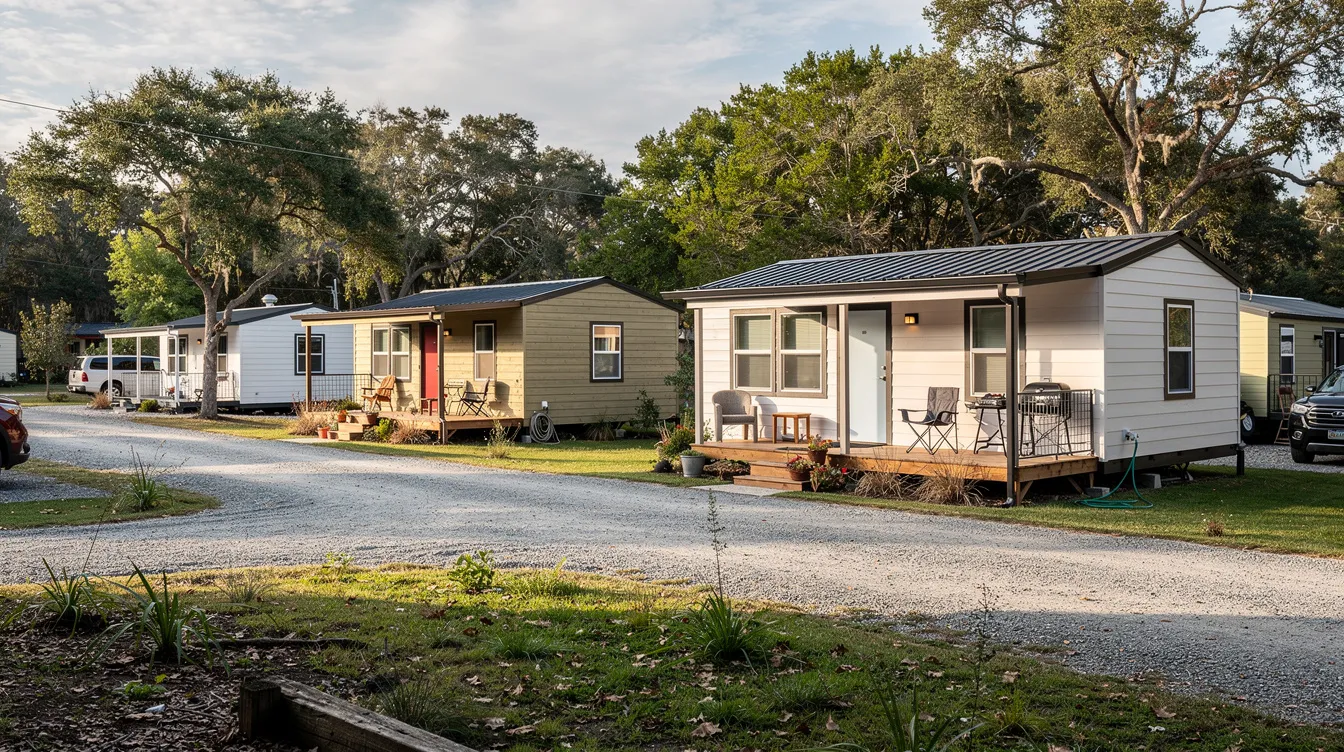
Park model RVs are factory-built units of roughly 350 to 400 sq ft, designed to sit in RV resorts, 55+ parks, or tiny home community sites with long-term leases. Zook Cabins' park models comply with ANSI 119.5 standards, and many California park models meet similar certifications.
Used park models sell for roughly $40,000 to $80,000. New designer models with upgraded finishes, covered decks, and bright interiors frequently run $90,000 to $150,000 or more. These homes are sold separately from the pad in most cases; the buyer pays monthly site rent to the community operator.
Park models fit buyers who want a semi-permanent home in a coastal, wine country, or mountain resort area without buying the underlying land. Space rent, community amenities, and HOA-style rules vary by property; always confirm the park's policies on full-time occupancy before committing.
Tiny homes sold with land (turnkey packages)
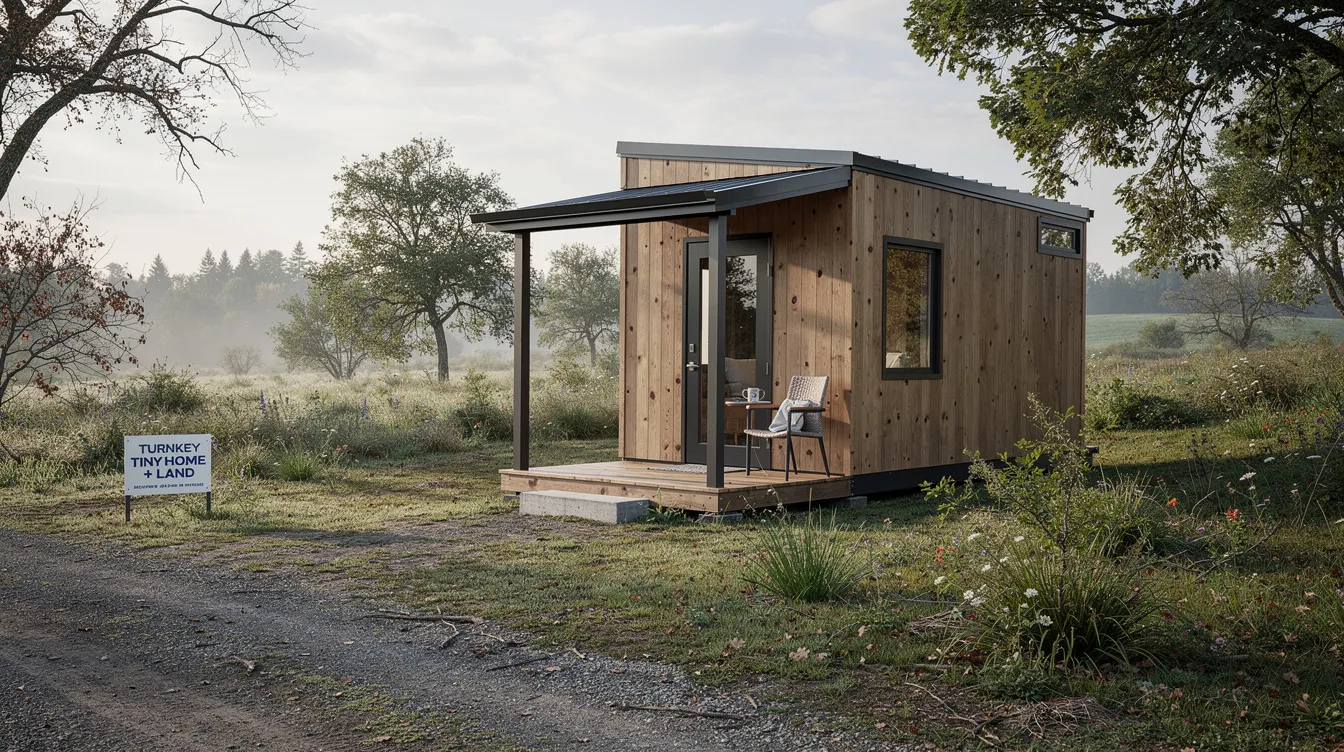
A turnkey listing bundles a completed tiny house with its own lot, utilities already connected, and (usually) permits in place. There are 127 tiny homes with land for sale in California as of current data, with an average listing price of $339,076. Land for tiny homes costs about $21,030 per acre in California, though that figure varies by county.
Real examples: a 784 sq ft small house on roughly 16 acres in Shasta County listed for $249,000; a one-bedroom tiny cabin on 5 acres near Twentynine Palms in San Bernardino County for about $189,000. Closer to the coast, prices climb past $500,000 for comparable packages. Tiny homes can be placed on urban infill lots or rural acreage, depending on local zoning.
The benefit of buying land included: you skip the hardest part of tiny home ownership in California, which is finding a legal site with utility hookups. TinyHomeMap allows filtering specifically for "includes land" to surface these listings.
Off-grid and specialty tiny homes (A-frames, skoolies, cabins)
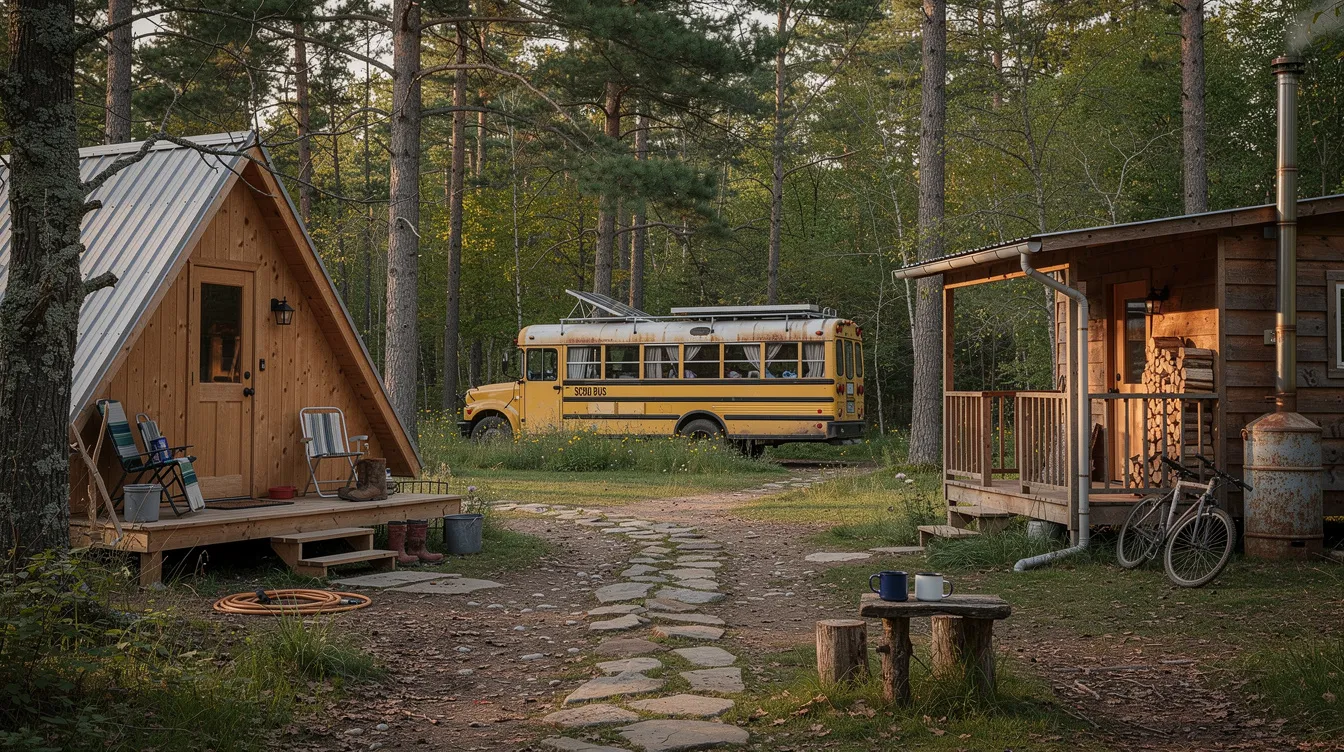
California listings include A-frame cabins, off-grid solar tiny homes, converted buses ("skoolies"), and modular pods. Tiny homes can be equipped with off-grid solar panels, and off-grid tiny homes can include solar panels for energy alongside composting toilets, rainwater harvesting, and propane appliances. Off-grid tiny homes can be equipped with luxury wood interiors, so "off-grid" does not necessarily mean bare-bones.
These homes appear most often in the high desert (Joshua Tree, Pioneertown), Sierra foothills, and rural Northern California, where land is cheaper and zoning more open. California has friendly zoning laws for off-grid tiny homes in many of these areas. Eco-friendly features support sustainable off-grid living, and tiny homes require less energy to heat, cool, and power than traditional houses. Buyers should verify code status and legal occupancy, because a home listed as "off-grid cabin" may or may not be permitted for full-time residence.
What to look for when buying a tiny home in California
Beyond photos and sticker price, several attributes determine whether a listing is actually the right fit. Here is what to check.
Size, layout, and sleeping arrangements
Square footage in California listings runs from micro units under 120 sq ft up to roughly 400 sq ft for most tiny homes, with small cottages extending to 800 sq ft. A 160 sq ft tiny home in San Diego costs $57,000; a 300 sq ft tiny home in Arroyo Grande costs $93,900. The price-per-square-foot gap between those two listings shows how much layout and location affect value.
Check ceiling heights, especially in lofts. A loft with 3.5 feet of clearance works for sleeping but not sitting up; a standing-height loft with stair access is a different experience. Think about realistic occupancy: solo, couple, or family, and whether the home can accommodate guests or pets. Ladder-access lofts are common in budget THOWs but less practical for daily use than stair-access designs.
Build quality, certification, and code compliance
California has some of the strictest building codes and housing regulations in the country regarding tiny homes. The certifications that matter here: RVIA certification for THOWs, ANSI A119.5 for park models, NOAH (National Organization of Alternative Housing) inspection, and state-licensed factory-built housing certification for modular or prefab units.
Certification determines where you can park, whether an RV park will accept your unit, and whether a lender will finance it. Beyond the label, look at framing type (steel vs wood), insulation R-values (critical if you plan to live in mountain vs coastal climates), roof material, and window quality. A home engineered for coastal salt air needs different materials than one designed for Sierra snow loads.
Hookups, utilities, and off-grid systems
Standard on-grid setups include 30- or 50-amp electrical hookups, sewer or septic connections, and city or well water. Many California listings in desert and rural areas feature off-grid elements: solar panel systems (check wattage and battery capacity), propane-powered appliances, water storage tanks, and greywater recycling where county rules allow it.
"Solar-ready" and "solar-equipped" are different things. A solar-ready home has the wiring and roof mounts but no panels or batteries; adding a full system can cost $5,000 to $15,000. Off-grid tiny homes can reduce overall energy consumption, but only if the system is properly sized for the climate and the occupant's usage. Ask the seller for specifics on panel output, battery storage in kilowatt-hours, and whether the system has been permitted.
Land, zoning, and placement legality
California rules are local. Los Angeles, San Diego, Fresno, Sonoma, and other jurisdictions each have different ADU and tiny home policies. California allows tiny homes to function as Accessory Dwelling Units on many lots provided they meet local setbacks, but "many lots" is not "all lots." Local zoning laws for tiny homes can vary from one city block to the next.
The key distinction: buying a tiny home alone (which you then need to place somewhere legal) versus buying one already on permitted land with hookups in place. Tiny homes can be placed in ADU-permitted zones in California, and California has friendly zoning laws for tiny homes in general, but always verify with the local building department. A home without a legal site is furniture, not housing.
Ongoing costs: space rent, taxes, and maintenance
RV park or community space rent in California varies by region: Bay Area parks often charge $1,000 to $1,500+ per month; Southern California parks $800 to $1,200; Central Valley parks $400 to $700. Add utilities, insurance ($400 to $1,500 annually for most units), and any HOA-style fees.
Taxation differs by classification. Foundation-built tiny homes on land are assessed as real property with annual property tax. THOWs registered as RVs pay vehicle registration fees instead. Maintenance costs also depend on climate: coastal homes face salt and moisture exposure on siding and roof components; mountain homes deal with snow loads and freeze-thaw cycles on plumbing. Budget for these ongoing costs before purchase.
How to choose the right tiny home for you in California
Narrowing hundreds of listings to a shortlist requires walking through a few decisions in order. Each one eliminates categories that do not fit your situation.
Start with location and parking. Whether you want to live in a city like Los Angeles or San Jose, a small coastal town, wine country, or on rural acreage determines whether you should focus on ADU-legal foundation homes, park models in existing communities, or off-grid cabins. Location also sets your budget floor; a lot in San Diego costs multiples of a lot in Shasta County.
Clarify if you need land included. Buyers without existing property should consider turnkey "tiny home + land" listings or homes in established communities. If you already own a backyard or acreage, you can focus on the home itself and buy a unit for delivery. There are 127 tiny homes with land for sale in California, with an average listing price of $339,076.
Match home type to lifestyle. Frequent travelers or remote workers who move between cities may prefer THOWs for their mobility. Families or people working from home often need the space and stability of a larger park model or foundation cottage with a separate room. Tiny homes and small modular units for sale range from mobile tiny houses to custom-built accessory dwelling units, so there is a fit for most living situations.
Set a realistic budget range. Think in total cost terms: purchase price plus delivery ($3,000 to $15,000 depending on distance), site prep and hookups ($2,000 to $10,000), permits ($500 to $5,000), and first year's space rent if applicable. Tiny homes in California start at $99,000 for many new models, but used THOWs and shells can be found for less. Financing options are available for tiny homes in California, including RV loans, personal loans, and conventional mortgages for foundation-built units on land.
Check legal fit before you commit. Shortlist only homes you can legally place where you plan to live. This means calling the local building or planning department, confirming ADU rules and setback requirements, and verifying park or community policies on full-time occupancy. California has friendly zoning laws for tiny homes, but "friendly" still requires compliance with specific local codes.
Filter on TinyHomeMap. Use price range, "includes land," off-grid, square footage, and location radius filters to cut your search from hundreds to a manageable list in minutes.
Using TinyHomeMap to find tiny homes for sale in California
This section walks through the practical steps of searching TinyHomeMap's map and filters to locate California listings that match your criteria.
Search by region and lifestyle
Zoom the TinyHomeMap interface to the California region that matches your goals. Southern California beaches for surf-town life; the Bay Area for tech commutes; Central Valley for affordability; Sierra Nevada for mountain living; far Northern California for open space and peace.
Drag the map or use a location radius to discover towns adjacent to headline cities. A tiny home listed 30 miles inland from Santa Cruz or San Diego is often tens of thousands of dollars cheaper than one in the city proper. Explore the map before locking into a single zip code.
Filter by home type, size, and features
TinyHomeMap lets you filter by category: tiny homes on wheels, park models, foundation-built small homes, cabins, buses, and A-frames. If you have a specific parking pad with a width limit, use the size filter (under 200 sq ft, 200 to 300, 300 to 400, 400+).
Feature filters help narrow further: off-grid capable, solar included, loft vs no-loft, and accessibility-friendly layouts. Tiny House Listings tracks private and builder-direct tiny houses on wheels and small cabins across California, and many of those listings also appear on TinyHomeMap. Tiny homes typically use fewer building materials and produce less waste than traditional homes, so if energy efficiency is a priority, filter for solar-equipped or off-grid listings to find homes designed with that in mind.
Compare prices and land options across California
Browse multiple regions side by side. A 300 sq ft THOW in a San Diego County park might list at $93,900 before space rent, while a similar-sized cabin on 5 acres in San Bernardino County lists for $189,000 with land included. The total cost of ownership over five years can be lower for the inland option despite the higher sticker price, because you avoid monthly space rent.
Look for whether each listing includes land, offers community placement, or sells only the movable home. This distinction changes total cost, legal requirements, and long-term stability. Track 5 to 10 serious candidates and compare them on price, location, land inclusion, and features before contacting sellers.
Contacting sellers and doing due diligence
TinyHomeMap publishes and reviews listings, but buyers negotiate directly with owners, builders, or community operators. Before making an offer, ask the seller:
Year built and who built it (builder name, factory location if applicable)
Certifications held (RVIA, ANSI 119.5, NOAH, state factory-built)
Permits pulled for the current site, and whether the parking arrangement transfers to a new owner
Last maintenance performed, and whether any manufacturer warranty is transferable
Whether the unit is classified as real property or a vehicle/RV in the current jurisdiction
For foundation-built homes or listings above $100,000, hire an independent inspector. For any listing, consult the local planning or zoning office to confirm the home can legally sit where you intend to place it. This step takes an hour and can save months of problems.
Frequently asked questions about tiny homes for sale in California
These FAQs address the cost, legality, and practical questions California tiny home buyers ask most often.
How much do tiny homes for sale in California typically cost?
Used THOWs in California often list from around $30,000 to $80,000. New designer models and luxury builds run $90,000 to $160,000+. Tiny homes with land average $339,076 in current listings, ranging from the mid-$200,000s in rural counties to over $500,000 near the coast. Land value and location drive the largest differences in total price.
Can I live in a tiny home full-time in California?
Yes, but legality depends on the specific city or county. Some jurisdictions allow tiny homes as ADUs or primary residences on qualifying lots. Others permit full-time occupancy only in designated RV parks or tiny home communities. Check the local ADU ordinance and, if buying in a community, confirm the park rules about year-round residency before purchase.
Do tiny homes in California need to be permitted?
Foundation-built tiny houses and ADUs nearly always require building permits, inspections, and Title 24 energy compliance. THOWs and park models may fall under vehicle or RV regulations instead, depending on the jurisdiction. Ask the seller what permits were pulled, and confirm with the local building department before moving or installing a unit.
Is it easier to buy a tiny home with land included?
Buying a package where the tiny home is already placed and permitted removes the hardest part of tiny home ownership: finding a legal site and connecting utilities. These listings cost more upfront but save time and reduce uncertainty, which is especially useful for first-time tiny home buyers who are not familiar with California's permitting process.
Can I finance a tiny home in California?
Financing options are available for tiny homes in California. RVIA-certified THOWs and park models qualify for RV loans. Personal loans cover some movable units. Foundation-built tiny houses on land with proper permits can qualify for conventional mortgages or construction loans. Approval depends on the home's classification (RV vs real property), so work with lenders experienced in small or non-standard homes.
How do I move a tiny home I buy in California?
THOWs and park models require a properly rated tow vehicle or a professional transport company. Oversized loads (wider than 8.5 feet) need California Department of Transportation permits. Delivery costs typically run $3,000 to $15,000 depending on distance and width. Get transport quotes early in your search, especially if the home is located in a different part of the state than your final site.
Start exploring tiny homes for sale in California
The right tiny home depends on where you want to live, whether you need land included, your budget, and how you plan to use the space. Open TinyHomeMap, zoom into your preferred California region, and apply filters for home type, price, size, off-grid capability, and "includes land" to build a shortlist. Every listing links directly to the seller, so you can visit, ask questions, and learn the details that matter before making a decision.
Related articles
More guides that dig deeper into the same topics.
- Legal & ZoningZoning Laws and Tiny Homes: What You Need to Know
- Legal & ZoningBuilding Codes for Tiny Homes: Legal Requirements
- Off-Grid PowerTiny Home Battery Storage: How to Size Your Off-Grid Bank
- BuyingDo Tiny Homes Appreciate in Value? A Realistic 2026 Guide
- BuyingTiny Homes for Sale in Sherman, TX (2026 Guide)
Ready to start searching?
Browse tiny homes, plans, builders, communities and land on the interactive map.
Explore the map