Tiny House Regulations in Utah: County Rules, ADUs, and Where You Can Legally Live Small
17 min read · Updated October 14, 2026
By John
Utah has no single statewide tiny home laws governing where and how you can live small. Instead, tiny house regulations in Utah depend on a patchwork of county zoning laws, city ordinances, and building codes that vary dramatically from one jurisdiction to the next. Whether you're planning to park a tiny home on wheels in Washington County or build a foundation-based accessory dwelling unit in Salt Lake City, the rules that apply to your project are local first and state second.
Key Takeaways
Foundation vs. wheels determines your path. Foundation-based tiny homes are easier to classify as primary residences or accessory dwelling units, while tiny homes on wheels face more restrictions and are usually treated as recreational vehicles or accessory buildings.
Utah's ADU reforms are opening doors. Since HB 82 passed in 2021, owner-occupied single-family homes in residential zones must allow internal ADUs statewide. SB 284, effective October 2026, expands this to detached ADUs on qualifying lots.
Regulations vary by county. Salt Lake County has defined ADU standards in unincorporated areas. Davis County allows ADUs in residential zones with specific zoning requirements. Washington County cities recognize detached ADUs with size caps. Rural counties like Sanpete County rely more on septic and access constraints than strict square footage caps.
Most tiny homes on wheels cannot be legally occupied full time inside city limits-they're classified as RVs and restricted to RV parks or temporary use.
Use TinyHomeMap to visually explore tiny homes, ADU-friendly land, and tiny home communities across Utah before committing to a location.
How Tiny Homes Are Classified in Utah (Foundation vs. Wheels)
Utah uses building codes, vehicle and RV rules, and local zoning definitions to classify a tiny house. That classification then determines what is legal on a given parcel. Understanding the distinction between a dwelling structure on a permanent foundation and one sitting on a trailer chassis is the single most important step in your planning process.
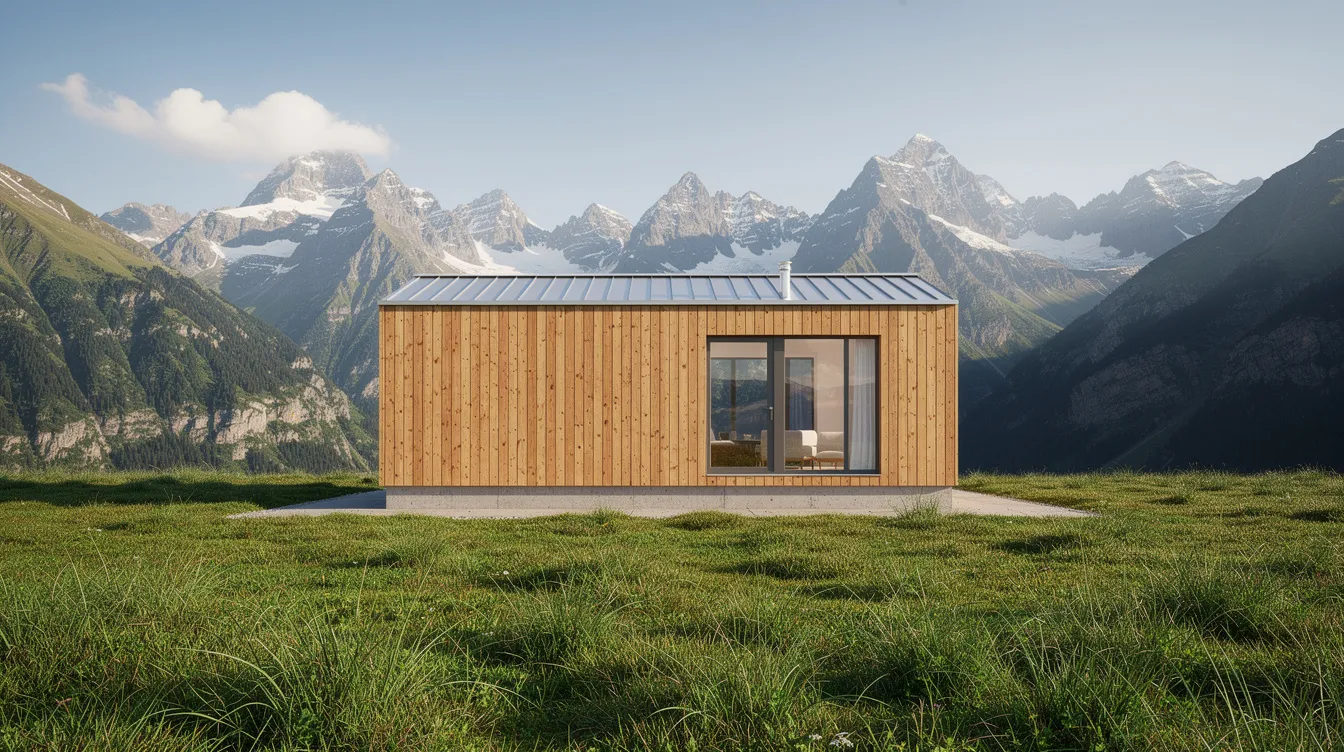
Tiny homes on permanent foundations are usually reviewed as single-family dwellings, accessory dwellings, or small cabins under the International Residential Code with Utah amendments. In Utah, tiny houses must comply with the International Residential Code (IRC), and the state has adopted Appendix Q of the IRC for tiny houses 400 square feet or less. Appendix Q allows reduced ceiling heights in tiny houses to 6 feet 8 inches for habitable spaces, among other accommodations. However, tiny home builders must verify adoption of Appendix Q by local municipalities prior to construction, as enforcement and amendments vary by county.
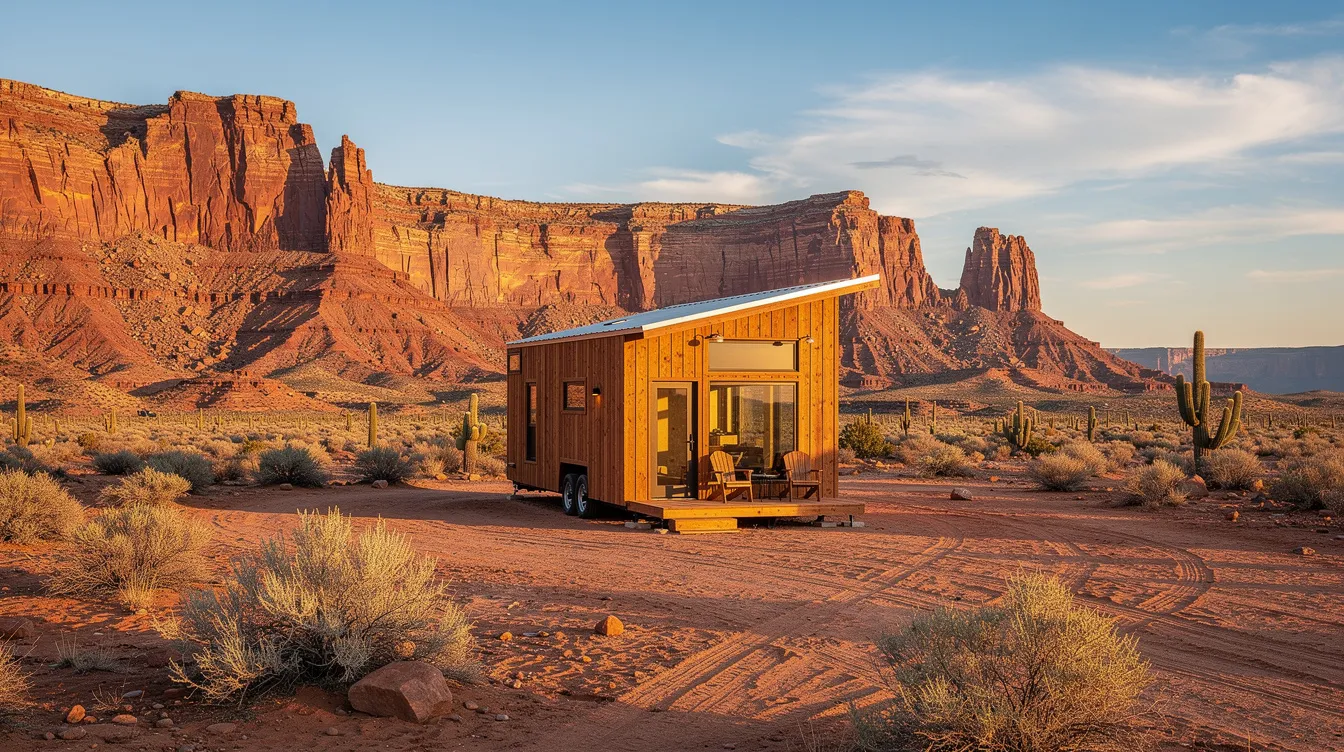
Tiny homes on wheels (THOWs) are generally treated as RVs, park models, or accessory buildings and almost never qualify as permanent dwellings. Salt Lake City does not allow tiny houses without permanent foundations-any structure with wheels is considered an RV and cannot be used as living space except in designated parks.
Utah Statewide Rules That Affect Tiny Houses and ADUs
While Utah has no statewide tiny home laws as a standalone act, the state legislature has passed important ADU and building code legislation that indirectly shapes tiny home options across the state:
IRC adoption with Appendix Q: As of July 2025, Utah has adopted the 2021 IRC including provisions for homes under 400 square feet. Local amendments still apply.
HB 82 (2021) - Internal ADUs: Owner-occupied detached single-family homes in residential zones must allow an internal accessory dwelling unit as a permitted use, rented for 30 or more consecutive days. Municipalities cannot impose restrictive lot size or frontage requirements on these units.
SB 284 (2026) - Detached ADUs: Cities with populations over 5,000 must allow detached ADUs as a permitted use on lots of 11,000 square feet or larger, effective October 1, 2026.
Minimum square footage caps: State law prohibits municipalities from enforcing minimum size requirements over 1,000 square feet (excluding garage), but local cities in Utah may enforce strict minimum square footage requirements for homes below that threshold.
HOA protections: State law prevents HOAs from blanket-banning internal ADUs in many cases, though HOA rules can ban tiny houses even if local zoning laws allow them for detached or short-term rental units.
Vehicle registration: Tiny homes on wheels may be classified as RVs in Utah and must be registered through the DMV, but registration alone does not grant residential zoning approval. Municipalities may restrict tiny homes by requiring access to public utilities for occupancy approval.
Local Zoning and Building Codes: Why County and City Matter More Than the State
Regulations for tiny houses in Utah depend on local municipalities and counties. Local zoning ordinances and building codes ultimately decide where a tiny house or accessory dwelling can be placed, its minimum square footage, front and rear setbacks, and whether it can be rented. Zoning laws dictate where tiny houses can be placed in Utah, and local governments can require minimum square footage for tiny houses that exceed state limitations.
Local zoning works through parcel labels-yes, zoning districts like R-1, R-2, agricultural, and rural residential each allow different uses. Building departments apply structural details, energy standards, plumbing, and electrical codes to foundation-built tiny homes, while zoning staff enforce lot size, accessory buildings height limits, and occupancy rules. Additional notes on accessory buildings-including height, placement, and accessory buildings permission-are typically found in a city's development standards documents.
Counties in Utah can have looser building constraints but still require building permits. Rural counties in Utah are often more accommodating of tiny homes than urban areas, while cities like Salt Lake City, Ogden, Provo, Moab, and St. George maintain detailed ADU and tiny home standards.
Before ordering a custom tiny home, always:
Ask planning staff how your unit will be classified (primary dwelling, accessory dwelling, RV, or accessory building)
Request written zoning verification with your zoning contact number and parcel details
Check whether short-term rentals are prohibited in ADUs or tiny homes
Tiny Houses as Primary Residences in Utah
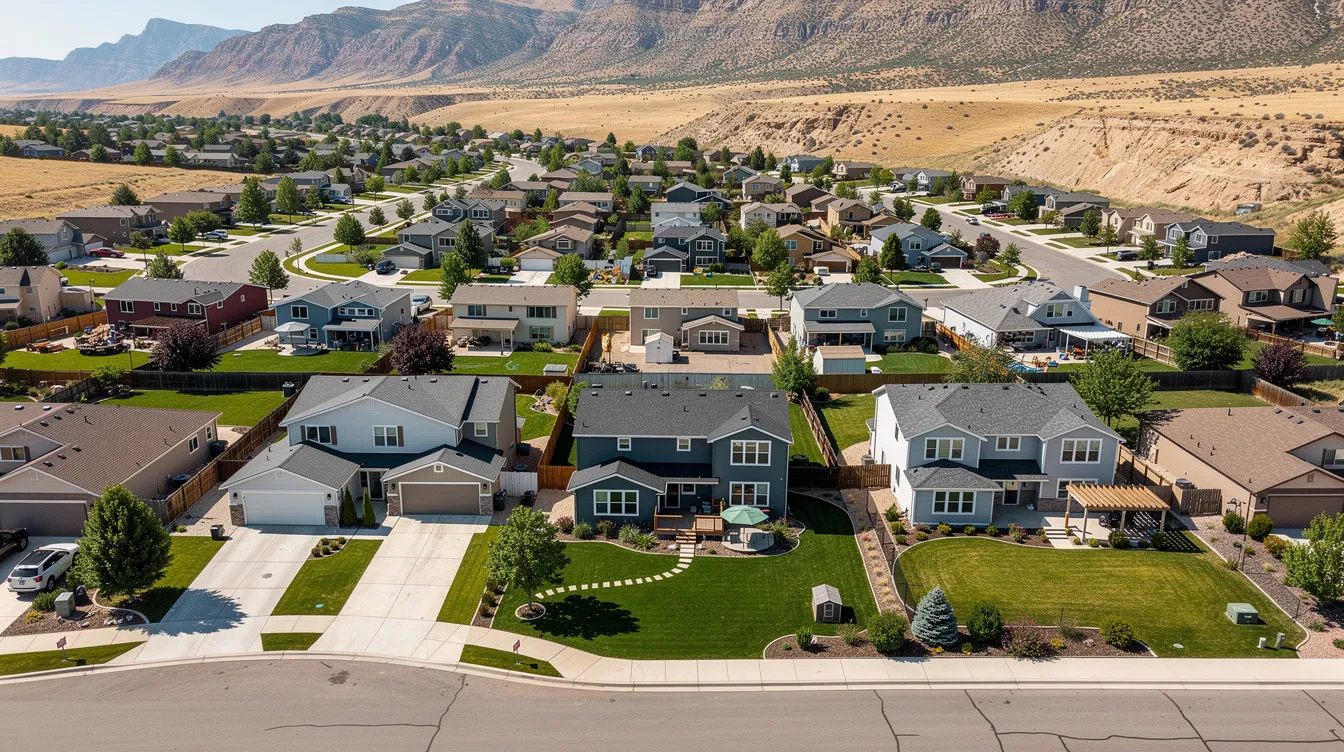
A tiny house can serve as your primary residence in Utah if it is built on a permanent foundation, permitted as a primary dwelling or ADU, and compliant with local building codes and utility requirements. Foundation-based tiny homes are easier to classify as primary residences because they fit neatly into existing residential permitting frameworks.
Many Utah cities set minimum square footage between 400 and 800 square feet for dwellings. However, some rural or agricultural zones in counties like Carbon, Daggett, Wayne, Rich, and Sanpete County allow smaller cabins if they meet health standards-primarily septic tank capacity and water supply. Utility connections are often required for tiny houses in Utah to be legal, especially in incorporated areas.
Full-time living in a THOW is restricted in most standard residential zones. A THOW used as a full-time residence is typically only legal in RV parks or manufactured home communities that allow long-term stays, or on private land in counties that explicitly allow seasonal or long-term RV occupancy-which is rare near the Wasatch Front.
On larger parcels, a foundation tiny home can be designated as the principal building while an additional unit is reviewed as an accessory dwelling, subject to the rule that many cities allow only one dwelling structure per lot unless an ADU exception applies.
Using Tiny Homes as Accessory Dwelling Units (ADUs) in Utah
An accessory dwelling unit is a self-contained secondary home on the same lot as a main house. Many Utah residents use tiny homes as ADUs for family members, long-term renters, or multigenerational living. Accessory dwelling units require permits in Utah, and tiny houses classified as ADUs face different regulations compared to primary residences.
ADUs in Utah typically range from 300 to 1,000 square feet. Utah recognizes three ADU types:
| ADU Type | Description | Typical Approval |
|---|---|---|
| Internal (IADU) | Carved from existing home (basement, attic) | Permitted use statewide under HB 82 |
| Attached | Shared wall, separate entrance | Varies by city |
| Detached | Separate structure in backyard | Permitted on qualifying lots under SB 284 |
Most detached ADUs must be smaller than the primary dwelling, meet required minimum rear yard and side setbacks (commonly 5 feet on sides, 10–20 feet rear), maintain yes building separation from the principal building, and provide at least one additional off-street parking space. Cities often regulate additional floor space relative to the main home and enforce accessory buildings height limits.
Many Utah cities require detached ADUs to be on a permanent foundation and connected to utilities-making THOWs ineligible as ADUs. The accessory dwelling unit permission process often requires detailed plans, structural reviews, and parking spaces documentation. Some rural counties may allow a park model as an ADU with a conditional use permit and approved hookups, but this remains uncommon.
County-by-County Highlights: Where Tiny Homes Work Best in Utah
Utah's tiny home regulations vary by county zoning laws. A full legal review is essential for each jurisdiction, but here are practical trends based on current ordinances as of 2025–2026.
Wasatch Front counties (Salt Lake County, Davis County, Weber County, Utah County): These counties generally have defined ADU ordinances. Salt Lake County has defined ADU standards in unincorporated areas. Davis County allows ADUs with specific zoning requirements, and the Davis County Health Department oversees septic and water compliance for new units. Cache County permits ADUs in certain residential zones as well. Tiny homes must usually be on foundations and meet residential building codes. Owner occupancy and parking facilities are commonly required.
Southern and southwestern counties (Washington County, Iron County, Kane County, Garfield County, San Juan County): Washington County cities like St. George recognize detached ADUs with size caps and a long-term rental focus. Iron County is flexible with additional dwelling units in rural areas. More remote areas allow additional small dwellings case-by-case, with septic and road access as the primary constraints. Farm production properties and farm industry parcels in these counties sometimes accommodate secondary housing for workers.
Central and rural counties (Sanpete County, Sevier County, Millard County, Daggett County, Wayne County, Rich County, Carbon County): These rural counties often lack formal tiny house language but are relatively flexible with second dwellings, cabins, or accessory residences on agricultural or large lots. Few explicit square-footage caps exist, but there is strong oversight of wells, septic, and road access.
Resort and high-pressure housing counties (Summit County, Grand County): Grand County allows ADUs with size limits around 1,000 to 1,200 square feet. Both counties enforce tight short-term rental bans and structured ADU rules emphasizing long-term housing.
City Examples: Salt Lake City, Ogden, Provo, St. George, and Moab
Large Utah cities each handle tiny homes and ADUs differently. Zoning can change at city limits even within the same county. Utah's zoning laws allow for progressive modifications regarding tiny home placement in some cities.
Salt Lake City: ADUs are allowed in all residential zones where residential uses are permitted, subject to zoning districts development standards for size, height, and setbacks. Salt Lake City defines a tiny house in the SR-3 district as a detached dwelling of 400 usable square feet or less on a permanent foundation. The city code requires owner-occupancy in either the main home or the ADU, and limits each lot to only one dwelling structure beyond the primary home. Detached ADUs must meet building codes, making full-time THOW living difficult inside city neighborhoods.
Ogden City: Ogden enforces a one-ADU-per-lot rule with owner-occupancy. Detached ADU size ranges roughly from 300 to 800 square feet, placed in the rear yard. Exterior appearance must match single-family character, and entrances should face the side or rear-which influences tiny home designs.
Provo: Provo focuses on "accessory apartments" in owner-occupied single-family homes, with parking spaces minimums of approximately four total across the property. Detached tiny home ADUs can be more challenging than interior conversions due to parking and occupancy restrictions for unrelated adults.
St. George: Attached ADUs are permitted, with a conditional-use process for detached ADUs often capped at roughly 800 square feet in rear yards, requiring extra parking facilities.
Moab: Moab emphasizes long-term housing. ADUs are allowed with size caps around 1,200 to 1,500 square feet, deed restrictions, and a prohibition on nightly rentals. The Fruit Heights plan and similar local framework documents in Davis County cities show a comparable emphasis on long-term occupancy over tourism use.
Tiny Homes on Wheels, RVs, and Park Models in Utah
Many Utah residents are attracted to movable tiny homes for flexibility, but legal occupancy is far more constrained than for foundation homes. Tiny homes on wheels face more restrictions than foundation homes across virtually every jurisdiction.
Common classifications include:
THOWs built to RV standards (RVIA, ANSI A119.5) are treated as recreational vehicles
Park model RVs under 400 square feet are used as seasonal housing in RV parks and campgrounds
Non-certified DIY tiny homes are harder to register, insure, and legalize as dwellings
Most cities prohibit full-time residency in an RV or THOW parked in a residential driveway or backyard-even with utilities connected. Many counties allow RV occupancy only in approved RV parks, campgrounds, or for limited temporary use during home construction. Some rural counties quietly tolerate long-term use on large agricultural parcels, but this is property-specific and subject to enforcement changes or neighbor complaints.
Before choosing a THOW, confirm whether your unit will be registered as an RV or built to residential code, and whether the land allows long-term RV use or park models.
Practical Steps to Get Your Tiny House Approved in Utah
Getting a tiny home legally approved in Utah follows a general sequence. Here is the roadmap:
Identify your target county and city. Compare Salt Lake County versus Sanpete County, or Salt Lake City versus an unincorporated township. Gather your assessor's parcel number and property address.
Contact planning and zoning. Describe your project scope-whether it's a primary home, accessory dwelling, or long-term rental. Request a preliminary building permit review and ask how your tiny house will be classified. Note your zoning contact number and the planner's business address for follow-up.
Request applicable code sections. Get local regulations for tiny homes, ADUs, accessory buildings, RV use, and minimum dwelling size standards. Confirm actual lot dimensions and sides site plan details match your plans.
Work with qualified professionals. Engage a builder or designer familiar with Utah building codes to produce detailed project plans including mechanical plans, structural details, and necessary roof structures. Your electrical contractor, plumbing contractor, and mechanical contractor should each hold a current Utah state license number. Unlike coastal states that may require a coastal permit, Utah's inland permitting focuses on snow load, wind, and seismic standards.
Apply for permits and approvals. Submit your site plan along with construction documents. If conditional-use approval is needed, prepare for public hearings. Coordinate a sewer connection verification with the respective sewer district, and establish a permanent power agreement with your utility provider. Budget for fees-ask about the multiplier maximum fee amount and any improvement agreement requirements. You may need to pay Davis County or other jurisdictions separately for health reviews. Address native material removal if grading is required at the construction site.
Build and inspect. After permit issuance of your approved application, your builder proceeds with construction. A building verification survey may be required to confirm setbacks and lot placement. Ensure all roof structures and foundation work meet inspection checkpoints.
Obtain final approvals. After the final inspection, apply for a certificate of occupancy upon completion, allowing legal occupancy of your detached dwelling or ADU.
Use TinyHomeMap to browse land listings already marked as tiny-home or RV friendly across Utah, filtering for accessory dwelling unit permission, off-grid capability, or park model compatibility.

Tiny Home Communities, Land, and Rentals in Utah
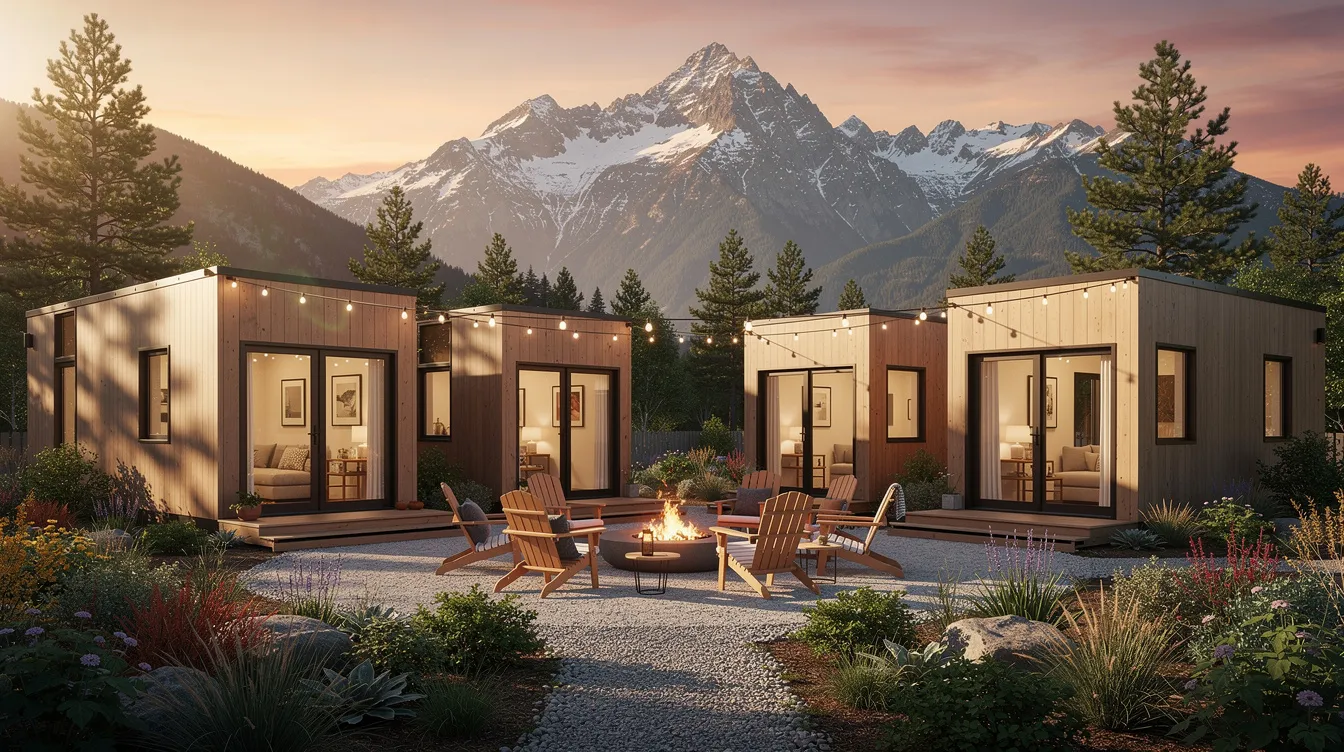
Several tiny home communities are emerging in Utah, offering eco-friendly and affordable living alongside the Wasatch Front and near outdoor recreation areas. Tiny home communities often include shared amenities for residents such as laundry facilities, gardens, and communal gathering spaces.
Types of tiny-friendly setups in Utah include:
Purpose-built tiny home communities in or near cities like Salt Lake City or Ogden where lots are pre-zoned for small dwellings
RV parks or resort-style developments in Washington County and Grand County that allow long-term stays in THOWs or park model tiny homes
Rural land parcels and homesteads in Sanpete County, Sevier County, and similar areas where multiple small cabins serve family or farm industry housing
Tiny homes in Utah vary in price based on size, and costs for tiny homes depend on customization and location. Before committing, ask community operators for copies of zoning approvals, verify whether stays count as long-term rentals or nightly lodging, and confirm your rights as a resident. Embracing tiny living in a community setting can ease the permitting burden significantly compared to going it alone on raw land.
How TinyHomeMap Fits into Your Utah Tiny House Journey
TinyHomeMap is an independent global directory that aggregates tiny homes for sale and rent, builders, land, and communities on an interactive map-with growing coverage across Utah. Search by county or city to see existing tiny homes and ADUs, filter by home type (tiny home on wheels, park model, cabin, accessory dwelling unit, off-grid home), and explore listings tagged as tiny-home friendly land in rural Utah counties.
TinyHomeMap reviews submissions before publication for quality and accuracy but does not broker transactions-buyers and renters deal directly with owners, builders, or community operators. It provides a practical starting point for regulatory research by showing how others are already living small in similar areas across Utah.
FAQ: Tiny House Regulations in Utah
These frequently asked questions cover common Utah tiny house topics not fully addressed above, focusing on timelines, financing, off-grid living, builder requirements, and enforcement. Answers reflect 2025–2026 practices-always verify details with your local planning department.
How long does it usually take to permit a tiny house or ADU in Utah?
Timelines vary significantly by city and project complexity. Simple internal ADUs in compliant residential zones may be approved within four to eight weeks if plans are complete and meet all building codes. Detached tiny home ADUs or new primary tiny houses on rural land can take two to six months due to zoning reviews, utility approvals, and inspection scheduling. Conditional-use permits or variances-often needed for THOWs, park models, or unusual rear setbacks-can add several months and require public hearings.
Can I live off-grid in a tiny home in Utah?
True off-grid setups using solar power, rainwater catchment, and composting toilets are most realistic in rural counties where zoning allows alternative systems and local health departments approve on-site wastewater solutions. Many counties still require an approved septic system and reliable water supply; composting-only or no-plumbing setups are often not acceptable for full-time residential use. Prospective off-grid dwellers should focus on agricultural or large rural parcels in permissive counties like parts of Sanpete, Sevier, Daggett, Wayne, or Carbon and engage health officials early.
Can I get a traditional mortgage for a tiny home in Utah?
Foundation-built tiny homes on owned land, permitted as primary residences or ADUs and meeting building codes, may qualify for conventional or FHA-style mortgages through some lenders. THOWs and park models are typically financed as RVs or personal property through chattel loans with higher interest rates and shorter terms. Talk to local lenders experienced with manufactured, modular, or small homes and verify their appraisal and minimum square footage policies before committing.
Do I need a certified builder for my tiny home to pass code in Utah?
While Utah law does not always require a tiny house specialist, using a licensed contractor or manufacturer familiar with the IRC and local snow-load, wind, and energy codes strongly improves your approval chances. Many building departments are more comfortable approving modular, prefab, or site-built tiny homes that come with engineer-stamped plans and third-party inspections. DIY tiny homes can be permitted but may face more plan-check scrutiny, especially in stricter counties like Salt Lake County or Summit County.
What happens if I park a tiny home on wheels in my Utah backyard without permits?
Enforcement varies by city and neighborhood, but possible outcomes include code enforcement notices, fines, and orders to remove the tiny home or cease occupancy. Complaints typically arrive after neighbors report full-time occupancy or visible utility hookups, and claiming the unit has been there for years is not a legal defense. Seek legal placement through permitted ADUs, RV parks, tiny home communities, or rural parcels with explicit allowances rather than relying on informal setups.
Related articles
More guides that dig deeper into the same topics.
- Legal & ZoningZoning Laws and Tiny Homes: What You Need to Know
- Legal & ZoningBuilding Codes for Tiny Homes: Legal Requirements
- Legal & ZoningTiny Home Permits and Building Codes: Legal Requirements
- Legal & ZoningWhat States Will Pay You to Build a Tiny House? (Grants, Rebates & Incentives in 2026)
- Legal & ZoningHow to Live on Your Land While Building a House (Without Losing Your Mind or Breaking the Law)
Ready to start searching?
Browse tiny homes, plans, builders, communities and land on the interactive map.
Explore the map