Best Tiny Houses in Nature: 10 Breathtaking Escapes You Can Actually Book or Buy
10 min read · Updated October 28, 2026
By John
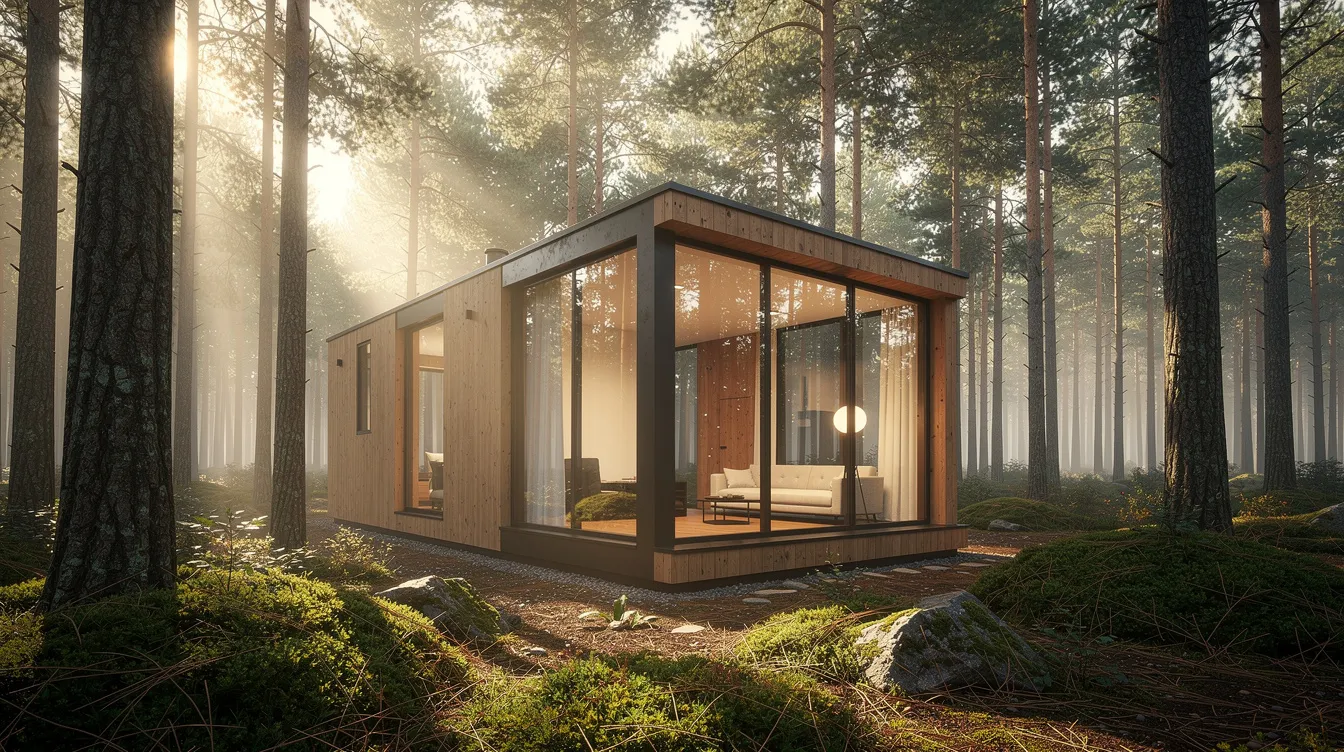
There's a kind of stillness you only find when your living space is 200 square feet and the door opens straight into a forest, a canyon, or a wildflower meadow. Tiny houses in nature strip away the noise - no commute, no clutter, just fresh air and the honest elements of a landscape doing what it does.
Living in nature can reduce stress and promote mental well-being, and tiny houses can promote a deeper connection to the natural environment that most conventional homes simply can't offer. Living in a tiny house offers a blend of minimalist design and environmental connection, making it one of the most compelling ideas in modern travel and housing.
This is a curated listicle of 10 specific tiny houses in nature - real cabins, off-grid pods, and tiny houses on wheels - across different regions. We selected for scenery, architectural quality, comfort, uniqueness, and availability. TinyHomeMap is an independent global directory where you can find similar listings filtered by location, budget, size, and features to continue your tiny house journey beyond this list.
How We Chose the Best Tiny Houses in Nature
We narrowed hundreds of nature-immersed tiny homes down to 10 using these criteria:
Scenic setting & immersion - Forest, mountain, lakeside, desert, or coastal locations where nature is visible from every window and deck. Outdoor spaces like decks and gardens are integral to tiny house living.
Architectural & interior design - Photogenic builds with large glazing, honest materials, and clever layouts. Tiny homes often utilize natural materials to blend into their surroundings.
Sustainability & off-grid readiness - Tiny homes can integrate off-grid living features like solar panels and rainwater systems. They require fewer resources to construct than conventional homes, and living in a tiny house reduces energy consumption for heating and cooling.
Comfort & year-round usability - Insulation, heating, comfortable sleeping, usable kitchen and bathroom.
Uniqueness & sense of place - Homes that reflect their landscape. Seamless indoor-outdoor living is a common feature in nature-focused tiny homes.
Verified availability - Bookable or purchasable as of 2026. Availability can change, so confirm before booking.
10 Tiny Houses in Nature You Need to See
Each listing below highlights what makes it special, who it's best for, and how it fits into the broader tiny-living trend. Locations span North America and Europe, and similar stays can be discovered via TinyHomeMap's map interface. Tiny houses tend to have a smaller ecological footprint due to their size, and intentional living in tiny homes encourages mindful consumption across every one of these builds.
1. Mirror Forest Cabin - Võrumaa, Estonia
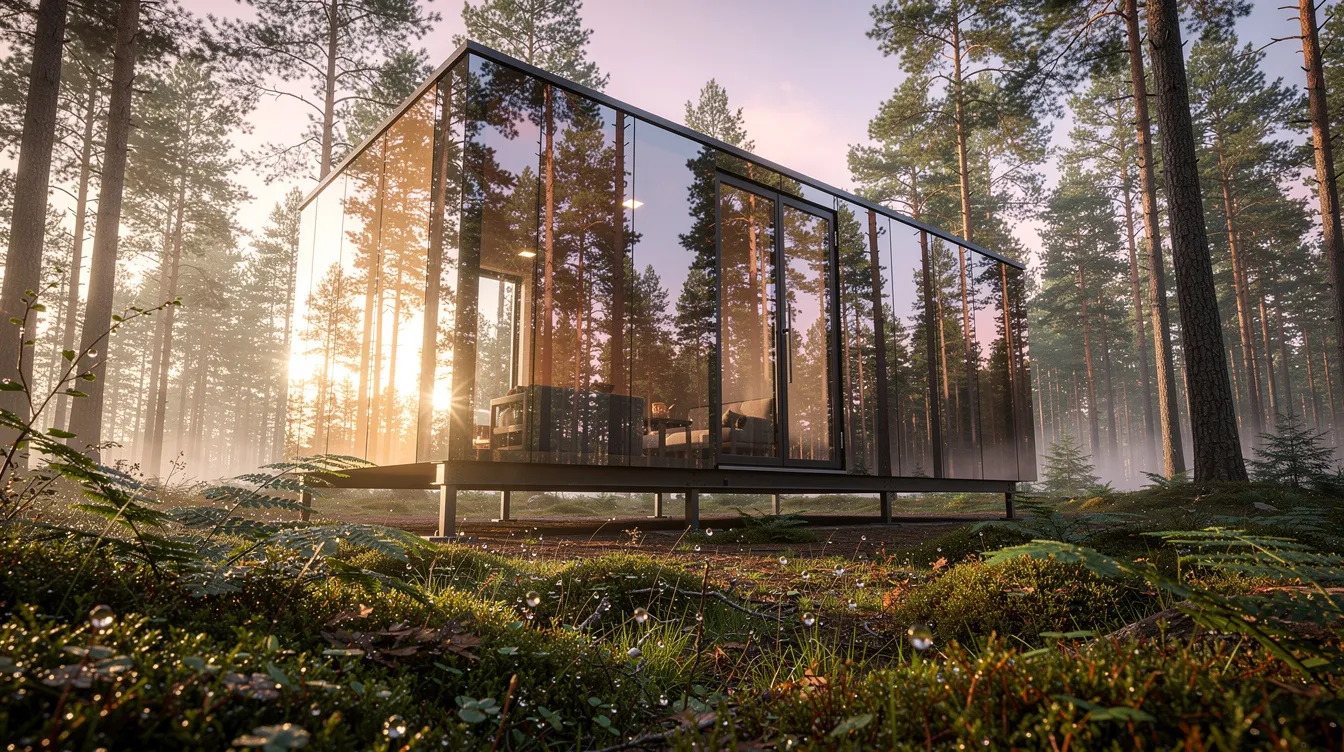
A mirrored-glass tiny cabin hidden in an Estonian pine forest, created to visually dissolve into the trees. The facade reflects surrounding pines and sky while offering interior privacy through one-way glass. At roughly 20–25 m², it features full-height glazing on the forest side and dark, minimalist interior finishes with a queen bed by the window and compact kitchenette.
A triangular cabin in Sweden similarly immerses guests in nature - the Scandinavian design style of disappearing into landscape is well-established. Triple-glazed windows and high insulation make this place comfortable even through Estonian winters.
Best for: Couples seeking a design-driven escape. Photographers and architecture enthusiasts will love the striking walls of reflected forest.
2. Cliffside Glass Tiny House - Picos de Europa, Spain
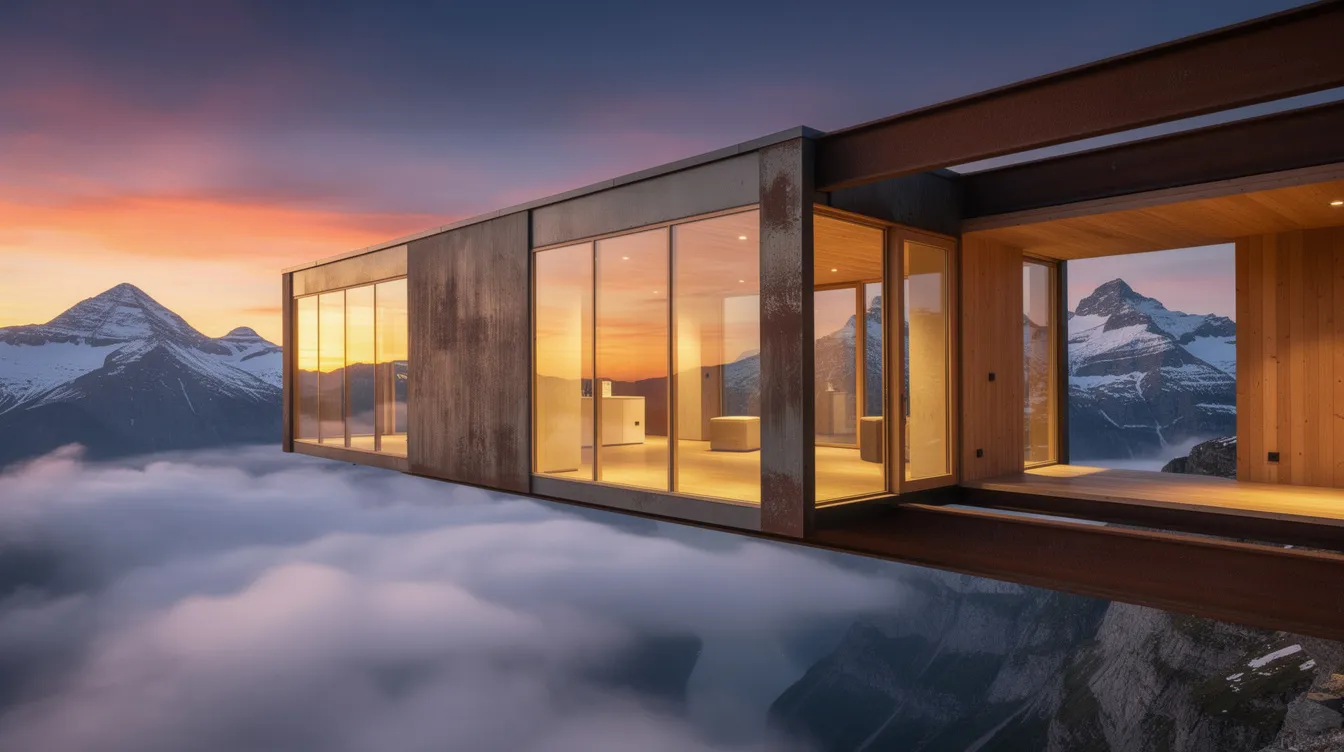
A narrow, glass-walled tiny house cantilevered above a valley edge in northern Spain. Floor-to-ceiling glazing on the valley side offers uninterrupted mountain views. The design uses corten steel and rough-sawn timber to anchor modernity into rugged alpine terrain.
A tiny home can have high ceilings and abundant windows - this one proves it at ~28 m² with a full bathroom and galley kitchen. Orientation captures passive solar gain and natural cross-ventilation.
Best for: Adventure travelers and remote workers seeking premium inspiration with low distraction. Not for people with a strong fear of heights.
3. Lakeside Cedar Tiny Cabin - British Columbia, Canada
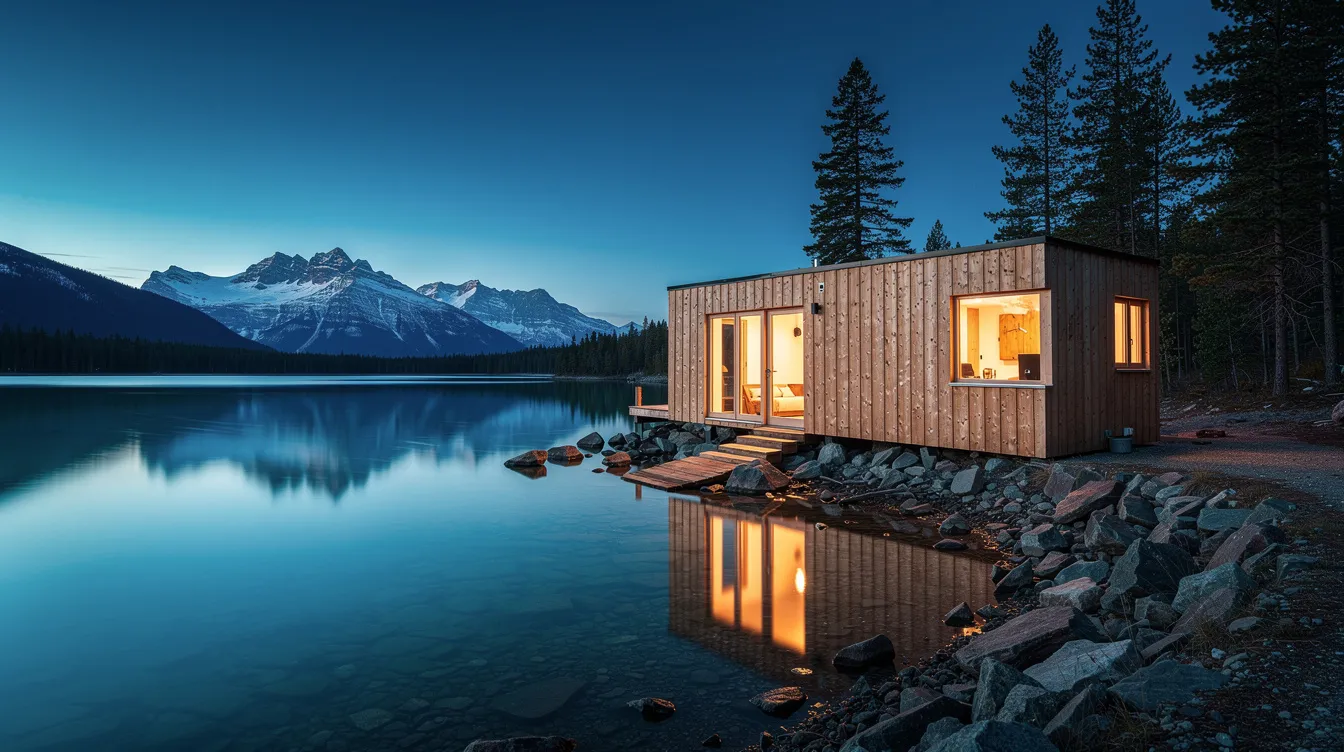
A cedar-clad tiny house on skids nestled among fir trees on a glacial lake in interior British Columbia. Classic cabin charm meets refined tiny-house craftsmanship with built-in furniture, a lofted sleeping area, and a big picture window to the lake. Direct water access includes a small private dock and canoe.
A sleeping loft adds a separate zone without increasing footprint, and built-in seating can maximize space throughout the main level. The wood-burning stove and thick insulation make shoulder-season stays charming.
Best for: Families or couples who love paddling, fishing, and cozy evenings. First-time tiny-house guests will find plenty to enjoy without feeling squeezed.
4. Desert Pod Tiny House - Joshua Tree, California, USA
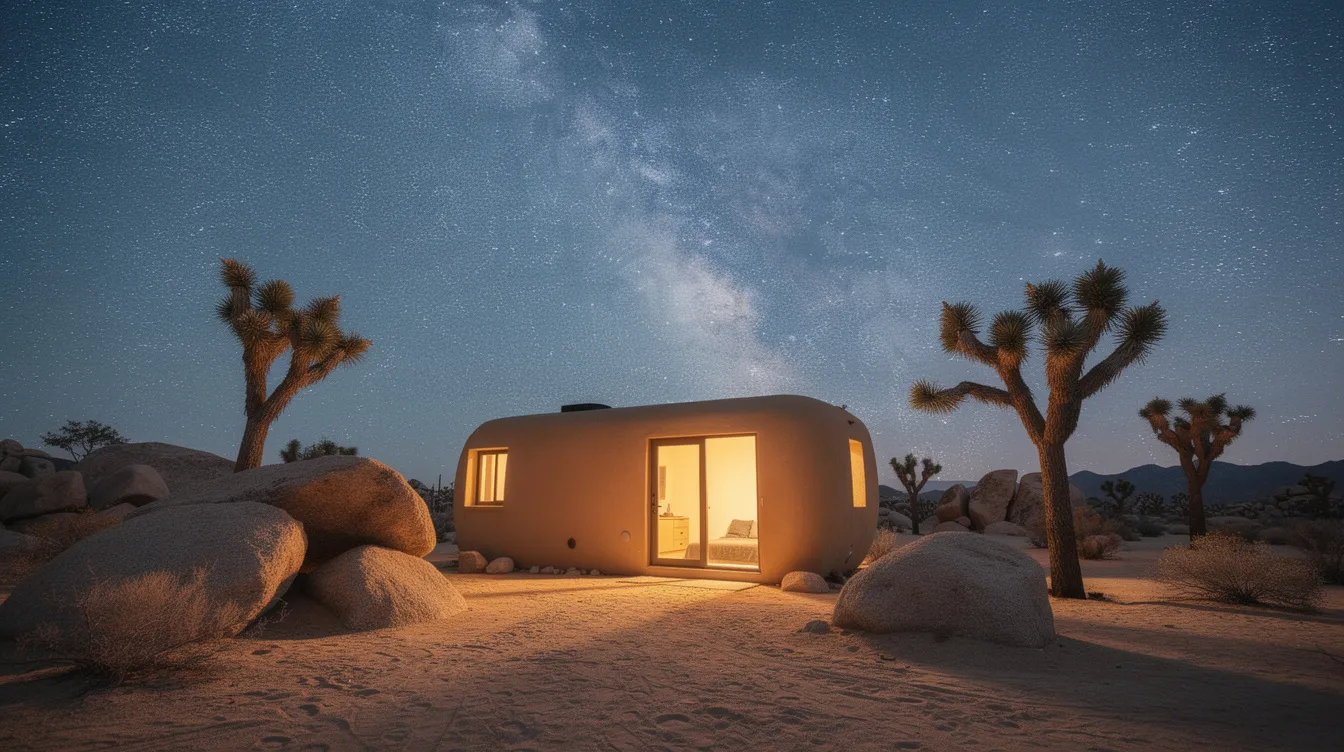
A low, sculptural pod set among boulders and Joshua trees near Joshua Tree National Park. The curved, sand-colored exterior echoes desert forms while an oversized circular bedroom window frames the Milky Way. Rooftop solar and a battery bank handle air conditioning during peak season.
Tiny homes typically range from 100 to 400 square feet - this pod sits at roughly 250 sq ft with a compact wet room and outdoor shower. Elsewhere in the country, a tiny house in Golden, CO offers million-dollar views, proving that desert and mountain settings consistently deliver dramatic landscapes.
Best for: Design-conscious travelers and night-sky enthusiasts. Water must be trucked in, so guests are encouraged to conserve.
5. Fjord-View Micro Cabin - Hardangerfjord, Norway
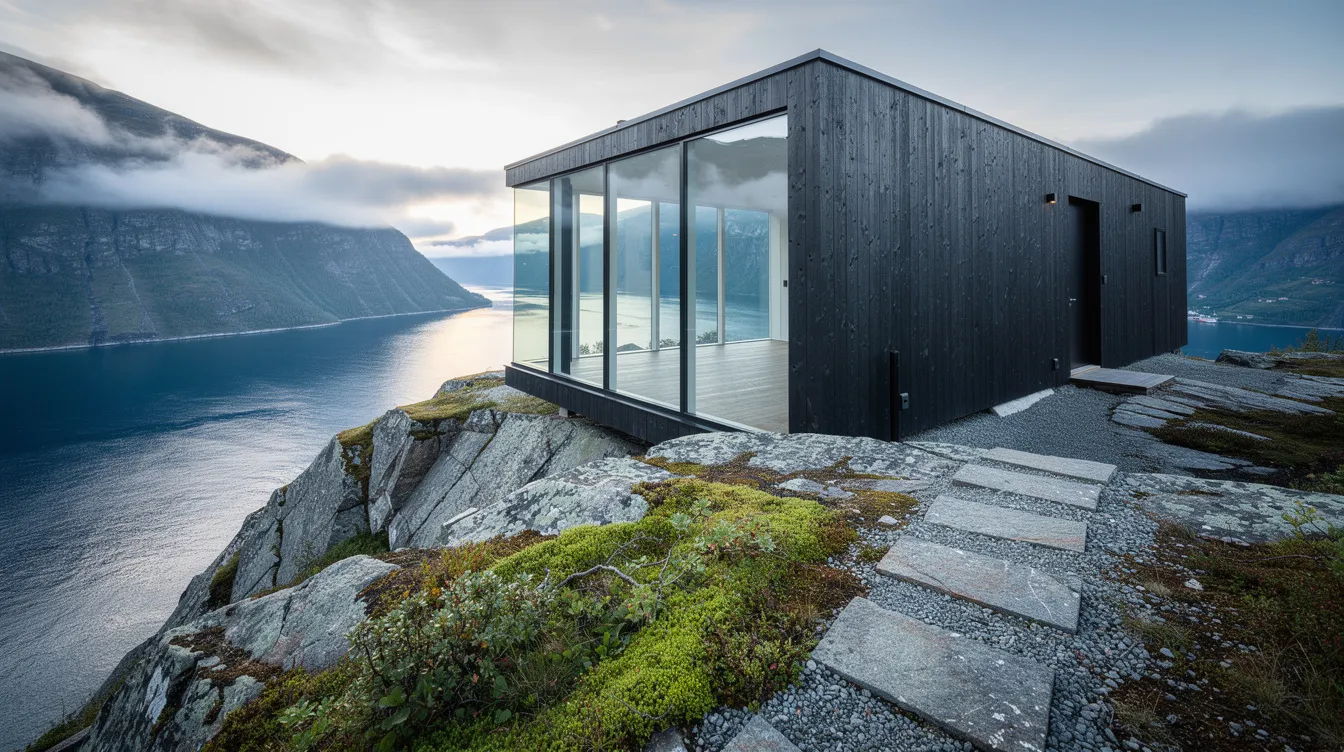
A sharply angular micro cabin perched above Hardangerfjord, clad in charred wood (shou sugi ban) with a fully glazed fjord-facing wall. At just 15–18 m², the extreme compactness paired with a vast outward view makes the interior feel much larger.
Compact designs like this echo the concept behind a 20m² beach home designed to enjoy sea views - or a 20m² tiny beach home that features a mini kitchen and shower room. Here, fold-down tables, wall-mounted storage, and a convertible sofa/bed squeeze maximum function from minimal space. Under-floor heating and triple glazing keep this envelope comfortable year-round. A composting toilet and greywater filtration protect the fjord ecosystem.
Best for: Minimalists comfortable living from a backpack. Solo travelers or cozy couples prioritizing scenery over floor space.
6. Forest Bathing Tiny Retreat - Kyoto Prefecture, Japan
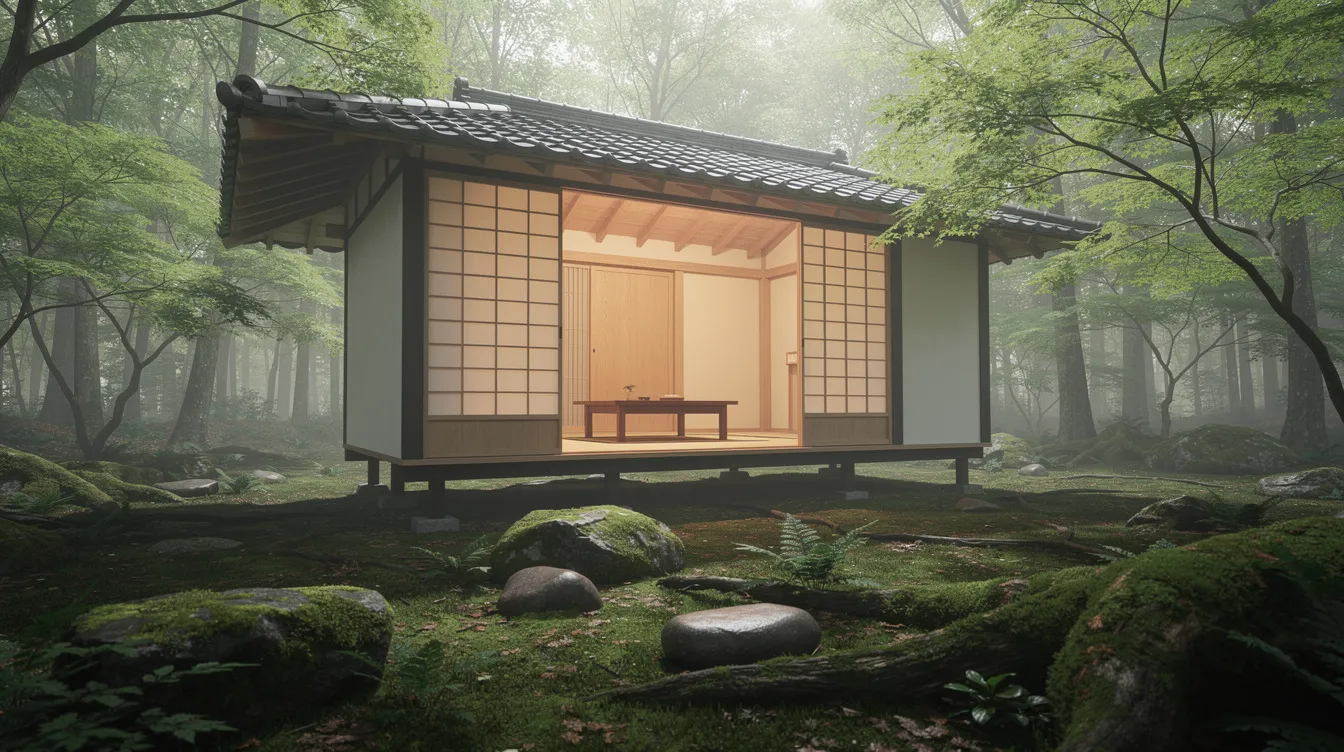
A Japanese-inspired tiny house on stilts above a mossy forest floor, with sliding shoji screens and a deep hinoki soaking tub overlooking maples. The raised structure preserves root systems and allows rainwater and wildlife to pass beneath.
Open shelving replaces bulky cabinets in the tiny kitchen, keeping sightlines clear. Sliding partitions and built-in futon storage allow flexible use of the main room. The deep soaking tub sits by a corner window for immersive nature views - a sign of how design attention to local tradition can elevate a tiny home beyond its square footage.
Best for: People who love slow living, tea rituals, and forest bathing (shinrin-yoku). Writers and artists needing quiet will find this retreat hard to leave.
7. Vineyard Tiny Loft - Tuscany, Italy
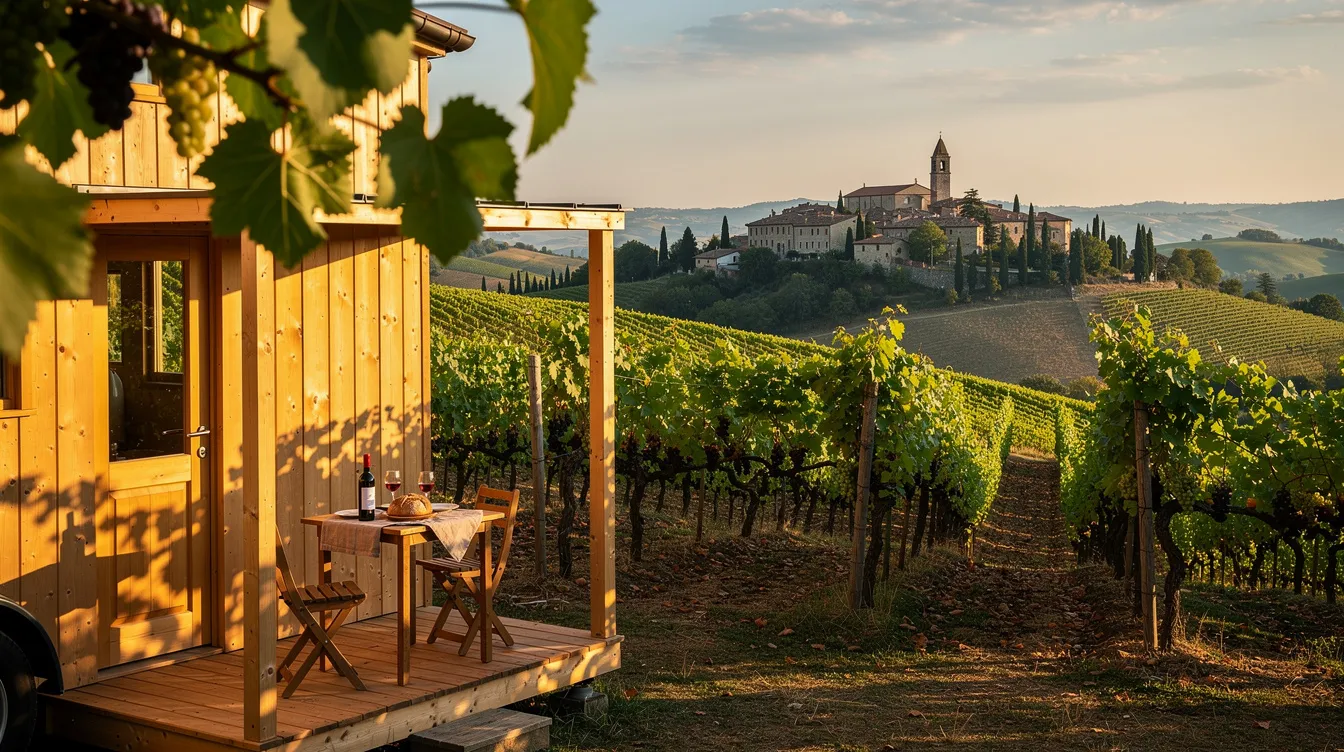
A lofted tiny house tucked between rows of vines on a working organic vineyard in Tuscany. Terracotta-toned cladding, a clay tile-inspired metal roof, and a pergola shaded by actual vines give this home a strong sense of place. The generous covered porch effectively extends the living space outdoors.
The U.S. tiny home market reached $21.9 billion in 2024, and tiny homes can cost between $25,000 and $474,999. A tiny house in Fresno, CA is listed for $25,000, while a tiny home in California is priced at $474,999. The average cost of a tiny home is around $60,000 - making vineyard retreats like this an increasingly accessible download from the dream-home catalog.
Best for: Couples wanting rural Italian charm. Food and wine travelers who add a good kitchen to their non-negotiable list.
8. Riverbank Off-Grid Tiny House - Blue Mountains, Australia
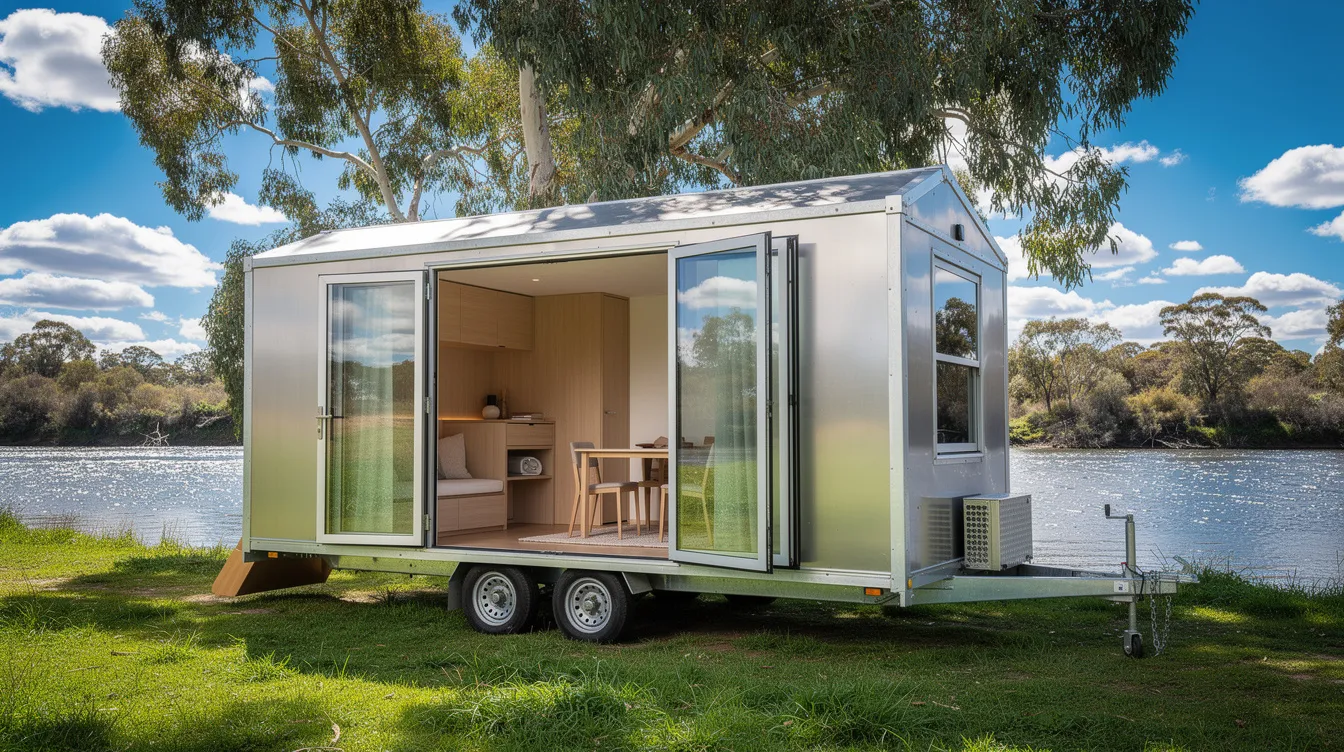
An off-grid, steel-framed tiny house on wheels parked semi-permanently on a grassy bank above a river in the Blue Mountains. Large bifold doors open the entire living area to a deck overlooking the water and eucalyptus trees. Roof-mounted solar, lithium batteries, and rainwater collection with basic filtration power this setup.
Prefab innovation is making these builds faster - the Ark Shelter, for example, can be installed in one day. For those seeking lots of land, a tiny home in Wetmore, MI sits on 14.27 acres, showing that off-grid tiny living can scale from compact riverbanks to sprawling parcels. This Australia-based home offers a sofa with integrated storage plus a queen loft bed accessed by storage stairs.
Best for: People researching off-grid tiny living who want to test it before committing. Kayakers and hikers will love the direct water access.
9. Alpine Meadow Tiny Chalet - Tyrol, Austria

A gabled tiny house styled as a modern alpine chalet, sitting alone in a wildflower meadow with panoramic views of the Tyrolean Alps. Familiar chalet morphology - steep roof, timber beams - meets tiny-house efficiency with big windows and a well-insulated envelope.
Radiant floor heating and a small wood stove handle winter. A sleeping loft plus convertible sofa accommodates up to four guests. Compact gear storage handles skis, boots, and hiking equipment. Elsewhere, a tiny home in Fairbanks, AK features views of Denali, proving that mountain settings across every country deliver on the promise of scale and silence.
Best for: Outdoor enthusiasts wanting four-season mountain access. Families of 3–4 comfortable in compact quarters who select adventure over sprawl.
10. Wetland Wildlife Tiny Hide - Friesland, Netherlands
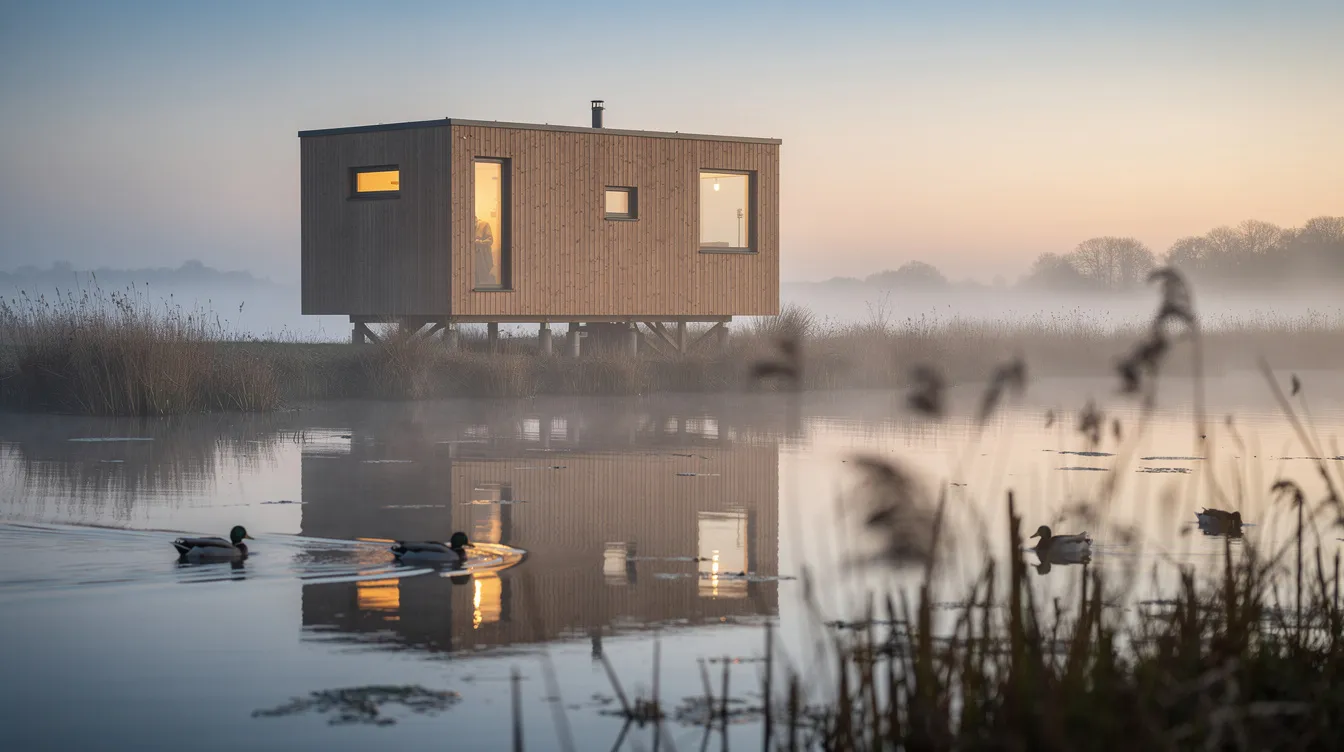
A slender, board-clad tiny house raised on short stilts above a wetland edge, designed for birdwatching and quiet observation of Dutch polder landscapes. Niches and benches are integrated beneath long horizontal windows for comfortable observation. The narrow footprint and elevated deck reduce disturbance to marsh vegetation.
This is a good place to mention community: Tumbleweed helps find tiny home communities across the U.S., while TinyHomeMap aggregates listings for tiny home communities globally. Tiny home communities connect like-minded individuals seeking alternative living and often feature off-grid living options. These communities can vary from vibrant neighborhoods to quiet retreats - much like this wetland hide itself.
Best for: Birders and nature photographers. Solo guests or couples seeking a contemplative retreat who enjoy the kind of silence that makes you notice your own breathing.
Quick Comparison
Use this table to quickly match your priorities to a listing:
| Tiny House | Location | Best For | Setting |
|---|---|---|---|
| Mirror Forest Cabin | Estonia | Design lovers | Deep forest |
| Cliffside Glass House | Spain | Adventure stays | Mountain cliff |
| Lakeside Cedar Cabin | Canada | Classic cabin comfort | Glacial lake |
| Desert Pod | USA | Stargazing | Desert boulders |
| Fjord-View Micro Cabin | Norway | Ultra-minimal stays | Nordic fjord |
| Forest Bathing Retreat | Japan | Slow living | Mossy forest |
| Vineyard Tiny Loft | Italy | Food & wine trips | Tuscan vines |
| Riverbank Off-Grid | Australia | Off-grid testing | River & eucalyptus |
| Alpine Meadow Chalet | Austria | Four-season mountains | Wildflower meadow |
| Wetland Wildlife Hide | Netherlands | Birdwatching | Dutch polder |
How to Choose the Right Tiny House in Nature
The "best" tiny house depends on your desired climate, level of remoteness, design taste, and whether you're booking a stay or considering a purchase.
Landscape & climate: Desert pods for winter sun, alpine stays for snow sports, northern forests for autumn colors, lakes for summer swimming. Google the local weather patterns before you book.
Comfort vs. minimalism: Contrast ultra-compact designs (fjord micro cabin) with more spacious layouts (vineyard loft or alpine chalet). For longer stays, look for a real staircase, full kitchen, and separate bedroom.
Off-grid vs. convenience: Deep seclusion usually means off-grid with rough access. Consider solar array size, water source, and waste systems. If you're exploring ownership, use TinyHomeMap to locate land and communities that allow off-grid tiny living.
A UC Berkeley study found that a well-designed tiny house consumed roughly 93% less energy and 82% less water than a standard California home - making these builds far more than aesthetic statements.
Final Thoughts
Tiny houses in nature offer a bridge between architecture and landscape, allowing people to explore and test-drive minimalist, eco-aware living without abandoning comfort. There is no single best setting: forest, desert, mountain, lake, and wetland each deliver a different rhythm.
If you join the growing number of people who fall in love with a particular style, use TinyHomeMap to find similar rentals, discover builders and plans, and explore tiny-home-friendly land where you could one day park your own home in nature.
Even a single day in a tiny house surrounded by nothing but landscape can help clarify what you really need from a home - and what you've been carrying that you never needed at all.
Related articles
More guides that dig deeper into the same topics.
Ready to start searching?
Browse tiny homes, plans, builders, communities and land on the interactive map.
Explore the map