Discover the Best Tiny Houses Texas Has to Offer for Affordable Living
16 min read · Updated October 12, 2026
By John
Introduction to Tiny Houses in Texas
Tiny houses in Texas typically refer to dwellings under 400–600 square feet - compact homes used as full-time residences, vacation rentals, backyard guest houses, or off-grid cabins across the Lone Star State. Whether you're interested in buying, renting, building, or placing a tiny home in Austin, Dallas–Fort Worth, Houston, San Antonio, or on quiet rural land, this guide covers the types available, the legal landscape, and how to find the right fit.
Texas is a vibrant hub for the tiny house movement, and for good reason. Land remains relatively affordable in many non-metro areas, with rural acreage averaging roughly $5,214 per acre as of late 2025. The state's diverse landscapes - Hill Country, Gulf Coast, Piney Woods, the wide-open Panhandle - offer big open spaces for nearly every style of tiny living. Several towns and communities have actively welcomed small dwellings, making Texas one of the most exciting states to explore if downsizing is on your mind. This is an informational guide; readers can use TinyHomeMap to browse real listings in Texas, including homes for sale, land, tiny home communities, and tiny home builders.
Types of Tiny Houses in Texas
"Tiny house" in Texas can mean several distinct formats, each with different legal treatment, cost profiles, and practical implications. Understanding which type fits your situation - whether that's a full-time city residence, a backyard ADU, a lakeside vacation spot, or a remote off-grid homestead - is the first step in the process.
Tiny Houses on Wheels (THOWs)
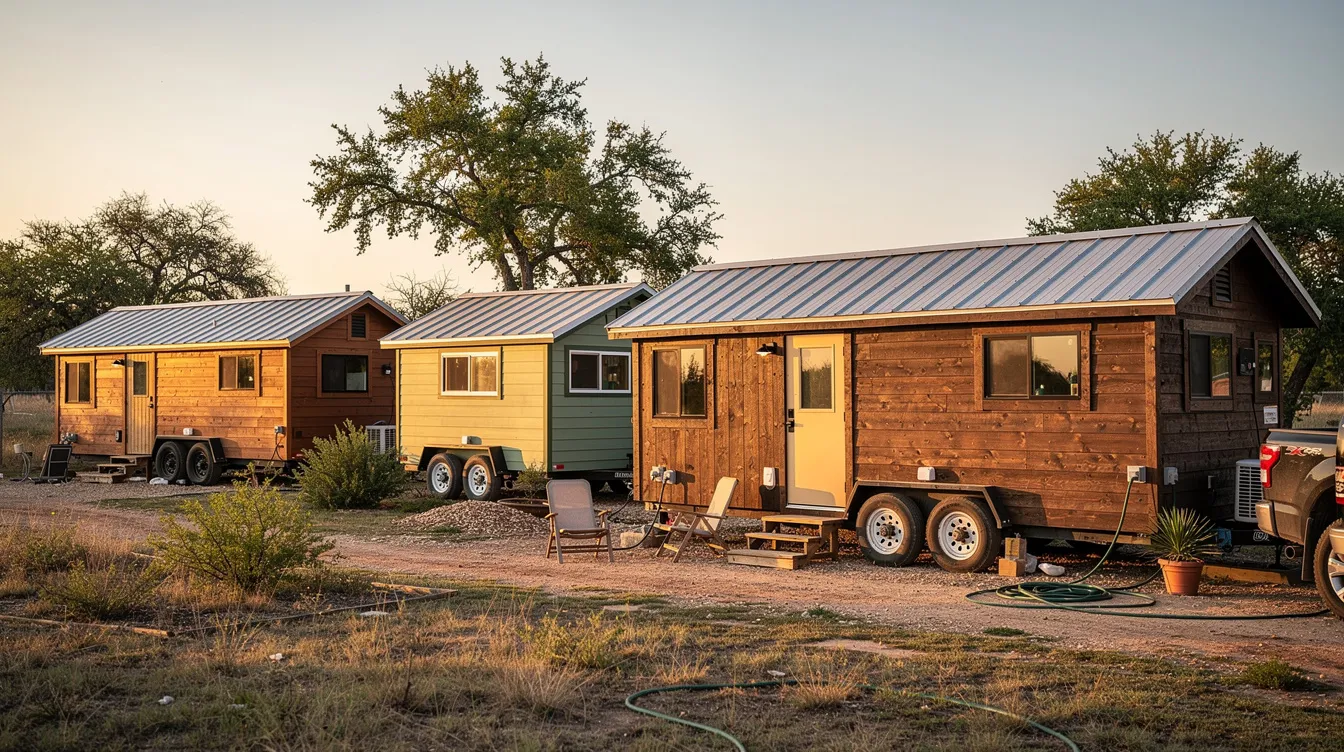
Tiny houses on wheels are towable dwellings built on trailers, typically 20–32 feet long and under 400 square feet. In Texas, tiny houses on wheels are often categorized as recreational vehicles, which shapes where and how you can use them. Common placements include tiny home communities that accept THOWs, RV parks allowing long-term stays, or private rural land where county rules permit.
THOWs offer a compelling advantage in Texas: mobility. You can relocate away from flood-prone coastal zones or reposition for better land utility without the permanence of a foundation home. They can also be easier to start with when local zoning is strict, since RV classification may bypass full residential code requirements. However, note that many Texas cities restrict full-time living in RV-classified units on residential lots. If a THOW is used as a permanent residence, some jurisdictions will enforce building codes regardless of the wheels underneath. Foundation-based tiny homes are subject to property taxes, whereas tiny homes on wheels may avoid them - an important financial distinction for buyers weighing long-term costs.
Foundation-Built Tiny Homes
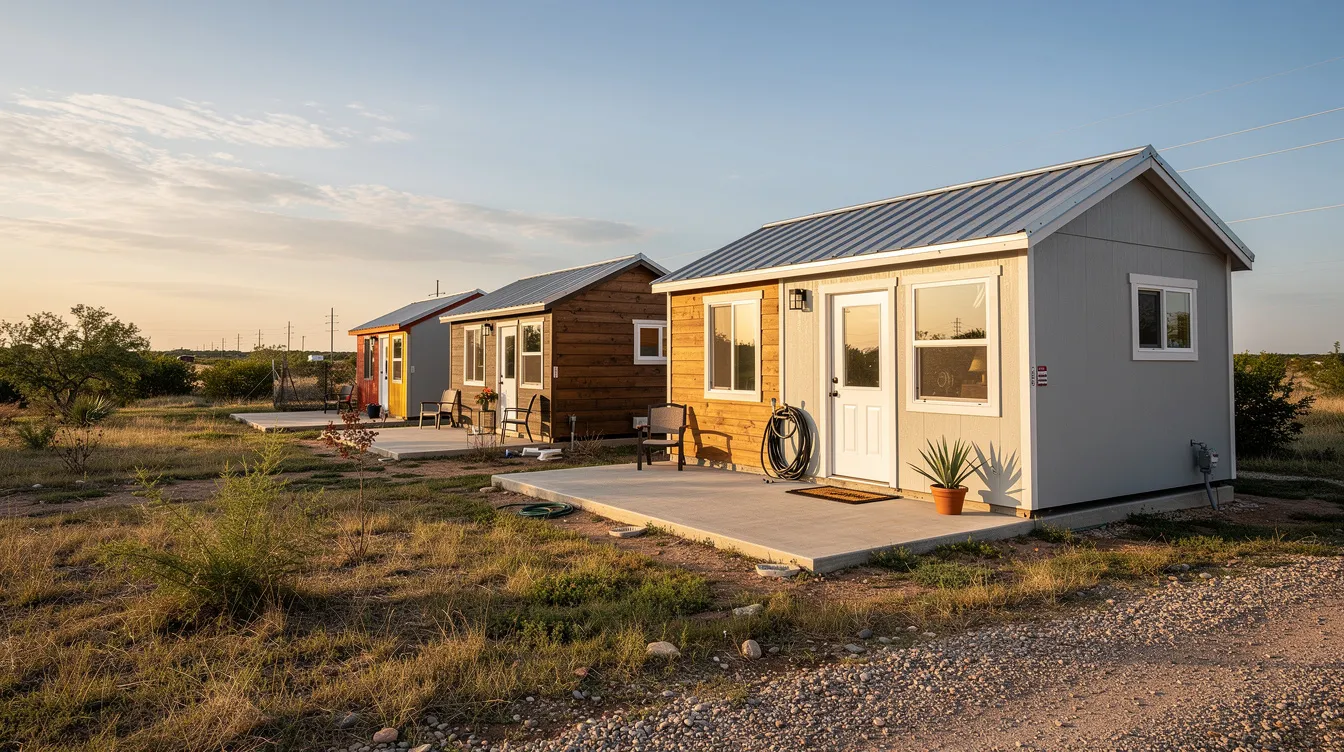
Foundation-built tiny homes are permanent structures on slabs, pier-and-beam, or crawlspace foundations, generally under about 800 square feet and built to meet the International Residential Code (IRC) or local modular building standards. In Texas, these serve as primary residences on rural acreage, accessory dwelling units in cities like Austin and San Antonio, or small homesteads in tiny-friendly towns.
The practical benefits for Texas living are significant. Foundation homes are easier to insure and finance than THOWs, better equipped to handle tornado or hurricane-force winds with proper anchoring, and generally carry stronger resale value. Tiny homes on a permanent foundation must comply with local building codes and utility requirements, but that compliance also opens the door to conventional mortgage products and homeowner insurance. Many "tiny homes" listed in Texas communities actually range from 300 to 800 square feet, blurring the line between tiny and small - but they share the same efficiency-driven design philosophy. Texas supports tiny homes as accessory dwelling units in cities like Austin and San Antonio, making foundation builds a practical path for homeowners with available backyard space.
Park Models and Small Cabins
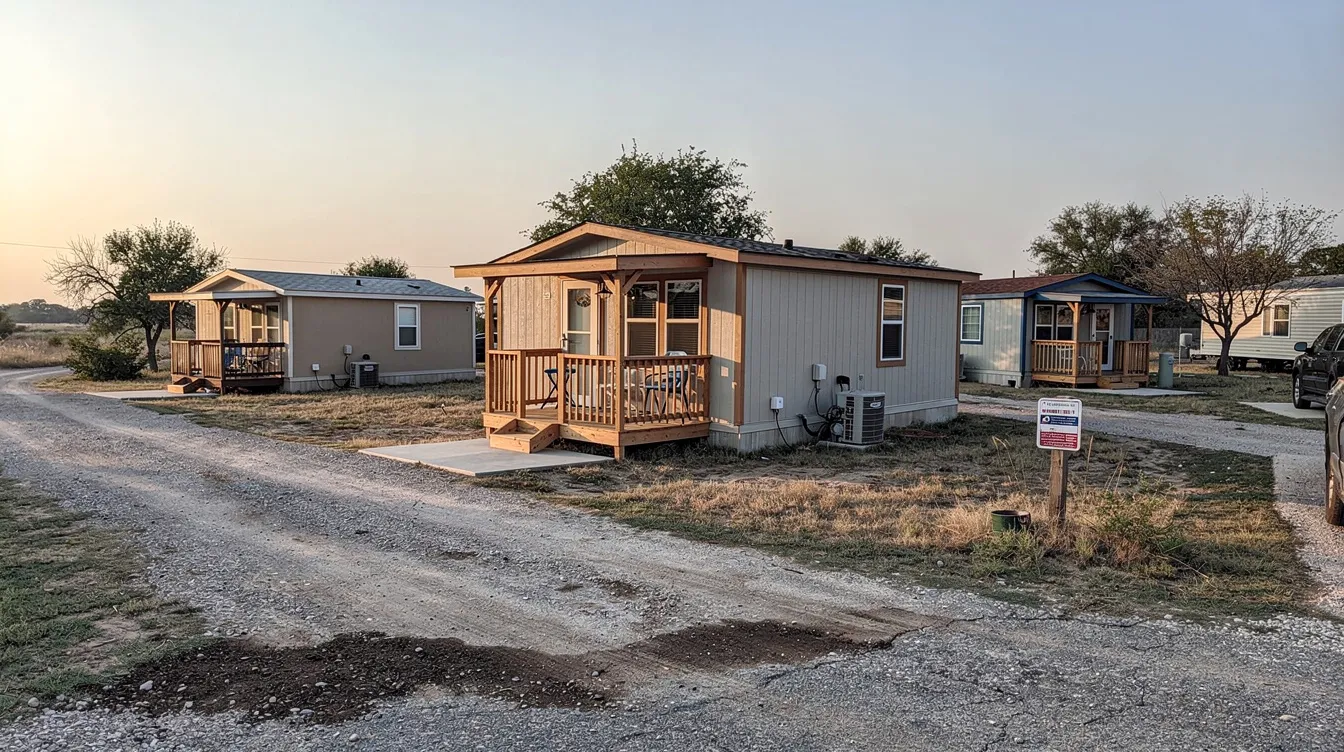
Park model RVs - typically up to about 399 square feet and built on a chassis - and small cabins in the 400–800 square foot range fill a popular niche in Texas. They're frequently located around lakes like Lake Travis, Lake Texoma, and Lake Conroe, on hunting ranches, or nestled in Hill Country retreats. Galveston offers a cozy 660 square foot tiny home near the beach, illustrating the vacation-oriented appeal of this category.
Some Texas tiny home communities accept park models alongside THOWs; others are cabin-style neighborhoods on deeded lots. The regulatory treatment varies: park models may fall under RV or park-model classification in one county, while a cabin on a foundation qualifies as a permanent dwelling in another. If you're considering a park model or cabin for year-round living rather than weekend fun, verify that local ordinances allow it.
Shed Conversions and DIY Tiny Homes
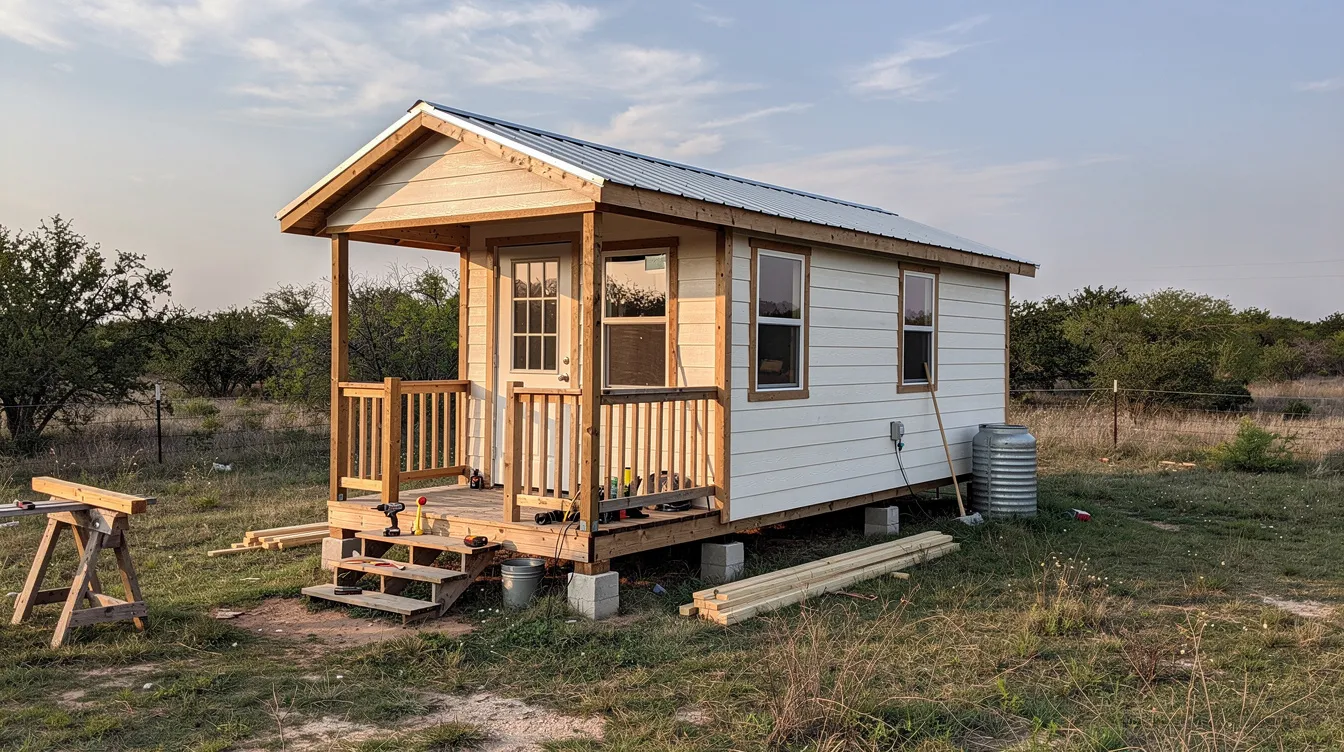
A growing number of Texans buy prefabricated sheds - popular sizes include 12×32 and 16×40 - and convert them into livable tiny homes. A 16' x 48' shed can be converted into a home with enough room for a full kitchen, bathroom, and sleeping area, making it one of the most affordable options for getting into tiny living.
Key considerations for Texas shed conversions include insulation (critical when summers regularly hit 95–105°F), plumbing that meets county health and septic codes, and electrical wiring that requires a licensed electrician for permitting in most areas. Climate conditions in Texas necessitate energy-efficient systems for tiny homes due to extreme summers, so skimping on wall and roof insulation in a shed conversion is a costly mistake. Permitting and building-code compliance vary dramatically by county - many rural Texas counties have minimal zoning restrictions allowing for flexible tiny home placement, while conversions inside city limits or within HOA-governed subdivisions face much stricter enforcement.
Tiny House Communities and Villages
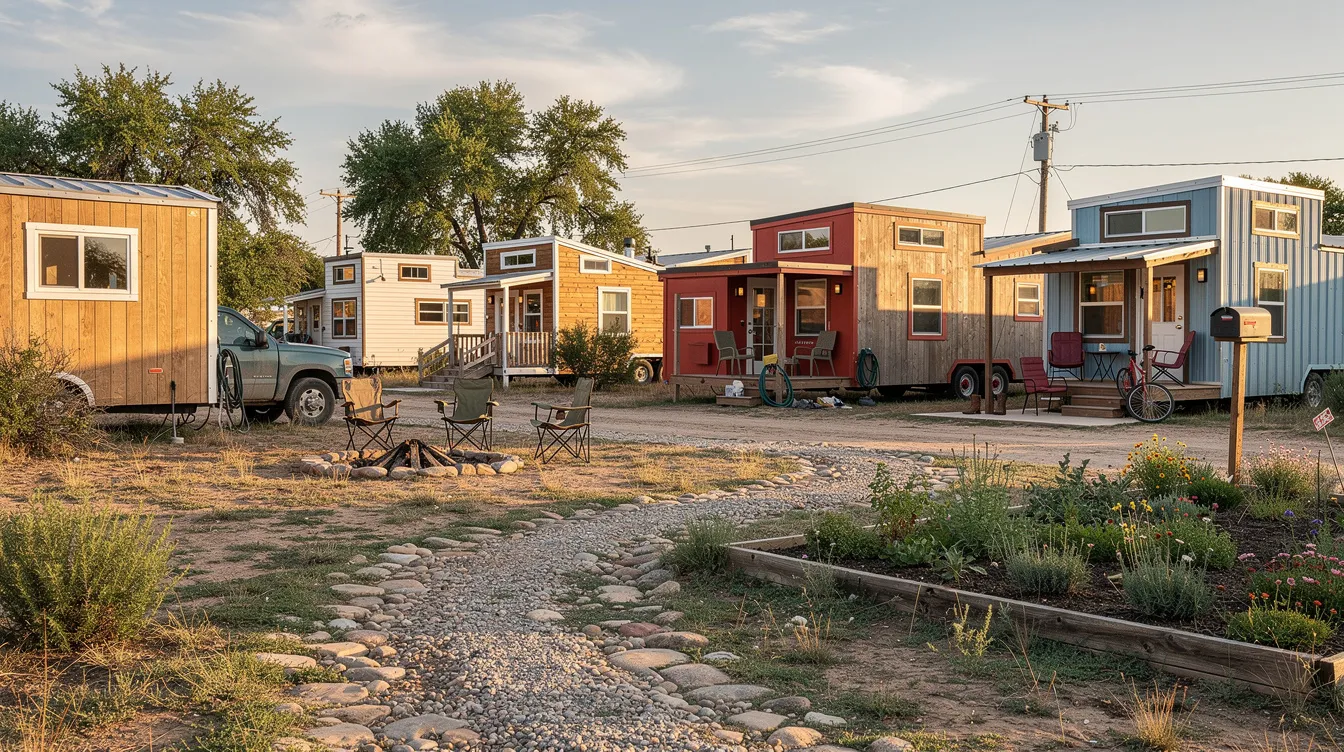
Tiny house communities are planned neighborhoods or pad-lease parks dedicated to small and tiny homes, often with shared amenities like community gardens, laundry facilities, gathering spaces, and organized activities. Tiny house communities in Texas provide shared amenities and organized activities, fostering genuine neighborhood environments for residents who want both compact living and social connection.
Texas has many tiny house communities with few restrictions. The Dallas–Fort Worth area, Austin region, and parts of East Texas all have established and emerging tiny home villages - one directory lists at least 28 across the state. Lake Dallas Tiny Home Village has 13 lots, all currently full, illustrating the demand in North Texas. Lot rents generally range from $350 to $1,000+ per month depending on region and amenities - East Texas communities tend toward $300–$450, while premium locations near Austin or in the Dallas suburbs can approach $600–$950. Some communities focus on full-time residents, others on short-term rentals or vacation clusters. TinyHomeMap lists Texas tiny home communities so readers can explore locations, lot types, and rules before committing.
What to Look For in a Texas Tiny House
Texas's climate extremes - blistering summers, Gulf hurricanes, tornado-prone corridors, and occasional Hill Country floods - make certain features more critical here than in states like California or the Pacific Northwest. Beyond weather, the state's patchwork of zoning rules means that build quality, utility setup, and location compatibility all deserve careful attention before you buy.
Climate-Ready Design for Texas Heat and Storms
Insulation is non-negotiable. Walls, roofs, and floors all need high R-values, and in humid regions like Houston and the Gulf Coast, a radiant barrier in the roof assembly and proper ventilation significantly reduce heat gain. High-performance windows - double-pane, low-E glass with deep overhangs or awnings for shading - keep cooling loads manageable.
For HVAC, mini-split heat pumps are the standard in Texas tiny homes. Even in a small space, properly sized units (often 1–2 tons) are essential to handle sustained triple-digit days. Porches and shade trees aren't just aesthetic - they meaningfully lower interior temperatures.
Wind and storm resilience matters throughout the state. THOWs and park models need rated tie-downs; foundation homes need code-compliant anchoring and fasteners, especially in tornado-prone North and Central Texas. Along the Gulf Coast and in floodplains, elevated foundations (stilts, piers), flood-resistant materials, and a thorough check of FEMA flood maps are essential before placing any tiny house.
Utilities: Water, Septic, and Power Options
In Texas parks and communities, full hookups - city water, sewer, and 30/50-amp electrical - are common and simplify the move-in process. Tiny homes require adherence to local codes regarding utilities such as water and sewage systems, so even in a community setting, verify that connections meet county standards.
On rural acreage, expect to budget for a well, a permitted septic system (percolation tests are often required), and either overhead or buried power lines. Off-grid living often includes solar power systems, battery storage sized for heavy A/C loads, and potentially propane for cooking and backup heating. Rainwater catchment is used in some remote Texas counties, though legality and permitting vary by jurisdiction. Composting toilets are common in off-grid homes and can eliminate the need for a full septic installation in areas where regulations allow.
Always ask sellers or builders for clear utility diagrams and estimated monthly costs specific to the local climate - cooling expenses alone can be a significant line item in a Texas tiny home budget.
Build Quality, Codes, and Certifications
The main standards relevant in Texas are the IRC/IBC for site-built homes, ANSI/RVIA certification for RV-style THOWs, and manufactured housing codes administered by the Texas Department of Housing and Community Affairs. Many Texas jurisdictions have adopted Appendix Q of the International Residential Code for tiny homes - a section specifically addressing permanent dwellings under 400 square feet. In Austin, the 2024 IRC (effective July 2025) now includes Appendix Q, simplifying code compliance after years of requiring an Alternative Method of Compliance. Amarillo's ordinance explicitly permits tiny homes in designated Tiny Home Courts and requires Appendix Q compliance.
Visible quality cues to check include structural framing, moisture and breathable barriers, roofing material (metal roofs are popular across Texas for hail resistance and heat reflection), and properly flashed window and door installations. Verify that a Texas builder has experience meeting local inspections and wind load requirements for the specific county. For larger investments, especially foundation-built tiny homes, a third-party inspection or engineering stamp provides valuable peace of mind.
Location, Zoning, and HOA Rules in Texas
Texas does not have a single statewide ruling on tiny homes; regulations depend on local jurisdictions. Zoning laws in Texas vary significantly between city limits and unincorporated areas, and even neighboring counties can have dramatically different rules.
Spur, Texas is known as the tiny house capital of the USA - in 2014, the city eliminated its minimum square footage requirement for homes on foundations, making it one of the most welcoming places for small dwellings in the country. Spur, Texas has very few restrictions on tiny homes. Austin and Fort Worth have minimal restrictions for tiny homes, particularly for ADUs. Dallas requires a special exemption for tiny homes, making the permitting process more complex. Houston has a 504 square foot tiny home in East Downtown, reflecting that tiny living can work even in the state's largest city - but always within local code.
Key questions to answer before purchasing land or a home: What is the minimum square footage allowed? Are THOWs permitted as residences? What are the rules for second dwellings on a single lot? Are there RV-parking limits? Check county offices, city planning departments, and HOA covenants. Texas lacks traditional zoning in some areas, providing more flexibility for housing options, but that flexibility is not universal.
Costs and Budgeting for Tiny Living in Texas
Tiny homes offer financial benefits such as lower utility costs and reduced maintenance expenses, but upfront costs vary widely. Most turnkey THOWs in Texas range from $60,000 to $90,000 depending on features and finishes, though DIY shell builds can start around $25,000. Foundation-built tiny homes and ADUs typically run $80,000–$165,000+ depending on size, site preparation, and finish level. San Antonio has a 704 square foot tiny home built in 2020, and Austin has a 728 square foot tiny home for sale - real examples of what the market looks like at different price points. Dallas features a remodeled 3 bedroom, 2 bath tiny home, showing that even compact homes can offer surprising room.
Land is a separate cost. Rural acreage averages around $5,000+ per acre statewide, but prices near Austin, Dallas–Fort Worth, and Houston suburbs are substantially higher. Budget for site prep, foundation or pad, utility connections (well, septic, and electric hookup can add $15,000–$30,000 on rural land), and permits - ADU permits in Austin alone can run $1,500–$4,000. Community lot rent typically falls between $350 and $800 per month.
Financing for tiny homes can be challenging as traditional mortgages may not be available for homes under 400 square feet. Foundation-built, code-compliant homes generally have an easier path to conventional loans and insurance than THOWs or park models. Most tiny homes must meet foundation requirements in Texas to qualify for standard financing products.
How to Choose the Right Tiny House in Texas
Turning features into a decision comes down to a few Texas-specific criteria. Keep your climate zone, storm risk, local regulations, and daily life needs in mind as you narrow your options.
Where You Want to Live (City, Suburbs, Rural, or Mobile) - An Austin backyard ADU, a tiny home in a Lake Dallas village, and a movable THOW on rural Hill Country land all face different zoning and utility realities. Texas offers various areas for tiny homes including urban settings near major cities and quiet rural land. Your location choice will narrow the viable tiny house types immediately.
Intended Use (Full-Time Home vs. Vacation or Rental) - A full-time family home near Houston may require more square feet and storage than a weekend cabin in the country or a short-term rental by a lake. The tiny house movement is driven by lower housing costs and a desire for simpler living, but "simpler" looks different depending on whether a home is your primary address or a getaway.
Budget and Timeline - Buying an existing Texas tiny home or park model that's already set up is faster but potentially pricier. Commissioning a custom build from one of the state's tiny home builders or tackling a DIY shed conversion offers more affordable options but takes longer and adds complexity. Discover what fits by comparing turnkey listings against raw land plus build costs.
Willingness to Handle Permits and DIY Work - Hands-off buyers may prefer established communities or turnkey homes with utilities in place. DIY-oriented buyers can consider raw land and conversions - but any deviation from code risks insurance problems, financing barriers, and legal complications. The process is simpler in some counties than others.
Mobility Needs and Risk Tolerance - THOWs offer the flexibility to move within Texas or leave entirely, but bring towing costs, wear, and occasional legal uncertainty. Foundation-built homes provide stability and are better suited to high-wind regions. Texas has open areas for unrestricted tiny home building, but permanence and portability each come with trade-offs.
Community vs. Seclusion - Some Texans value neighbors, shared gardens, and amenities in tiny villages. Others want a standalone tiny homestead on 5–10 acres - perhaps even a permaculture homestead that supports sustainable off-grid living. This choice shapes where to search and what type of home to consider. Tiny homes are becoming increasingly popular in Texas across both models.
Frequently Asked Questions
These FAQs address common questions about legality, costs, and where to place a tiny home in Texas.
Are tiny houses legal in Texas?
Yes, but legality depends entirely on local jurisdiction. Texas does not have a single statewide tiny house law - rules are set by cities, counties, and sometimes HOAs. Many rural counties have minimal zoning restrictions, while big cities each maintain their own rules on minimum size, ADUs, and whether THOWs count as dwellings. Austin and Fort Worth have few restrictions on tiny homes; Dallas requires a special exemption. Texas has areas with unrestricted zoning ordinances for tiny homes, particularly in unincorporated counties. Always contact the planning department of the exact Texas city or county where you want to live.
Where can I put a tiny house on wheels in Texas?
Common options include tiny house communities (like the Lake Dallas Tiny Home Village in Denton County), RV parks that accept long-term stays, and private rural land where county rules allow. Many cities limit full-time living in RV-classified homes on residential lots, especially in front yards or driveways. Use TinyHomeMap to find Texas communities and parks that explicitly welcome THOWs, and always confirm zoning before moving a unit onto any lot.
How much does a tiny house cost in Texas?
Turnkey THOWs typically range from $60,000 to $120,000 without land. Foundation-built tiny homes and ADUs generally cost $80,000–$165,000+ depending on region, finish level, and site preparation. Land is a separate expense - rural acreage may start around $5,000 per acre, but prices near metro areas are considerably higher. Ongoing expenses include utilities (cooling costs are significant in Texas), lot rent in communities ($350–$800+/month), property taxes for land and permanent structures, and regular A/C maintenance.
Can I live in a tiny house full-time in Texas?
Full-time living is allowed where local ordinances permit small dwellings or long-term RV occupancy. Spur is known as the tiny house capital of the USA with very few restrictions on tiny homes. Several tiny house villages and communities across the state explicitly allow year-round residence for their residents. The key requirement is having legal dwelling status - the ability to register for mail, a driver's license, and school districts - which generally requires that the home meet local building code or certification standards.
How do I find tiny houses, land, and communities in Texas?
TinyHomeMap lets you search Texas by city, region, or directly on the map. Filter for tiny homes for sale, rentals, land, and communities by price, square footage, and features like off-grid availability or pet-friendly rules. Listings are posted by Texas owners, builders, and community operators, but buyers should always perform their own due diligence - verify local regulations, check utility availability, and confirm zoning before making any commitment.
Start Exploring Tiny Houses in Texas
Texas offers a remarkable range of tiny living options - from city ADUs in Austin and San Antonio to rural cabins, lakeside park models, and wide-open Hill Country homesteads. The key is matching home type to local rules, climate demands, and your own budget. The popularity of tiny living in Texas continues to grow, and the opportunity to find your fit has never been broader.
Browse the Texas map on TinyHomeMap to compare real tiny homes, communities, and land listings side by side. Identify your preferred regions, check local regulations, and use filters to shortlist homes or plots that match your life and budget. Your journey toward simpler, more intentional living in Texas starts with knowing what's actually available.
Related articles
More guides that dig deeper into the same topics.
Ready to start searching?
Browse tiny homes, plans, builders, communities and land on the interactive map.
Explore the map