Lifestyle & Community

Tiny Home Neighborhoods: Finding Your Community

12 min read · Updated March 14, 2026

By John

A tiny home is more than a house — it is often a way to belong to a community of like-minded people. Here is a practical guide to finding the right tiny home neighborhood, from what to look for to how to choose the village that fits your life.
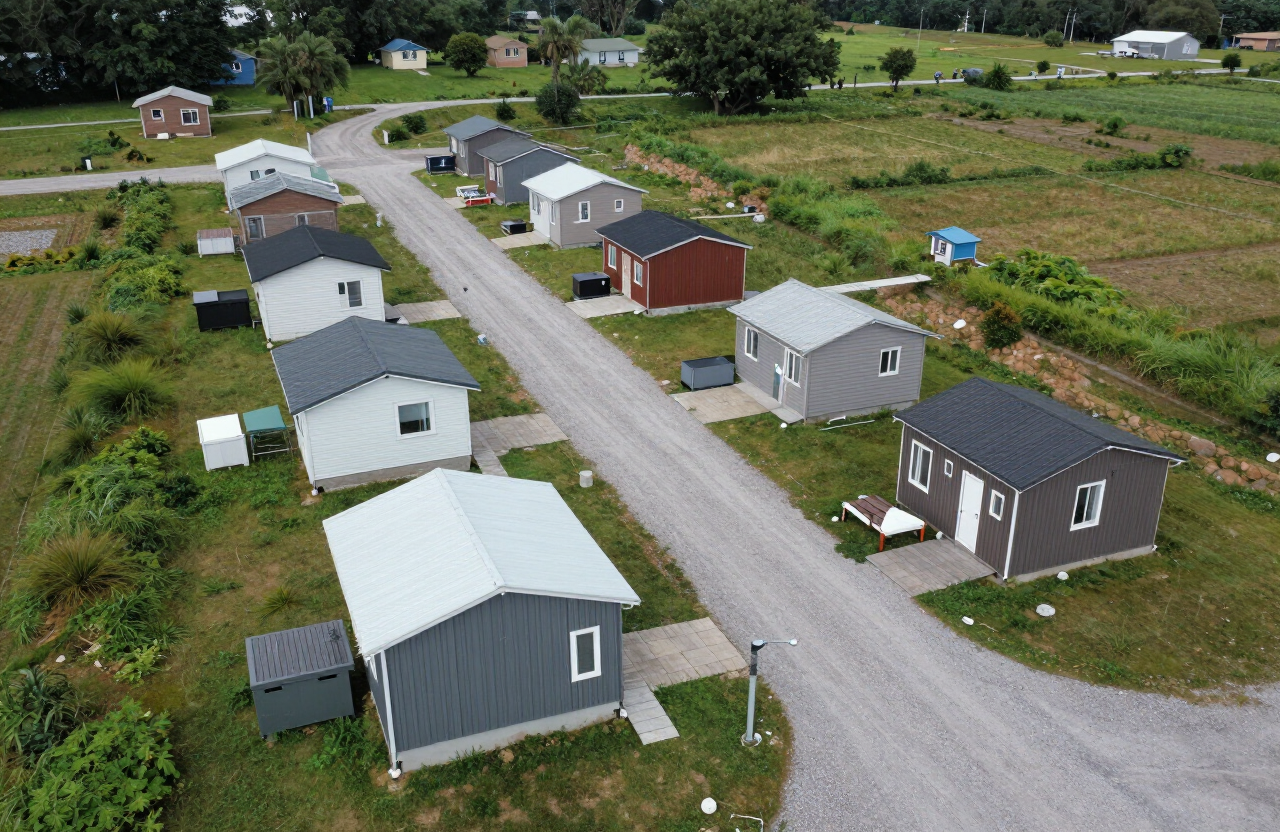
Aerial view of a tiny home community with several small houses arranged along a shared gravel lane and green spaces

Why community matters in tiny living

Tiny living can be isolating if you go it alone on a remote lot, but it can be deeply social in a tiny home neighborhood. Because the homes are small, residents naturally spend more time in shared outdoor spaces — gardens, common houses, fire pits — and that creates the casual, repeated contact that builds real community. For many people, the community is the point: shared meals, shared tools, neighbors who notice when you are away, and a sense of belonging that suburbs often lack. If community is part of why you want a tiny home, choose your neighborhood as carefully as your house. Start in our

Types of tiny home neighborhoods

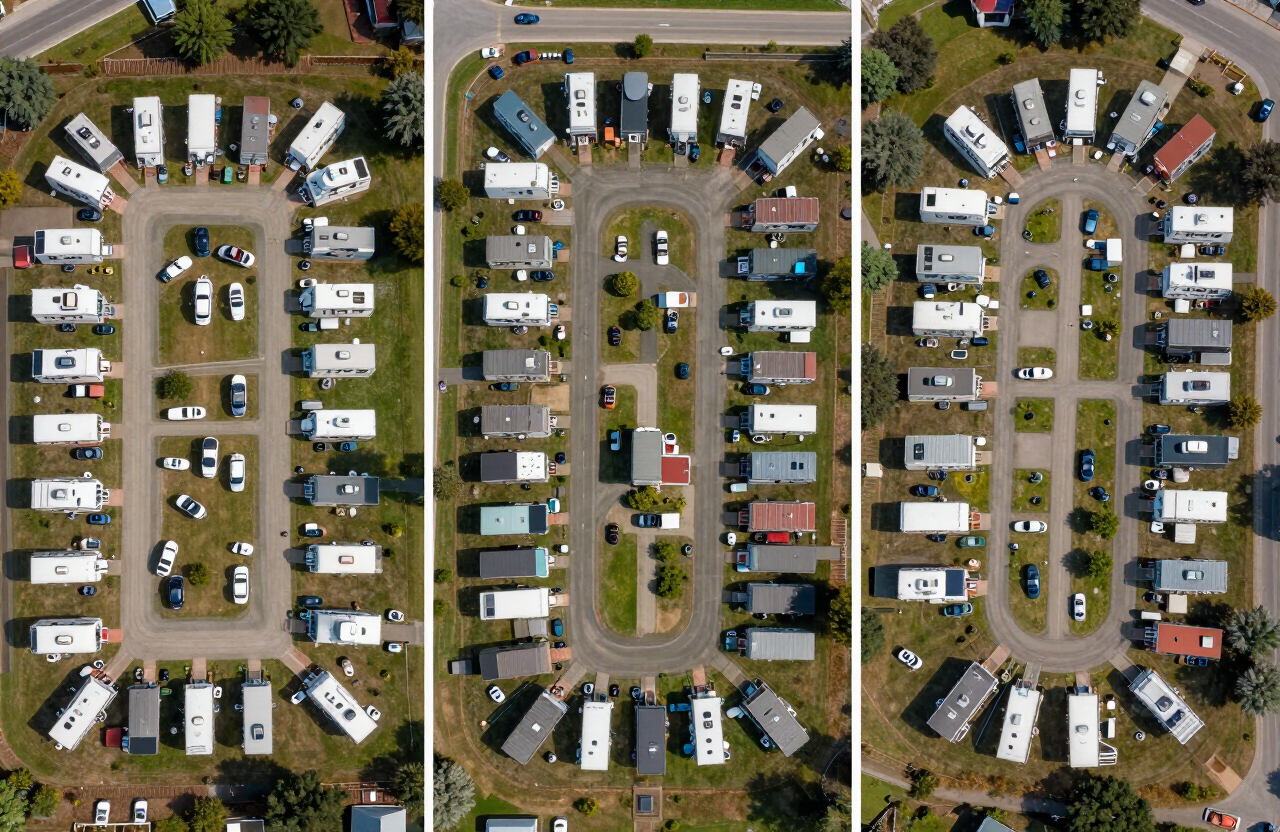
Tiny home neighborhoods come in several forms. An RV park or tiny home park rents lots by the month and offers full hookups with minimal governance — the most affordable and flexible option. A planned tiny home community owns or leases land collectively, with covenants, shared amenities, and a stronger sense of place. A cohousing village combines private tiny homes with a shared common house and intentional community governance. A backyard ADU cluster is an informal network of tiny homes on adjacent lots. Each type trades freedom for community differently, so know which balance you want before you tour.
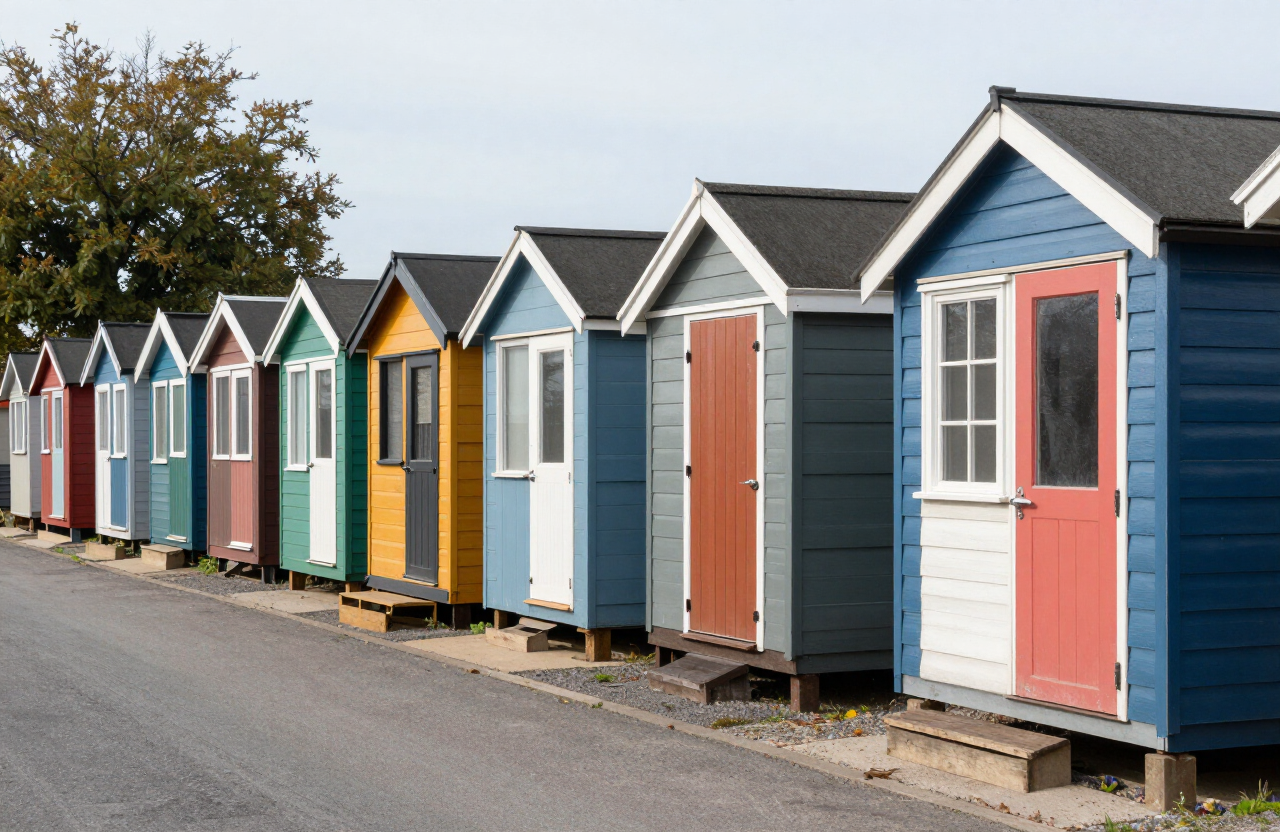
Row of diverse tiny homes in different styles and colors along a community lane

What to look for in a tiny home neighborhood
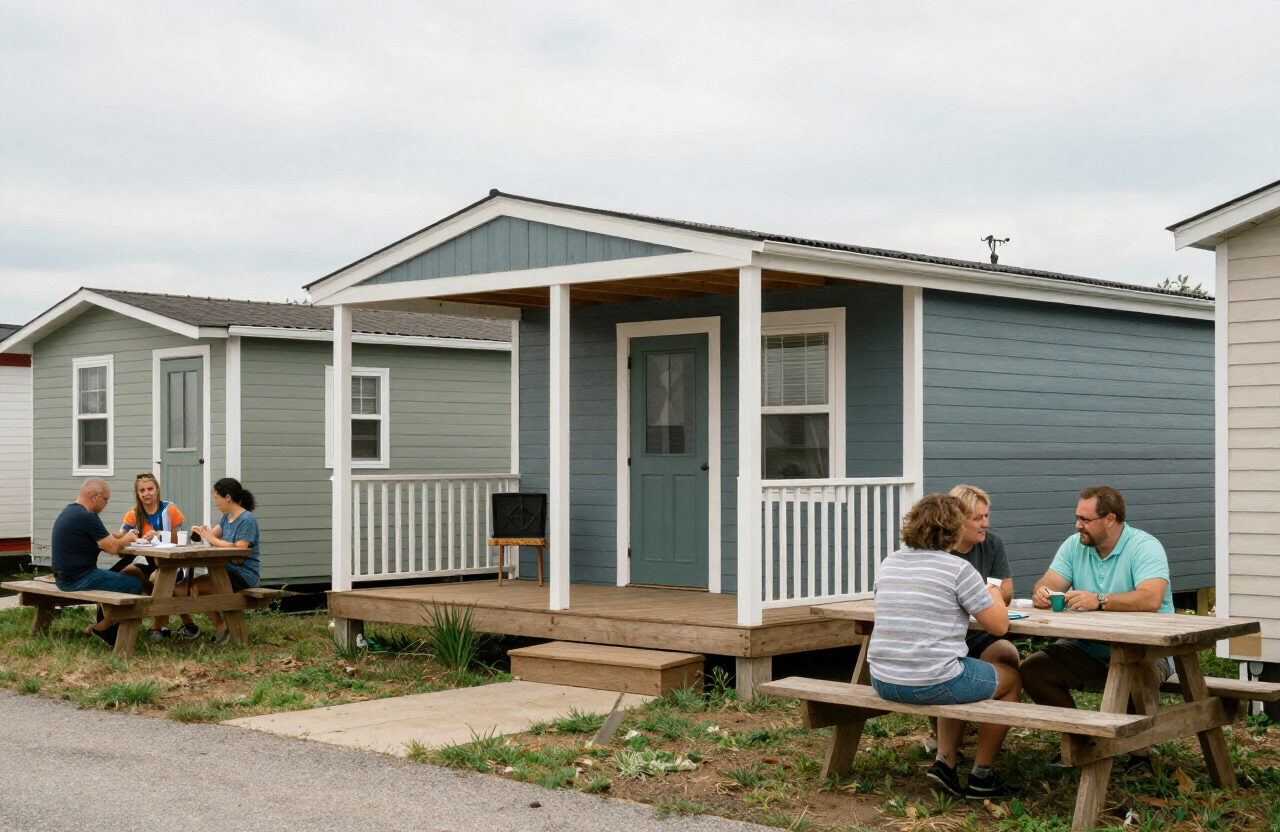
When you tour a community, look past the houses at how it functions. Are the shared spaces — garden, common house, laundry, workshop — well used and well maintained? Do the residents seem to know and like each other? Is there a clear governance structure, and do the rules match your lifestyle? Check the practical basics: lot rent or HOA fee, what utilities are included, lease length and security, and whether you own or rent your lot. Talk to current residents, not just the manager, because they will tell you the unvarnished truth. A neighborhood that looks charming but functions poorly will wear thin fast.
Common house at a tiny home community with a covered porch and picnic tables where neighbors gather

Shared amenities and spaces

The shared amenities are what make a tiny home neighborhood feel larger than the sum of its homes. A common house with a kitchen, dining area, and laundry lets residents keep their own homes small while still hosting big gatherings and washing clothes. A community garden grows food and relationships at once. A workshop with shared tools means no one needs a full garage. A fire pit, a playground, and walking paths create the casual hangouts that build friendship. When you evaluate a community, ask which amenities exist, how they are maintained, and how often they are actually used. Amenities that sit empty are a warning sign.
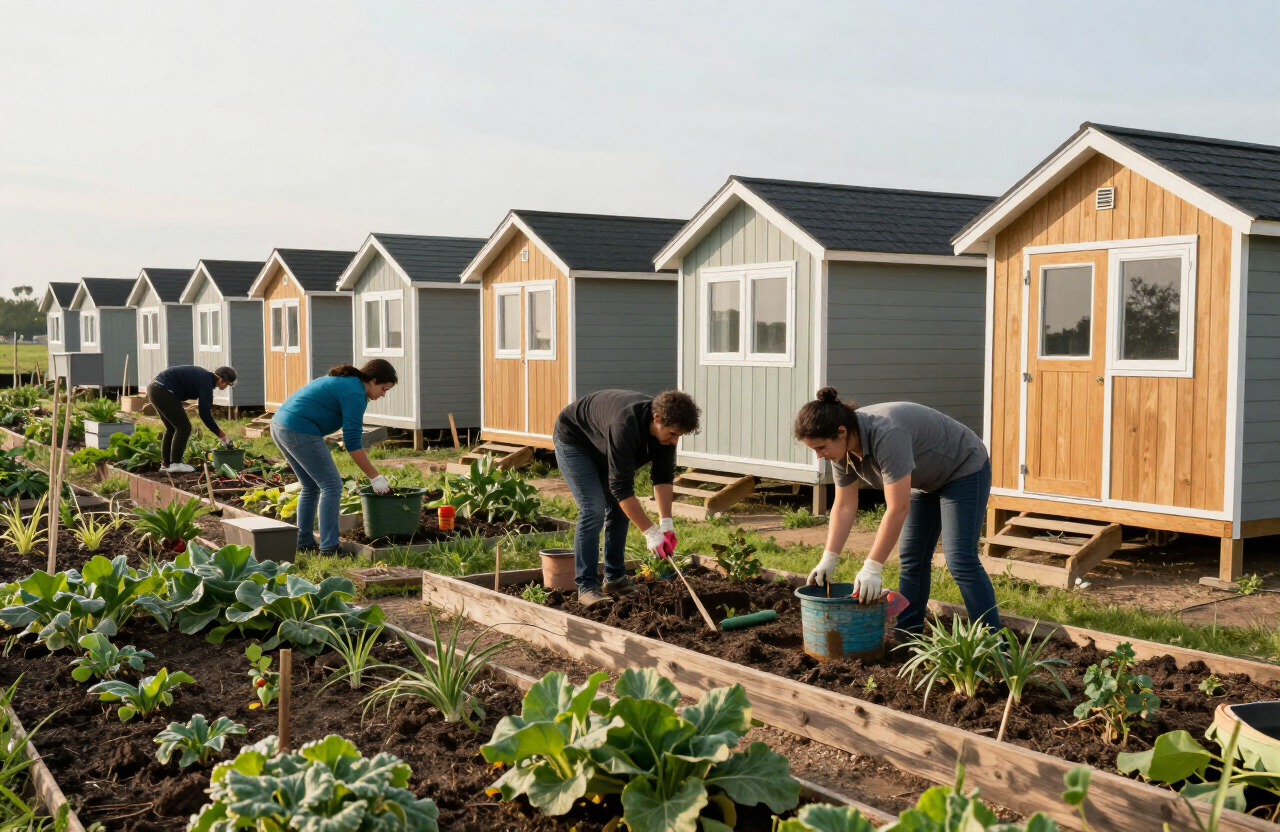
Residents working together in a shared community garden beside a row of tiny houses

Governance, rules, and culture

Every community has rules, and the question is whether they fit you. Some tiny home parks have minimal rules and maximum freedom; cohousing villages often have detailed covenants about design, pets, and participation. Read the rules before you commit, and ask about how decisions are made — by a manager, a board, or consensus of residents. Culture matters as much as rules: is the community quiet and private, or social and participatory? Are there kids, retirees, remote workers? Visit more than once, at different times, and attend a community meal or meeting if you can. The right cultural fit is what makes a neighborhood feel like home.
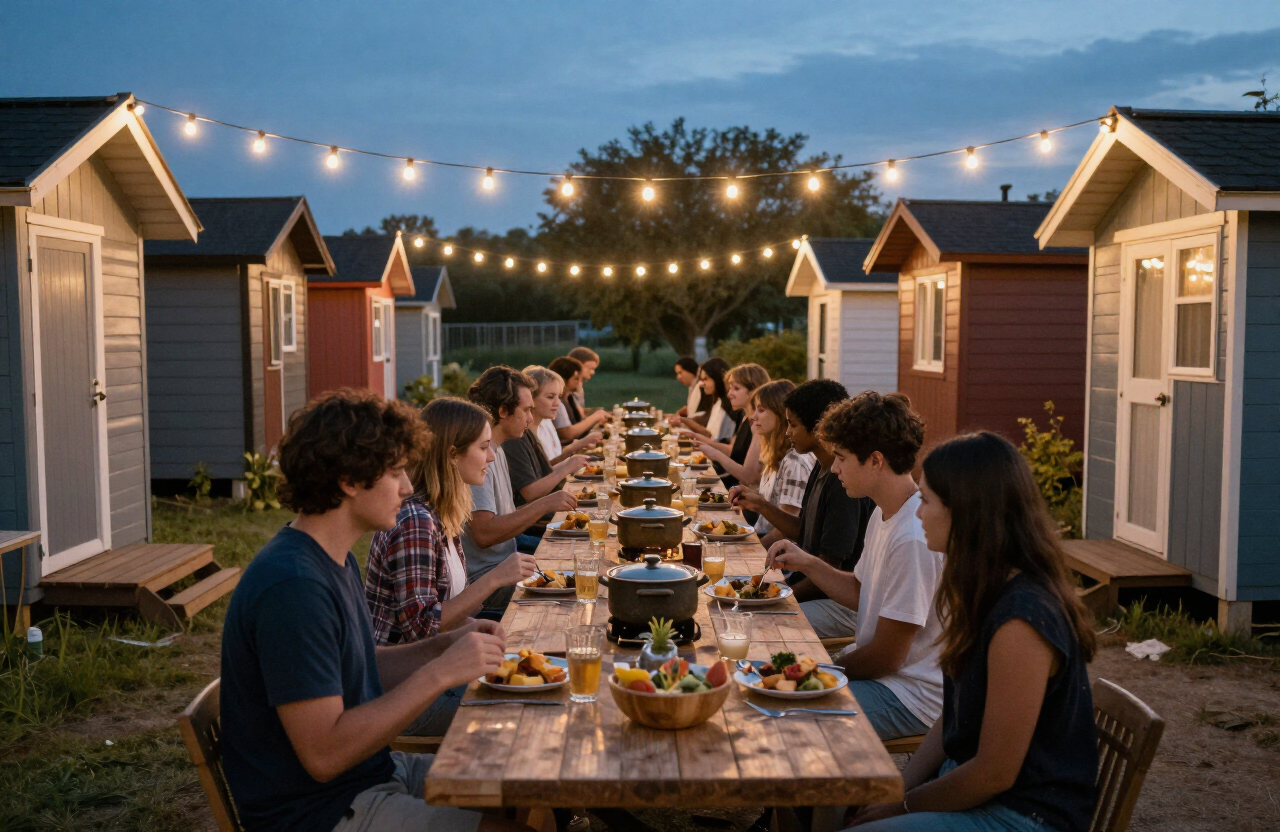
Community potluck dinner at long outdoor tables between tiny houses with string lights overhead

Costs and lease structures

Tiny home neighborhood costs vary widely. An RV park lot rent runs $300 to $900 per month including utilities, with a short or month-to-month lease. A planned tiny home community charges $500 to $1,200 per month, or requires a lot purchase of $30,000 to $100,000 plus a monthly HOA fee. Cohousing often requires buying a share or lot plus monthly dues. Weigh the cost against what is included — utilities, amenities, maintenance of shared spaces, and the security of your tenure. A cheap lot with no amenities and an insecure lease is rarely a better deal than a pricier one with a strong community and a long lease.
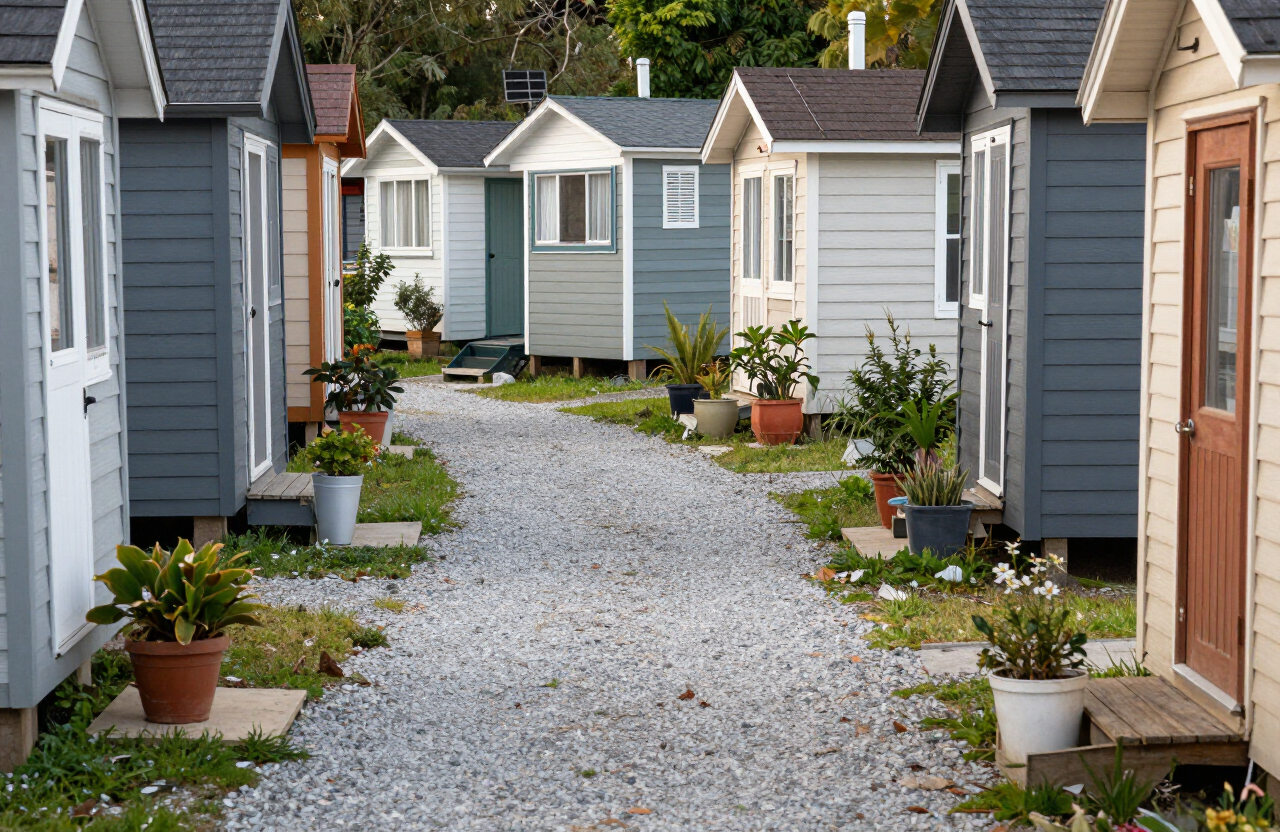
Walkable gravel path winding through a tiny home village with small front porches and potted plants

Finding tiny home neighborhoods near you
Start with dedicated directories like our communities and land listings, then search tiny home and RV park aggregators by region. Tiny home shows and social media groups are rich sources of word-of-mouth recommendations. State and local tiny home associations often maintain lists of friendly communities. When you find candidates, call the manager or community association, ask for a tour, and request to speak with current residents. If a community is not yet established, look for forming groups on cohousing networks — joining early can let you shape the culture. Cast a wide net, then narrow by fit.
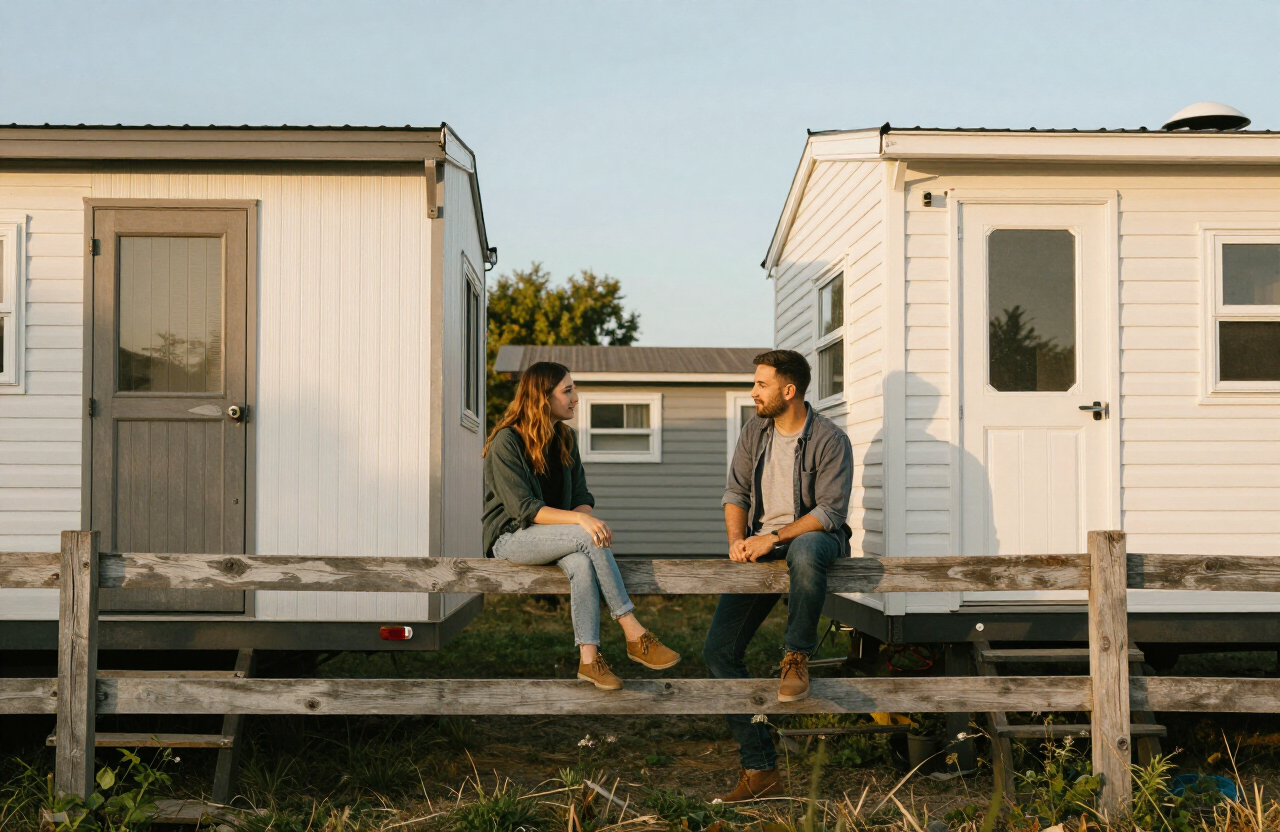
Two neighbors chatting across a low fence between their tiny houses on wheels

Visiting and evaluating a community

A visit tells you what a website cannot. Walk the whole community, not just the model lot, and look at the condition of shared spaces and the back of homes. Notice whether residents greet each other or keep to themselves. Ask about turnover — how long people stay, and why anyone has left. Check cell coverage, internet reliability, and proximity to the services you need. If you have a partner, visit together and compare impressions. Bring a list of deal-breakers and nice-to-haves, and score each community against it. The right neighborhood will feel obvious once you have seen a few.

Community types at a glance

TypeMonthly costTenureCommunity feel
RV / tiny home park$300–$900Month-to-monthCasual, flexible
Planned community$500–$1,200Lease or lot buyStrong, amenity-rich
Cohousing villageDues + shareOwnershipIntentional, participatory
Backyard ADU clusterVariesInformalNeighborly, loose
Own land + inviteProperty costsOwnershipYou shape it
Aerial top-down view of different tiny home community layouts side by side: an RV park, a planned village and a co-housing cluster

Choosing your community

The right tiny home neighborhood is the one that fits your stage of life, your budget, and your appetite for community participation. If you want flexibility, an RV park or a backyard ADU may suit. If you want roots and shared amenities, a planned community or cohousing village is the move. If you want total control, buy land and invite others. Whatever you choose, visit more than once, talk to residents, and read the rules before you sign. When you are ready, browse communities and land, compare tiny homes for sale, and read our communities guide for more.

Related articles

More guides that dig deeper into the same topics.

Frequently asked questions

How do I find a tiny home community near me?+

Start with dedicated directories like our communities and land listings, then search tiny home and RV park aggregators by region. Tiny home shows, social media groups, and state tiny home associations are rich word-of-mouth sources. Call the manager, request a tour, and speak with current residents before committing.

How much does it cost to live in a tiny home community?+

Lot rent in an RV or tiny home park runs $300 to $900 per month including utilities. A planned community charges $500 to $1,200 per month or requires a lot purchase of $30,000 to $100,000 plus HOA dues. Cohousing often requires buying a share plus monthly dues. Weigh cost against included amenities and lease security.

What is the difference between a tiny home park and cohousing?+

A tiny home park rents lots with minimal governance and maximum flexibility. Cohousing combines private tiny homes with a shared common house and intentional community governance, where residents participate in decisions and shared life. Parks are casual and flexible; cohousing is intentional and participatory.

Can I buy a lot in a tiny home community?+

In some planned communities and cohousing villages, yes — you buy a lot or a share and pay monthly dues. In most RV and tiny home parks, you rent the lot and own only the home. Buying offers more security and equity but higher up-front cost; renting offers flexibility but no equity in the land.

What should I look for when touring a tiny home community?+

Look at the condition and use of shared spaces, whether residents know and like each other, the governance and rules, lot rent and what is included, lease length and security, and proximity to services. Talk to current residents, not just the manager, and visit more than once at different times before deciding.

Are tiny home communities good for families with kids?+

Many are. Communities with playgrounds, gardens, and other families offer kids safe, social outdoor space and neighborly supervision. Check the rules for child-friendly amenities and the mix of residents. Cohousing villages are often especially family-oriented, with shared meals and mutual support.

Can I start my own tiny home neighborhood?+

Yes, though it takes land, zoning approval, and significant organization. You will need land zoned for multiple dwellings or an RV park, utility infrastructure, and a governance structure. See our guide on starting a tiny home community for the steps, and browse communities and land for existing options first.

Ready to start searching?

Browse tiny homes, plans, builders, communities and land on the interactive map.

Explore the map
>