Market Trends & Investment

Tiny Home Resale: Selling Your Tiny Property

12 min read · Updated March 14, 2026

By John

Selling a tiny home is different from selling a house — the buyer pool, the paperwork, and the financing all work differently. Here is a practical guide to pricing, preparing, marketing, and closing the sale of your tiny property.
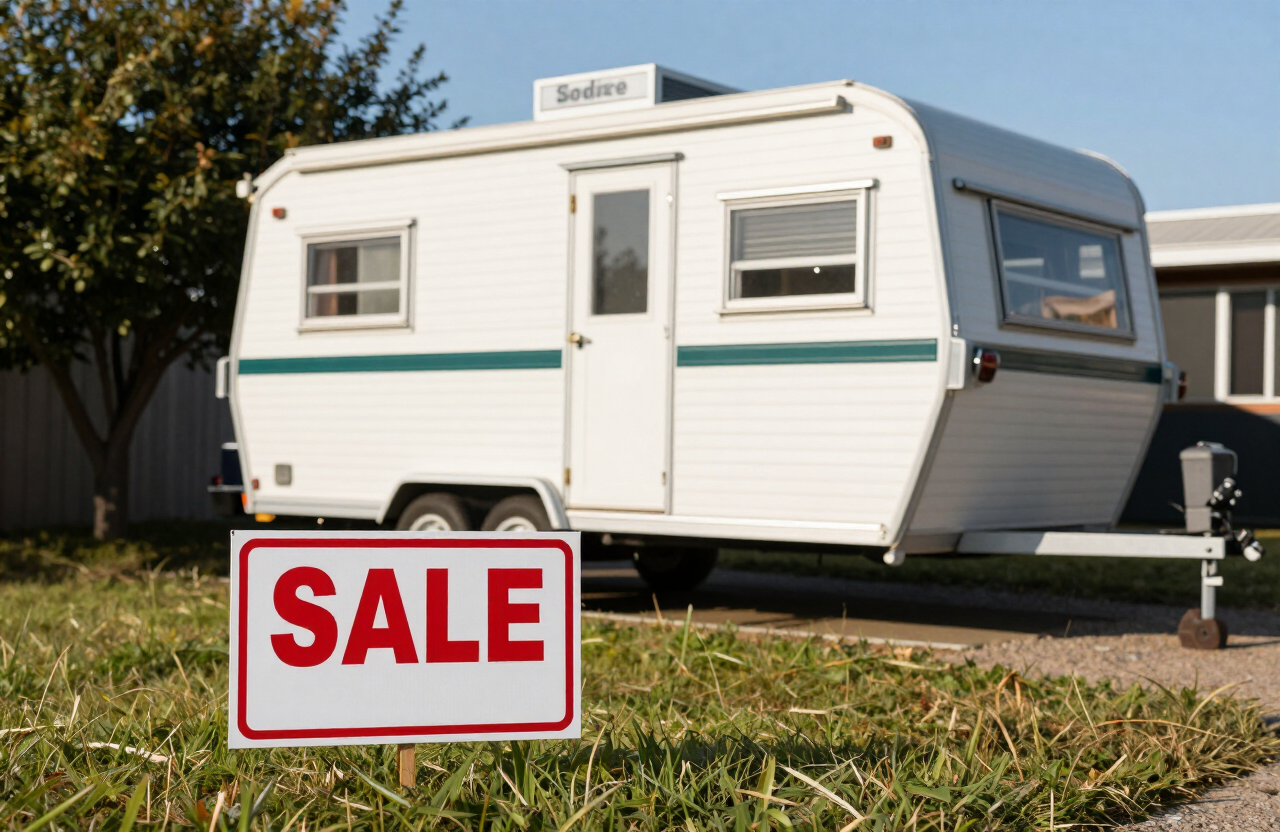
For sale sign posted in the yard beside a tiny house on wheels on a sunny day

How selling a tiny home differs

Selling a tiny home is not the same as selling a house, and understanding the differences is the first step to a smooth sale. A tiny house on wheels is personal property, not real estate, so it transfers with a bill of sale rather than a deed and title insurance. The buyer pool is smaller and more specific — people who want tiny living, not the general house-hunting market. Financing is harder, since most buyers pay cash or use a personal or RV loan rather than a mortgage. And the home's condition, certification, and legal status matter enormously to a savvy buyer. Play to these realities and you will sell faster. Start by browsing

Pricing your tiny home

Pricing a tiny home is part science, part realism. Start with what comparable homes have sold for — search tiny home listing sites, sold listings, and local tiny home groups for recent sales, not just asking prices. Adjust for your home's age, condition, size, certification, and included systems like solar or off-grid gear. A certified, well-maintained, fully equipped THOW holds value far better than an uncertified DIY build. Be honest about depreciation: a three-year-old tiny home is not worth what a new one is, no matter how much you love it. Price to sell, not to flatter, and leave a little room for negotiation. An overpriced tiny home sits and accrues storage costs.
A person pricing a tiny home for sale using a laptop with comparable listings on screen and a for-sale sign beside

Preparing and staging the home

Preparation sells a tiny home as much as the price. Start with deferred maintenance: fix leaks, touch up paint, service the trailer bearings, and clean every surface including the roof and undercarriage. Declutter ruthlessly so the small space reads as spacious — remove personal items, excess decor, and anything on the counters. Stage the home like a model: a made bed, fresh flowers, a folded towel, a bowl of fruit. Clean the windows inside and out for maximum light. A tiny home that feels cared for and uncluttered commands a higher price and a faster sale than one that feels crowded or neglected.
Staged tiny home interior with a made bed, fresh flowers, and neutral decor prepared for sale

Photography and video that sell

In a tiny home, photos make or break a listing because buyers browse online first. Hire a real estate photographer who understands small spaces, or shoot carefully yourself: use a wide-angle lens, shoot from corners to show depth, and capture every room and the exterior in good daylight. Add a walkthrough video that shows the flow of the home, and include detail shots of craftsmanship, the kitchen, the bathroom, and any off-grid systems. Photograph the trailer VIN and certification plaques, since buyers will ask. Bright, honest, well-composed photos draw serious buyers; dark, cluttered ones draw none.
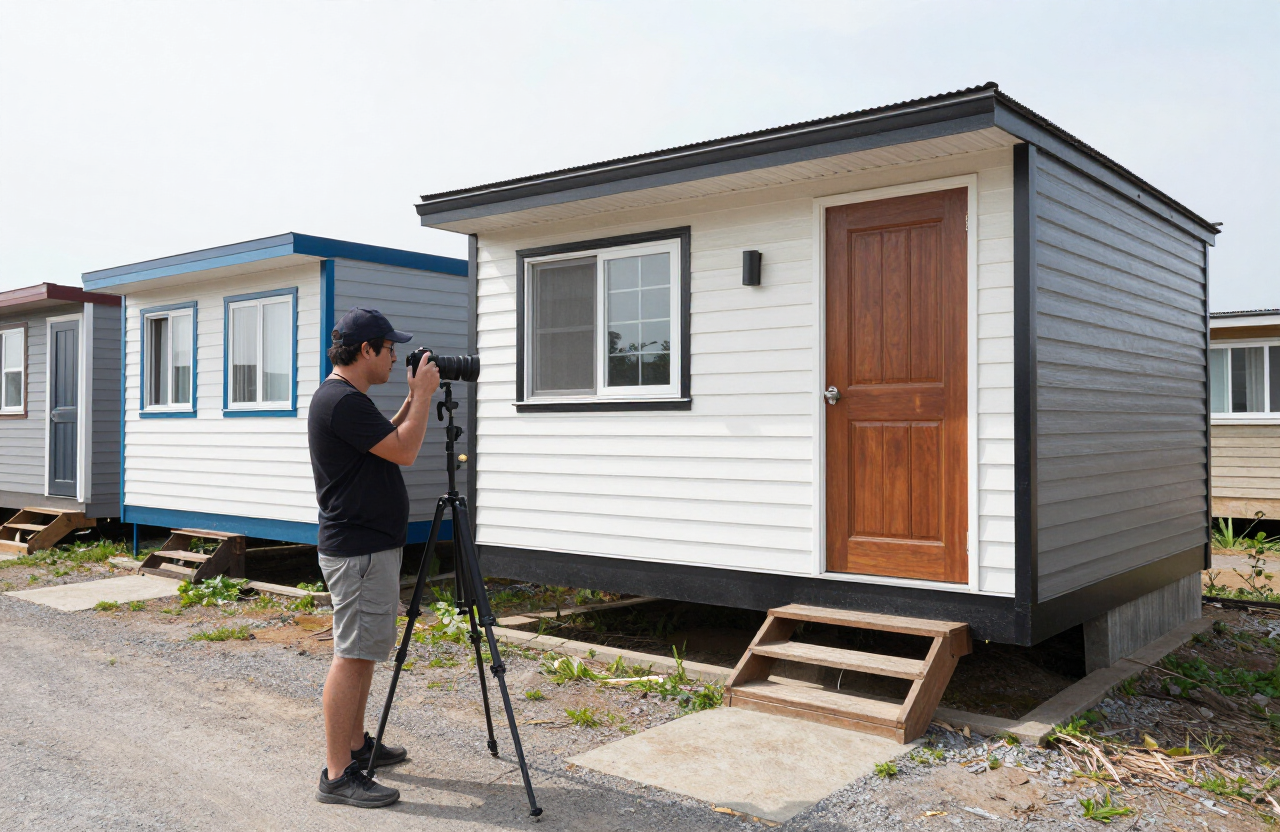
Real estate photographer on a tripod capturing wide-angle photos of a tiny house exterior

Where and how to list

List where tiny home buyers actually look. Specialized tiny home and tiny house listing sites reach the right audience, as do tiny home social media groups and forums. General marketplaces like Facebook Marketplace and Craigslist work for lower-priced THOWs but attract more tire-kickers. If your home is a foundation build on owned land, a local real estate agent who understands tiny homes can help. Write an honest, detailed description: size, certification, systems, appliances, trailer specs, and any issues. Honesty filters out the wrong buyers and builds trust with the right ones. Price, photos, and an honest description are the sale's foundation.

Handling inquiries and showings

When inquiries come in, respond promptly and qualify buyers before scheduling a showing. Ask whether they have a place to put the home, how they plan to pay, and whether they have experience towing or living tiny — these questions save everyone time. For showings, clean and stage the home fresh each time, and be present to answer questions about systems and maintenance but give buyers space to look. Consider an open house for a busy listing weekend to reach several buyers at once. Keep a one-page spec sheet on hand with dimensions, weight, certification, and included items to leave with serious buyers.
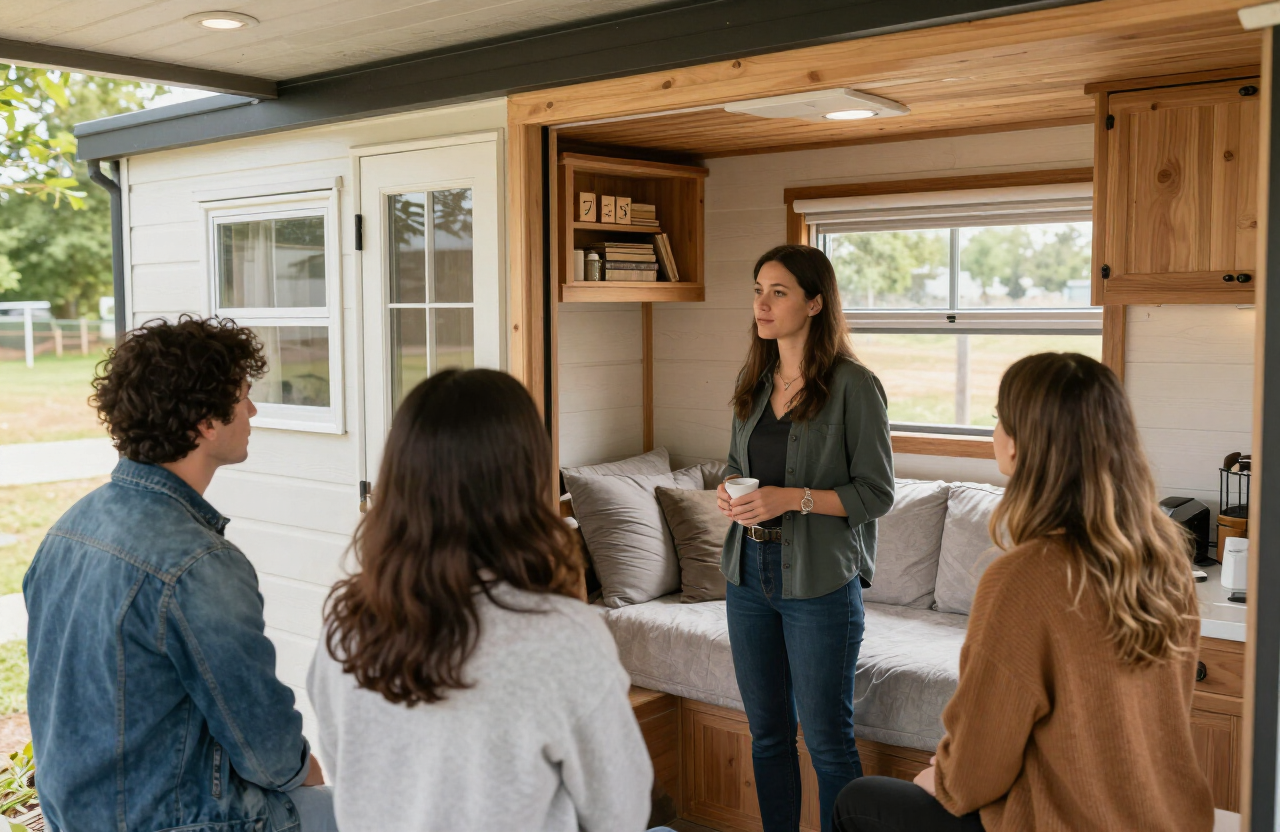
Open house at a tiny home with prospective buyers touring the interior while an agent answers questions

The inspection and due diligence

A serious tiny home buyer will inspect, and you should welcome it. Expect questions about the trailer frame, the roof, the electrical and plumbing systems, insulation, and any certifications. If you have maintenance records, receipts, and warranty paperwork, have them ready — they prove care and justify your price. Some buyers hire a tiny home or RV inspector; accommodate them and fix anything genuinely wrong beforehand if you can. An honest home that passes inspection closes; a home with hidden problems falls through late and wastes weeks. Disclose known issues up front to protect yourself and build trust.
Home inspector checking the underside and trailer frame of a tiny house on wheels with a flashlight

Paperwork and transfer

The paperwork for a tiny home sale depends on its type. For a THOW, you transfer ownership with a bill of sale that includes the home's details, the trailer VIN, the price, and both parties' information, and you sign over the trailer title if your state issues one. Include any certification documents, warranties, and manuals. For a foundation tiny home on owned land, the sale goes through a standard real estate closing with a deed, title insurance, and possibly a mortgage. In both cases, a written purchase agreement that spells out price, deposit, inspection contingency, and closing date protects both sides. Use an escrow service for a long-distance sale.
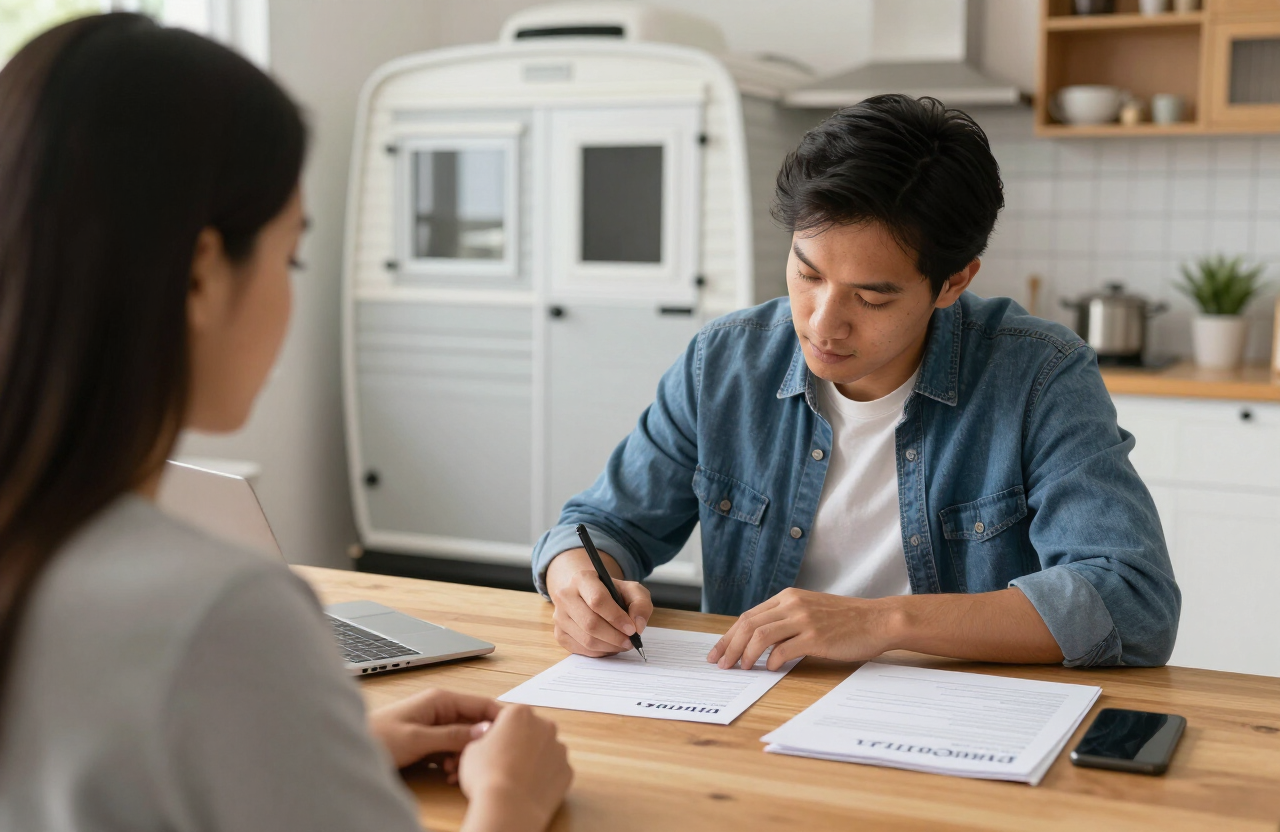
Seller signing a bill of sale and transfer documents for a tiny home at a kitchen table with a buyer

Delivery and handover

For a THOW, delivery is often part of the sale. Decide whether you include delivery within a radius, charge per mile, or make delivery the buyer's responsibility, and state it in the agreement. If you deliver, inspect the trailer, tires, and lights before the trip, and plan the route for clearances and permits. On handover, walk the buyer through every system — the electrical panel, the water inlets, the propane shutoff, the composting toilet — and hand over all keys, remotes, and documents. A thorough handover prevents post-sale disputes and leaves the buyer recommending you. End with a handshake and a clean handover of keys.
Buyer receiving the keys to a tiny house on wheels from the seller with a handshake in front of the home

Selling checklist at a glance

StepKey action
PriceResearch recent comparable sales, adjust for condition
PrepareFix maintenance, declutter, stage, clean windows
PhotographWide-angle, good light, walkthrough video, detail shots
ListTiny home sites, social groups, honest detailed description
ShowQualify buyers, keep a spec sheet, stage fresh
InspectWelcome inspection, share records, disclose issues
CloseBill of sale or deed, purchase agreement, escrow if remote
Hand overWalk through systems, deliver if agreed, hand over keys

Closing the sale confidently

Selling a tiny home is a project, but a methodical one. Price to the market, prepare and stage the home, photograph it well, list where tiny home buyers look, and qualify your inquiries. Welcome inspection, keep your records ready, and use clear paperwork. Deliver or hand over with a full systems walkthrough. Done this way, most well-priced tiny homes sell in weeks rather than months. When you are ready to list, browse tiny homes for sale to position yours, and read our resale value guide for the pricing context.

Related articles

More guides that dig deeper into the same topics.

Frequently asked questions

How do I price a tiny home for sale?+

Research recent comparable sales on tiny home listing sites and in local groups — not just asking prices. Adjust for age, condition, size, certification, and included systems like solar. Be honest about depreciation, price to sell rather than to flatter, and leave a little room for negotiation. An overpriced tiny home sits and accrues storage costs.

Do I need a real estate agent to sell a tiny home?+

For a tiny house on wheels, usually not — it transfers with a bill of sale, not a deed, and most sales happen through tiny home listing sites and social groups. For a foundation tiny home on owned land, a local agent who understands tiny homes can help with pricing, marketing, and the standard closing.

What paperwork do I need to sell a tiny house on wheels?+

A bill of sale with the home's details, trailer VIN, price, and both parties' information, plus the trailer title if your state issues one. Include certification documents, warranties, and manuals. A written purchase agreement covering price, deposit, inspection contingency, and closing date protects both sides. Use escrow for a long-distance sale.

How long does it take to sell a tiny home?+

A well-priced, well-presented, certified tiny home typically sells in a few weeks to a few months. Overpriced or poorly presented homes sit much longer. Pricing to the market, staging, professional photos, and listing where tiny home buyers look are the biggest factors in selling quickly.

Should I include delivery when selling a tiny home?+

It depends on your willingness and the buyer's needs. You can include delivery within a radius, charge per mile, or make delivery the buyer's responsibility — just state it clearly in the agreement. If you deliver, inspect the trailer, tires, and lights first, and plan the route for clearances and permits.

Do tiny homes hold their resale value?+

A certified, well-maintained tiny home holds value better than an uncertified DIY build, but a THOW still depreciates like a vehicle rather than appreciating like real estate. A foundation tiny home on owned land can appreciate with the land. Care, certification, and included systems are the biggest value holders.

What should I disclose when selling a tiny home?+

Disclose any known issues — leaks, damage, system faults, past repairs — honestly and up front. Share maintenance records, receipts, and warranty paperwork. Honesty filters out the wrong buyers, builds trust with the right ones, and protects you from post-sale disputes. A home that passes a clean inspection closes.

Ready to start searching?

Browse tiny homes, plans, builders, communities and land on the interactive map.

Explore the map
>