Lifestyle
Living in a Tiny Home with Pets
5 min read · Updated November 20, 2025
By John
Dogs, cats and small pets can thrive in a tiny home — with the right layout, storage and routines. Here is how to make it work for them and you.
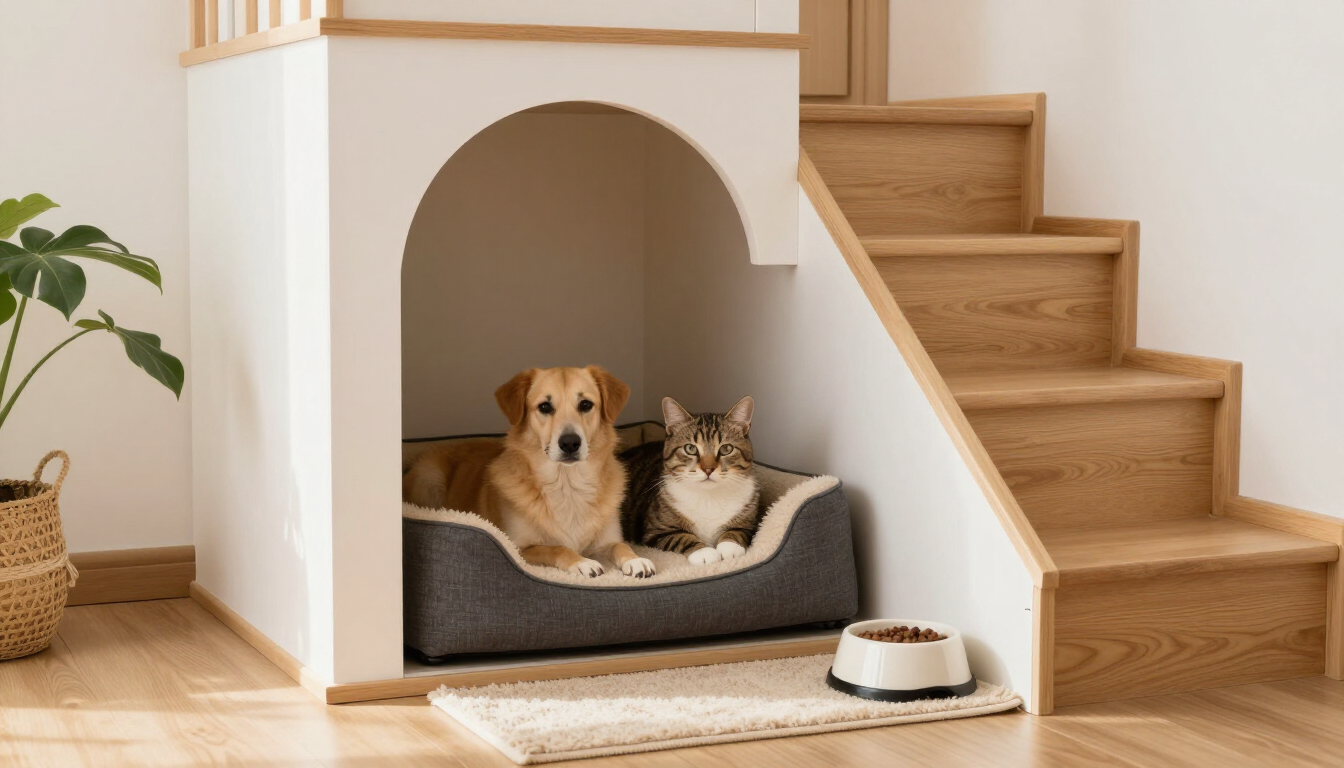
Pets adapt faster than people expect
Most pets care more about proximity to their humans than square footage. A dog that sleeps at your feet is happy in 200 sq ft; a cat with a window perch and a high shelf is content. The challenges are logistical — food, litter, mud — not emotional. With a little design foresight, a tiny home can be a great pet home. Browse
Built-in pet spots
Design pet infrastructure into the build: a dog bed tucked under the stairs or in a toe-kick void, a litter box in a vented cabinet, food and water in a dedicated nook. A built-in pet nook keeps bowls off the walking path and contains mess. For cats, vertical space — shelves, a window perch, a tall scratching post — substitutes for floor area. See our multi-purpose furniture ideas.
Mud, fur and the outdoors
A tiny home amplifies pet mess — one muddy dog dirties the whole floor. Plan a wipe-down station at the door, choose flooring that cleans easily (LVP or sealed wood, not carpet), and add a washable rug by the entrance. Fur accumulates fast in a small air volume, so a good air purifier and regular grooming matter. In winter, see our winter living tips for managing wet, salty paws.
Routine and the litter question
Consistent routines keep a small space livable: feed on a schedule, walk the dog before it gets restless, scoop the litter daily. A vented, enclosed litter cabinet controls odor in a way an open box cannot. For off-grid homes, plan pet water into your
Related articles
More guides that dig deeper into the same topics.
Ready to start searching?
Browse tiny homes, plans, builders, communities and land on the interactive map.
Explore the map