Lifestyle & Community

Tiny Home Lifestyle: Making the Transition

12 min read · Updated March 14, 2026

By John

Moving into a tiny home is as much a mental shift as a physical one. Here is a practical, friendly guide to making the transition to tiny home living — from the first box you sort to the routines that make small-space life feel expansive.

Person sorting belongings into donate and keep piles of cardboard boxes in a living room before downsizing to a tiny home

The mindset shift comes first

Before you measure a single cabinet, the transition to tiny living begins in your head. A tiny home is not a smaller version of your current life — it is a different relationship with stuff, space, and time. People who thrive in tiny homes tend to value experiences over possessions, freedom over square footage, and simplicity over accumulation. If that resonates, the practical adjustments will feel like relief rather than sacrifice. If it does not, tiny living can feel like a constant constraint. Be honest with yourself about why you are making the move, and let that reason guide every decision that follows.

Downsizing before you move

Downsizing is the single biggest task and the most emotionally loaded one. Start early — three to six months before the move — and work room by room rather than all at once. Sort everything into four piles: keep, donate, sell, and store. Be ruthless with duplicates, sentimental items you can photograph, and anything you have not used in a year. For the keep pile, ask whether each item will fit the new home and earn its place there. Measure your tiny home's storage before you finalize the keep pile, because everything you keep needs a designated spot. A thoughtful downsize is the foundation of a calm tiny home.
Cardboard boxes being sorted into keep and donate piles before moving into a tiny home

Designing routines for small spaces

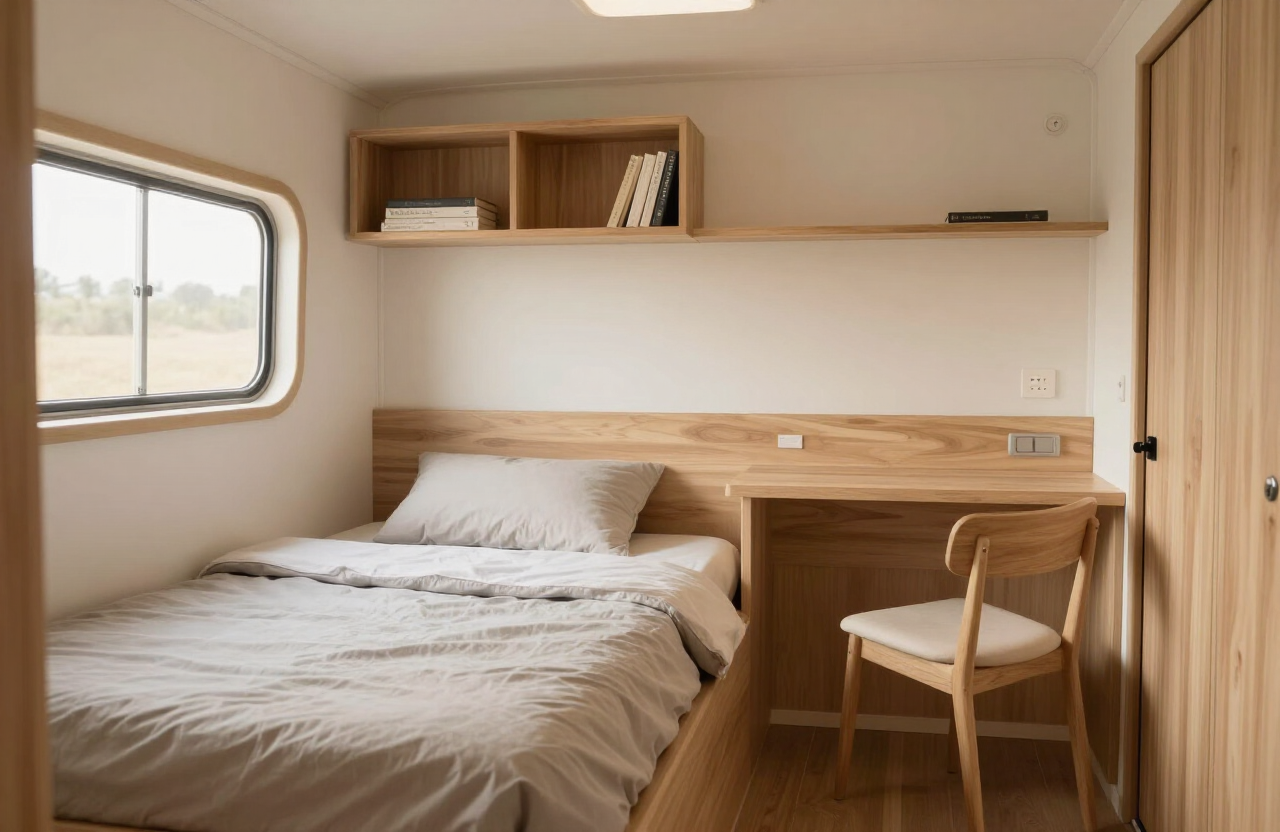
In a tiny home, routines replace square footage. Because there is no spare room to absorb mess, every activity needs a habit: cook, then wipe the kitchen immediately; work, then clear the desk; sleep, then make the bed. Build a place for everything — hooks for coats, a bin for recycling, a drawer for devices — and return items to their spot the moment you finish with them. A daily ten-minute reset, where you put the whole home back in order, keeps clutter from accumulating. These habits feel rigid at first and then become effortless, and they are what make a tiny home feel spacious rather than cramped.
Minimalist tiny home interior with a made bed, a small bookshelf, and a single chair in warm wood tones

Cooking and eating in a tiny kitchen
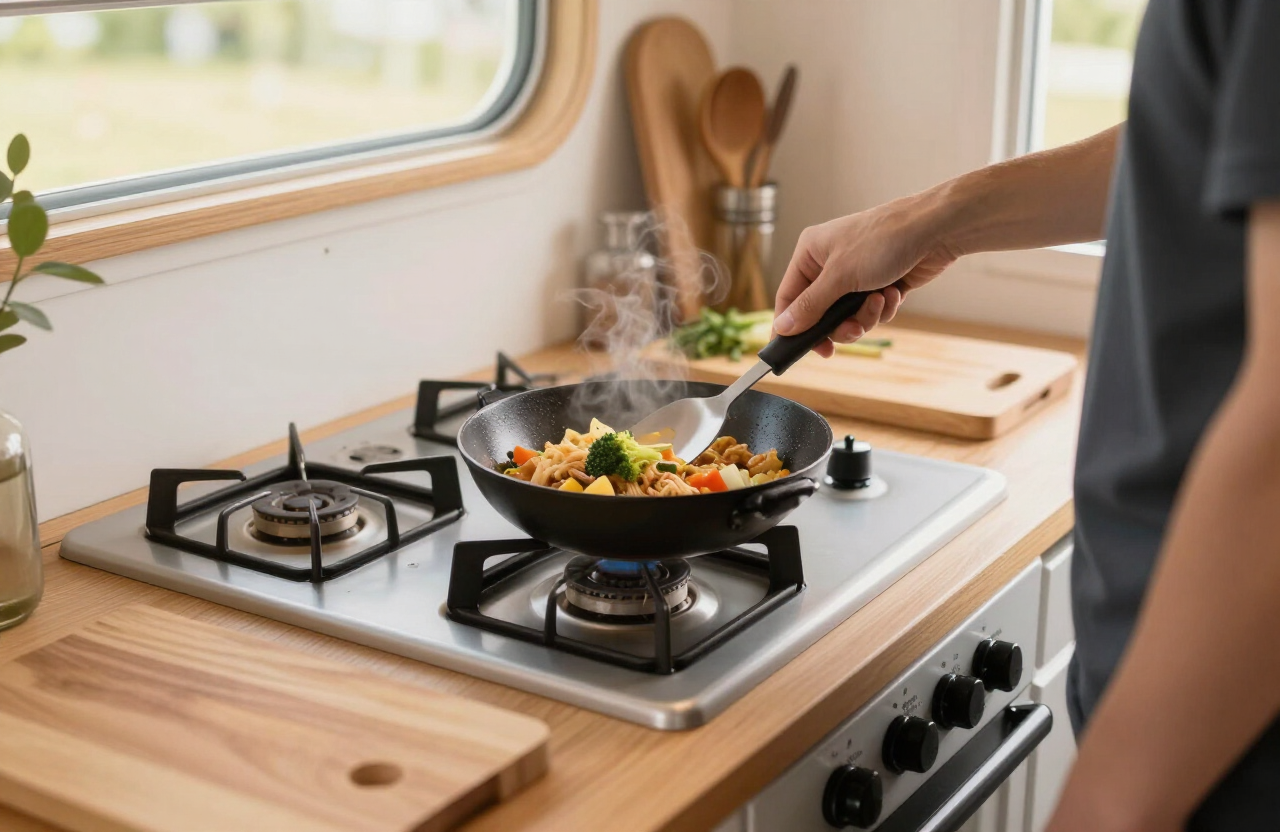
A tiny kitchen works if you cook simply and shop often. With a two-burner cooktop, a compact fridge, and limited counter space, plan meals around one-pot dishes, sheet-pan dinners, and fresh ingredients rather than bulk storage. Keep a small set of versatile tools — a good knife, a cast-iron pan, a cutting board, a pot — and let go of single-use gadgets. Shop for a few days at a time so nothing spoils in a small fridge. Eat at a fold-down table or outside when weather allows, which extends your living space beyond the walls. Cooking small is a skill that improves quickly and quietly.
Person cooking a simple meal in a compact tiny home kitchen with a two-burner stove and a cutting board

Working and sleeping in one room

When your bedroom, office, and living room share 200 square feet, zoning by time and furniture keeps sanity intact. A wall-mounted desk that folds away separates work from rest; a loft bed frees the floor below; a curtain across a sleeping nook creates visual privacy. Set work hours and close the desk at the end of them so the space returns to a home. Use noise-canceling headphones for focus and a small Bluetooth speaker for ambience. The key is that each activity has a clear start and end, so no one use colonizes the whole space. See our remote work guide for the full setup.
Person working on a laptop at a wall-mounted desk inside a tiny home with a coffee cup in natural window light

Sharing a tiny home with a partner or family
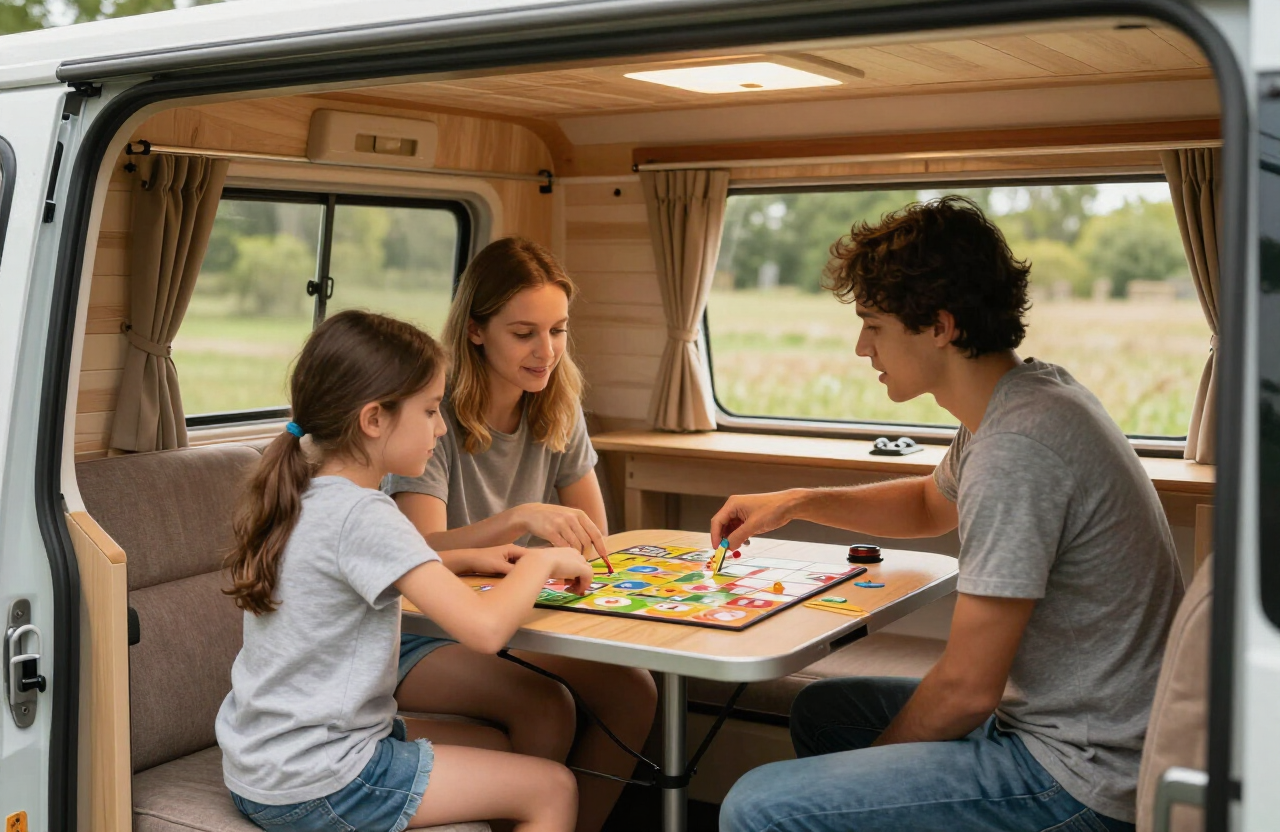
Sharing a tiny home demands more communication, not less. Agree on alone-time signals — headphones on means do not disturb, a closed curtain means privacy — and respect them without exception. Give each person a small territory that is theirs alone, even if it is just a shelf or a side of the bed. Schedule time apart, whether a walk, a coffee shop work session, or a hobby night, so the small space does not feel inescapable. For families, involve children in the design so they have kid-scale spaces, and accept that a tiny home with kids means more time outdoors. Done well, shared tiny living can feel closer, not smaller.
Family of three sitting together at a fold-down table inside a tiny house on wheels playing a board game

Extending life outdoors

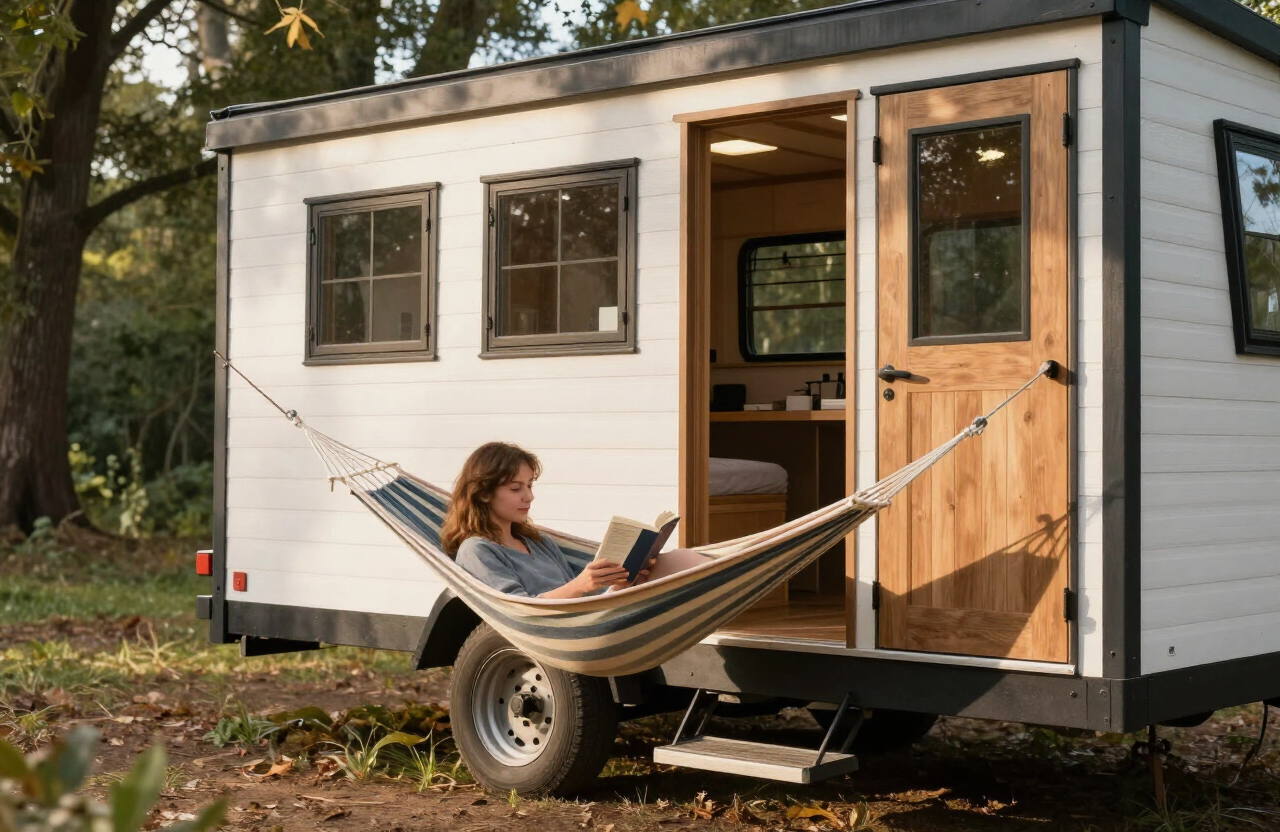
The secret to loving a tiny home is treating the outdoors as an extension of it. A deck, a fire pit, a hammock, or a covered porch effectively doubles your living space for much of the year. Eat meals outside, read in a lawn chair, host friends around a fire pit rather than in the kitchen. A tiny home in a beautiful setting feels expansive because the setting becomes the room. Even in a tiny home community, shared outdoor spaces — gardens, common houses, paths — give you room to breathe. Plan your outdoor space as carefully as your indoor one.
Tiny home owner reading a book in an outdoor hammock beside their house on wheels in a wooded setting

The emotional arc of the first year

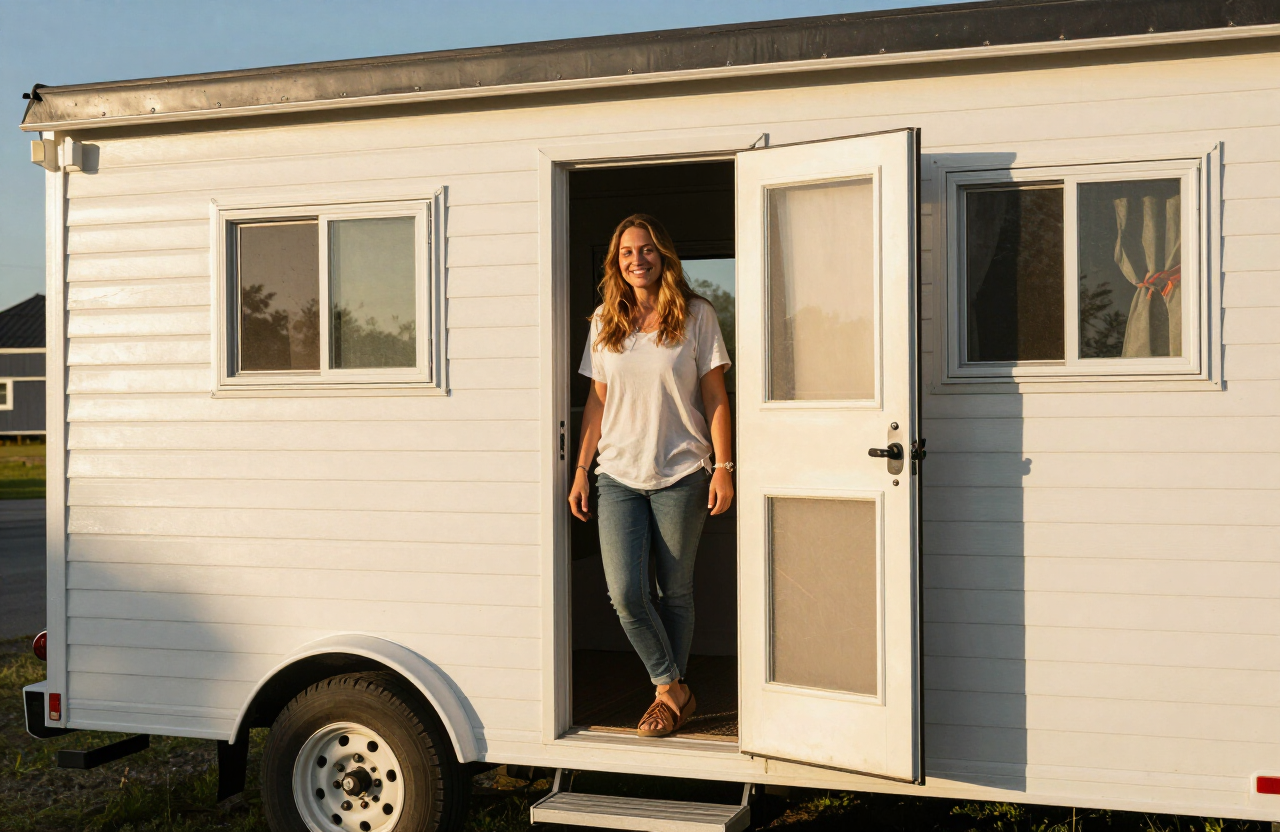
The first year in a tiny home follows a predictable arc. The first weeks are a honeymoon — everything feels novel and freeing. Months two to four bring friction as you bump elbows, miss a convenience, and question the choice. Months five to eight are adjustment, where new habits take hold and the home starts to feel like yours. By the end of the first year, most people report a deep satisfaction: lower bills, less cleaning, more time, and a clearer sense of what matters. Expect the dip, push through it, and trust that the lifestyle rewards arrive on the other side.
Tiny home owner standing in the doorway of their house on wheels smiling with arms relaxed in golden hour light

Common transition challenges and fixes

ChallengePractical fix
Too much stuff arrivesOne-in-one-out rule for every new item
Claustrophobic feelingsOpen windows daily, extend life outdoors
Conflict with partnerAgree alone-time signals and personal shelves
No space for hobbiesChoose one compact hobby or use community space
Hosting guests is hardUse outdoor space, a fold-out couch, or a nearby rental
Missing the old homeGive it six months — the dip is normal

Making the transition stick

The transition to tiny living sticks when it becomes a lifestyle you chose, not a sacrifice you endure. Celebrate the wins — the low utility bill, the ten-minute clean, the afternoon on the porch — and let go of comparing your square footage to your old life. Keep refining the home as you learn how you actually live, and connect with other tiny home owners for support and ideas. When you are ready, browse

Related articles

More guides that dig deeper into the same topics.

Frequently asked questions

How long does it take to adjust to tiny home living?+

Most people take three to six months to settle into tiny living, with a friction phase around months two to four. By the end of the first year, the majority report deep satisfaction with lower bills, less cleaning, and more free time. Expect a dip, push through it, and trust the process.

How do I downsize for a tiny home?+

Start three to six months early and work room by room, sorting everything into keep, donate, sell, and store piles. Be ruthless with duplicates and anything unused in a year. Measure your tiny home's storage before finalizing the keep pile, and give every kept item a designated spot so nothing arrives without a home.

Can a couple live comfortably in a tiny home?+

Yes, with clear communication. Agree on alone-time signals like headphones-on, give each person a small personal territory, and schedule time apart so the space does not feel inescapable. Couples who thrive in tiny homes often report feeling closer, not more constrained, because the lifestyle rewards shared intention.

How do you cook in a tiny home kitchen?+

Cook simply with one-pot meals, sheet-pan dinners, and a few versatile tools. Shop for a few days at a time so nothing spoils in a compact fridge, and let go of single-use gadgets. Eat at a fold-down table or outside when weather allows to extend your living space beyond the kitchen.

Is tiny home living cheaper?+

Generally yes. Tiny home owners save on mortgage or rent, utilities, property taxes, and maintenance, and spend less time cleaning. The up-front cost of the home and land is the main expense. Over a few years, most owners see meaningful savings compared to a traditional house.

How do you work from home in a tiny house?+

Use a wall-mounted or fold-away desk, set clear work hours, and close the desk at the end of the day so the space returns to a home. Noise-canceling headphones help focus, and a small Bluetooth speaker sets ambience. The key is giving each activity a clear start and end so work does not colonize the whole space.

What if I feel claustrophobic in a tiny home?+

Open windows daily for fresh air and light, extend your life outdoors with a deck or hammock, and keep the interior uncluttered with a daily reset. Choose light colors and good lighting. Claustrophobic feelings usually fade as habits settle, but if they persist, a slightly larger floor plan or more outdoor access may be the answer.

Ready to start searching?

Browse tiny homes, plans, builders, communities and land on the interactive map.

Explore the map
>